

Purple-striped jelly
Chrysaora colorata
- On view
- Open Sea
- Animal type
- Invertebrates
- Ecosystem
- Open ocean
- Relatives
- Pacific sea nettle, other jellyfishes, sea anemones, coral; Family: Pelagiidae
- Diet
- Mainly zooplankton, including copepods, larval fish, ctenophores, salps, other jellies, fish eggs
- Range
- Limited range off the coast of California
- Size
- Up to 3 feet (1 m) in diameter
Meet the purple-striped jelly
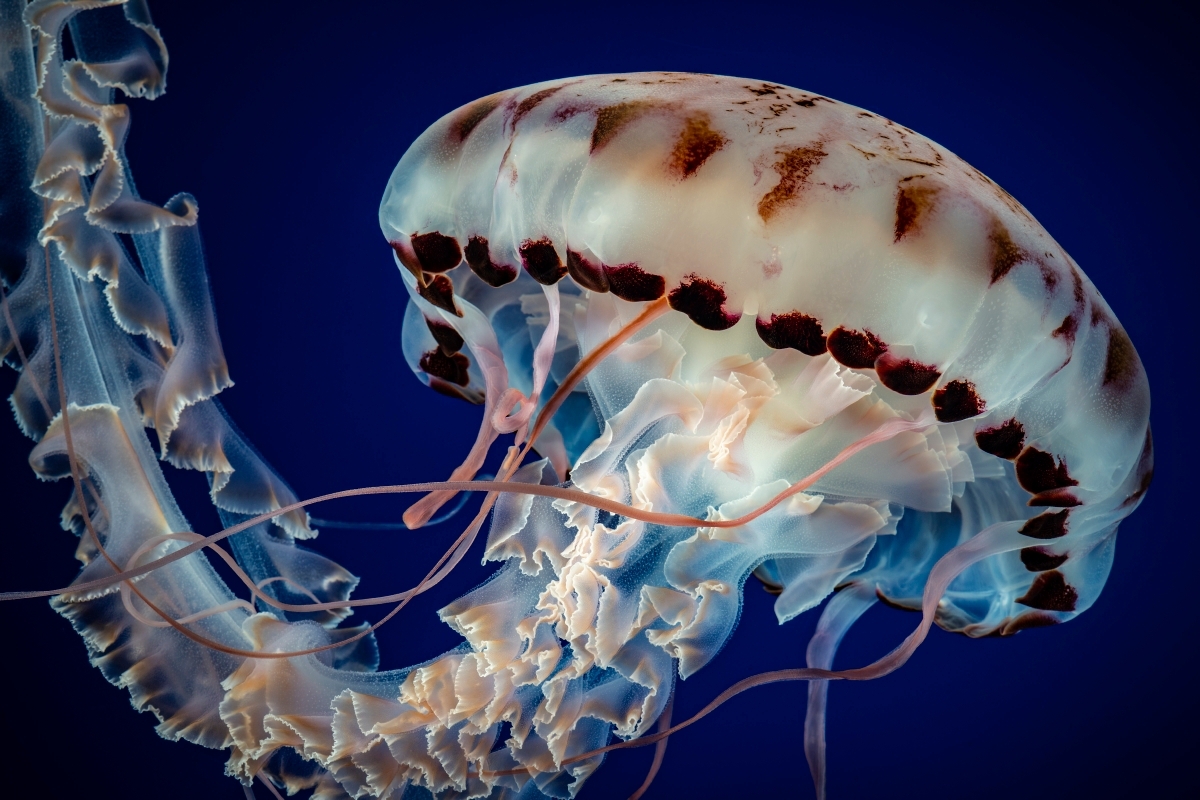
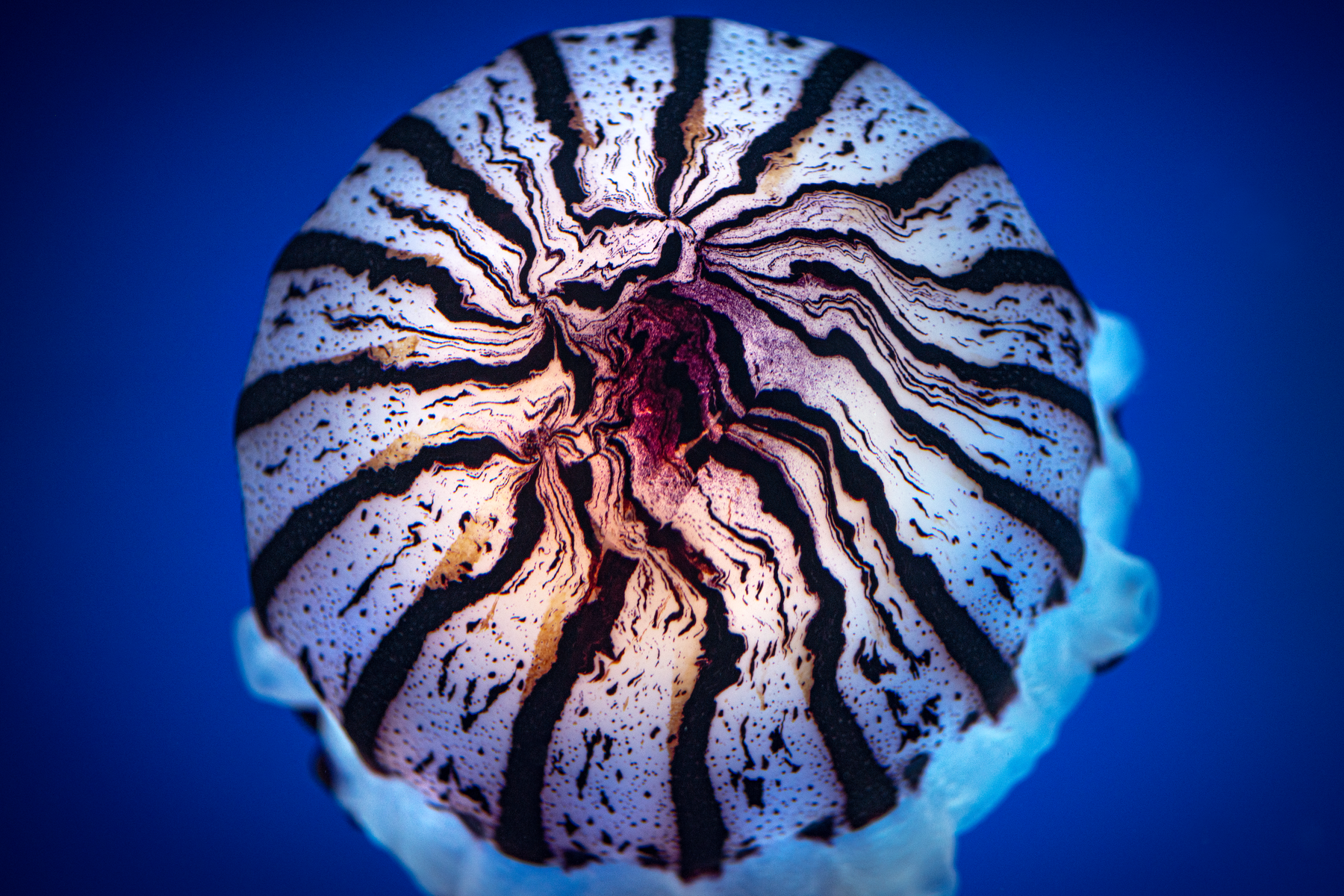
Large and striking, adult purple-striped jellies are silvery white with deep-purple bands. In certain seasons, they mysteriously appear near the shores of Monterey. When the jellies arrive, it's wise to keep your distance (their sting isn't fatal, but it can be painful).
Watch in real time
Open Sea Cam
Check out this live cam – Open Sea CamDid you know?
Young cancer crabs are often found clinging to this jelly, even inside the gut. The crab helps the jelly by eating the parasitic amphipods that feed on and damage the jelly.
Conservation
Human activities can hit nearshore habitats hard. Dredging, dumping and silt build-up can wipe out underwater communities in bays, estuaries and reefs. Several jelly species live in nearshore habitats. And many that don't live near the shore do develop in nearshore "nurseries" when they're young. Harming these habitats could reduce the overall jelly population.
Cool facts
- The purple-striped jelly's lifecycle was first discovered in its entirety at the Monterey Bay Aquarium.
- How does a jelly move? The bell pulses to move short distances—to go farther a jelly rides the current.
- Since divers have seen ocean sunfish eating these jellies, we know some fishes must be immune to the sting.
Up next in open ocean
Animal
Pacific white-sided dolphin
These dolphins keep close company, sometimes swimming in pods of thousands.
Keep exploring
Animal
Moon jelly
This dreamy jelly is named for their translucent, moon-like bell.