

Sea pig
Scotoplanes sp
- Not on exhibit
- Animal type
- Invertebrates
- Ecosystem
- Deep sea
- Relatives
- Other sea cucumbers
- Diet
- Detritus and organic material
- Range
- Worldwide from 1,800 to 22,000 ft. (550–6,700 m)
- Size
- Most between 1.5 and 6 inches (4–15 centimeters) long
Meet the sea pig
Tiptoeing over the deep seafloor, a sea pig searches for a meal. The tentacles around its mouth probe the mud for treats—bits of dead animals, poop, and mucus.
How big are sea pigs?
Compared to a human, sea pigs aren't large. Most measure between 1.5 and 6 inches (4–15 centimeters) long.
Not your normal cucumber
The sea pig may get its name from its pink-colored body and love of the muddy seafloor, but it's actually a type of sea cucumber. The odd-looking, but surprisingly adorable creature has tube feet on its underbelly, back, and surrounding its mouth.
Snuffling along the seafloor
The sea pig spends its days snuffling through the muddy sediments on the seafloor, eating bits of dead algae and animals that have fallen from the surface. When something big, like a whale fall, sinks to the seafloor, huge herds of sea pigs gather nearby to feast on the rich organic sediments from the decaying carcass.
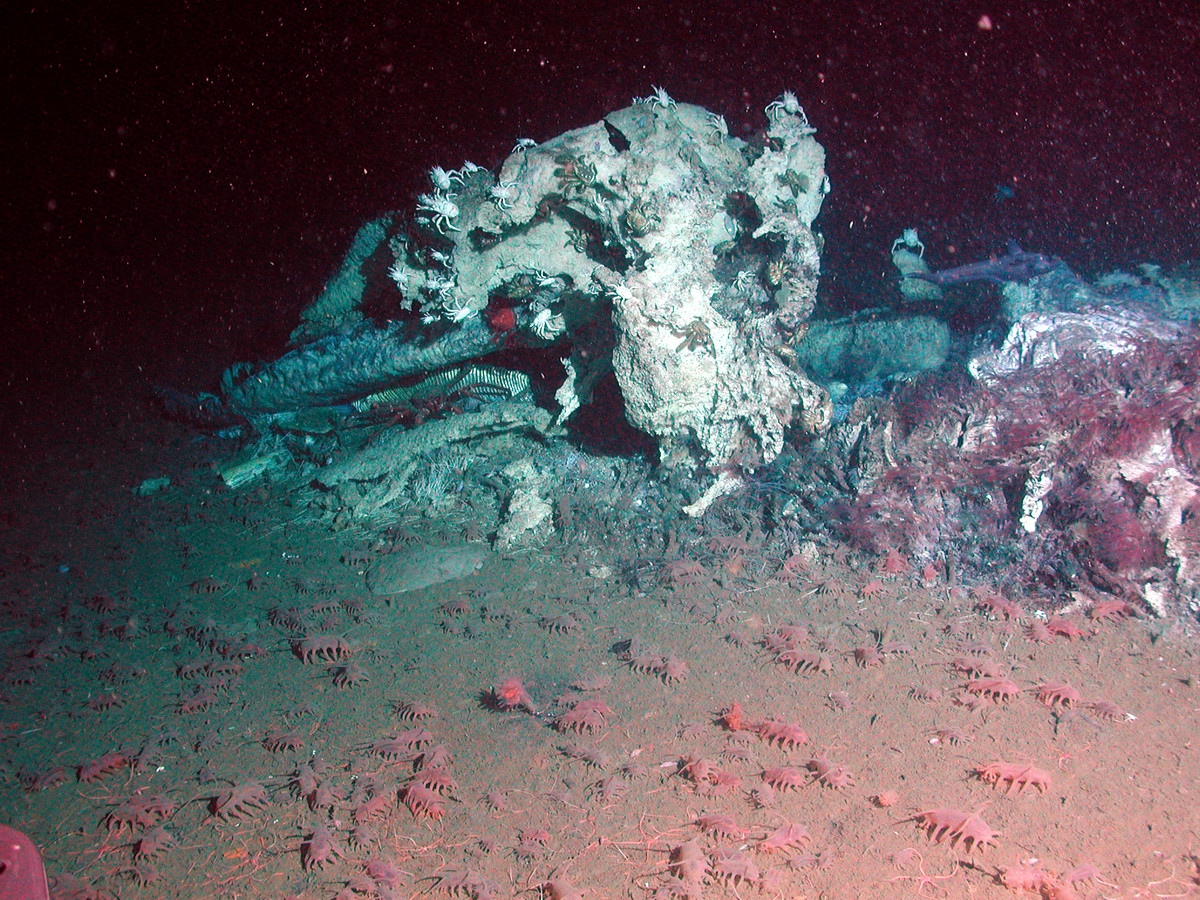
Sea pigs swarm a fallen whale.
© MBARI
Deep sea babysitters
Sea pigs might be deep sea babysitters. Our research partners at the Monterey Bay Aquarium Research Institute (MBARI) frequently see juvenile lithodid crabs (Neolithodes diomedeae) climbing on or hiding under sea pigs—possibly as a way for the young crabs to protect themselves from predators.
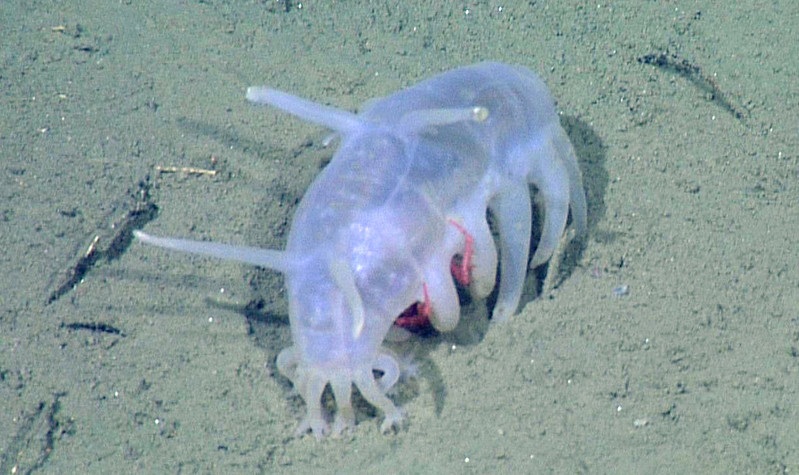
An MBARI remotely operated vehicle snapped this photo of the backside of a Scotoplanes sp. at more than 1,300 meters (4,200 feet) under the sea.
© MBARI
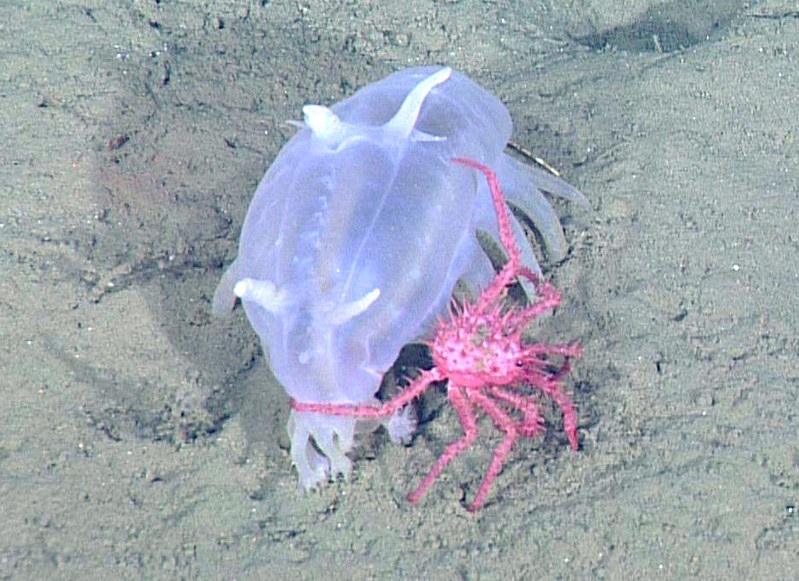
Nobody knows why sea pigs are often spotted with juvenile king crabs clinging to them, like this pair photographed at almost 1,300 meters (4,200 feet) beneath the surface. One possibility is that the crabs are seeking protection from potential predators.
© MBARI
Related videos
Weird and wonderful sea pigs

Studying sea pigs
Our research partners at MBARI come across sea pigs frequently on their deep-sea research expeditions. Follow MBARI's Instagram account for incredible images and videos captured by their underwater robots!
Up next in deep sea
Animal
Shortspine thornyhead
Fisheries that catch thornyheads along the West Coast of the United States are carefully managed.
Keep exploring
Animal
Giant siphonophore
When startled, the giant siphonophore glows with bright blue light.