

Clownfish
Amphiprion spp.
- On view
- Ocean in Motion
- Animal type
- Fishes
- Ecosystem
- Coral reefs
- Relatives
- Damselfishes; Family: Pomacentridae
- Diet
- Tiny drifting animals like copepods and zooplankton; algae
- Range
- Throughout most of the tropical Indo-Pacific
- Size
- up to 4.5 in. (11 cm)
Meet the clownfish
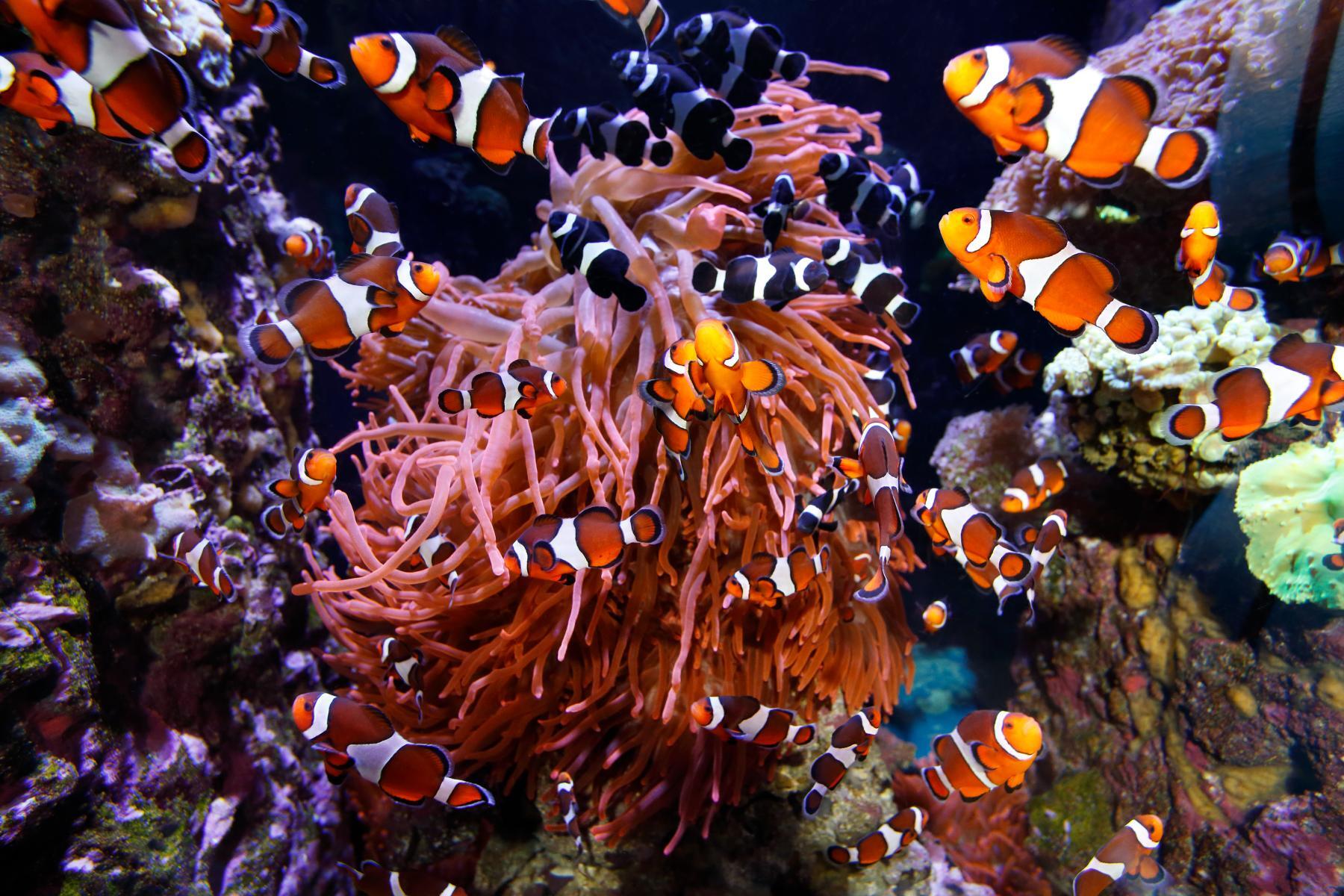
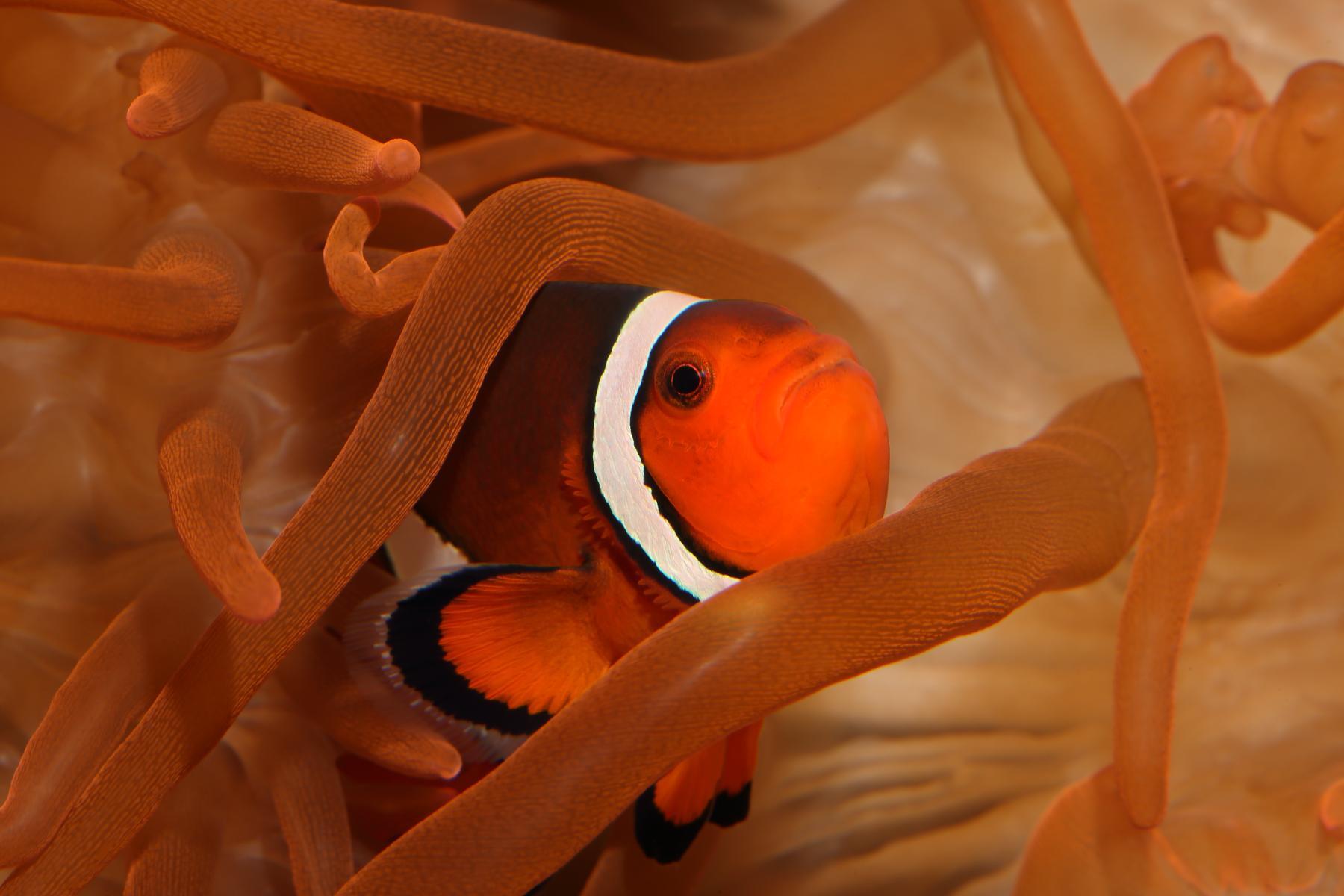
A clownfish lives nestled among the tentacles of a stinging anemone. Scientists believe a special mucus coating helps protect clownfish from the anemone’s sting.
A symbiotic relationship
Living within the tentacles of the anemone offers clownfish protection and food. In return, this anemonefish drives off intruders and removes parasites from the anemone. This mutually beneficial, biological interaction makes anemone and clownfish symbiotic species.
To acclimate to a host anemone clownfish gently touch the tentacles of the anemone with different parts of their body.
From male to female
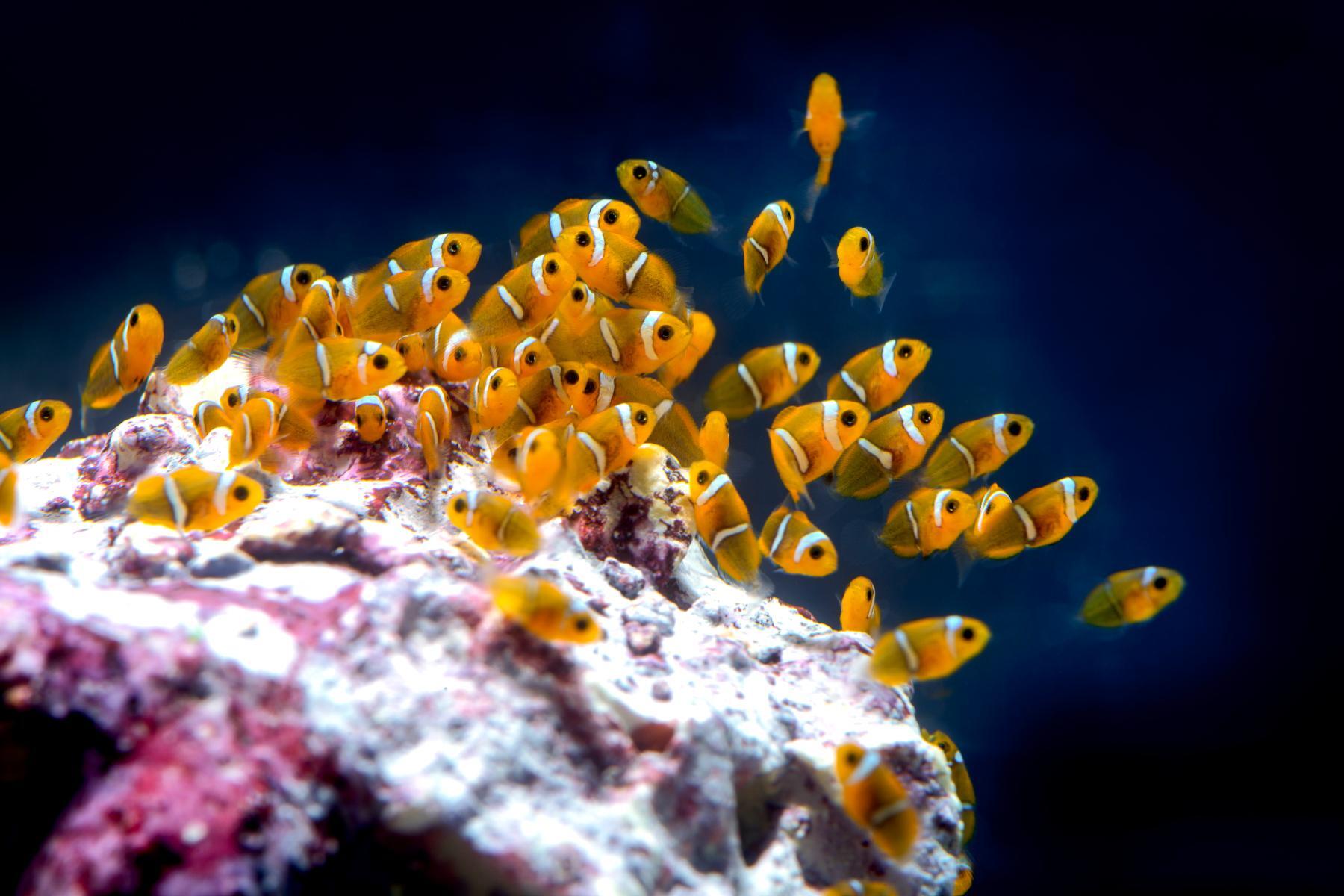
Clownfish are born as males first and can become female later.
They live in small social groups with a single dominant female, a smaller sexually mature male, and two to four even smaller males and juveniles. When the dominant female dies or disappears, the largest male changes sex, and becomes the dominant female for that group.
Reproduction
The Marine Biological Association of India observed the mating patterns of clownfish and found some notable behaviors: before a female lays her eggs, there's an increase in social interaction between her and her mate. Male clownfish express interest by chasing, erecting their fins, rapid zig-zag swimming, and nibbling their female mate.
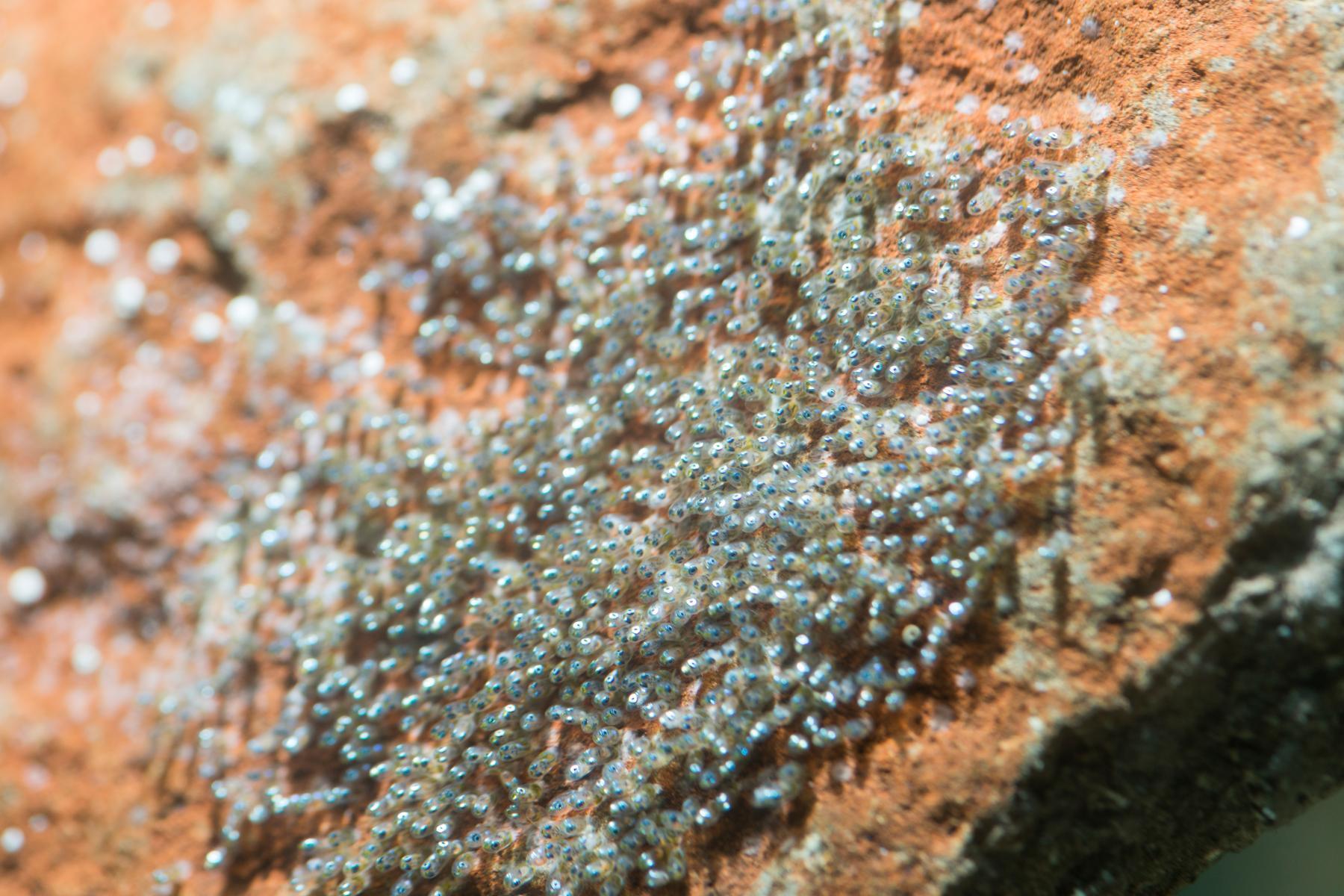
Pairs then find a desirable place to nest and actively clean their site of choice. Once the female dusts the site with her eggs, the male clownfish fertilizes them shortly after.
Clownfish are like stay-at-home dads. Scientists found that male clownfish assumed nearly all responsibilities for caring for the eggs and spent a higher percentage of the time in the nest than the female clownfish. This allows the females to continue feeding and develop more strength for future spawning.
Up next in coral reefs
Animal
Blue tang
Blue tangs, known for their bright blue hue, are a type of surgeonfish with thin, elegant, oval bodies.
Keep exploring
Animal
Brain coral
These corals get their name from the grooves on their surfaces that look like the folds of the human brain.