

Question: What is your role at the Aquarium? What are your responsibilities? What does a regular day look like for you? What is one of your favorite animals to work with?
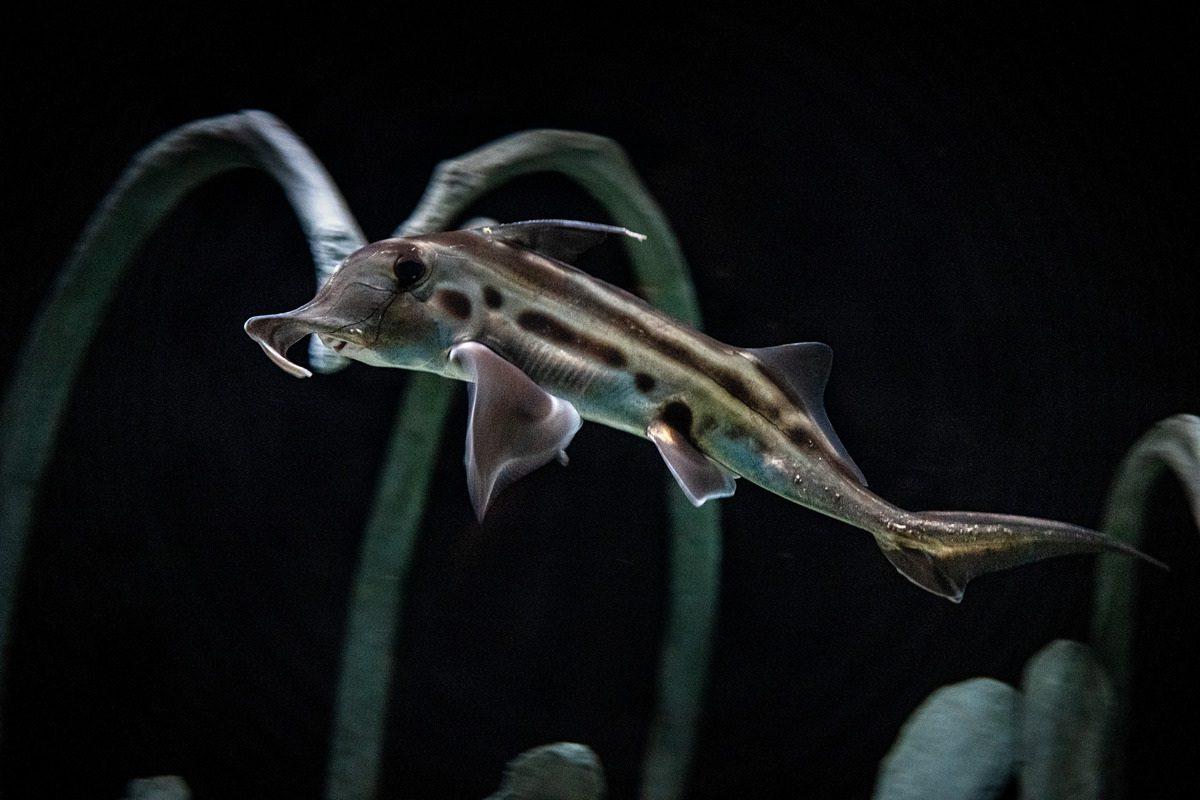
Answer: I’m an aquarist (a person who takes care of aquarium animals) working on the Into the Deep special exhibition. A normal day for me involves coming in around 7:30 or 8 a.m. and check in all of the spaces my team is responsible for. After that, I do maintenance on our public-facing exhibits—clean the windows, siphon the poop, and feed the animals. Once the Aquarium is open and the public arrives, I continue to work with animals behind the scenes, and my day gets a little more variable. In particular, I really enjoy working with our elephant fish!
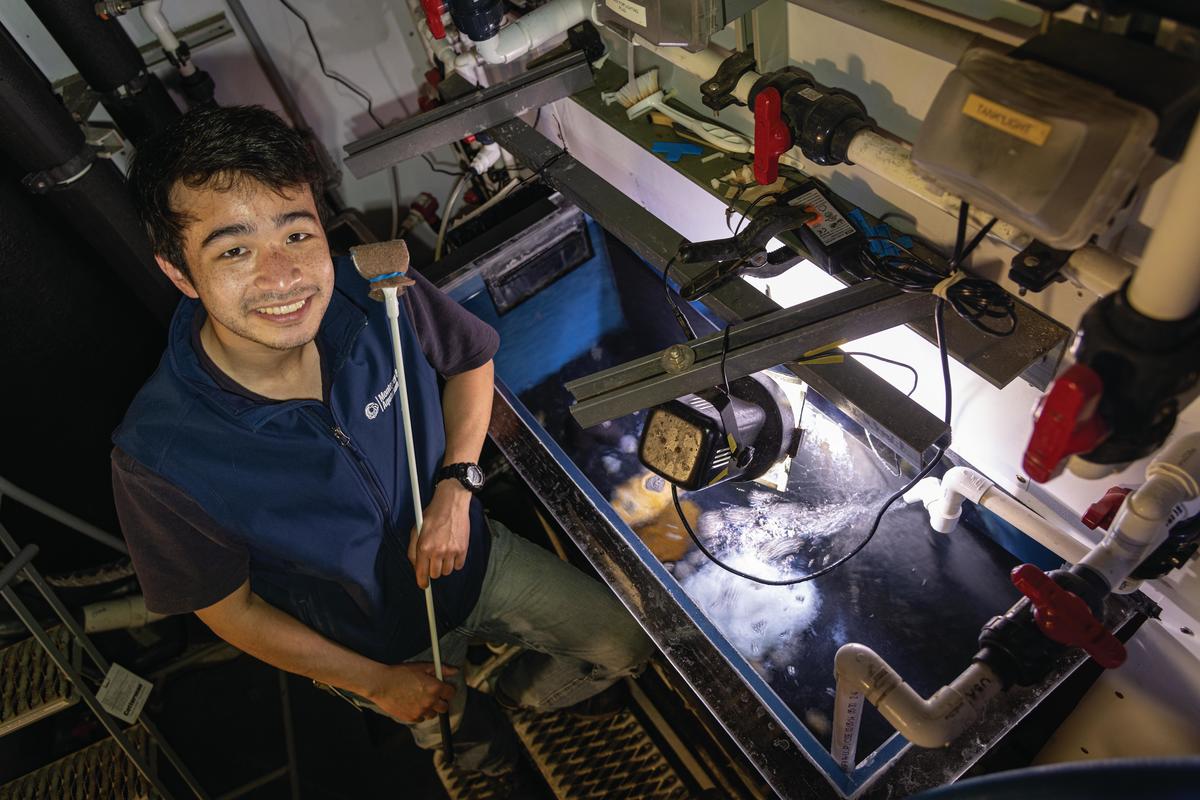
Dalton Richardson
Q: What was your career journey to get to the Aquarium?
A: My path has been a little convoluted to say the least. When I was in high school, I volunteered at the Oklahoma City Zoo. Having previously lived on the island of Guam, I gravitated heavily toward the fish department, and put in over 200 hours with the fish alone. While pursuing my B.S. in Zoology at Oklahoma State University, I had the opportunity to work for the zoo as a part time aquarist. Eventually, I quit and began to do research with Eastern Bluebirds instead, but quickly learned that academia wasn’t for me. Once I graduated, I decided to do a summer internship at the Georgia Aquarium on their freshwater fish team. At the end of the summer, I was hired on as an aquarist where I learned a lot about the intricacies of water chemistry, fish pathology and treatment—and was able to work with a dizzying number of species. Eventually, a position opened up here at Monterey Bay Aquarium and I started here in the summer of 2019.
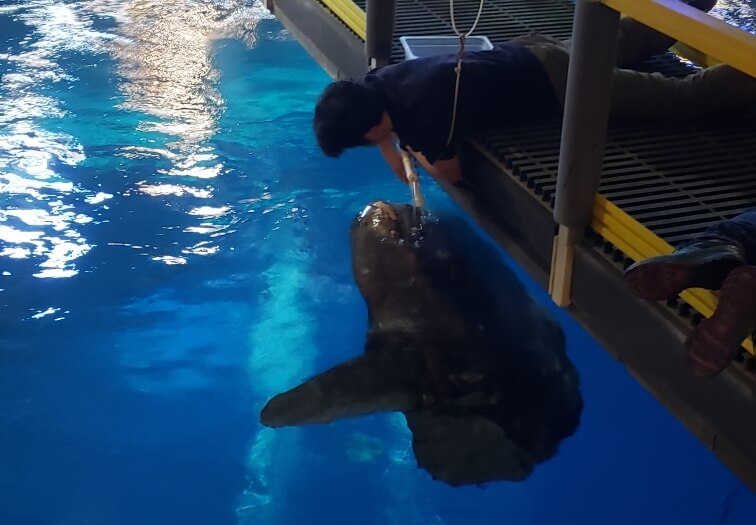
Dalton with an ocean sunfish in the Open Sea exhibit.
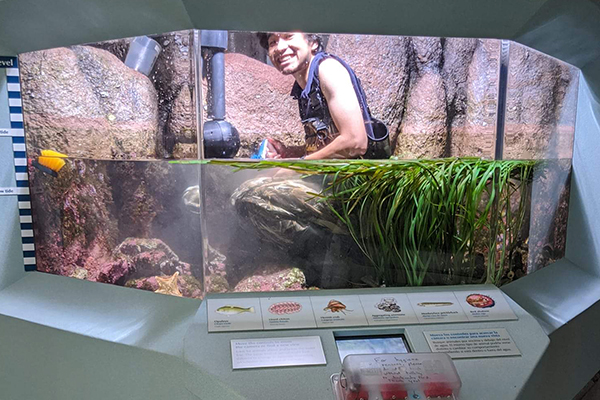
Dalton working in one of the Rocky Shore exhibits.
Q: What's some advice you'd have for young people who’d like to go into your field?
A: Get any experience you can. Keep fish tanks at home and meticulously track what you’re doing with them. Volunteer at your local zoo or aquarium. Any of these things will not only help recruiters know that you’re serious about the field, but it will also help you figure out if this is a good fit for you or not! The life of a husbandry professional is tough and often smelly, and it’s our passion for the animals that keeps us going.
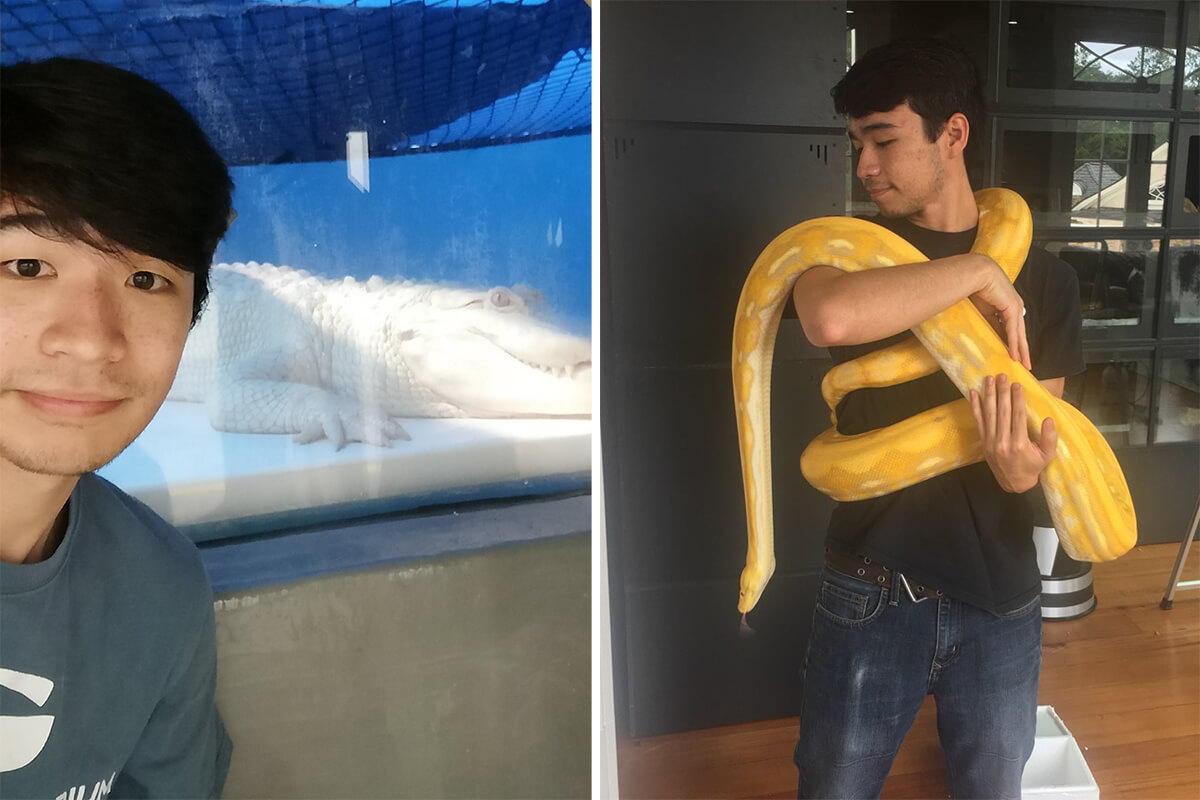
Dalton has had many roles before coming to the Monterey Bay Aquarium. At one point he was the primary caretaker of an albino alligator!
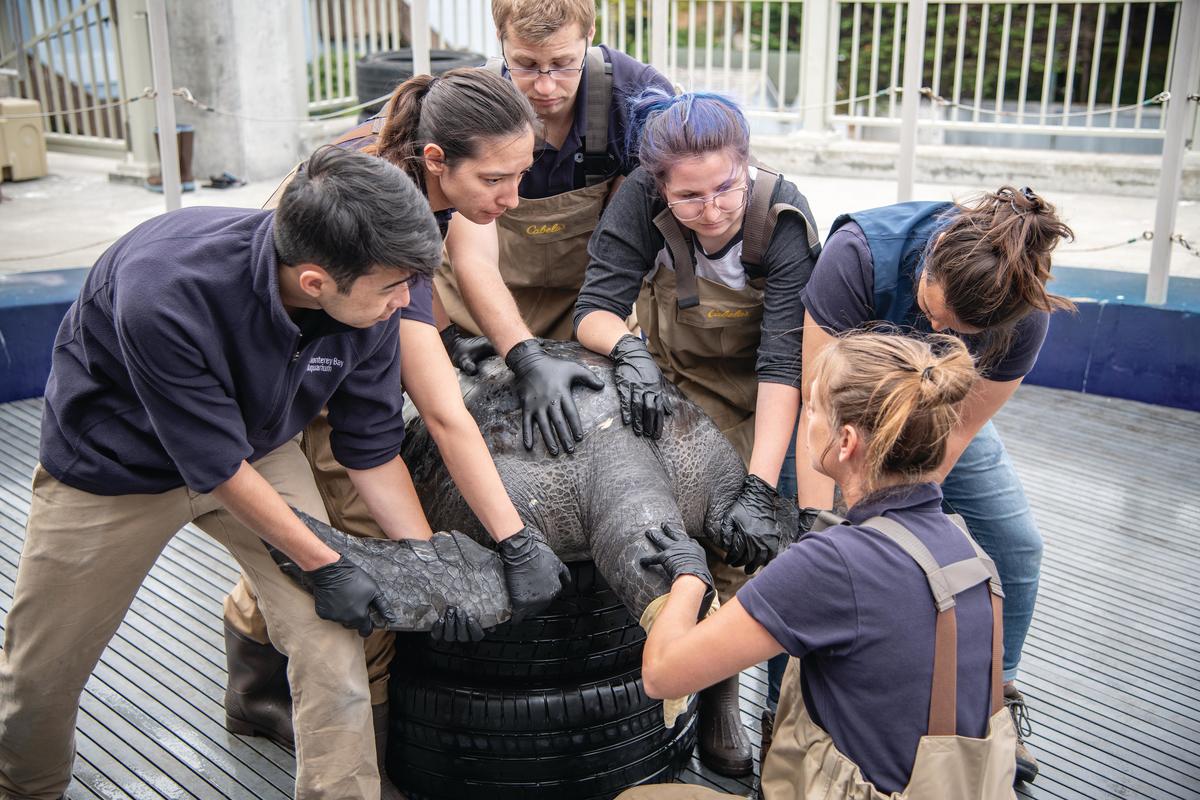
"Get any experience you can," says Dalton. It "will not only help recruiters know that you’re serious about the field, but it will also help you figure out if this is a good fit for you or not!"
Q: What would you say is the biggest challenge to entering the field?
A: The biggest challenge to entering this field is getting the experience necessary to get your foot in the door. Internships (and volunteering) are usually not paid in the field. On top of that, you frequently need a degree. Even just taking care of a fish tank at home can be expensive. So finding an accessible experience that will leave you time to work another job or take classes can be difficult, especially if you’re trying to stay close to a parent’s house or your college. Unfortunately, there currently aren’t any easy solutions to this problem. But many institutions, including Monterey Bay Aquarium, recognize that there is a problem and are working on creating more accessible entry points for people in this industry. For now, I would maintain that volunteering or interning at your local zoo or aquarium is going to be the best solution, or attending a program such as Oregon Coast Community College’s Aquarium Science program.
Related videos
Caring for deep-sea fish with Senior Aquarist Dalton
Keep exploring
Story
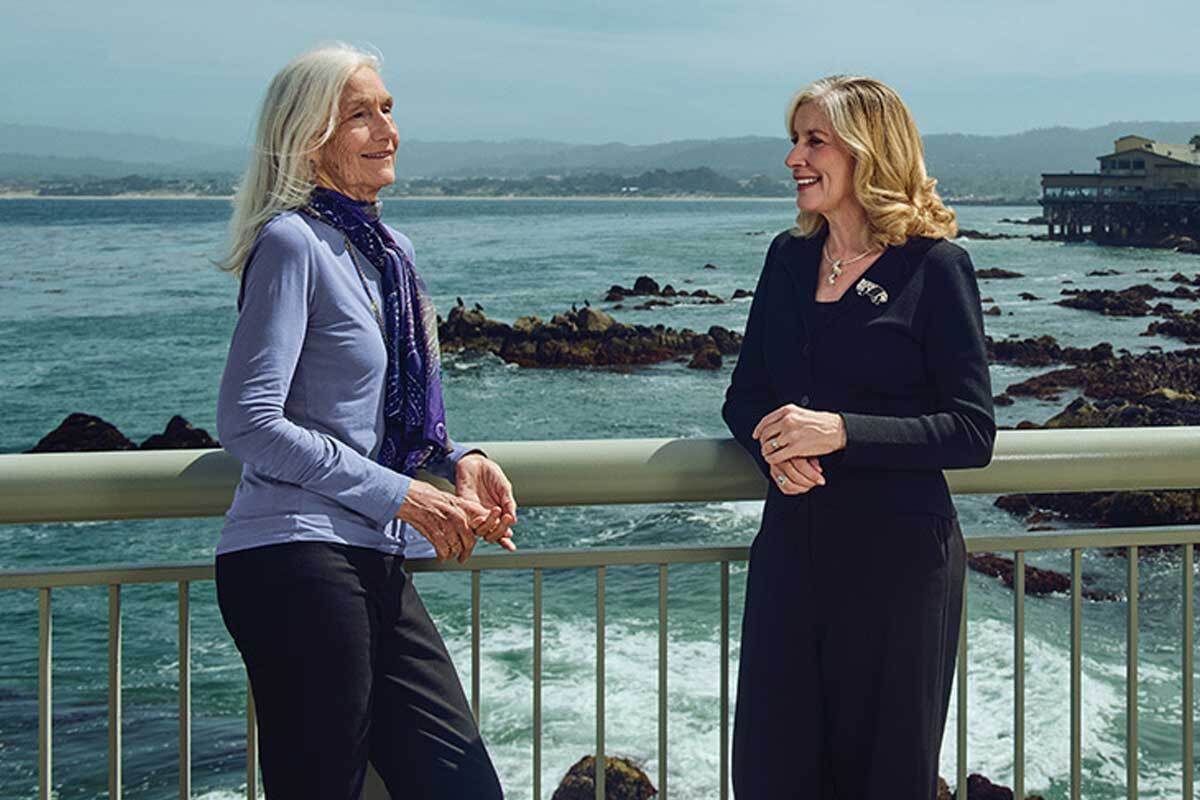
Q&A: Julie Packard and Dr. Jenny Gray
Get to know incoming Chief Executive Officer Jenny Gray in this Q&A with Julie Packard.
Read the Q&A – Q&A: Julie Packard and Dr. Jenny Gray
Story
2026 Lucile S. Packard Memorial Award and Youth Award recipients
We’re proud to announce the 2026 Lucile S. Packard Memorial and Youth Awards for outstanding volunteers!
Read story – 2026 Lucile S. Packard Memorial Award and Youth Award recipients
Story
Elevating Black voices in ocean science and conservation
Why representation in ocean science matters.
Read story – Elevating Black voices in ocean science and conservation