

Monkeyface prickleback
Cebidichthys violaceus
- On view
- Rocky Shore
- Animal type
- Fishes
- Ecosystem
- Rocky shore
- Relatives
- Rock and black pricklebacks; Family: Stichaeidae (pricklebacks)
- Diet
- Juveniles eat crustaceans and algae. At two to three inches (5-7.5 cm), they become mostly herbivores.
- Range
- Southern Oregon to Baja California; rarely south of Point Conception
- Size
- Up to 2.5 feet (.8 m) long
Meet the monkeyface prickleback
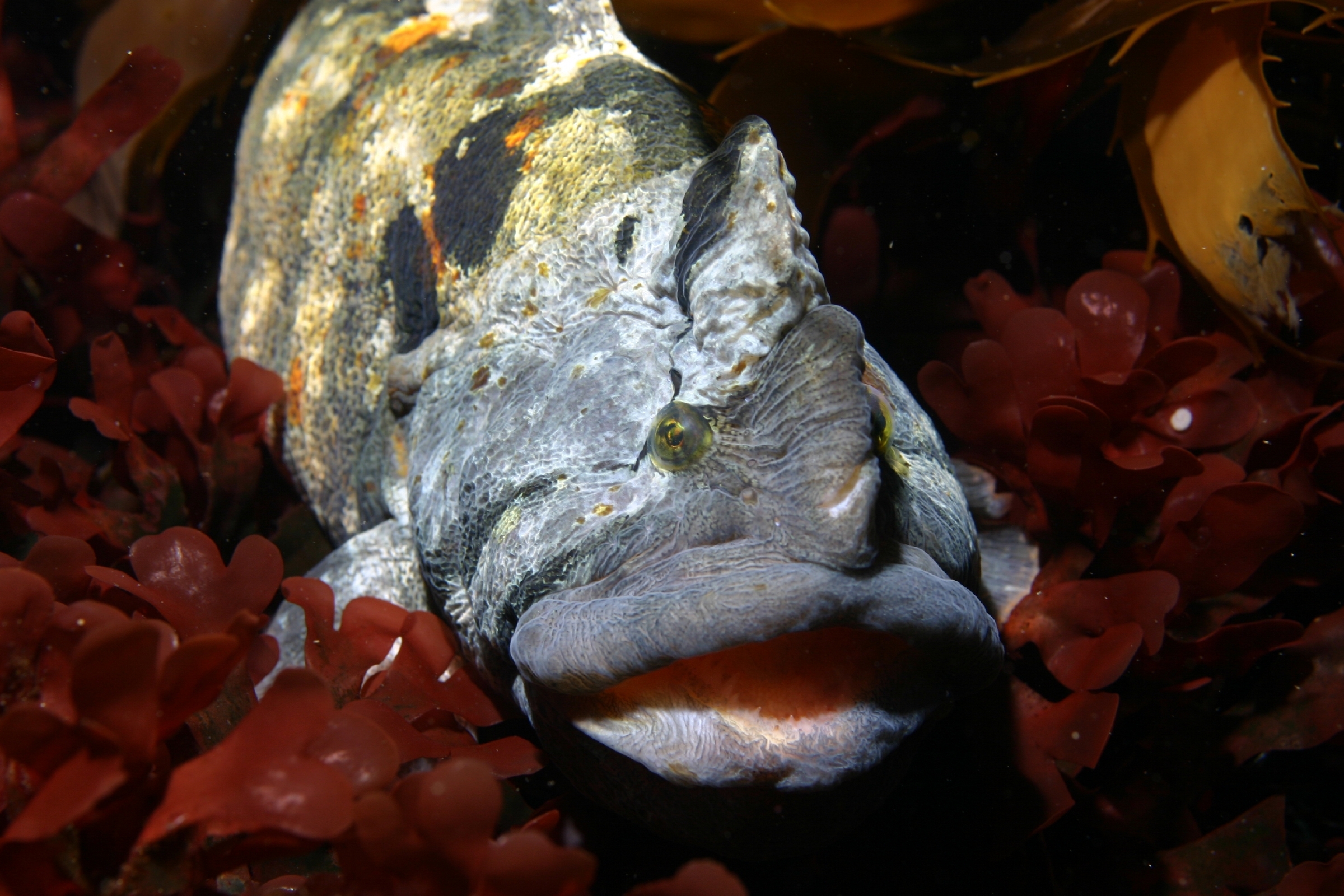
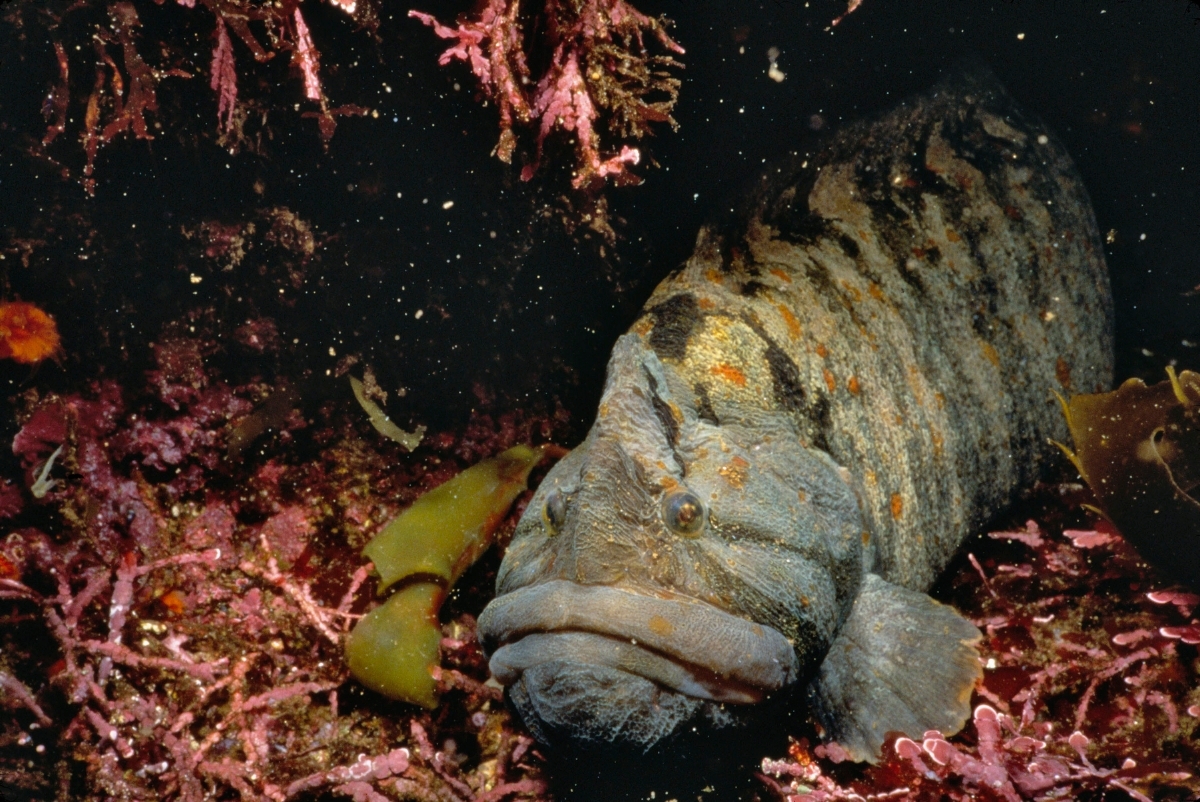
Long and eel-like, monkeyface pricklebacks sport a bluntly rounded snout, large fleshy lips, and two black lines that radiate from behind their eyes. A dorsal fin runs along the pricklebacks' backs. A lumpy ridge appears on adult monkeyface pricklebacks' heads. Their color ranges from uniform light brown to dark green—some specimens have orange spots on their bodies and orange-colored fin tips.
Natural history
Monkeyface pricklebacks' body shapes allow them to live hidden in crevices and holes in rocky reefs, rocky tidal zones and kelp forests. These fish don't move around much, seldom traveling more than 15 feet (4.6 m) from their home. They can breathe air and, in a moist area, can stay out of the water for at least 35 hours.
Conservation
The commercial fishery for monkeyface pricklebacks is insignificant.
Many monkeyface pricklebacks live close to shore. Tidepoolers turning over rocks are likely to see a monkeyface prickleback scurry away. Experienced tidepoolers know it's important to return rocks to their original positions so animals can return to their homes.
Cool facts
- Shore anglers fish for monkeyface pricklebacks in rocky intertidal and shallow subtidal zones by "poke poling." The fishermen attach a short piece of wire with a baited hook to a long bamboo pole. They place the bait in front of a hole between the rocks or "poke" the pole into crevices and holes.
- Peak spawning time is from February to April; fertilization is internal. After mating, a female deposits 17,500 to 46,000 eggs in a mass on subtidal, rocky surfaces. Observers have seen monkeyface pricklebacks guarding the eggs, but they don't know if males or females (or both) guard the egg masses.
- Piscivorous (fish-eating) birds such as herons and great egrets prey on juvenile monkeyface pricklebacks. Other predators include cabezon and grass rockfish.
Up next in rocky shore
Animal
Purple sea urchin
A purple sea urchin uses its teeth and spines to dig holes in stones, which become the sea urchin's hideaway.
Keep exploring
Animal
African penguin
Not all penguins live in snow—African penguins thrive along South Africa's coast in a mild climate.