

Black sea nettle
Chrysaora achlyos
- Not on exhibit
- Animal type
- Invertebrates
- Ecosystem
- Open ocean
- Relatives
- Other true jellies, sea anemones, coral
- Diet
- Gelatinous zooplankton including other jellies
- Range
- Mexico, southern Baja California, north to Monterey Bay (rare)
- Size
- Up to 3 feet (.9 m) and oral arms extending to 20 feet (6 m)
Meet the black sea nettle
The black sea nettle is considered a giant jelly; its distinctive purplish bell can reach over three feet (.9 m) in diameter. Its lacy, pinkish mouth-arms can reach nearly 20 feet (6 m) in length and its stinging tentacles can reach 25 feet (7.6 m) or more. They typically appear in large blooms in San Diego Bay—most recently in 2012.
Watch in real time
Open Sea Cam
Check out this live cam – Open Sea CamNatural history
The black sea nettle is an elusive creature; during most years its whereabouts are unknown. Scientists named this jelly in 1997, although pictures of the species were taken as early as 1926. Many details about its behavior, distribution and lifecycle remain a mystery.
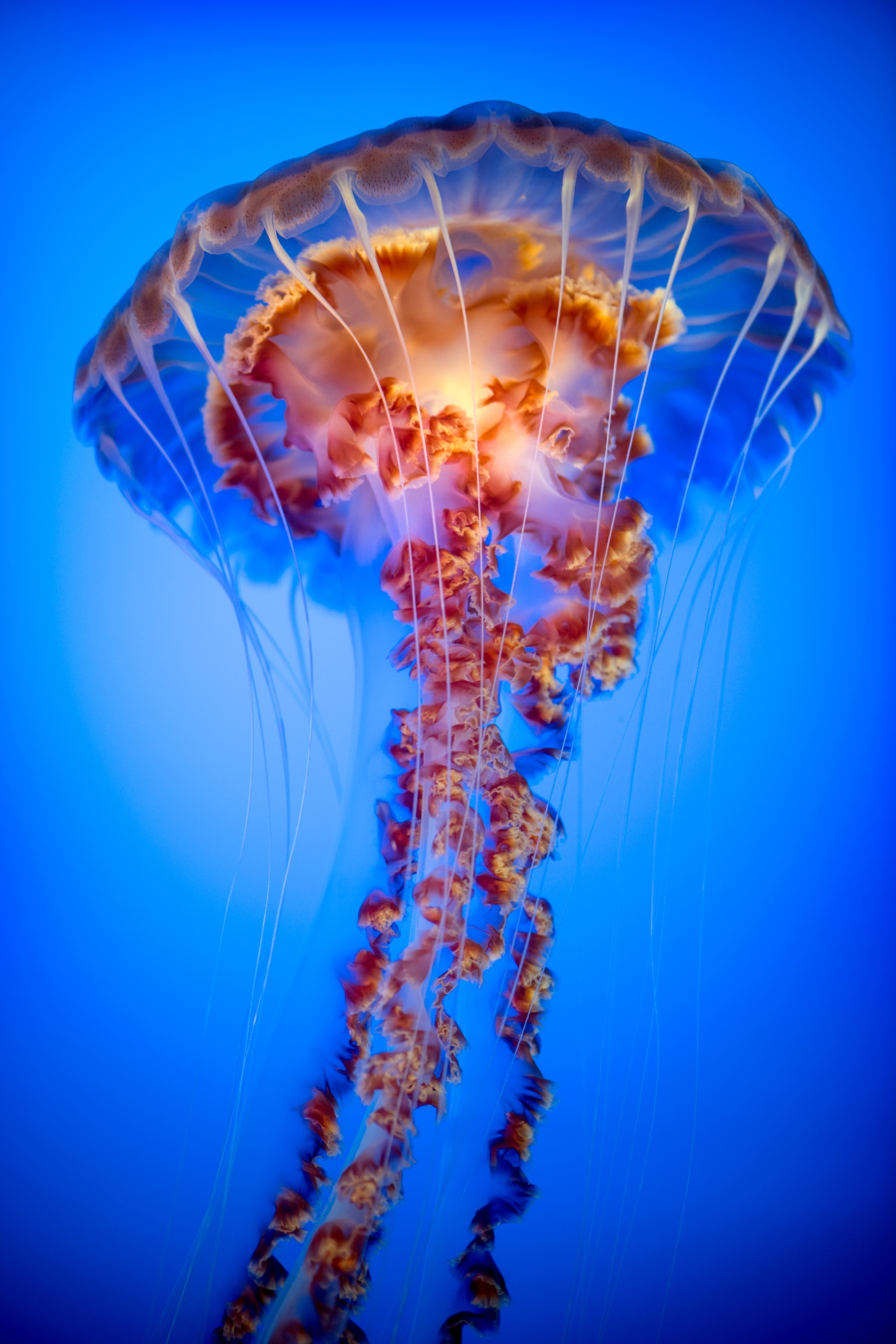
This giant jelly has a distinctive purplish bell and long, lacy mouth-arms that can reach 20 feet (6 m). Its tentacles can extend even longer, reaching 25 feet (7.6 m) or more.
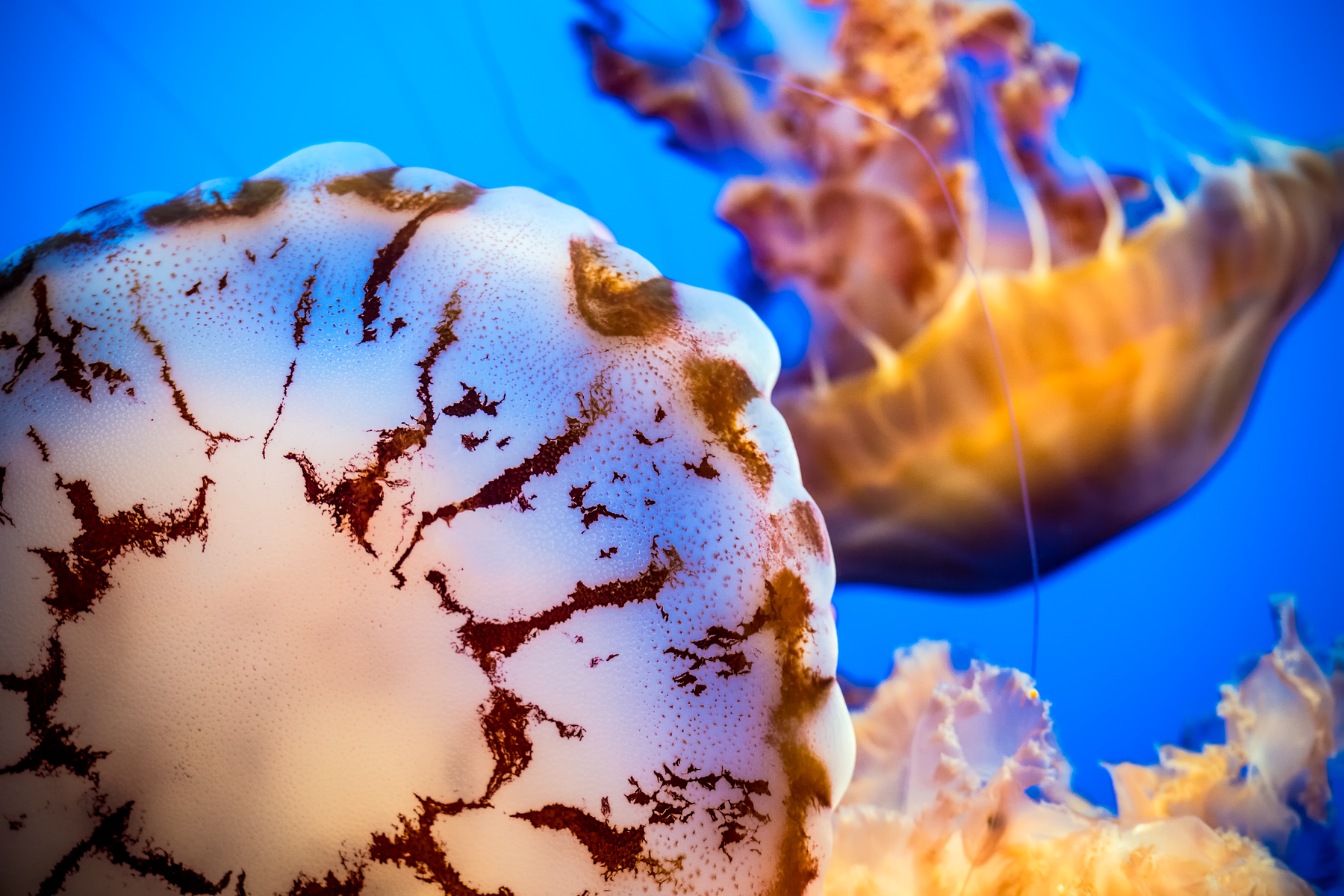
Close-up of a black sea nettle (Chrysaora achlyos) in the Open Sea exhibit.
Cool facts
- The black sea nettle was the largest invertebrate discovered in the 20th century!
- The black sea nettle provides the Pacific butterfish with food and protection. The silvery butterfish feeds on the plankton the jelly gathers. When danger approaches, the butterfish hides inside the jelly’s bell.
Up next in open ocean
Animal
Broadnose sevengill shark
A sevengill shark isn’t a fussy eater—this predator preys on octopuses, rays, other sharks and bony fishes.
Keep exploring
Animal
Moon jelly
This dreamy jelly is named for their translucent, moon-like bell.