

Bluespotted ribbontail ray
Taeniura lymma
- On view
- Ocean in Motion
- Animal type
- Sharks & rays
- Ecosystem
- Coral reefs
- Relatives
- Maskrays, the round ribbontail or blotched fantail ray, the Atlantic round stingray
- Diet
- Mollusks, crabs, shrimp, worms, and small fish
- Range
- At or near the seafloor in temperate and tropical shallow waters around coral reefs; widely distributed in the Indian and Western Pacific Oceans
- Size
- Up to 12 in. (30.5 cm) wide, 24 in. (61 cm) long
Meet the bluespotted ribbontail ray
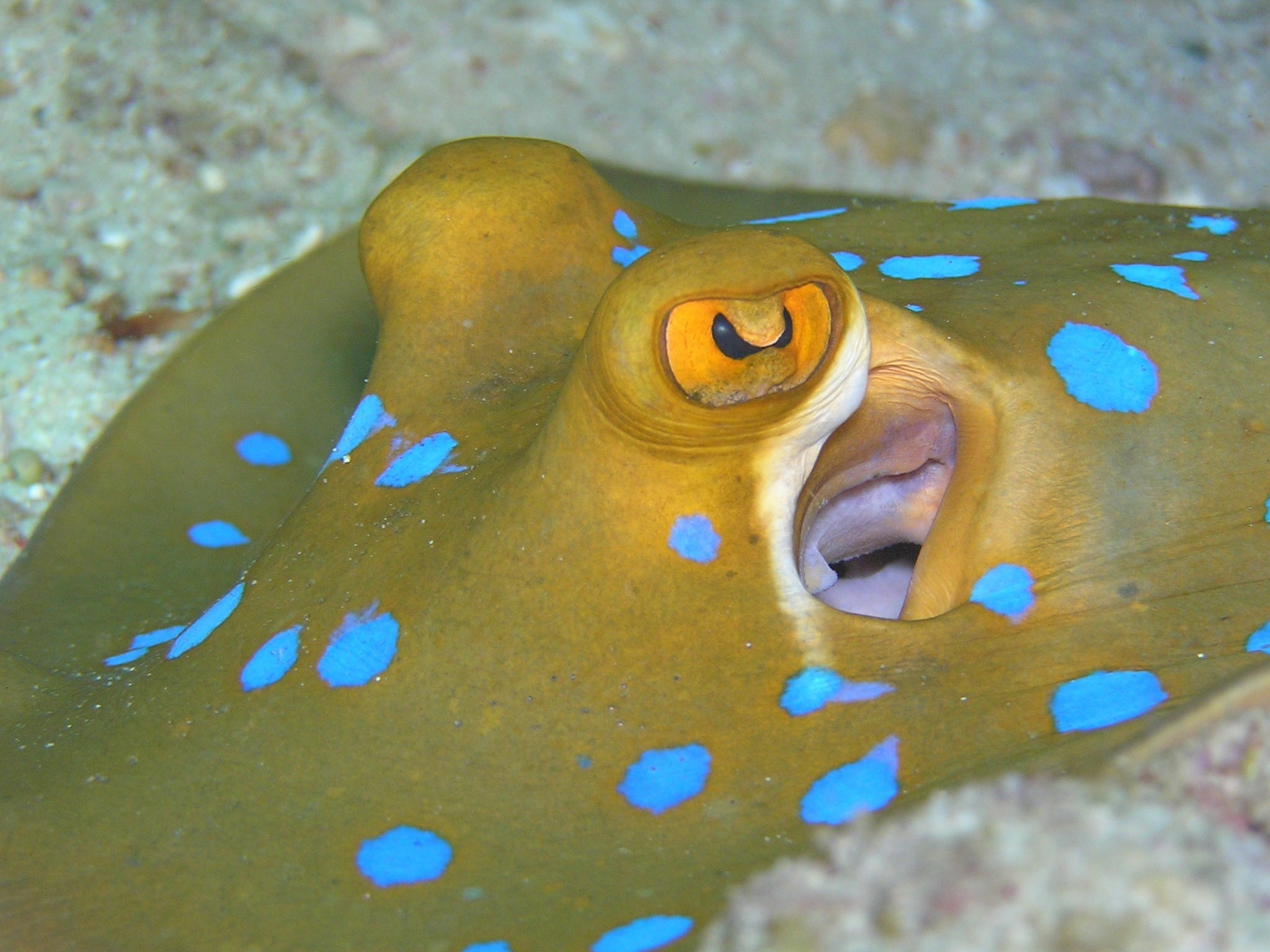
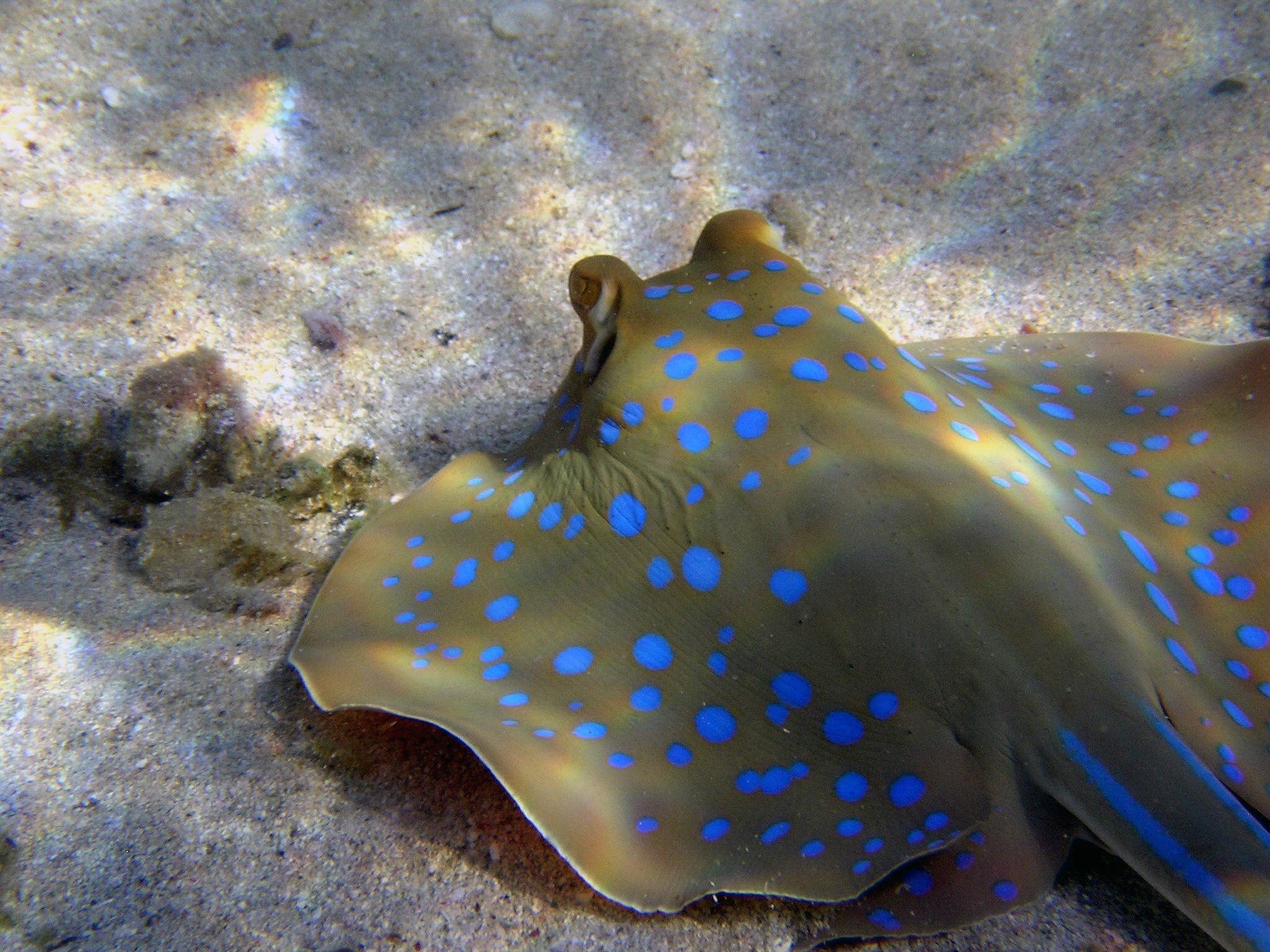
The bluespotted ribbontail ray is named for the electric blue spots on its back and sports two blue stripes along its tail. Its color doesn't come from blue pigment, but rather from skin cells packed with tiny structures that scatter blue light, backed by a dark pigment layer that makes the blue extra vivid.
Natural history
Behold the bluespotted ribbontail ray, with its disc-shaped body and bright blue dotted back. If you were to flip over a bluespotted ribbontail you would see its white underside. Its tail is tapered with blue side stripes and one or two venomous spines. These rays use their venomous spines to defend against predators, which can be fatal–even to humans. However, they are likely to swim away from confrontation.
Conservation
The International Union for Conservation of Nature (IUCN) once assessed the bluespotted ribbontail ray as near threatened, but recently moved it to Least Concern in 2021. Despite its Least Concern rating, the bluespotted ribbontail ray is still targeted by fisheries. The species is occasionally targeted by fisheries and is also caught as bycatch, though some populations are increasing as their predators become scarcer.
Cool facts
- Bluespotted ribbontail rays can sense the electric fields that other living things produce.
- They generally live in small groups, but when the tide rises they migrate en masse to shallow, sandy areas to scoop up food.
- As the tide recedes, these animals shelter in crevasses and under rocky ledges in the coral reef.
- These rays reach sexual maturity at a young age, and every litter can contain up to seven pups!
Up next in coral reefs
Animal
Brain coral
These corals get their name from the grooves on their surfaces that look like the folds of the human brain.
Keep exploring
Animal
Carpet anemone
With their bases anchored to rocks, these anemones spread their crowns of stinging tentacles wide, up to…