

Chambered nautilus
Nautilus pompilius
- Not on exhibit
- Animal type
- Octopus & kin
- Ecosystem
- Reefs & pilings
- Relatives
- Octopuses, squid, cuttlefish; Phylum: Mollusca; Class: Cephalopoda
- Diet
- Preys on fish and crustaceans, including crabs and shrimp; scavenges remains of other animals
- Range
- Indo-Pacific
- Size
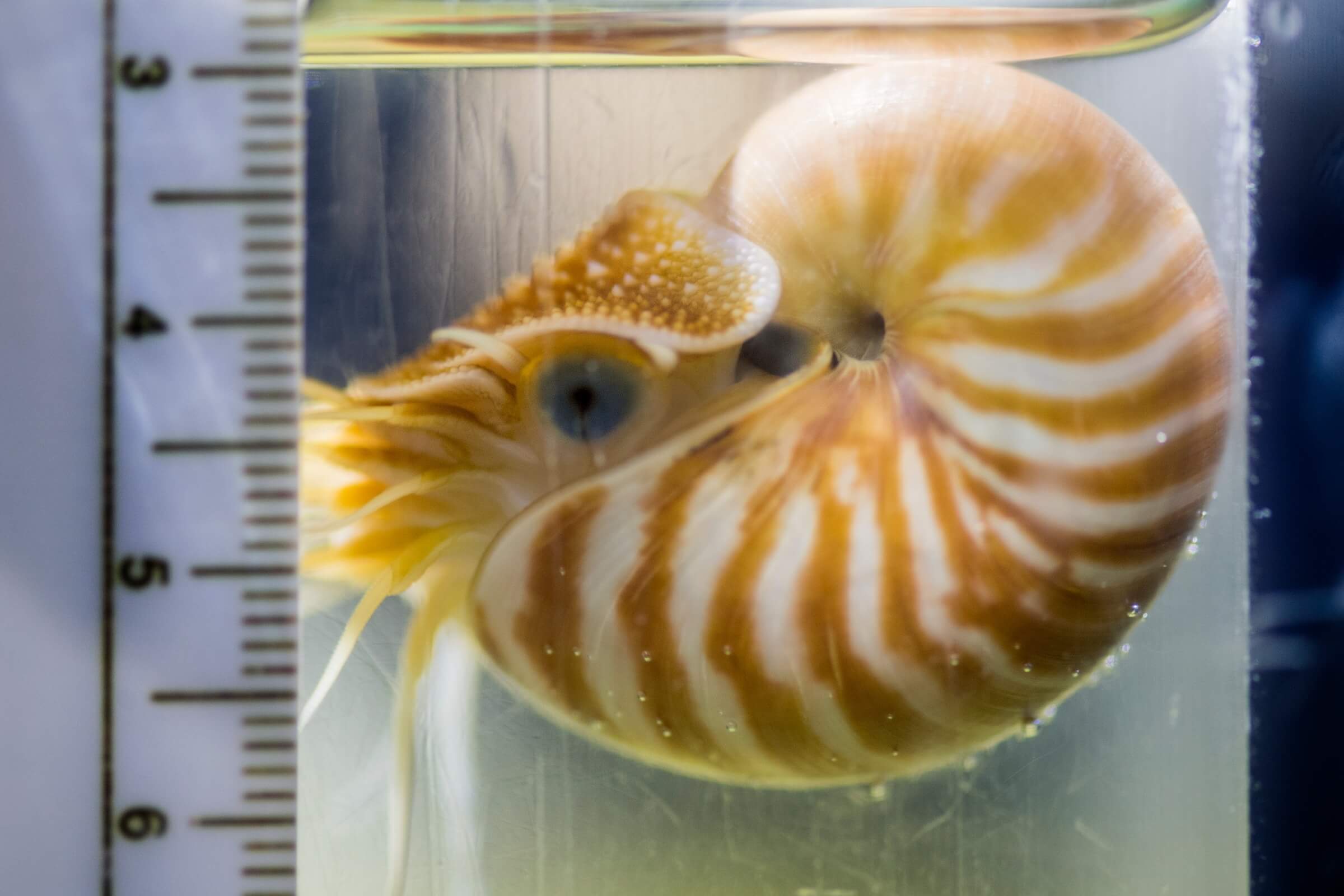
- Shell sizes vary from about 6 to 8 inches (16–21 cm) in diameter
Meet the chambered nautilus
These unique soft-bodied cephalopods that reside in intricate chambered shells. Chambered nautiluses are a living link to the ancient past—they've been cruising deep-ocean reefs since before the time of dinosaurs.
Natural history
The chambered nautilus hasn’t changed much in the past 150 million years. Though their simple eyes can only sense dark and light, a nautilus can perceive the depth of water as well as the current’s speed and direction to help keep their body upright.
Anatomy
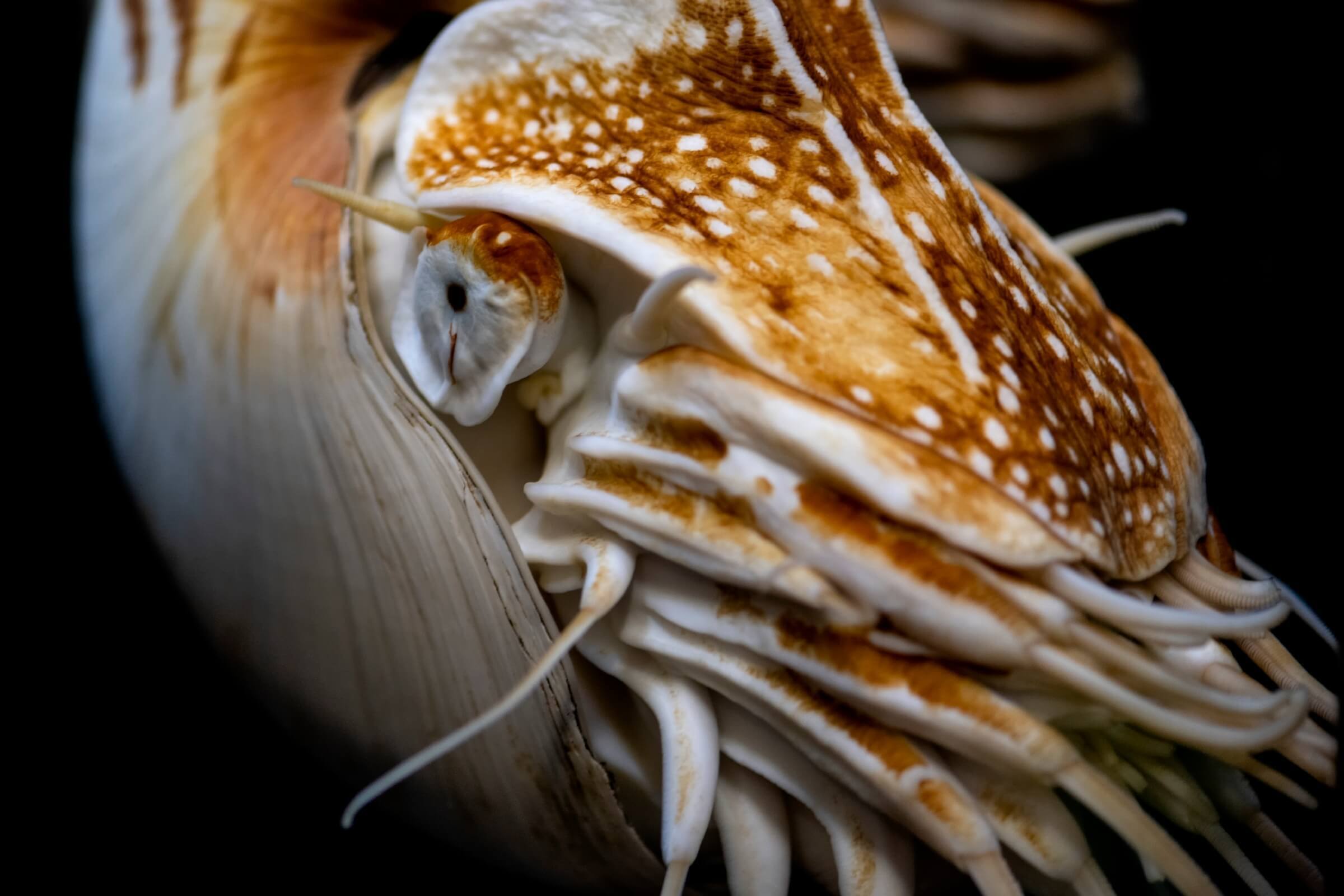
Chambered nautiluses use more than 90 tentacles—the most of any cephalopod—to taste and touch the world. Unlike the suckered appendages of other cephalopods, nautilus tentacles have grooves and ridges they use to feel along reefs in search of food.
Their tentacles are coated with a sticky secretion to help the nautilus get a firm grip on their prey. They then pass their captured prey along to a sharp, beak-like mouth to break it apart, then use a band of tissue lined with tiny teeth called the radula to further shred their meal into digestible morsels.
A nautilus swims using jet propulsion, expelling water from their mantle cavity through a siphon located near the head. By adjusting the direction of this siphon, a nautilus can swim forward, backward, or sideways through the water.
Life cycle
To avoid predators by day, nautiluses linger along deep reef slopes as deep as 2,200 feet (700 m). They use a hood like a trap door to seal itself inside their shell for safety. At night, nautiluses migrate up to shallower depths of about 230 feet (70 m) to feed and lay their eggs.
While most cephalopods are fairly short lived, a nautilus reaches maturity from 12 to 15 years old and can live for more than 20 years! The female lays relatively few eggs—between 10 and 18 per year. These eggs take about 12 months to hatch.
Conservation
Collectors seek out nautilus shells for their beautiful mother-of-pearl linings and eye-catching exteriors. In the past beachcombers mostly gathered washed-up shells, but demand for perfect shells led to deep-water nautilus trapping. Since these animals mature late and produce few offspring, overfishing can lead to significant population decline in nautiluses. For this reason, the Aquarium doesn’t sell seashells in our gift shops.
In 2017, the chambered nautilus was listed as a threatened species under the Endangered Species Act. They’re also protected by the Convention on International Trade in Endangered Species of Wild Fauna and Flora, an international agreement that regulates trade of wild animals to safeguard vulnerable species from human exploitation.
Cool facts
- Nautilus eggs are a similar in size and shape to a bulb of garlic.
- A newly-hatched nautilus has a shell divided into seven or eight small chambers. As the nautilus grows, they gain more living space by building new chambers connected to the old ones. Adult nautilus shells have 30 chambers!
- The nautilus is the only cephalopod with an external shell.
- In young animals, nautilus shells are striped all over. Their stripes are fixed in place and stretch out as they grow.
- Like zebras, nautiluses can be individually identified based on their unique striped shell patterns.
Related videos
Ancient history
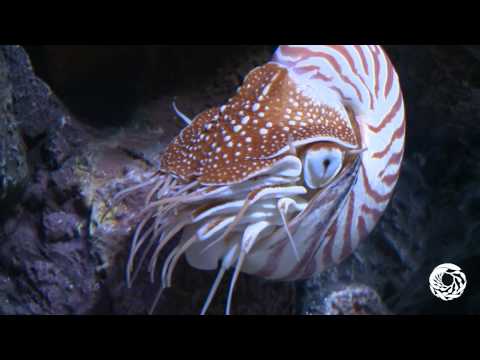
A nautilus deftly maneuvers through water using jet propulsion. They can swim forward, backward, or sideways through the water by adjusting the direction of a siphon near the head.
Up next in reefs & pilings
Animal
Wolf-eel
A wild wolf-eel eats crabs and sea urchins by grabbing them with its jaws and crunching through their shells…
Keep exploring
Animal
Orange cup coral
After cementing its limestone skeleton to a rock, the orange cup coral is set for life.