

Wolf-eel
Anarrhichthys ocellatus
- On view
- Kelp Forest
- Animal type
- Fishes
- Ecosystem
- Reefs & pilings
- Relatives
- Wolffishes; Family: Anarchichadidae
- Diet
- Crabs, sand dollars, sea urchins, snails, abalone, mussels, clams, fish
- Range
- Pacific coast of North America from northern Baja California to Kodiak Island, Alaska; west to Russia and south to Sea of Japan
- Size
- Up to 8.2 feet (2.5 m) long
Meet the wolf-eel
The wolf-eel is not related to other eels. It's one of five species in the "wolffish" family. The other four species are not nearly so long and skinny. Wolf-eels look more or less normal-sized down to their necks, and then their bodies just keep going, with thick, muscular waves of tail stretching nearly 8 feet (2.4 m) behind them. Adults wind those long bodies into caves and crevices, sticking just their heads out and waiting for something crunchy to swim by. They love crabs, urchins and shellfish.
Watch in real time
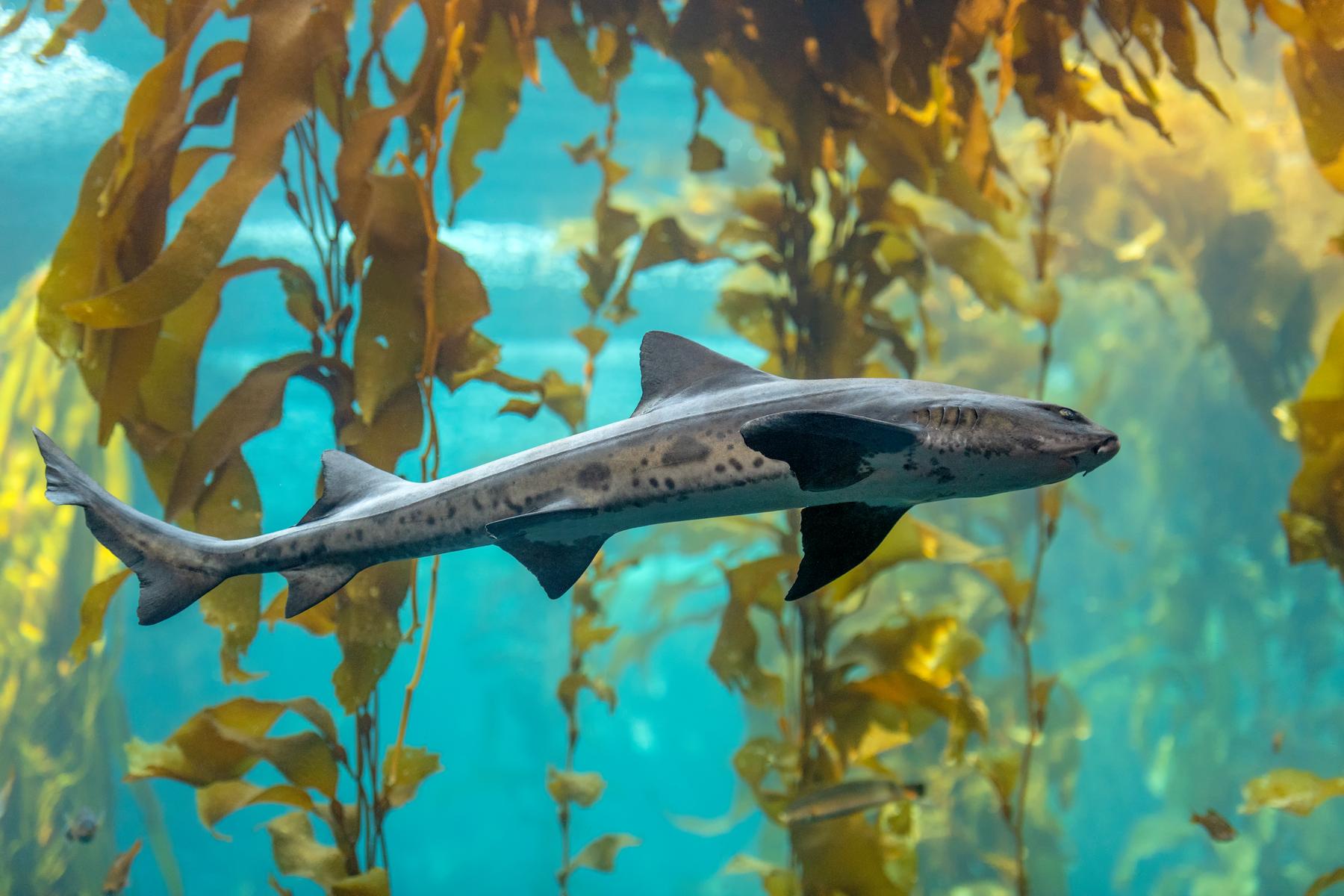
Kelp Forest Cam
Check out this live cam – Kelp Forest CamAt the Aquarium
"They've got faces only a mother could love," Scott Reid says affectionately of the wolf-eels he cares for at the Aquarium. "Their jaws are very strong, and if you get your finger in there, you'd regret it. But they're really slow. It may be a vicious-looking eel, but it totally has the opposite temperament," Reid says.
Wolf-eels are hardy animals, Reid says, but there are two challenges to keeping them in the Aquarium. First, making sure they eat a healthy diet. And second, keeping the reclusive fish visible "from the dry side of the window." Though wild adult wolf-eels eat mostly crunchy food, they develop a taste for soft Aquarium fare like squid—and that can ruin their back teeth, Reid says. "It's like anything, I guess. If it's good for you, you don't want to eat it." He makes sure his wolf-eels exercise their teeth with supplements of rock crab and sea urchin.
"They like to hide—that's part of what they do. They're not out there to be seen," Reid says. "We may know where it is hiding. But a visitor could look for five minutes and never see it. The best time for a visitor to see a wolf-eel out in the open, Reid says, is during afternoon feeding at the Kelp Forest exhibit.
Related videos
D-eel-icious!

A wolf-eel is neither a wolf nor an eel, but it’s still fascinating to watch it pounce on a squid and nosh on it with its awesome jaws.
Natural history
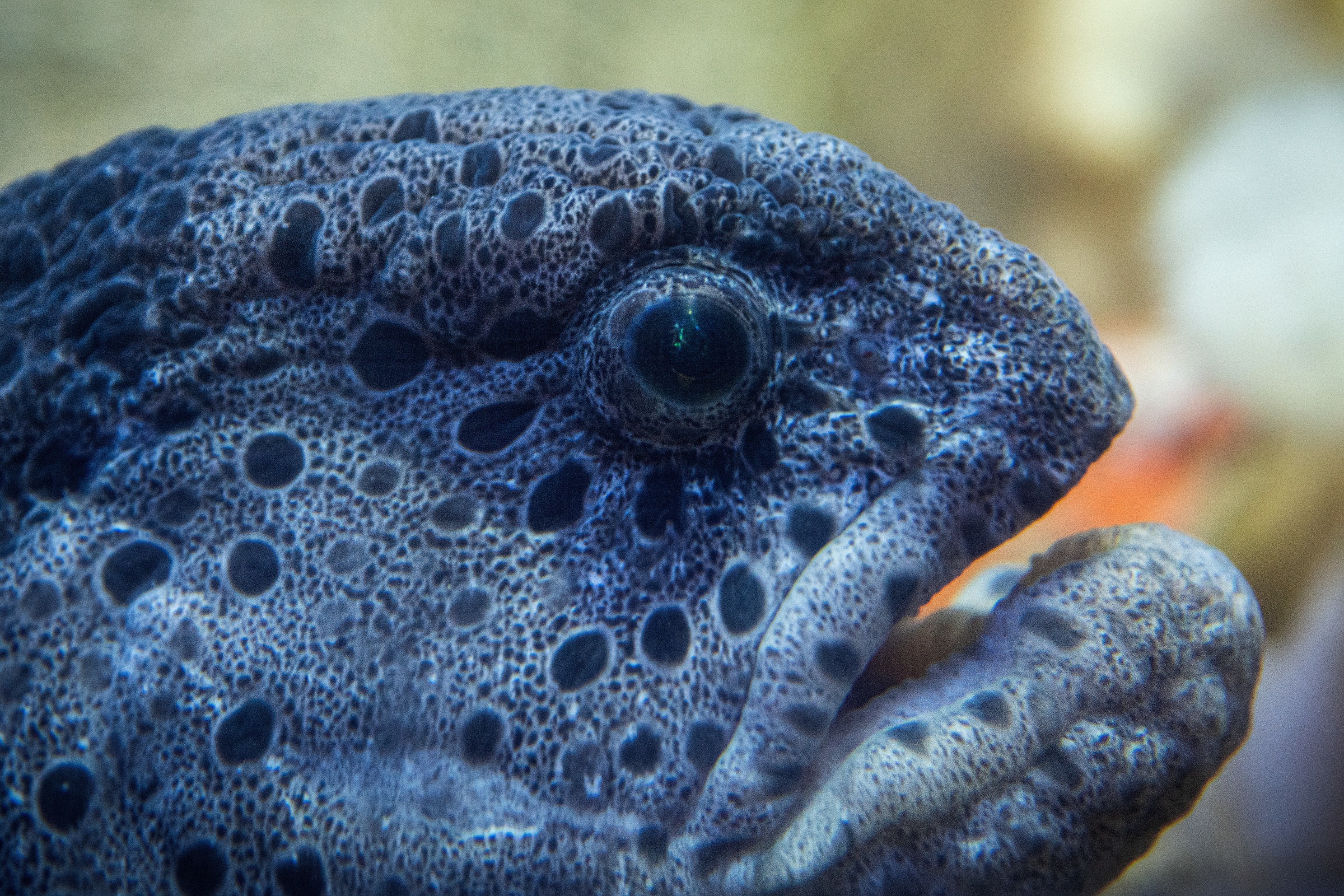
Wolf-eels live in shallow water as deep as 740 feet (225 m). They swim by making deep S-shapes with their bodies, like a snake moving across the ground. The slender fish are as gray as a rain cloud, with large heads and dark spots over their backs. Males have thick jaws and a bulging forehead. Combined with their long, snaggly front teeth they look ferocious, but wolf-eels tend to be aggressive only to other wolf-eels.
Model parents
Wolf-eels mate for life and the pair takes special care of its eggs as they develop. Beginning around age seven, the female lays up to 10,000 eggs at a time, then coils around them and uses her body to shape the eggs into a neat sphere roughly the size of a grapefruit.
When she's settled, the male coils around her as an added layer of protection. The female continues massaging the eggs periodically as they develop, helping to circulate water around the eggs to keep them supplied with oxygen. Eggs take about four months to hatch.
See the world before settling down
Though adult wolf-eels are nearly always found around shelter, the fish spend early life in open water. After eggs hatch, the little 1.6-inch (40 mm) larvae float away on currents, eating tiny animals including copepods and other zooplankton. Next they enter a free-swimming "pelagic" phase which they spend in the middle depths of the ocean.
Gradually, as the juvenile wolf-eels mature into young adults, they move to shallower water and wander the sea bottom looking for food. Once they find a mate and a suitable hideout in a rocky reef they settle down, typically to spend the rest of their lives there.
Killer instinct from day one
Young wolf-eels wear an attractive bright orange that fades as they mature. Even in their first few days of life they are hunters, watching the water for drifting prey.
To strike, the little wolf-eels bend their tiny bodies into a sideways S-shape and then lunge at their prey. Young wolf-eels don't have the powerful molars that adults use to crush shellfish; they stick to catching fish with their long canine teeth.
Hearty appetites
In the wild, wolf-eels eat hard-shelled animals like crabs, sand dollars and sea urchins. They grab these in their jaws and use the broad molars in the back of their mouths to crunch through the shells.
At all ages they seem to have great appetites. Baby wolf-eels in captivity may eat up to 100 herring larvae at a time. Captive wolf-eels in their bottom-wandering phase of life (young adult) have eaten as many as 24 Dungeness crabs in a single day.
Predators
You might not think many animals could threaten an 8-foot long fish that lives coiled inside a jumble of rocks with only its fearsome snout poking out. But harbor seals can. Biologists saw a harbor seal at Point Lobos (about 10 miles south of Monterey) surface with a live wolf-eel wriggling in its teeth. As the scientists watched, the seal subdued the wolf-eel and ate it for lunch. Different predators go after the young: both rockfish and kelp greenling will eat unguarded wolf-eel eggs.
Conservation
Currently, wolf-eel populations seem to be stable. They are not targeted by fishermen, but they are frequently caught in crab and fish traps. As with many coastal species, one of the keys to keeping wolf-eels plentiful is to keep its rocky reef habitat in good condition. That means guarding against problems like polluted runoff—keeping oil and chemicals out of storm drains and making sure sewage is properly treated before it is discharged.
Up next in reefs & pilings
Animal
California moray
Unlike most fishes, this moray has no pelvic fins, pectoral fins, or gill covers.
Keep exploring
Animal
Orange cup coral
After cementing its limestone skeleton to a rock, the orange cup coral is set for life.