

Giant Pacific octopus
Enteroctopus dofleini
- On view
- Giant Pacific octopus
- Animal type
- Octopus & kin
- Ecosystem
- Reefs & pilings
- Relatives
- Squid, cuttlefish, nautilus, and argonauts
- Diet
- Primarily shellfish, crabs and lobsters, with a wide range of other prey including echinoderms and seabirds
- Range
- Pacific Ocean from Japan to Alaska and Baja California
- Size
- Body to 2 feet (60 cm); arm span at least 7 feet (2 m) and often exceeding 13 feet (4 m)
Masters of disguise
The color-changing, jet-propelling giant Pacific octopus is a brainy beauty that can disappear in the blink of an eye. Its magic tricks are surprising, psychedelic—and perfectly practical.
All about the giant Pacific octopus
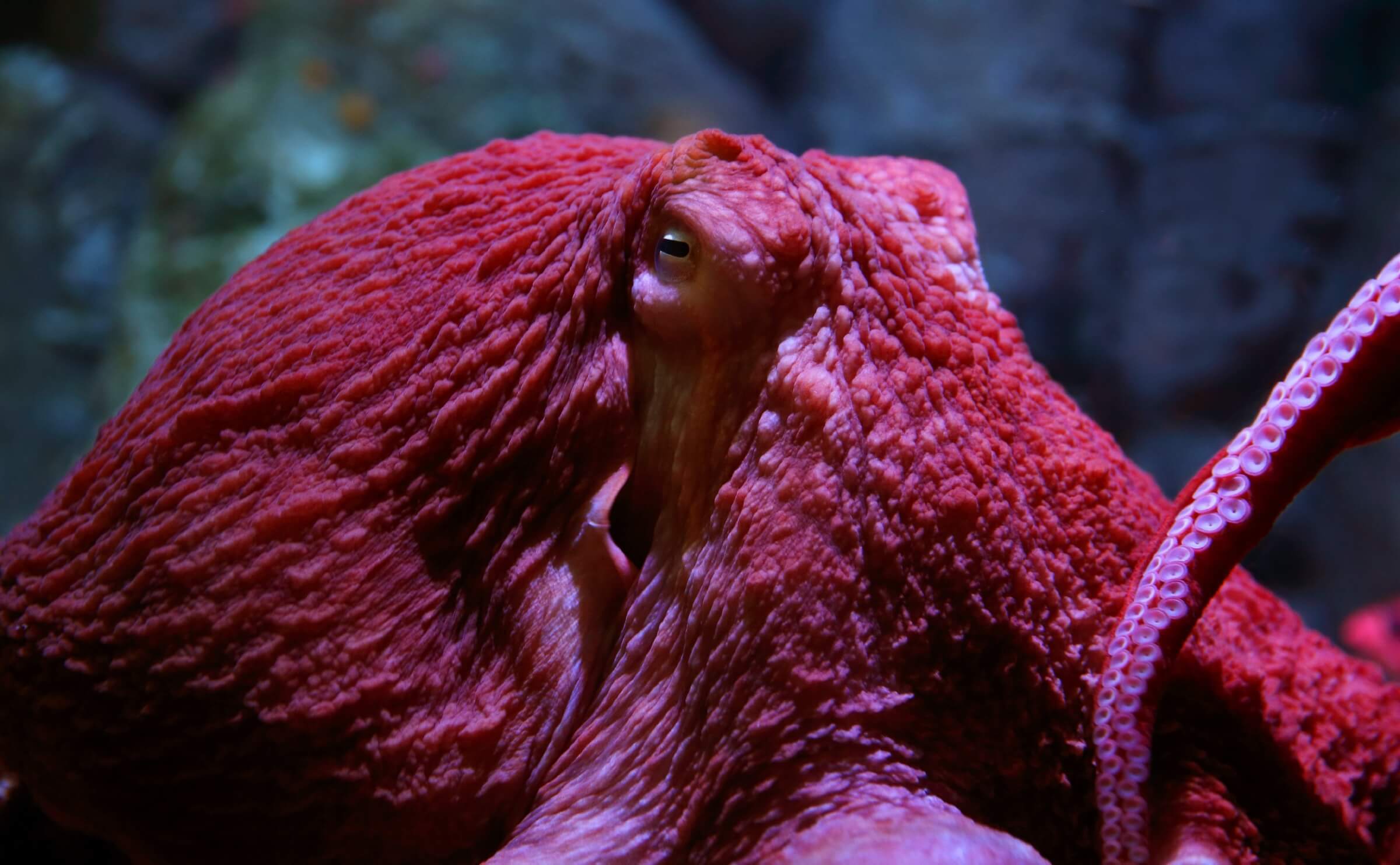
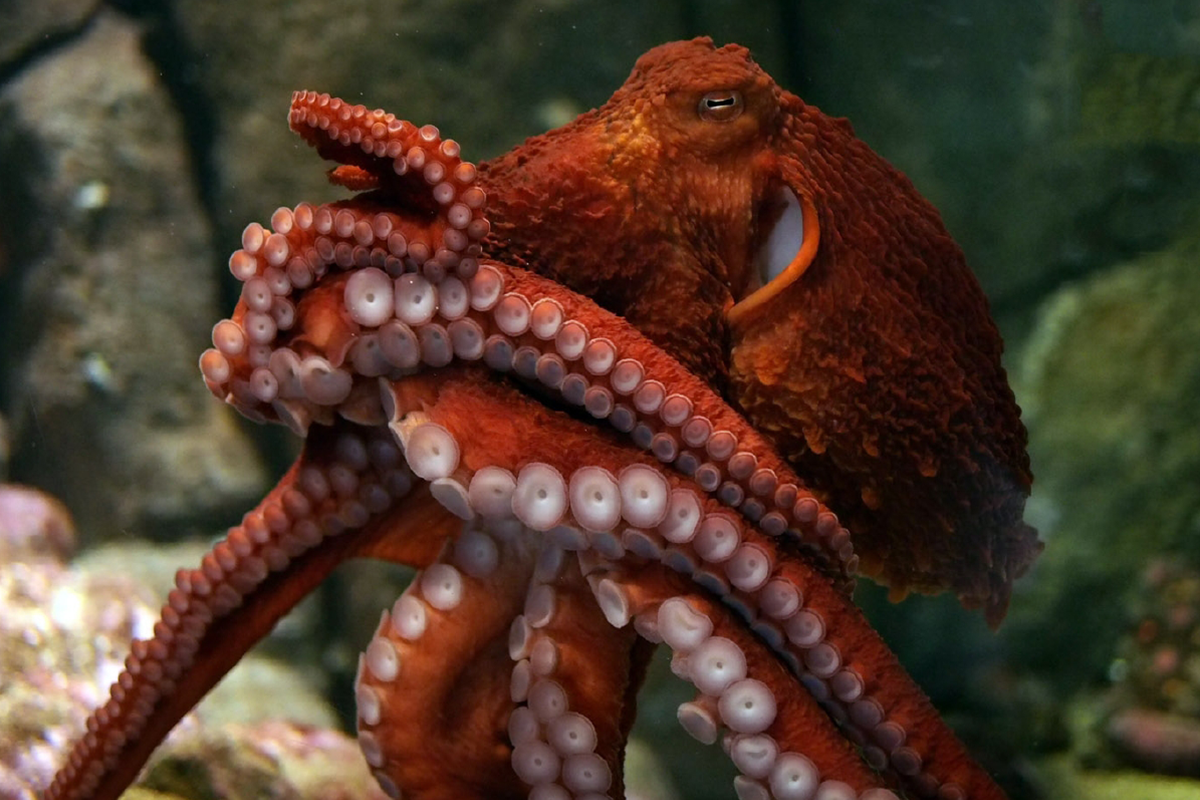
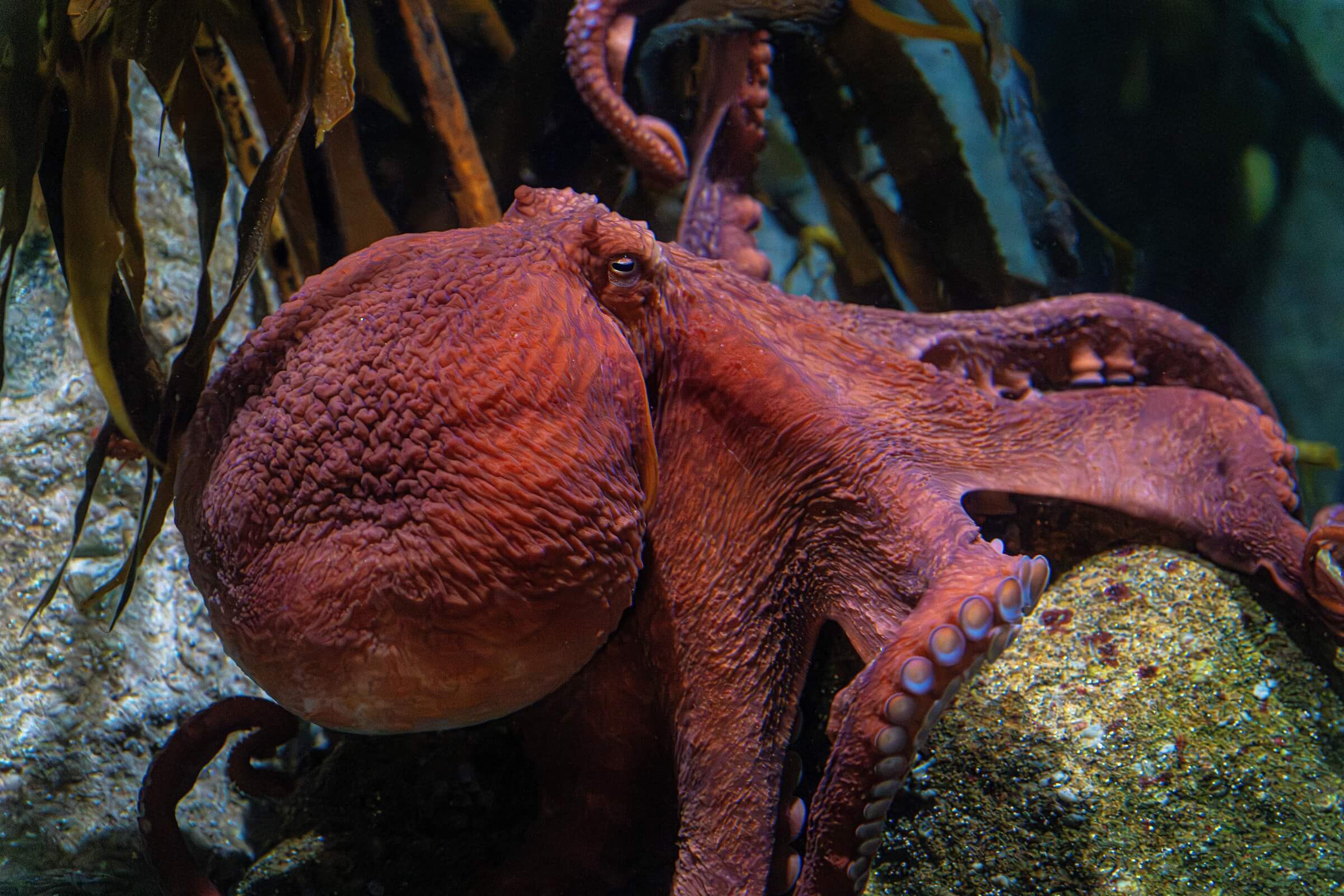
The giant Pacific octopus, the largest octopus species, is usually reddish-pink with a delicate, veinlike pattern when you see it up close, fading to white on the underside of the arms. Its eight arms are covered with suction cups—2,240 of them in females, about 100 fewer in males—which give the octopus an iron grip as well as exquisite senses of taste and smell.
Habitat
The giant Pacific octopus can be found all around the Pacific, from Korea and Japan to the coastlines of Canada, the United States, and Mexico. It lives in chilly Pacific waters 60 degrees Fahrenheit or colder—in both shallow water and depths to 4900 feet (1500 m) and more. If you're lucky and extremely sharp-eyed, you may find one in a tide pool. It is a solitary animal that spends most of its life alone.
Lifespan
The giant Pacific octopus has a long lifespan for an octopus—about three to five years. Octopuses in general usually live no more than a year! A giant Pacific octopus will live a solitary life until the very end, at which point it will seek out a mate, reproduce, and die shortly thereafter.
Astounding anatomy
Size, length, and weight
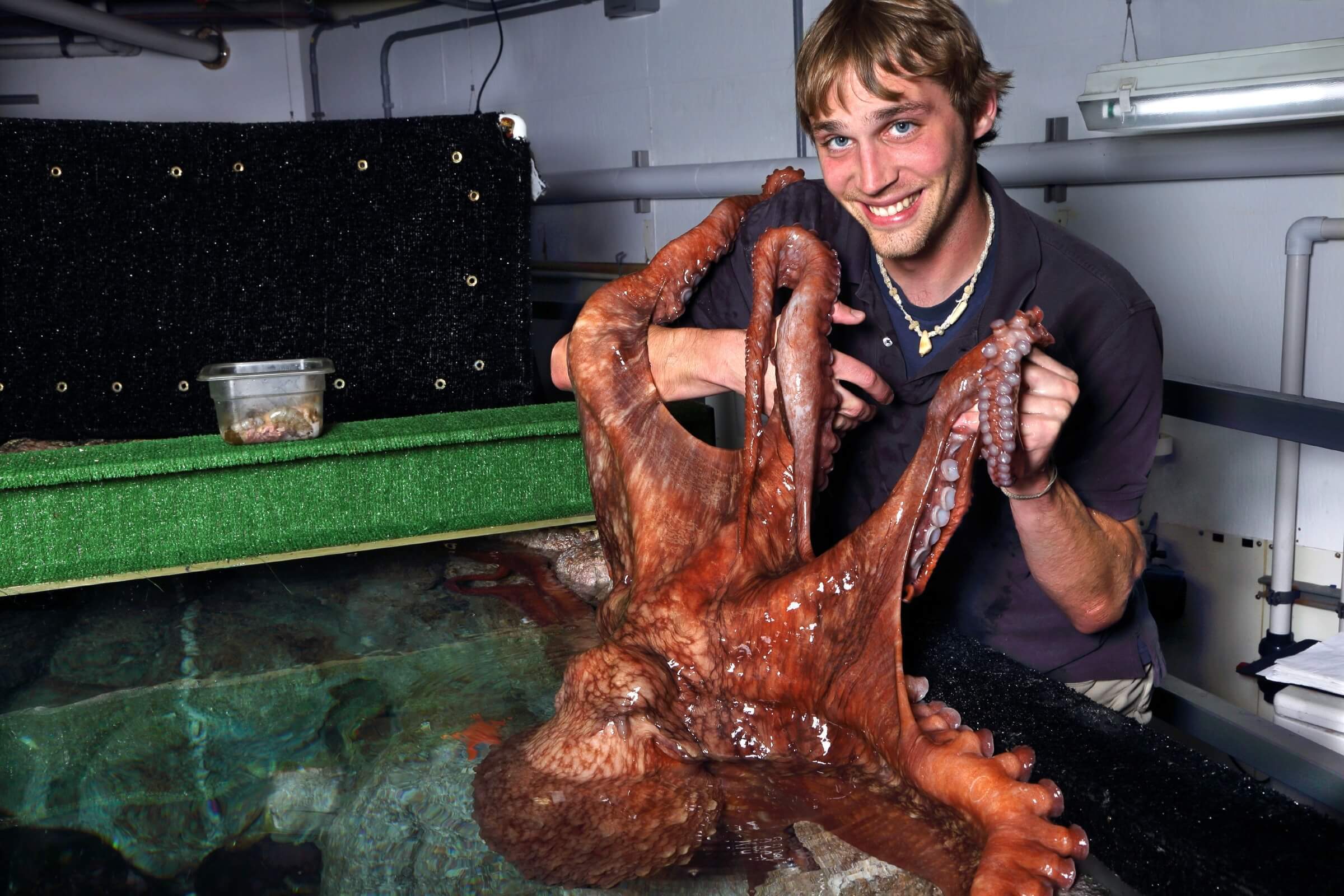
This octopus is impressive in size. A full-grown giant Pacific octopus can weigh more than 50 pounds. The heaviest on record was a creature weighing 200 pounds and measuring nearly 20 feet across.
Shells
The giant Pacific octopus, like all octopuses, is a mollusc—a boneless invertebrate related to clams. It has a soft body, and its shell has been reduced to two small plates where the head muscles anchor, plus a powerful, parrotlike beak. But this is no shell-bound, sedentary mussel! It’s agile, smart, and sneaky—and studded with suction cups.
Diet, beak, and mouth
An adult giant Pacific octopus is a stealthy hunter that eats a wide assortment of seafood—most commonly crustaceans such as crabs, clams, and other molluscs. The giant Pacific octopus catches prey by surprise, using camouflage, jet propulsion, and the sure grip that comes with having eight arms. The octopus can then return to its rocky den to settle down for a leisurely meal.
Once in its den, an octopus uses three different techniques to break into its hard-shelled prey. It may pull the hard-shelled prey apart, bite it open with its beak, or “drill” through its shell. Prey that are difficult to pull apart or bite open are drilled. Secretions from the octopus’s saliva soften the shell. The octopus uses a hard, rough tongue called a radula to scrape away the softened material and create a tiny hole. Through this hole, the octopus secretes a toxin that paralyzes the prey and begins to dissolve the animal’s connective tissue. The prey can then be pulled apart and consumed.
After picking it clean, the octopus discards the shell into a rubbish pile, called a midden, just outside its den. Scientists study these piles to learn about octopus diets.
Camouflage
Lacking a shell, the giant Pacific octopus protects itself with one of the most sophisticated camouflage systems in the animal world—a complex orchestration of pigment cells, muscle fibers, and nerves.
Its millions of elastic cells under the skin, called chromatophores, contain special colored pigments. The octopus uses its sharp eyes to match the patterns and colors of its background nearly perfectly, then adjusts its skin color by stretching the chromatophores open or squeezing them shut from moment to moment. Experiments have shown that the octopus is color-blind, making these feats that much more mystifying.
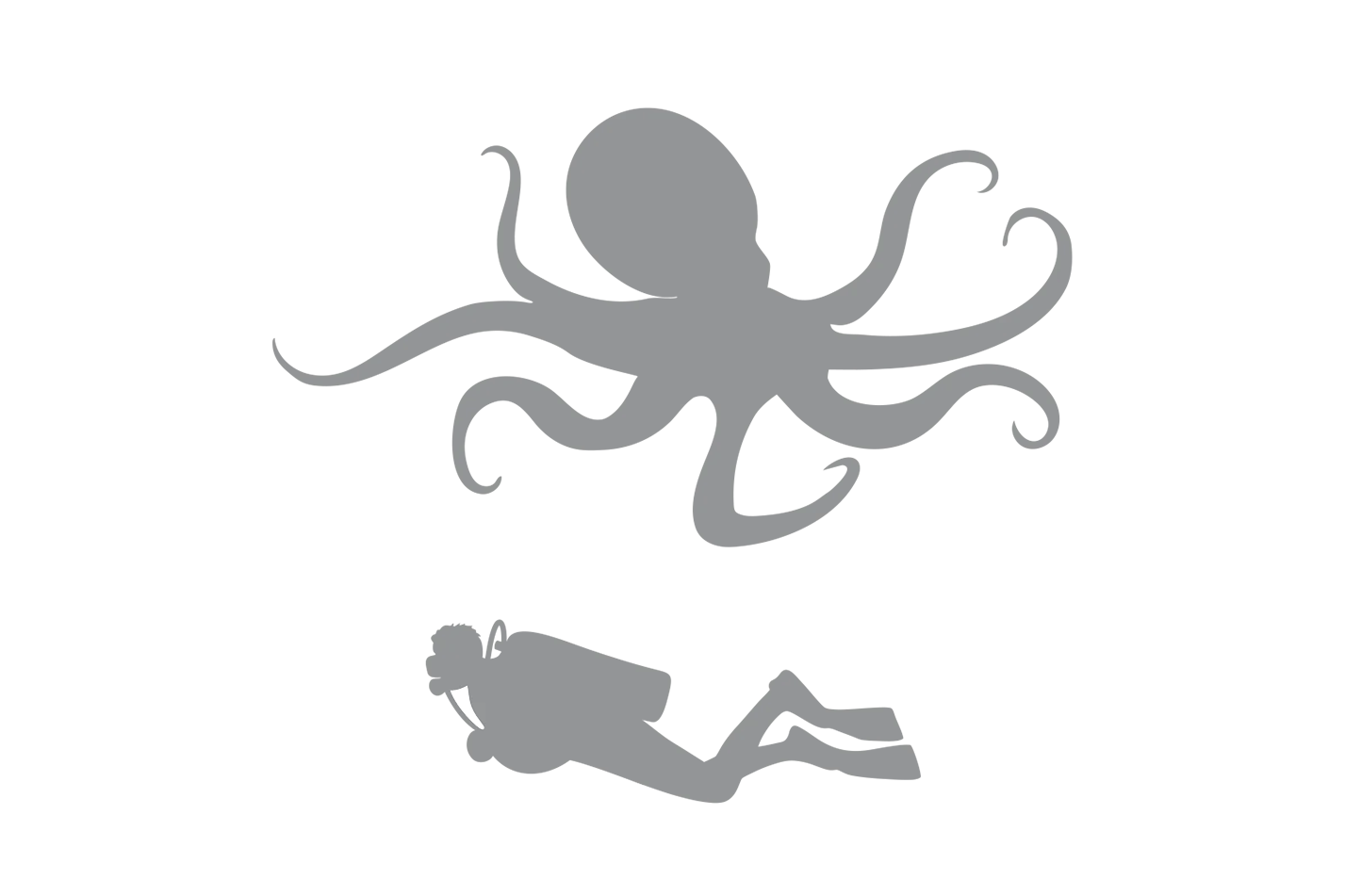
Size
Stretched from tip to tip, a giant Pacific octopus’ arms measure 7 feet (2 m) to 13 feet (4 m) or more.
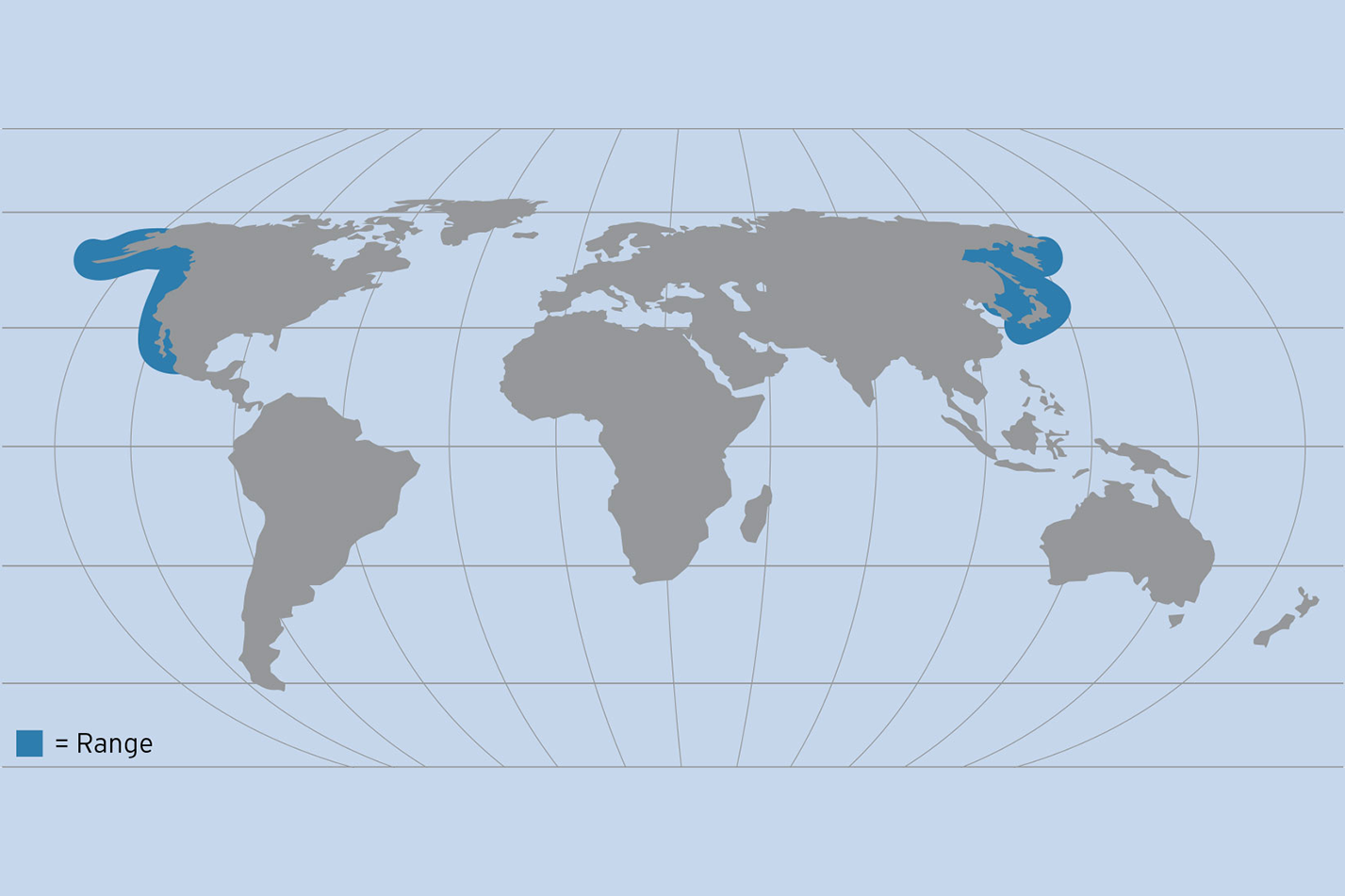
Range
The giant Pacific octopus inhabits coastal waters in the Northern Pacific Ocean—from Korea and Japan to Canada, the U.S. and Mexico.
Jet propulsion
Like most cephalopods, the giant Pacific octopus swims head first, which sometimes makes it look like it’s swimming backward. The octopus fills its mantle with water. The muscles of the mantle then contract to force water through a narrower opening called a siphon, creating movement. This handy ability is why we say octopuses move using jet propulsion.
Life as a newborn giant Pacific octopus
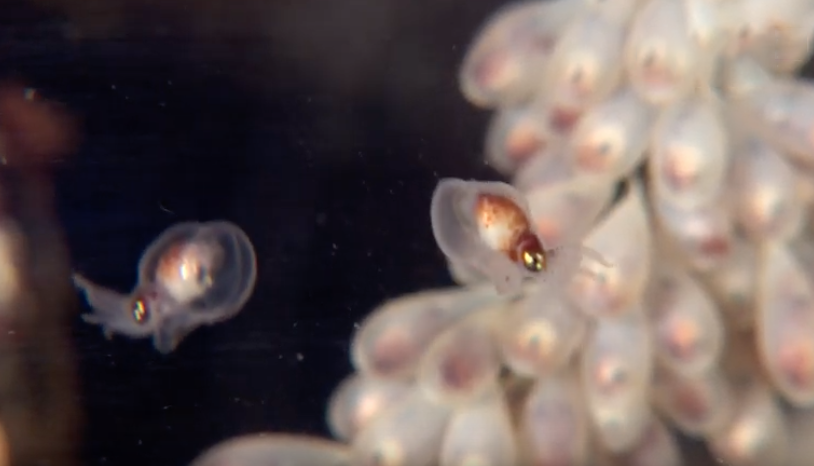
Even though the giant Pacific octopus is the largest octopus in the world, it hatches from an egg the size of a rice grain. The tiny hatchling is just over a quarter-inch long and weighs 22 milligrams (less than one thousandth of an ounce). On day one, its eight little arms already have about 14 tiny suckers each.
It drifts in the surface waters, eating plankton for up to three months, then settles to the seafloor, weighing five grams. It takes another year for a young octopus to grow to about two pounds. By age two, it may weigh around 20 pounds and be ready to mate. Males can mate with several females, while females mate only once.
The octopus will keep growing—up to 50 pounds or more! Until it grows larger than about 10 pounds, life is very dangerous in an ocean filled with predators.
Predators
The giant Pacific octopus lives in an everybody-eats-everybody world. Juveniles are eaten by a variety of marine life, including lingcod, seals, sea otters, wolf eels and halibut. But an adult giant Pacific octopus is more commonly the predator than the prey.
With eight powerful arms, it is not uncommon for the giant Pacific octopus to fight off would-be predators and create a temporary visual barrier with a cloud of ink, allowing the octopus to escape. The giant Pacific octopus avoids these encounters by staying in its protective den dwelling, hiding amongst the kelp forest and using its excellent camouflage capabilities.
Conservation
Population
The giant Pacific octopus is not endangered. Although it has a fairly short lifespan of about three to five years, it produces an average of 50,000 eggs—making its population naturally resilient. And even though it’s popular in Asian and Mediterranean cuisine, it’s not as heavily fished as other seafood. So, happily, the giant Pacific octopus population is in pretty good shape.
Fishing
People eat giant Pacific octopus, and fishermen use octopus as bait for species like Pacific halibut. It’s commercially fished in North America and Japan for both of these purposes. Records show that up to 3,500 tons are fished annually in North America.
Giant Pacific octopus are also frequently caught as bycatch in cod, crab, and prawn fishing. In Alaska, roughly 35,000 lbs (15,876 kg) of giant Pacific octopus are caught as bycatch every year.
Communication
Though the giant Pacific octopus is a bit of a loner, it has many behaviors that allow it to communicate. For example, changing color may be a way to communicate with a mate or scare off predators.
Related videos
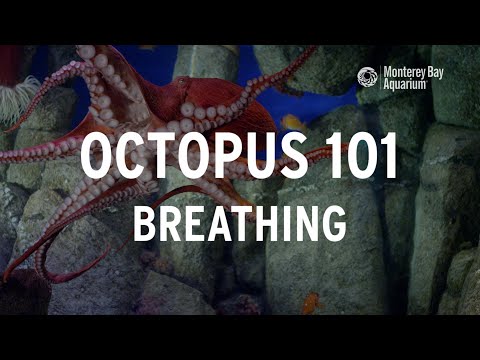
Octopus 101 series



Common questions
How intelligent is the giant Pacific octopus?
These animals are smart and solitary. An octopus is a very intelligent animal that can learn to open jars, solve puzzles and interact with caretakers. Scientists long thought that animals were unlikely to evolve intelligence unless they were social (like us). So the octopus's clever, lonely life in the wild is something of a mystery.
How does it mate?
An octopus typically lives alone, saving up energy for its one chance at mating near the end of its 3 to 5 year lifespan. Then a female chooses a male—typically one much larger than herself—and together they head for a den in deeper water (beyond 164 feet, or 50 m deep). The female returns to shallower depths to brood her eggs. A month or more after mating, she lays 18,000 to 74,000 eggs (occasionally up to 100,000), hanging them from the roof of her den in hundreds of strands of around 250 eggs each.
The octopus mother lays her eggs outside of her body. She is oviparous, in contrast to a viviparous human mother who grows the child inside her body. The mother octopus then lives in the cave for up to six months as the curtain of eggs develops, fanning the eggs with her arms or contracting her body to shoot streams of oxygen- and nutrient-rich water over them. She doesn't eat during this time, and usually dies shortly after the young hatch.
Is it dangerous for humans?
Despite its impressive size, the giant Pacific octopus poses little threat to humans; it typically avoids divers. However, a bite from a giant Pacific octopus contains toxic venom. It is known to cause harm to humans but is not fatal if treated in a timely fashion. As with most wild animals, it's best to maintain distance and never approach a wild octopus.
Does it eat sharks?
The giant Pacific octopus eats sharks opportunistically—sharks come in all sizes and activity levels, so it’s not uncommon. That said, a giant Pacific octopus would prefer to eat clams, cockles, crabs, abalone, scallops, fish, fish eggs and even other octopuses.
Up next in reefs & pilings
Animal
Bat ray
A bat ray flaps its batlike wings to swim through the water to help it uncover prey hiding in the sand.
Keep exploring
Animal
Orange cup coral
After cementing its limestone skeleton to a rock, the orange cup coral is set for life.