

Common murre
Uria aalge
- On view
- Open Sea
- Animal type
- Birds
- Ecosystem
- Coastal waters
- Relatives
- Razorbills, guillemots, puffins; Family: Alcidae
- Diet
- Fishes, squid, krill and marine worms
- Range
- In the U.S. they are found on coastal islands and headlands, from California to Alaska
- Size
- Up to 17 inches (43 cm)
Meet the common murre
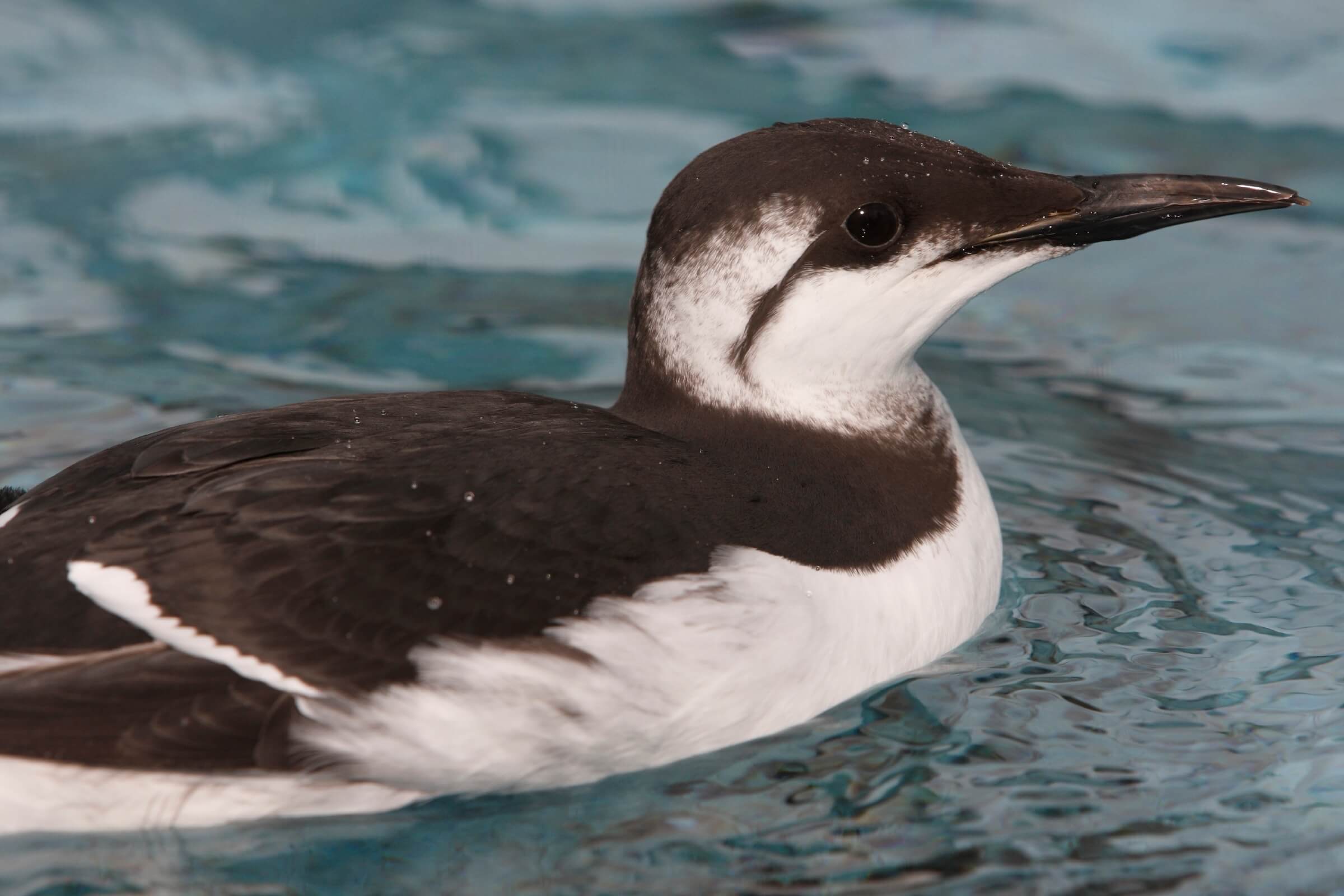
It might be easy to mistake this bird for a penguin with its dark head and wings, white belly and upright posture. But common murres aren't even related to penguins. Common murres are seabirds that spend eight or nine months of each year continuously at sea. Those short wings are perfect for diving and "flying" under water.
Conservation
Because seabirds spend so much time on the surface of the water and because they congregate in large groups for nesting, they're threatened by oil spills.
Murres dive deep—as deep as 590 feet (180 m), although more commonly to 230 feet (70 m). Unfortunately, this puts them in danger of being trapped in gill nets, where they drown.
Pesticide compounds found in the eggshells of murres in California pose a threat to future reproductive success.
Cool facts
- Common murres don't build nests like many birds. Instead, the females lay their eggs on bare rock or soil on steep cliffs. Fortunately, the pear-shaped — or pyriform — eggs stay quite safe there. If an egg is disturbed, it pivots around on its pointed end, whereas an oval egg might roll off the edge of the cliff.
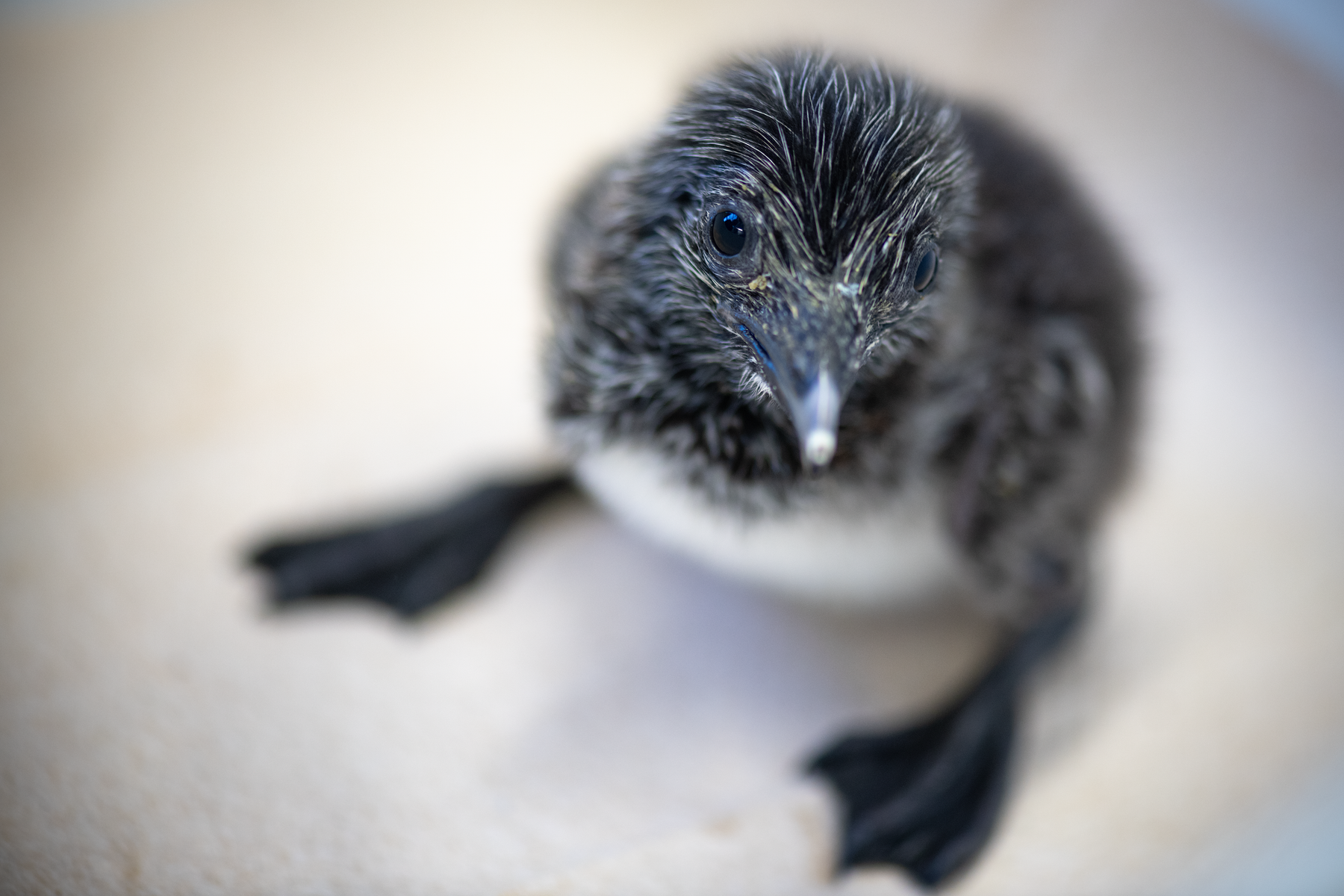
- A murre chick leaves the cliff in dramatic style. Even without proper flight feathers, it hurls itself off the edge and glides down to sea — a drop of 800 to 1,000 feet (244 to 304 m). The male murre escorts the chick out to sea, where he feeds and cares for it until the chick can fly on its own.
Related videos
A murre chick joins the colony
Up next in coastal waters
Animal
Horned puffin
Horned puffins live primarily on the open ocean, but return to coastal nesting grounds in summer to mate and…
Keep exploring
Animal
Sea otter
Beyond their cute faces and fluffy fur, sea otters play an irreplaceable role in their coastal habitats.