

Decorator crab
Loxorhynchus crispatus
- On view
- Kelp Forest
- Animal type
- Invertebrates
- Ecosystem
- Kelp forest
- Relatives
- Kelp crabs, sheep crabs, dungeness crabs, other crabs; Family: Epialtidae
- Diet
- Algae, sponges, small crustaceans, bryozoans
- Range
- Northern California to Baja California
- Size
- Up to 5 inches (12.7 cm)
Meet the decorator crab
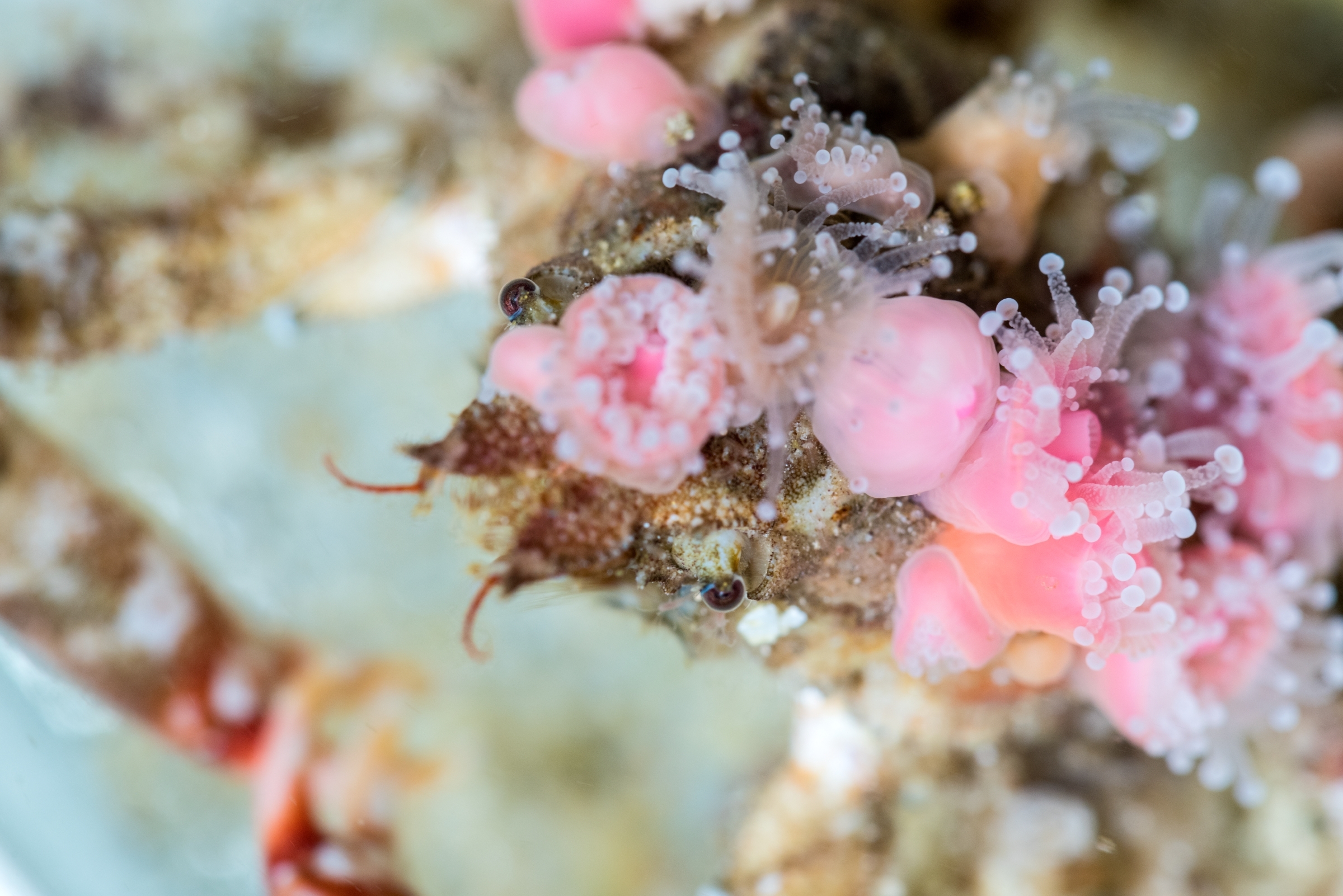
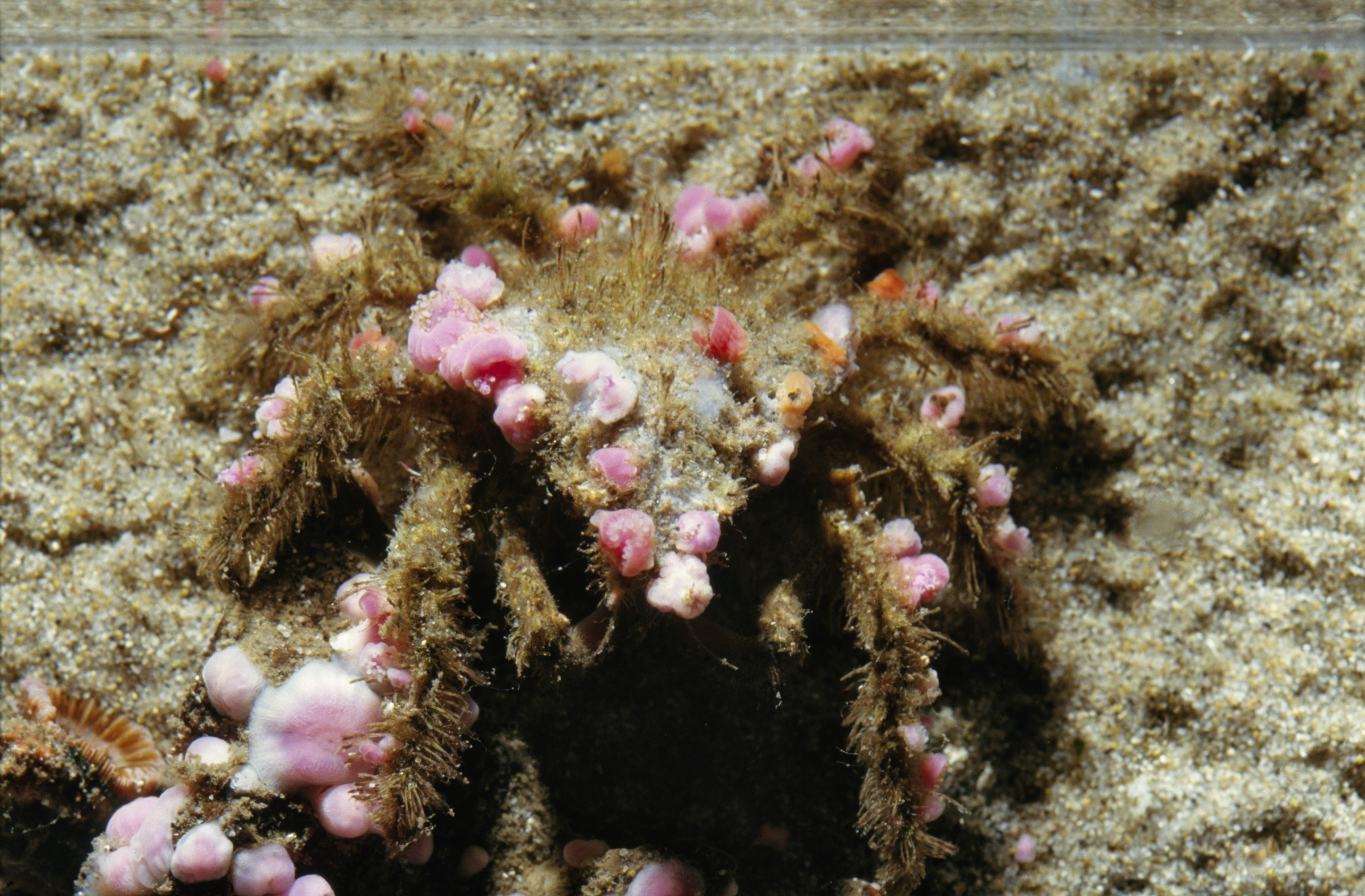
If you see a rock moving in one of our exhibits, look closer. That might be a decorator crab that has camouflaged itself! The crab selects pieces of algae and small animals from its habitat and fastens them to hooked, Velcro-like bristles called setae on the back of its carapace, or upper shell.
Natural history
As long as the crab stays in the neighborhood, it blends in and looks at home. Large decorator crabs don’t decorate as much as smaller crabs. But plants and animals may still settle, take hold, and grow on the decorator crab’s shell without help.
Conservation
Oil spills and the runoff of pesticides, used oil, paint solvents, and other chemicals endanger the decorator crab's coastal habitat. As stewards of the ocean, we must carefully dispose of hazardous materials like these or, better yet, use environmentally-safe products.
Cool facts
- The decorator crab is an important food source for some fishes, including croakers and cabezon.
- A crab’s shell doesn’t grow, but the crab does. To solve this dilemma it must molt as it grows, shedding its old exoskeleton and forming a larger one. The old shell loosens as a new one forms beneath it. When the old shell splits, the soft-bodied animal crawls out. Before its new shell hardens, the crab absorbs water and expands to a size larger than before the molt. While the new shell is hardening, the crab hides from predators. Once they’ve reached sexual maturity, decorator crabs stop molting.
- The decorator crab recycles its living decorations during the molting process. It removes the anemones, sponges and other decorations from its old shell and uses them to adorn its new shell.
Up next in kelp forest
Animal
Garibaldi
Swimming through dark reefs and kelp forests, the garibaldi is a bright jolt of glowing orange.
Keep exploring
Animal
Leopard shark
Leopard sharks live in shallow waters of bays and estuaries and occasionally patrol the kelp forest.