

Flapjack octopus
Opisthoteuthis sp
- Not on exhibit
- Animal type
- Octopus & kin
- Ecosystem
- Deep sea
- Relatives
- Cirrate octopuses
- Diet
- Small worms, crustaceans, and other invertebrates
- Range
- Worldwide
- Size
- Up to 20 inches (50 cm)
Meet the flapjack octopus
Researchers exploring the deep sea have spotted this little octopus resting on the mud with an orange body resembling a lumpy pancake. The flapjack octopus can swim like a jelly and float like an umbrella! In all its shapes, the flapjack octopus is cute—scientists even considered naming it adorabilis.
Not like other octopuses
The flapjack octopus belongs to a unique group of octopuses called cirrate octopods. These unique cephalopods sport webbing between their arms, making them look like deep sea umbrellas when they spread out and float down to the seafloor. Cirrate octopuses also have a mantle with a pair of fins that look like miniature elephant ears. These fins aren’t just cute, they help the octopus swim.
Unlike many other octopuses, cirrate octopuses can’t camouflage by changing their skin texture or color. They also lack ink sacs and radula, the food-scraping structure of tiny teeth found in the mouths of most octopuses. They do, however, still have beaks.
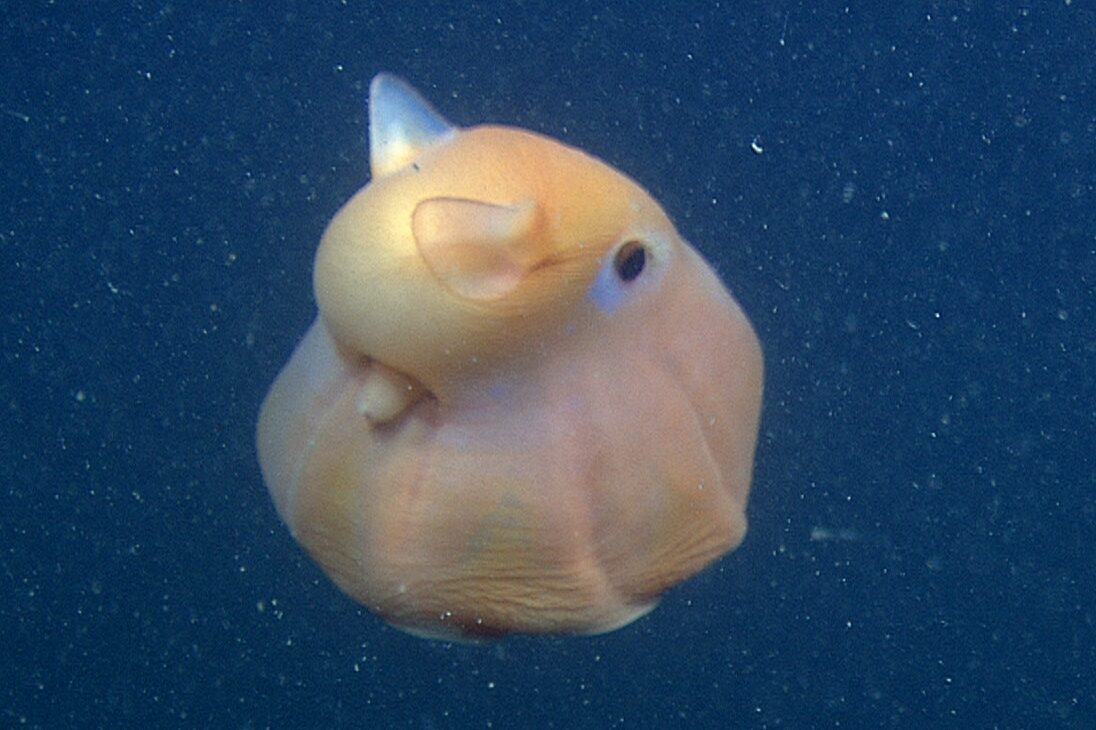
MBARI researchers observed this flapjack octopus at a depth of approximately 1,180 feet (360 meters).
© MBARI
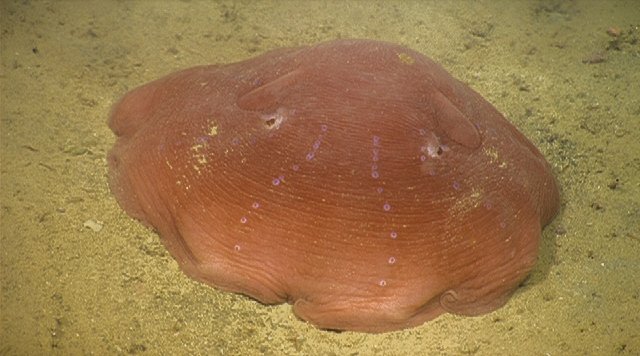
This flapjack octopus photographed by MBARI looks like a fluffy pancake resting on the seafloor.
© MBARI
A pancake that shape-shifts into an umbrella
The domed and lumpy gelatinous body of this octopus looks like an uncooked pancake on the seafloor where they often rest.
The flapjack octopus swims by pulsating their bodies and contracting their webbed arms similar to the movement of a jelly. Despite the effort of using their bodies, arms, and fins to swim, they’re still not strong swimmers. When they grow tired, they spread their arms and use their unique webbing to drift down to the seafloor and save energy.
Related videos
An octopus in motion

Watch how this cephalopod pulses their way through the deep sea and rests on the muddy, rocky seafloor.
Habitat
Researchers frequently observed one species of flapjack octopus at the muddy, mucky seafloor of Monterey Bay. This octopus was spotted most often in areas that were silty without many rocks.
Diet
The flapjack octopus eats worms and other small invertebrates that live hidden in the seafloor sediment. Finger-like filaments called cirri line the flapjack octopus’ arms. To find prey, they probe the seafloor with their cirri and sucker discs to stir up sediment and find morsels hidden in the mud. This octopus will trap prey with their arms and move the food to its beak with their suckers.
Defense strategies
Since the flapjack octopus lacks skin-changing camouflage abilities, they use a simpler strategy: hiding in plain sight! To the human eye, their warm color scheme makes the flapjack octopus stand out. But to other deep-sea animals, those same colors are nearly invisible! Red light has a shortest wavelength that doesn’t reach the deep sea, so their red-to-yellow pigmentation disappears into the darkness.
A flapjack octopus can evade predators by making a quick escape by pulsing their bodies and jet-propel themselves away with their funnel. They can use their fins to steer themselves into a current that can carry them away to safety.
Predators
Sharks, fishes, fur seals, and sperm whales are known predators of cirrate octopuses like the flapjack.
Want to see amazing deep-sea creatures up close? Visit our exhibition, Into the Deep: Exploring Our Undiscovered Ocean (En lo Profundo: Explorando Nuestro Océano Desconocido).
Up next in deep sea
Animal
Fire star
This animal holds up its bright-orange arms to catch dinner drifting in the currents.
Keep exploring
Animal
Giant siphonophore
When startled, the giant siphonophore glows with bright blue light.