

Humpback whale
Megaptera novaeangliae
- Not on exhibit
- Animal type
- Marine mammals
- Ecosystem
- Open ocean
- Relatives
- Other baleen whales; Order: Cetacea; Family: Balaenopteridae
- Diet
- Krill, anchovies, herring, sand lance and invertebrates
- Range
- All oceans
- Size
- Up to 62 feet (18.9 m), 53 tons (48,081 kg)
Meet the humpback whale
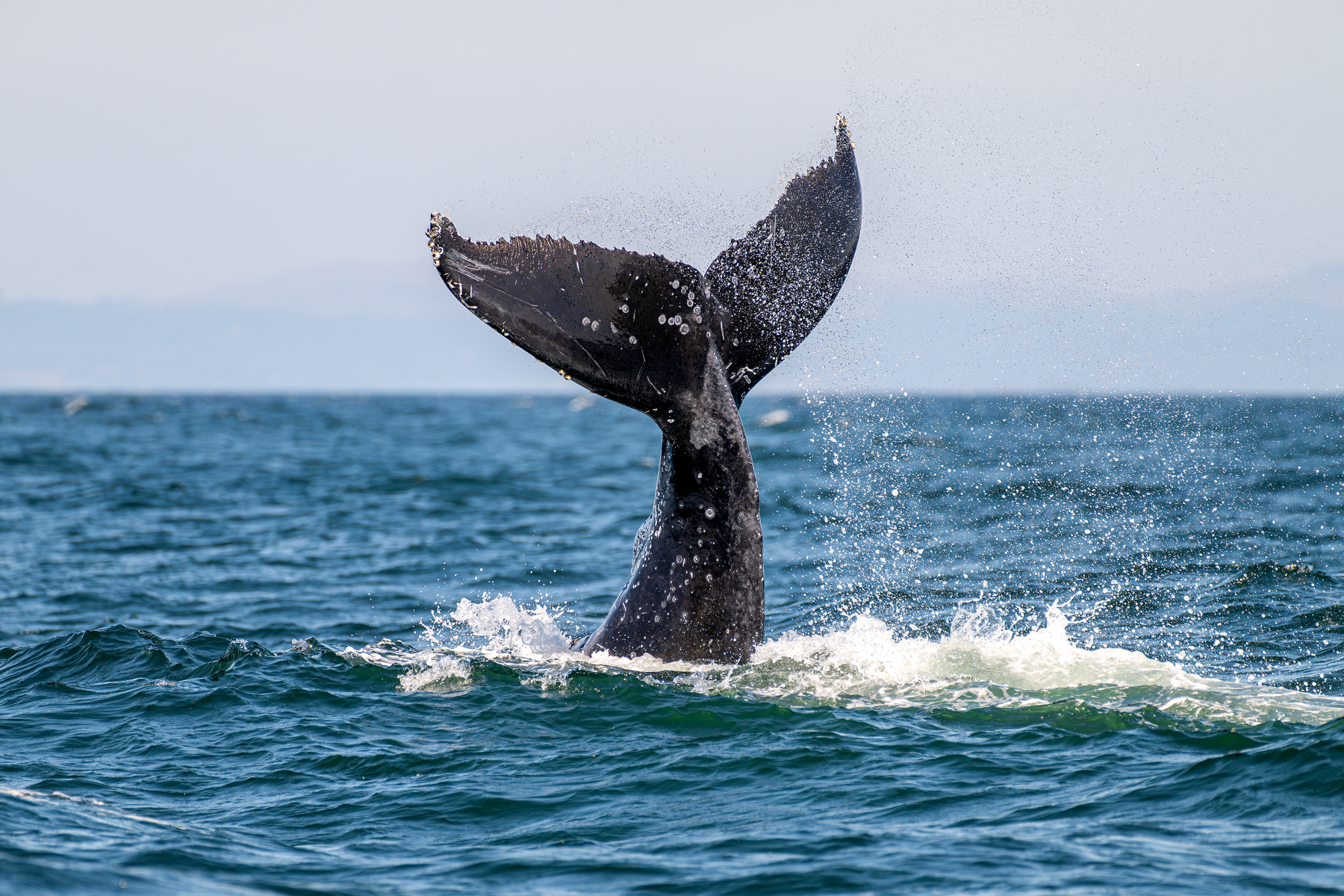
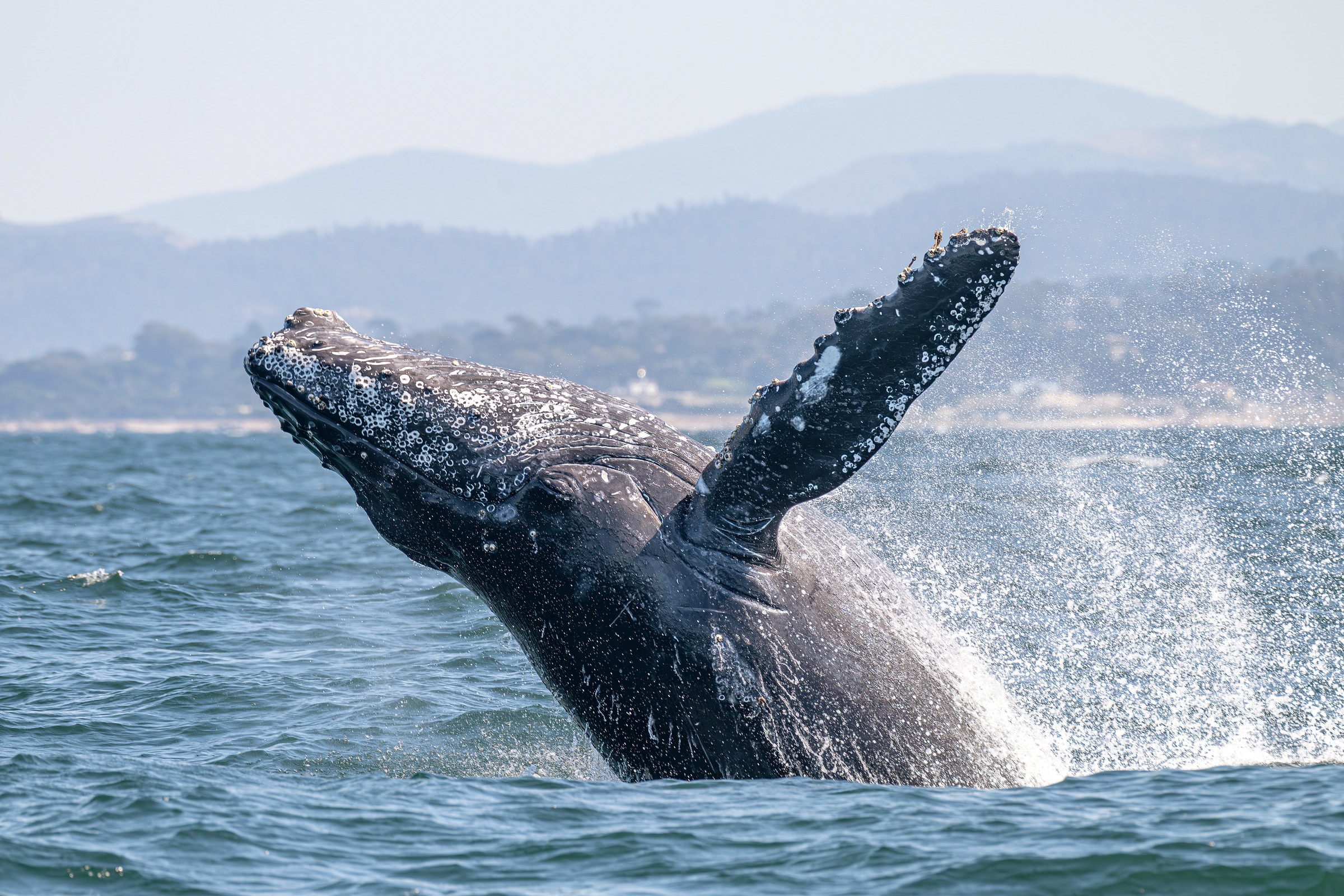
The humpback whale is known for its distinctive knobby head and spectacular breaching and tail fluking displays. An animated acrobat, it’s capable of launching its school-bus-sized body entirely out of the water.
Watch in real time
Monterey Bay Cam
Check out this live cam – Monterey Bay CamStatus: Least concern
Least concern(active)
Near threatened
Vulnerable
Endangered
Critical
Extinct in wild
Extinct
Natural history
A species of baleen whale, the humpback migrates thousands of miles each year, travelling from its summer feeding grounds off the California and Oregon coasts to warmer winter breeding waters closer to the Equator. Some whales make a round trip journey of up to 10,000 miles.
Humpbacks have the most complex and varied songs of any whale species. Their haunting calls carry for miles beneath the sea.
In Monterey Bay
Humpbacks that visit the Monterey Bay spend their winters in the warm waters off Mexico. Humpbacks, including mothers with newborn calves, travel thousands of miles to feast on krill and schooling fish in our open waters. These mega mammals are in the Monterey Bay from late April through early December.
Often spotted by whale watching boats, humpbacks can sometimes be seen from the Aquarium’s ocean-view decks. The unique white patches on their tail flukes, combined with notches in the flukes and other unique markings, make it possible to identify individual humpback whales, and thus track their movements across their entire lifespans. We see some whales return to the Monterey Bay year after year.
Conservation
Hunted to the brink of extinction, the humpback was thought to have been reduced to less than 10 percent of its original numbers before a hunting moratorium was introduced in 1966. It was listed on the Endangered Species Act in 1973. Current threats to the humpback include ship strikes, entanglement from fishing gear and illegal hunting.
Another threat is the growing rate of plastic pollution. A November 2022 study showed that per day, a krill-obligate blue whale may ingest 10 million pieces of microplastic, while a fish-feeding humpback whale likely ingests 200,000 pieces of microplastic. Moreover, gray whales and some populations of humpback whales suction feed in the sediment to extract invertebrates. As the seafloor is a primary sink for synthetic marine debris, there may be considerable risk to gray and humpback whales feeding in the substrate.
For species like whales that are struggling to recover from historical whaling alongside other anthropogenic pressures, these findings show that more attention needs to be paid to the threatening presence of plastics in our waters.
Related videos
Humpback feast
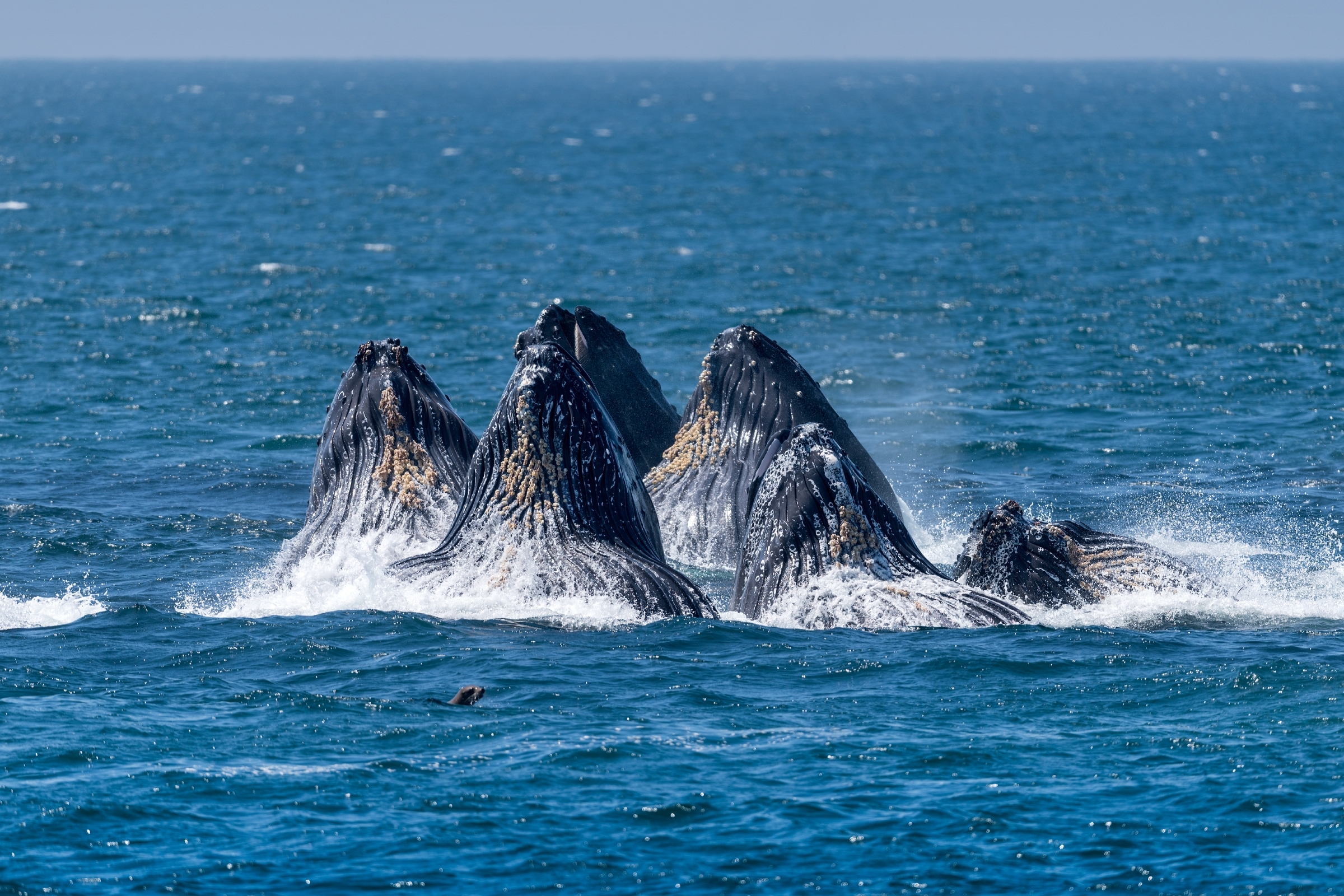
Watch as humpbacks leap for their lunch in Monterey Bay.
Cool facts
- Instead of teeth, this filter-feeder has baleen plates that overlap to form a dense net used to strain millions of small shrimp-like animals.
- Humpbacks may work as a team when hunting for schooling fish. Once underwater, several humpbacks encircle the fish with a “bubble net”—a ring of bubbles blown from their blowholes. Others position themselves beneath the school and then rise, forcing the fish toward the surface. The humpbacks then lunge up through the concentrated school of fish, feasting on thousands of prey in a single gulp with their cavernous mouths.
- The pectoral flippers can be up to 15 feet (4.6 m) long—one-third of their body size.
- Killer whales are known to prey on both calves and adult humpback whales.
- Females are larger than males of this species.
- At birth, a calf can measure up to 15 feet (4.6 m) long and weigh about 1,500 pounds (680 kg).
Up next in open ocean
Animal
Long-beaked common dolphin
This highly intelligent, gregarious animal is very active at the ocean’s surface, frequently swimming by boats
Keep exploring
Animal
Moon jelly
This dreamy jelly is named for their translucent, moon-like bell.