

Lion's mane jelly
Cyanea capillata
- Not on exhibit
- Animal type
- Invertebrates
- Ecosystem
- Open ocean
- Relatives
- Egg yolk jelly; Family: Cyaneidae
- Diet
- Tiny crustaceans, zooplankton, small fishes, moon jellies
- Range
- Arctic and North Pacific Ocean from Alaska to Washington; rarely seen as far south as California
- Size
- Between 19 inches (50 cm) and 3 feet (1 m) in bell diameter
Meet the lion's mane jelly
This colorful jelly has a very toxic sting, but reports of human fatalities are few. They're considered a giant jelly; their bells that can reach about three feet (1 m) in diameter and their tentacles can grow to more than 100 feet (30.5 m) long. That's longer than a 90-foot (27.4 m) blue whale, the largest mammal on Earth, but smaller than the 130 feet (39.6 m) of a giant siphonophore (a gelatinous relative). The largest specimens are found in Arctic waters.
Watch in real time
Open Sea Cam
Check out this live cam – Open Sea CamConservation
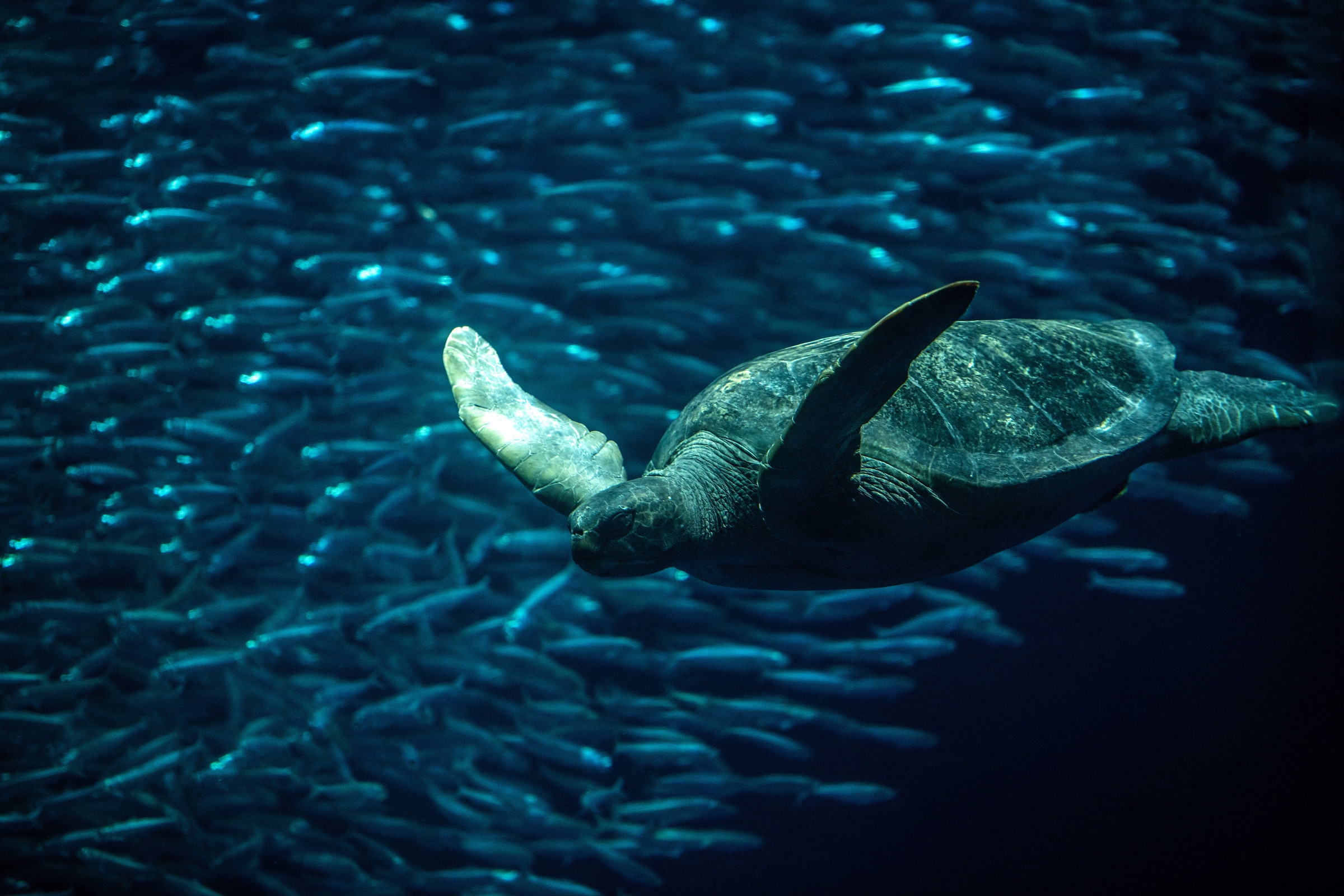
Leatherbacks are unique among sea turtles in that their primary food is jellies like the lion's mane. These turtles accidentally consume drifting plastic debris, confusing it for their gelatinous prey. You can help the sea turtles, jellies, and countless other species by cutting down on single-use plastic like disposable takeout containers.
Cool facts
- A Cyanea sea jelly was the murder weapon in a Sherlock Holmes mystery called "The Adventure of the Lion's Mane."
- Although the lion's mane's sting can be potentially fatal, most swimmers who encounter this gentle beast survive to tell the story.
- Some fishes, such as the southern harvestfish and gulf butterfish, are resistant to the toxin of the lion's mane. They're often found nibbling on this jelly's bountiful bell.
Up next in open ocean
Animal
Pelagic stingray
This ray prefers cruising open ocean waters to spending time on the sandy seafloor.
Keep exploring
Animal
Moon jelly
This dreamy jelly is named for their translucent, moon-like bell.