

Pelagic stingray
Pteroplatytrygon violacea
- On view
- Open Sea
- Animal type
- Sharks & rays
- Ecosystem
- Open ocean
- Relatives
- Round stingrays, diamond stingrays; Family: Dasyatididae
- Diet
- Small pelagic fishes, squid, jellies, shrimp
- Range
- Warm-temperate and tropical seas, deep ocean and inshore open bays
- Size
- 36 inches (1 m) maximum disc width
Meet the pelagic stingray
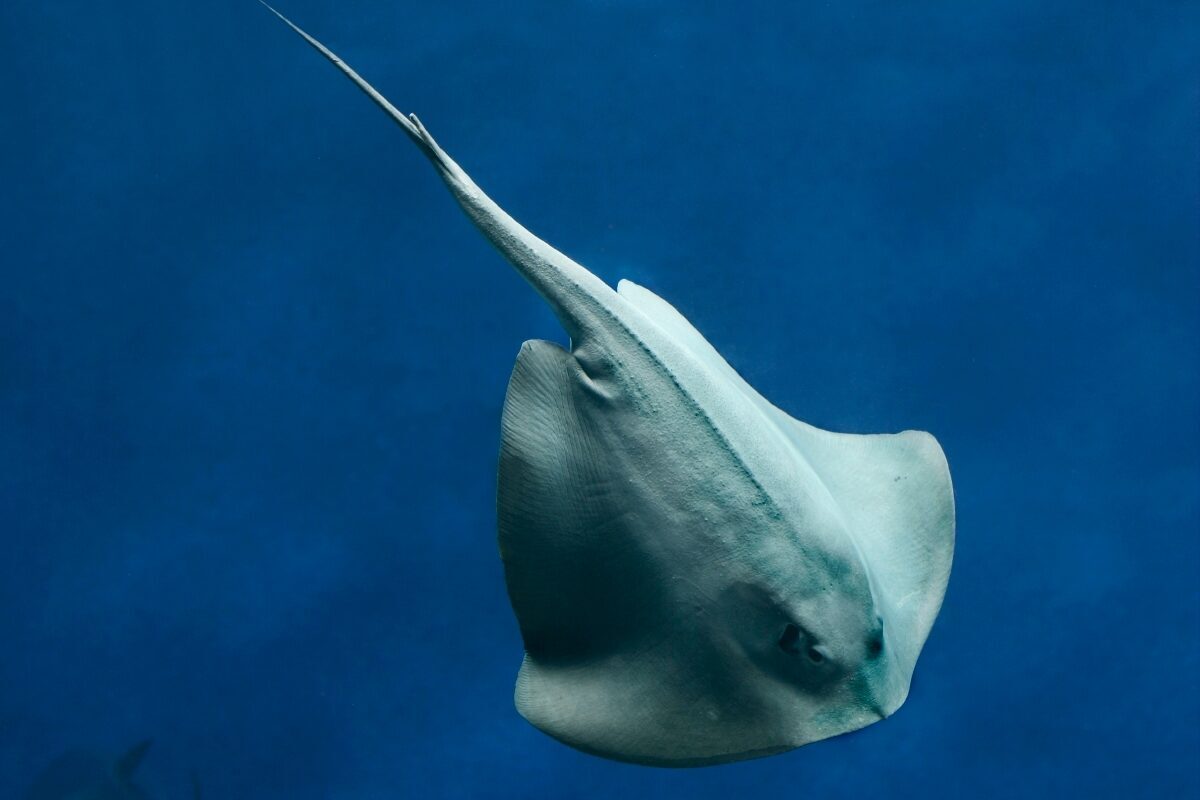
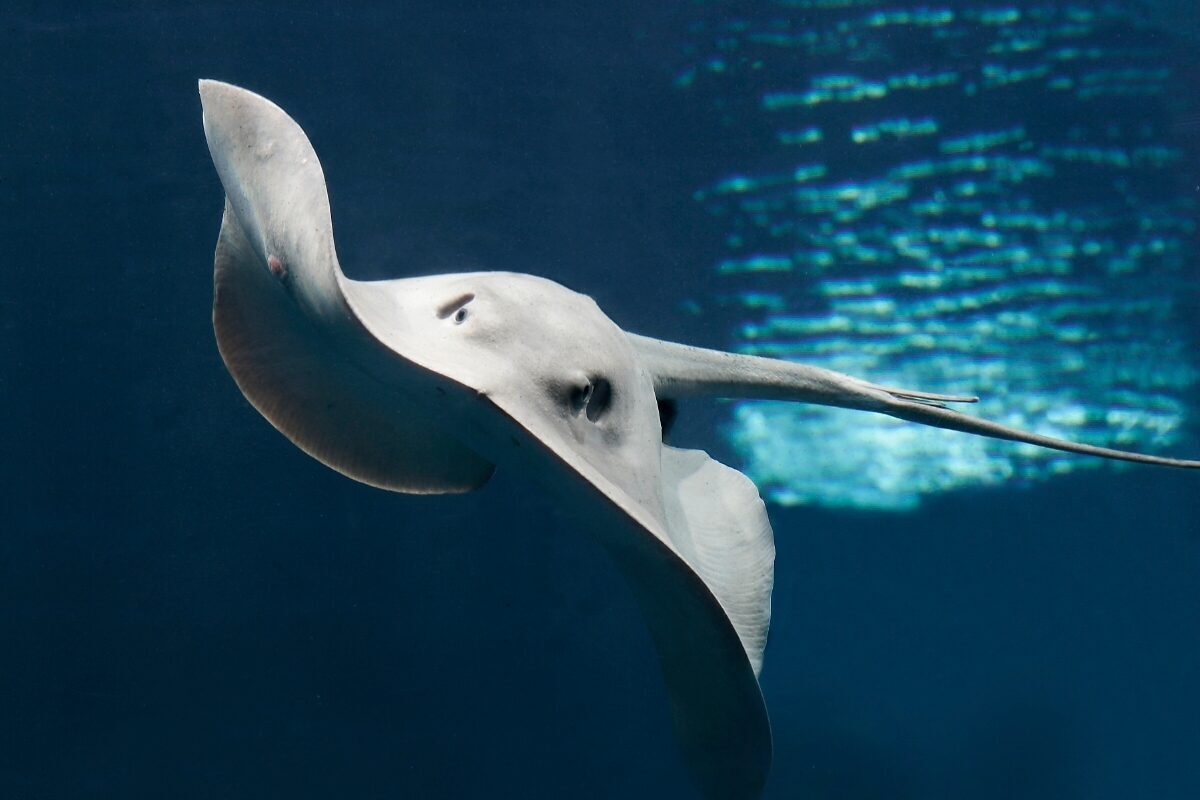
The pelagic ray travels across open ocean waters, unlike most other types of ray that spend their time buried on the sandy seafloor. Its coloration — dark purplish above and purplish to gray underneath—makes the rays harder for predators to see from above. Their dark backs blend with dark waters below, making these rays almost "disappear" from view.
Anatomy
The pelagic ray is distinguished by its diamond-shaped body with rounded snout and streamlined eyes.
Conservation
Pelagic rays are captured as bycatch on pelagic longlines or driftnets.
To pelagic rays, sea turtles and other animals that eat jellies, drifting plastic bags look like their natural prey. This can be a deadly mistake. Animals can choke as they try to swallow the bags, or slowly starve as the plastic clogs their stomachs. You can help save rays just by picking up plastic bags at the beach and making sure trash is disposed of far from the ocean.
Cool facts
- You'll find the ray's venom glands in paired grooves running the length of its barbed poison spines. Its sting—which is extremely painful—is usually not fatal.
- Often seen feeding upside down, a ray has many small, very sharp teeth for grasping pelagic prey. Sometimes a pelagic ray uses its pectoral fins to envelope and manipulate food into its mouth.

MeditOceans
Relax into the Open Sea
Sink into deep blue relaxation with a guided meditation in the Open Sea exhibit.
Start relaxing – Relax into the Open SeaUp next in open ocean
Animal
Crown jelly
The crown jelly distinguishes themself with an array of spikes encircling a broad bell.
Keep exploring
Animal
Moon jelly
This dreamy jelly is named for their translucent, moon-like bell.