

Northern anchovy
Engraulis mordax
- On view
- Kelp Forest, Open Sea
- Animal type
- Fishes
- Ecosystem
- Coastal waters
- Relatives
- Family: Engraulidae
- Diet
- Phytoplankton, zooplankton (including copepods, arrowworms and krill), larval fishes
- Range
- British Columbia to Baja California, Gulf of California
- Size
- Up to 9 in. (23 cm)
Meet the northern anchovy
Anchovies are small baitfish that supply supper for many other animals. They're an important part of the open ocean food web, feeding on microscopic morsels then becoming a meal for passing fishes, marine mammals, and seabirds.
Watch in real time
Open Sea Cam
Check out this live cam – Open Sea CamWhy anchovies school
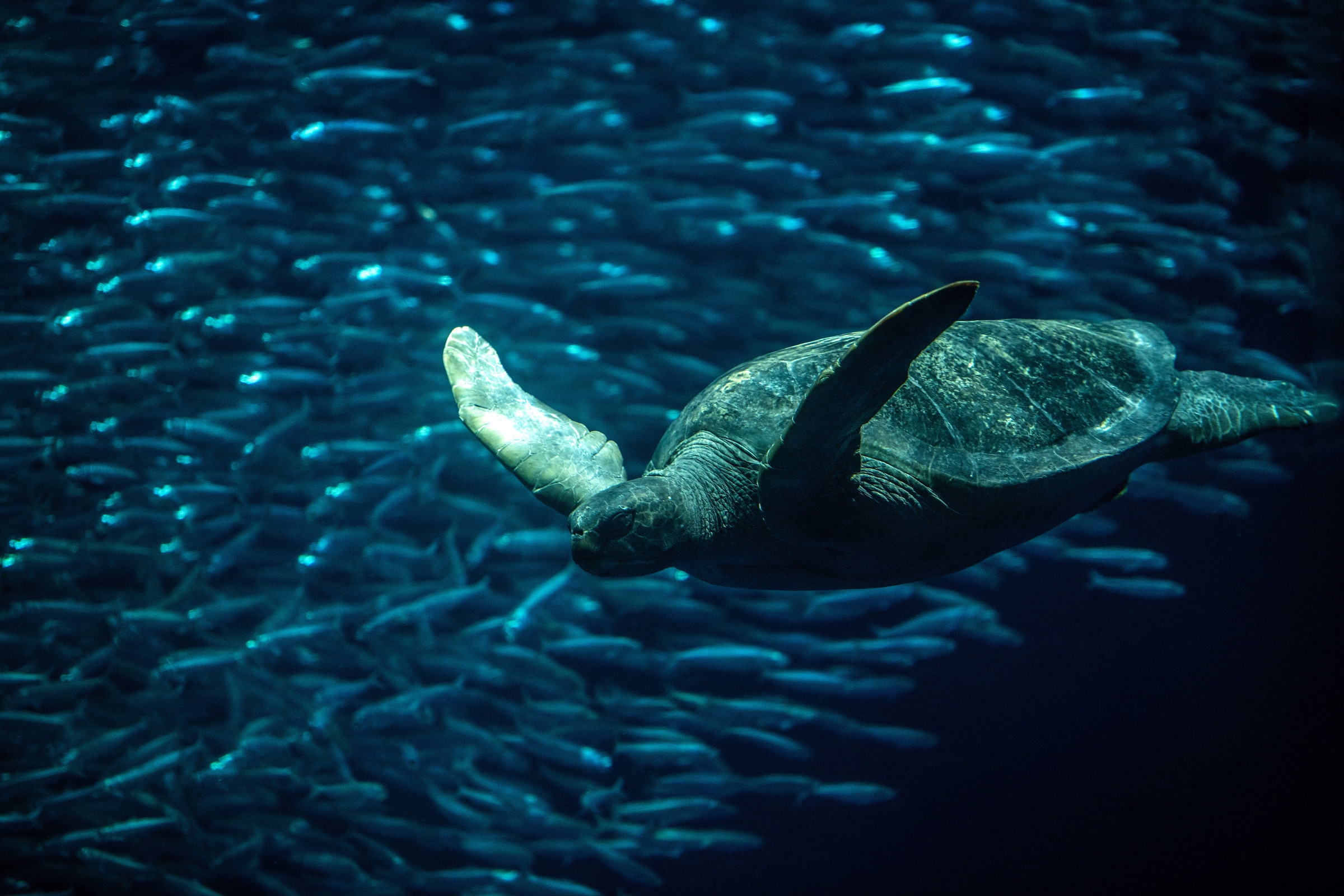
To avoid hungry predators, anchovies swim in schools of thousands. With all those moving targets, it’s hard for a predator to focus on just one.
The difference between anchovies and sardines
Visitors often ask us how to tell the difference between anchovies and sardines on exhibit. First, sardines have a row of distinctive black spots running the length of their bodies. Second, sardine schools tend to move in darting motions, while anchovy schools form a vertical funnel or “swirl.” And third, anchovies tend to swim with their mouths wide open gathering food.
Conservation
Baitfish like anchovies and sardines tend to flourish one year in the Monterey Bay, and disappear the next. No one knows for sure why this occurs. In the 1940s and 1950s, overfishing certainly played a role, but ocean currents that transport nutrients and affect the production of larvae may also be a factor.
At the aquarium
How do we keep our exhibits topped up with baitfish like anchovies? Local fishermen are key. We've developed relationships with local fishermen who specialize in these fish and know what we need. These relationships are fitting, since the Aquarium is built on the site of a former cannery!
Anchovies may be small, but collectively they use a lot of oxygen. This is because there are so many tightly packed fish in a given volume of water. Consequently, our aquarists are careful to maintain high oxygen levels in the water and have plentiful backup supplies to ensure that these fish thrive.
Cool facts
- Anchovies frequently seem to be “yawning”—that's how you know it’s mealtime. They’re opening wide to strain tiny plankton from the water.
- Life is short for an anchovy. They rarely live more than four years, but some as old as seven have been recorded.
- A lot of other species rely on healthy anchovy populations. For instance, the reproductive success of California brown pelicans and terns correlates with anchovy abundance.
Up next in coastal waters
Animal
Pacific spiny dogfish
As their name suggests, spiny dogfish sharks sport sharp, venomous (poisonous) spines in front of each dorsal…
Keep exploring
Animal
Sea otter
Beyond their cute faces and fluffy fur, sea otters play an irreplaceable role in their coastal habitats.