

Pacific bluefin tuna
Thunnus orientalis
- Not on exhibit
- Animal type
- Fishes
- Ecosystem
- Open ocean
- Relatives
- Yellowfin, bigeye and albacore tuna; mackerel; bonito; Family: Scombridae
- Diet
- Small fish, crustaceans, octopus, squid
- Range
- Pacific Ocean
- Size
- Up to 10 feet (3 m) and 1,000 pounds (450kg)
Meet the Pacific bluefin tuna
At up to 10 feet long and weighing over half a ton, Pacific bluefin tuna are among the world’s largest fish. These tuna are highly prized on the seafood market and can sell for tens of thousands of dollars apiece. After being overfished to the brink of collapse, these fish are making a comeback.
All about the Pacific bluefin tuna
A need for speed
One of three bluefin species, the Pacific bluefin tuna is a powerful swimmer—built for endurance and speed. This highly migratory fish can travel thousands of miles at a stretch, crossing the Pacific Ocean to reach spawning grounds in as little as fifty-five days.
Getting warmer
The bluefin tuna is known to dive to chilly depths of 1800 feet (550 meters) and navigate through icy northern waters during their migrations. Unlike most fish, a bluefin tuna’s blood temperature can be warmer than the water around it. Scientists have shown that this added warmth produces more efficient metabolic rates and directly contributes to the tuna’s fast and powerful swimming. Tagging studies have also shown that this added warmth helps bluefin tunas swim and hunt in colder waters—giving them an advantage over their cold-blooded prey.
Finned and fit
A bluefin tuna is a remarkable athlete. It will travel vast distances at amazing speeds thanks to some unique adaptations. A tuna's body is almost perfectly streamlined to reduce drag around its fins. Plus, a bluefin tuna can retract or fold those fins against its body so water flows more efficiently around it. And it continually swims with its mouth open to force water over its gills, supercharging its blood-rich muscles with oxygen.
Habitat
Pacific bluefin tuna are considered a highly migratory species. During the months of April through August, they spawn in the Western Pacific Ocean between Japan and the Philippines. When they are about one year old, some of the juvenile population migrates over 5,000 miles (8,000 km) to the Eastern Pacific Ocean near Baja California, Mexico. After remaining there for a few years, the tuna return to their Western Pacific Ocean spawning grounds.
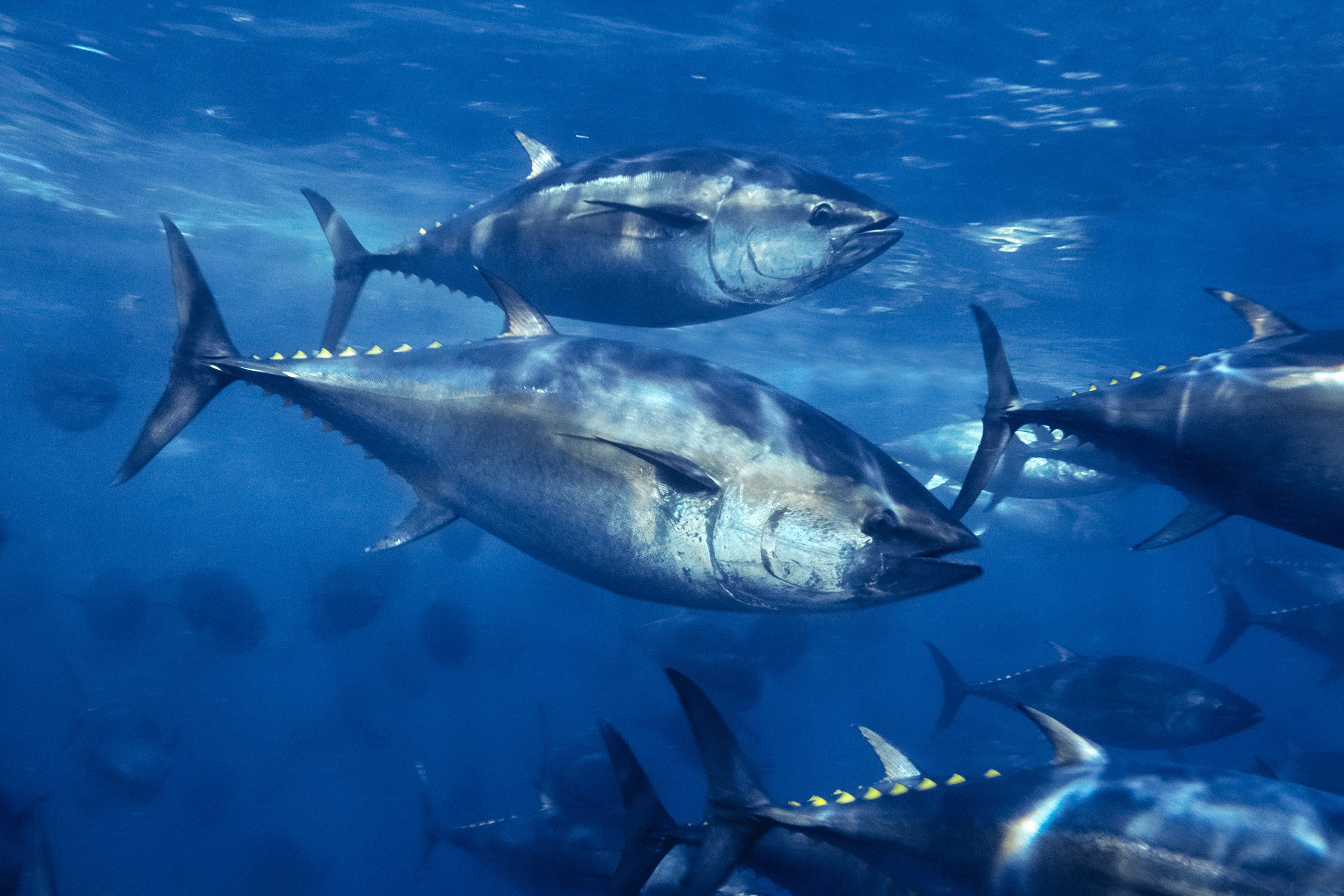
© Richard Hermann/SeaPics.com
Conservation
Known for its rich, buttery flavor, Pacific bluefin tuna is a highly sought-after delicacy in restaurants and sushi bars around the globe. But this demand proved troublesome. By 2010, the Pacific bluefin population dropped by over 98 percent from historic levels due to overfishing. Thanks to global cooperation and a commitment to following management practices anchored in science, Pacific bluefin is making a comeback—but there’s still work to do.
Extraordinary international cooperation
Recognizing the urgent need for action, countries from across the Pacific came together in 2016 to form an international joint working group. The next year, in an unprecedented show of global collaboration, the working group announced a plan to put Pacific bluefin tuna on a path to sustainability, starting with a commitment to rebuild the population to 20 percent of historic levels by 2034. This is the minimum level scientists consider necessary to protect many fish species. According to the latest international assessment, Pacific bluefin tuna stocks now exceed this, meeting it in less than a decade.
Buoyed by global cooperation among countries around the Pacific, a commitment to following scientific advice, and a willingness by fishing communities to adhere to strict catch limits, some Pacific bluefin tuna fisheries in the Eastern Pacific region (including U.S. and Mexico) for the first time earned a yellow rating from Seafood Watch.
What you can do
moderate environmental risk. Seafood Watch recommends buying yellow-rated items when green-rated options are not available. Pacific bluefin tuna’s recovery is something to be celebrated by seafood lovers, conservationists, and the seafood industry – but there’s still work to do.
To prevent this iconic fishery from backsliding, Pacific nations must set a new population target and adopt a long-term and precautionary management plan that carefully monitors population levels and adjusts catch limits as needed.
Monterey Bay Aquarium is committed to working with countries, markets, and other stakeholders to secure a long-term management plan that will ensure the Pacific bluefin tuna population not only survives, but thrives.
Check the tuna recommendations from our Seafood Watch program to find the best choices and other good alternatives.
Our tuna research
For the past three decades, Monterey Bay Aquarium has worked to gather as much data about Pacific bluefin tuna as possible. We’ve studied where they travel, how they reproduce, and what they need to thrive. This knowledge is incredibly important for conservation efforts and informs policies that help protect these amazing fish.
Tagging and tracking
We’re discovering where these ocean athletes travel so we can help protect them along their epic journeys. Tags, or electronic tracking devices, provide detailed records of the tuna’s migrations. Tagging helps us understand where and how Pacific bluefin tuna move throughout the global ocean. Understanding this helps inform fishing policies for Pacific bluefin tuna.
Our scientists at the Tuna Research and Conservation Center (TRCC) have been tagging both Atlantic and Pacific bluefin tunas for decades. Working with other U.S. and international research teams, we’ve helped to unravel the mysteries of Pacific bluefin tuna migrations.
Working on both sides of the Pacific, our researchers collaborate with the National Research Institute of Far Seas Fisheries in Japan and other Japanese partners in tagging juvenile and adult bluefin in the western Pacific. We’ve also partnered with Stanford University to tag bluefin off the coasts of California and Mexico. These electronic tagging efforts, which began in 2002 and continue to this day, have shown the movement of juvenile fish from the spawning grounds to the West Coast of North America, movements along the California and Mexican coasts, and migrations back to the Western Pacific to feed and spawn.
Cool facts
- A Pacific bluefin tuna is capable of swimming at speeds of 12 to 18 miles per hour (20-30 km per hour) for brief periods.
- Tuna may use magnetite, a mineral found in the neural pits of a tuna's snout, to detect the earth's magnetic field for navigation.
Up next in open ocean
Animal
Pacific sardine
Like synchronized swimmers, sardines in a school move together as one.
Keep exploring
Animal
Moon jelly
This dreamy jelly is named for their translucent, moon-like bell.