

Pacific sardine
Sardinops sagax caeruleus
- On view
- Open Sea
- Animal type
- Fishes
- Ecosystem
- Open ocean
- Relatives
- Herring; Family: Clupeidae
- Diet
- Zooplankton
- Range
- Southeast Alaska to Baja California
- Size
- Up to 15 inches (38 cm)
Meet the Pacific (California) sardine
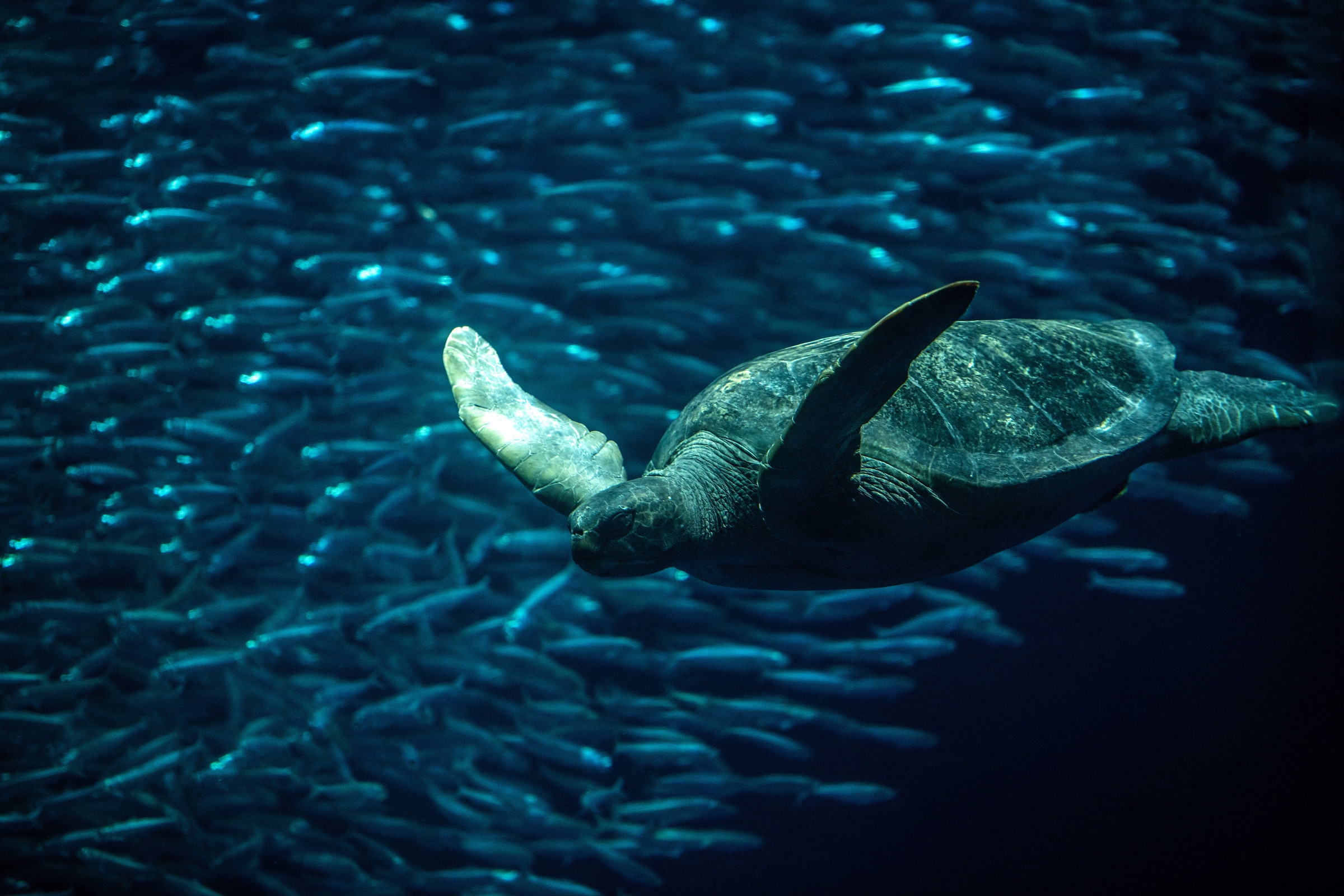
Staying together is their way of life. Like synchronized swimmers, sardines in a school move together as one. This communal lifestyle is good for these small fish. When predators come near, there's safety in numbers. And when it's time to reproduce, there's no need to seek out mates—plenty are close at hand.
Watch in real time
Open Sea Cam
Check out this live cam – Open Sea CamStatus: Least concern
Least concern(active)
Near threatened
Vulnerable
Endangered
Critical
Extinct in wild
Extinct
Natural history
Watching a school of sardines move, twisting and turning in near unison, is mesmerizing. But how do they do it? Although they may appear to be swimming together in a choreographed routine, sardines don’t actually move as one unit. Instead, each fish needs only to coordinate with its neighbors. In the blink of an eye, sardines use visual cues and sensing organs called neuromasts to coordinate their moves—appearing as though they had it planned all along.
Conservation
It's been a boom and bust history for the Pacific sardine fishery. During the 1920s through the 1940s, sardines were the most important and largest commercial fishery in California: annual yields peaked at 700,000 metric tons in 1936 and 1937.
However, under high demand for canned fish, fish meal and oil, this species was fished to the point of commercial extinction. A commercial harvest moratorium was enforced from 1967 to 1986. Due to strict fisheries management, Pacific sardine populations began to recover in the 1980s and populations are closely monitored today. The commercial fishing of Pacific sardines is regulated and allowances fluctuate based on population trends.
Cool facts
- Sardines are an important part of the open water food web. Many birds, marine mammals and other fishes eat sardines as a mainstay of their diets.
- The Monterey Bay Aquarium is located on the site of what was once a sardine cannery on Cannery Row! Named for the sardine processing companies that once lined the street, Cannery Row was made famous by John Steinbeck’s novel of the same name.
- Along the West Coast, the population of Pacific sardines is considered to consist of three subpopulations. The largest population ranges from Baja California to Alaska; an additional southern subpopulation is found off the coast of Baja California; and a third subpopulation is found in the Gulf of California. Studies conclude no genetic differences among the geographically different groups.
Up next in open ocean
Animal
Red phalarope
Red phalaropes spend most of the year at sea—they're one of the few birds classified as pelagic shorebirds.
Keep exploring
Animal
Moon jelly
This dreamy jelly is named for their translucent, moon-like bell.