

Red octopus
Octopus rubescens
- On view
- Kelp Forest
- Animal type
- Octopus & kin
- Ecosystem
- Kelp forest
- Relatives
- Squid, cuttlefish and nautilus; Phylum: Mollusca; Class: Cephalopoda
- Diet
- Small crabs, hermit crabs, other crustaceans, molluscs and fishes
- Range
- Central Alaska to northern Mexico
- Size
- Up to 20 inches (51 cm)
Meet the red octopus
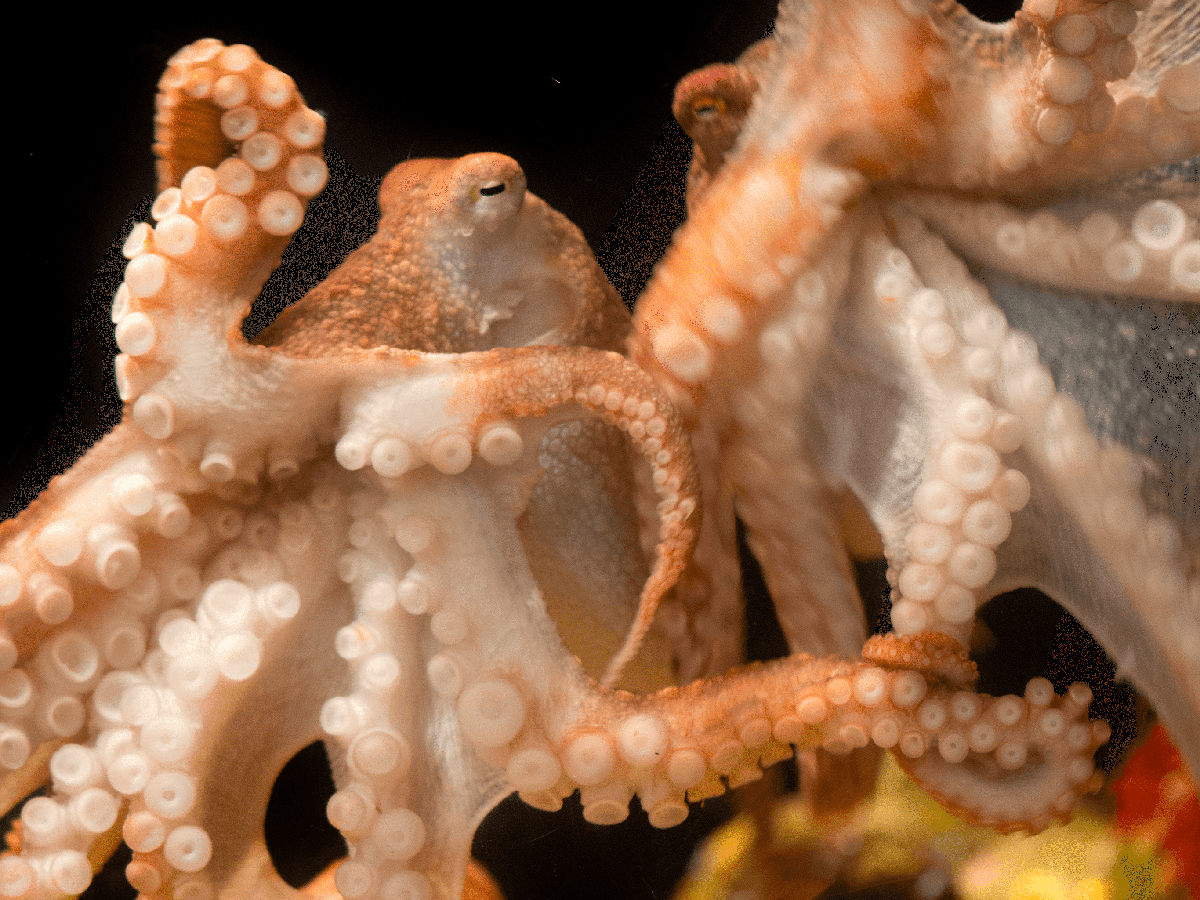
A red octopus's normal color is red or reddish brown, but like other octopuses it can change quickly—in a fraction of a second—to yellow, brown, white, red, or a variety of mottled colors. To communicate or court, an octopus might contrast with its surroundings; to hide, it will camouflage itself. It can also alter its skin texture to match sand or a rocky surface.
At the Aquarium
Red octopus are thought to be clever animals. In 2012, a tiny juvenile hitchhiked into the Aquarium on a sponge, and hid in one of our exhibits for a year before being discovered walking across the Aquarium's floor in the middle of the night!
"We'd noticed that there weren't as many crabs coming out at feeding time in that exhibit," said one aquarist. "Now we realize that's where they'd all been going—into the octopus's tummy!"
The crafty fellow was eventually released into the bay.
Natural history
An octopus usually forages at night and then retreats to its den to eat at leisure. It kills its prey (crabs are a favorite food) with venom secreted from its salivary glands, then cracks the shell with its sharp beak. It can also drill a hole in the snail's shell with its radula (toothlike structure) and inject a chemical that separates the snail's flesh from its shell. An octopus deposits empty shells outside its den in a pile—commonly called an "octopus's garden."
Conservation
Red octopus are common in their range. However, as with other sea life, pollution, overfishing and habitat destruction pose serious threats to cephalopods.
Related videos
Hide and seek
To hide from predators, red octopuses use their squishiness and extraordinary camouflaging abilities to sneak around the reef hidden in plain sight.
Cool facts
- Although it has excellent eyesight, a red octopus uses touch and smell to find food—thousands of chemical receptors and millions of texture receptors line the rims of its suckers. It scours the sandy seafloor to flush out small prey or crawls in and out of rocky areas to hunt crabs and shrimp.
- A red octopus lives about two years. Just-hatched red octopuses begin life in the intertidal and shallow subtidal zones. Juveniles make their homes on kelp holdfasts before migrating offshore and settling on the seafloor.
- A red octopus mates in late winter and early spring before moving to the intertidal area to spawn. Females protect and groom eggs until the larvae hatch six to eight weeks later. The females then die; the males die after mating.
- According to researchers who explore the Monterey Canyon with an ROV (remotely operated vehicle), the red octopus is the most common animal found along the continental shelf—at depths of 600 feet (183 m)!
- A red octopus is a highly developed marine mollusc. It has three hearts—one pumps blood through the body, and the other two pump blood through the gills. Researchers consider octopuses to be the most intelligent invertebrates—maybe as intelligent as a house cat.
- While tidepooling, you might see a red octopus in the intertidal zone, but it's best not to touch it. Red octopus have sharp beaks and are inclined to bite and then spit venom on the wound. Healing from an octopus bite might take three weeks.
Up next in kelp forest
Animal
Señorita
The señorita‘s small mouth and protruding teeth are ideal for picking small invertebrates from algae.
Keep exploring
Animal
Leopard shark
Leopard sharks live in shallow waters of bays and estuaries and occasionally patrol the kelp forest.