

Scalloped hammerhead shark
Sphyrna lewini
- On view
- Open Sea
- Animal type
- Sharks & rays
- Ecosystem
- Open ocean
- Relatives
- Requiem sharks, which include oceanic whitetip, tiger and bull sharks
- Diet
- Fishes, squid, crustaceans, stingrays
- Range
- Pupped in coastal lagoons, then migrate offshore later in life; found around the world in tropical, subtropical and warm-temperate waters
- Size
- Up to 14 feet (4 m) long and 350 pounds (160 kg)
Meet the scalloped hammerhead shark
With that wide, thick head shaped like a double-headed hammer, it's easy to identify a hammerhead shark. You can tell it from other hammerheads by the ridges along the front edge of its head. The shark's eyes and nostrils are located at the extreme ends of its head. Perhaps this unusual shape gives the sharks added lift and lets them make sharper turns than other sharks. The location of the eyes may also allow better stereoscopic vision. The broad shape of the head enables the shark's sensing organs, called the ampullae of Lorenzini, to find prey buried in the sand (such as stingrays).
Watch in real time
Open Sea Cam
Check out this live cam – Open Sea CamEndangered Species Act (ESA)
The ESA is a U.S. law that protects plants and animals at risk of extinction by classifying them as either Threatened or Endangered.
Threatened
Endangered(active)
International Union for the Conservation of Nature (IUCN)
The IUCN Red List is a global system that evaluates the conservation status of species and classifies them based on their risk of extinction.
Least concern
Near threatened
Vulnerable
Endangered
Critical(active)
Extinct in wild
Extinct
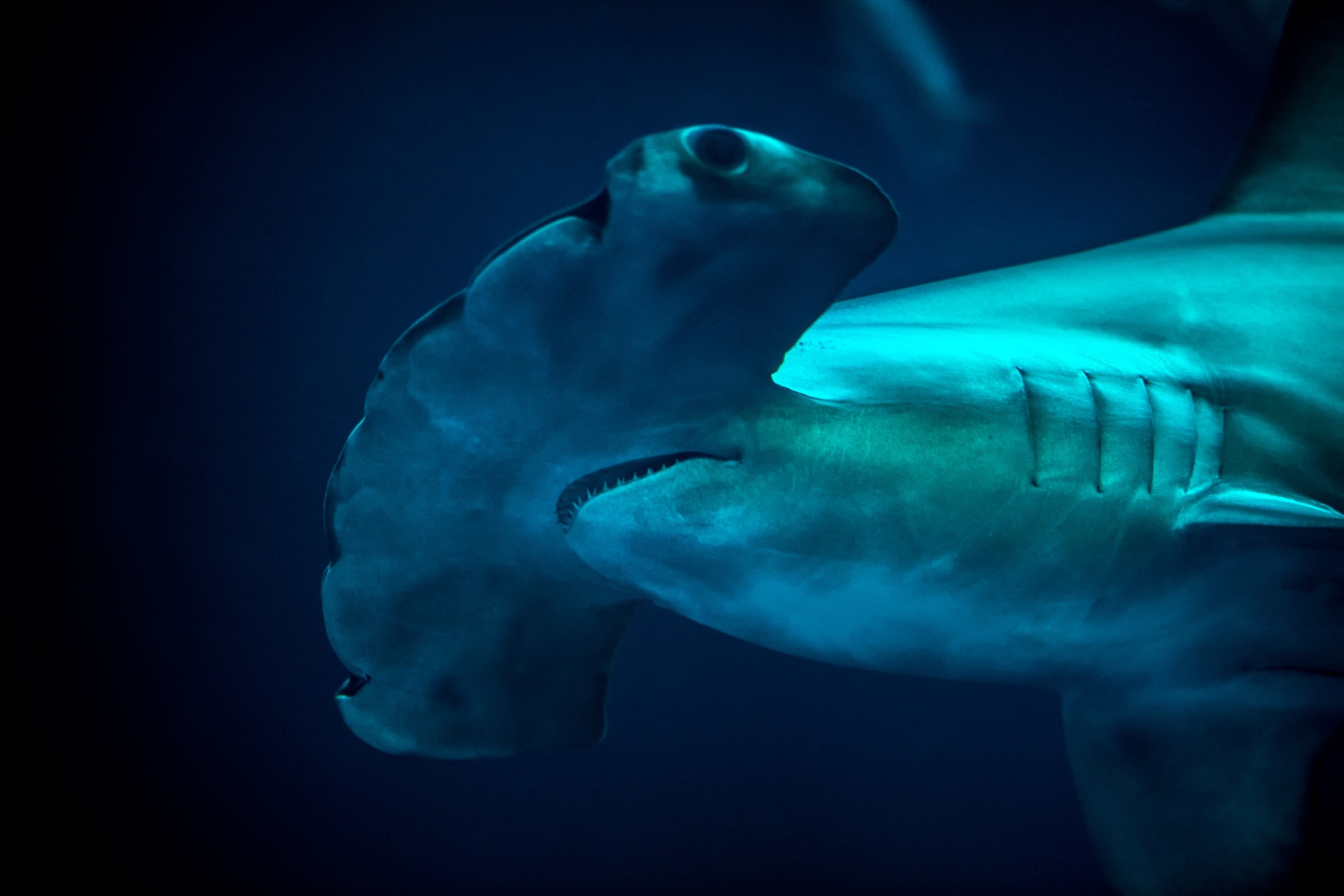
Scalloped hammerhead sharks are listed as Critically Endangered by the International Union for the Conservation of Nature and Natural Resources (IUCN).
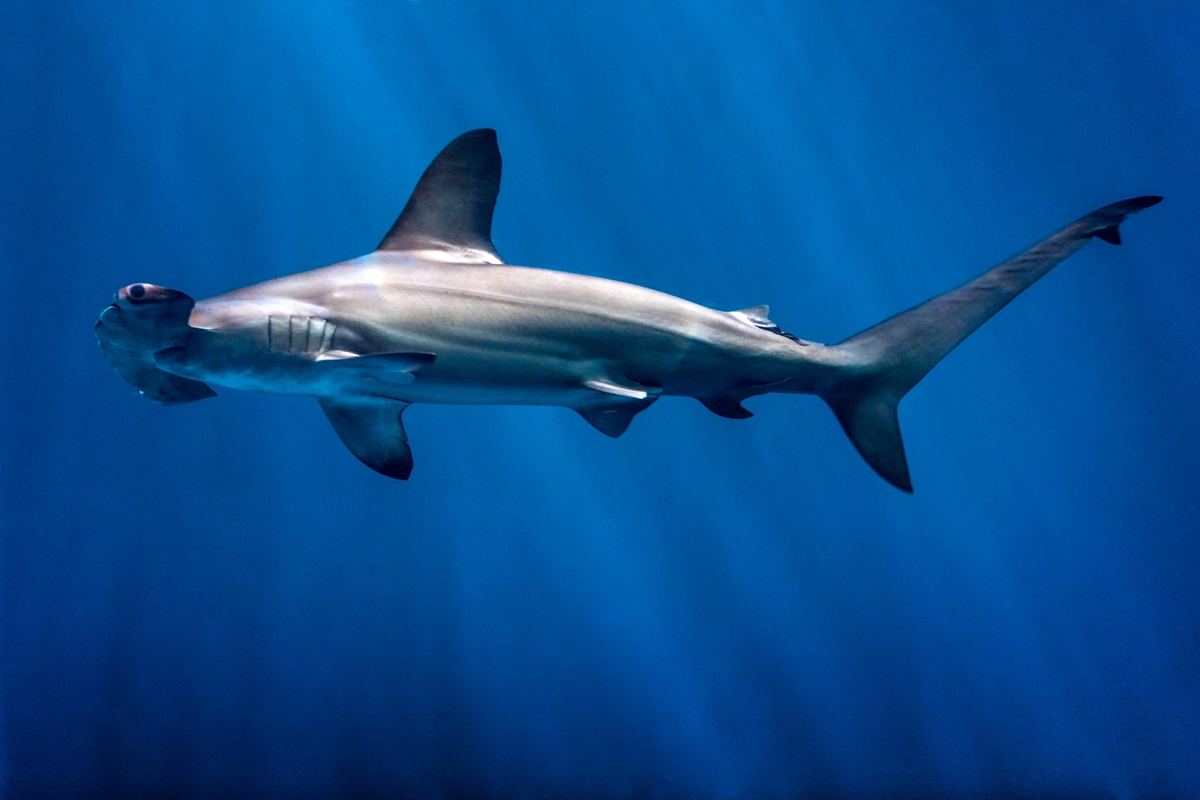
A scalloped hammerhead shark (Sphyrna lewini) swimming in the Open Sea exhibit.
Conservation
Commercial fisheries catch hammerheads for their oil, meat and skin. At certain times of the year, scalloped hammerheads swim in schools of several hundred animals—unusual behavior for predators at the top of the food chain. This schooling pattern makes them easy prey for fishermen targeting large catches. Hammerheads are also caught accidentally by longlining crews fishing for swordfish and tuna.
Scalloped hammerhead sharks are listed as Critically Endangered by the International Union for the Conservation of Nature and Natural Resources (IUCN).
Cool facts
- In general, hammerheads aren't aggressive toward humans, although on rare occasions larger sharks have attacked people. (It's possible that these sharks are a separate species, the great hammerhead, Sphyrna mokarran.) Their uncommonly small mouths are much better suited for eating fishes.
- Scalloped hammerheads commonly prey on stingrays. One shark was found with 96 venomous stingray barbs imbedded in its mouth and jaws. We don't know much about how the barbs affect the sharks, or how the sharks get rid of them.
Up next in open ocean
Animal
Green turtle
A green turtle is always on the move. It starts life as an egg on a beach, then travels the open ocean.
Keep exploring
Animal
Moon jelly
This dreamy jelly is named for their translucent, moon-like bell.