

Green turtle
Chelonia mydas
- On view
- Open Sea
- Animal type
- Reptiles
- Ecosystem
- Open ocean
- Relatives
- Loggerhead; hawksbill; Kemp's ridley and olive ridley; flatback. Family: Cheloniidae
- Diet
- Primarily sea grasses and macroalgae, although they will also eat invertebrates and the occasional dead fish; hatchlings and juveniles are omnivorous and eat invertebrates, including jellyfish
- Range
- Worldwide in tropical and subtropical waters
- Size
- Approximately 3 to 4 feet long (1.2 m) and up to 400 pounds (181 kg)
Meet the green sea turtle
A green sea turtle is always on the move. It starts life as an egg buried on a beach, then travels the open ocean as a hatchling. Around age 5, a juvenile green turtle heads to shallow nearshore waters to forage for sea grasses, macroalgae, jellies, and other invertebrates. When a green sea turtle reaches adulthood around the age of 15, it develops a preference for sea grasses. As it matures, it spends its time migrating to coastal areas in search of its favorite vegan meal.
Watch in real time
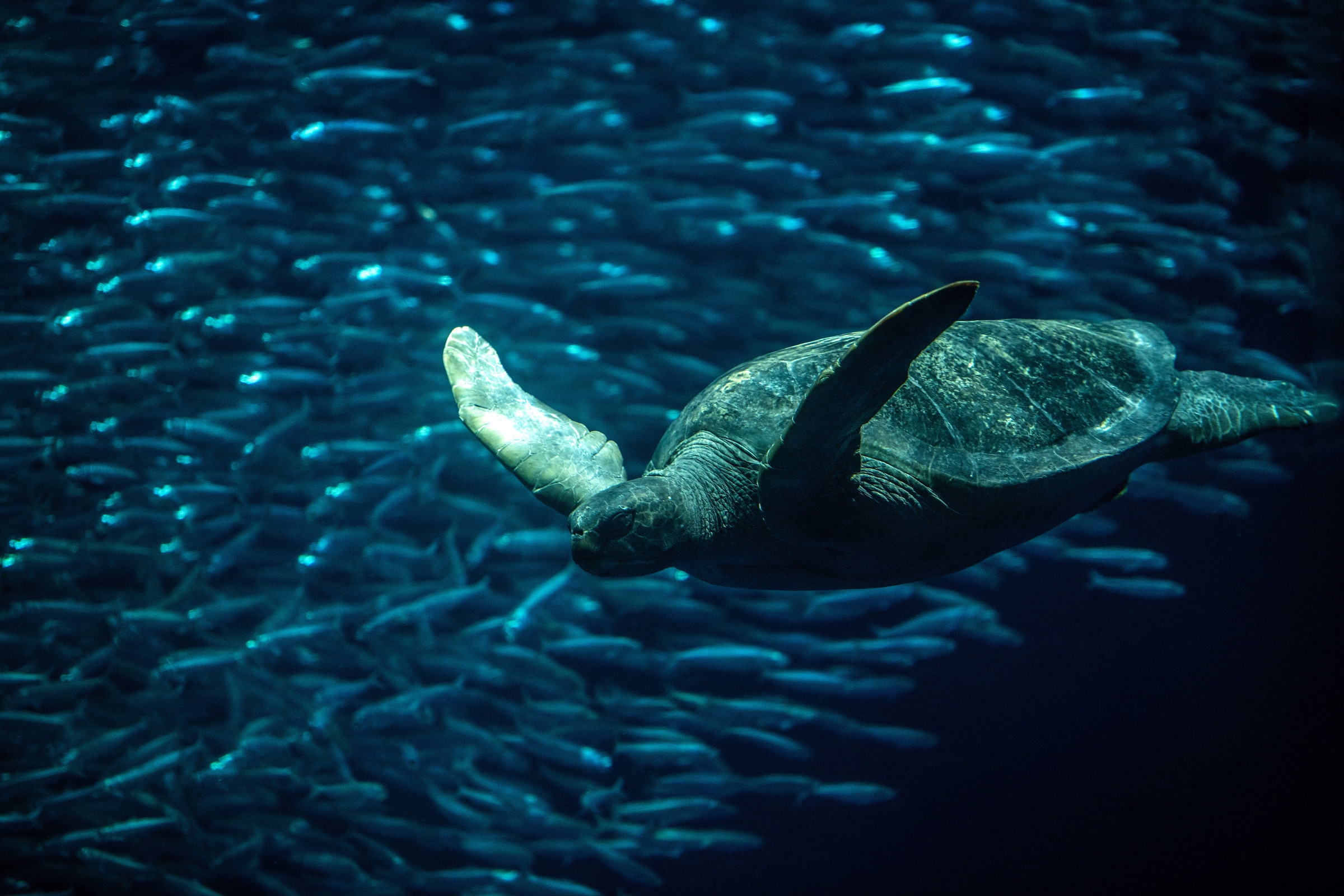
Open Sea Cam
Check out this live cam – Open Sea CamEndangered Species Act (ESA)
The ESA is a U.S. law that protects plants and animals at risk of extinction by classifying them as either Threatened or Endangered.
Threatened(active)
Endangered
International Union for the Conservation of Nature (IUCN)
The IUCN Red List is a global system that evaluates the conservation status of species and classifies them based on their risk of extinction.
Least concern(active)
Near threatened
Vulnerable
Endangered
Critical
Extinct in wild
Extinct
Lifecycle
After incubating for 40-70 days, a hatchling will crawl out of its nest and down the slope of the beach towards the ocean—using the moon’s reflection on the water to help guide it. Eggs in the same nest all hatch within days of each other, and the baby turtles all move together towards the water. This increases their odds of making it past other hungry animals.
A hatchling will head out to sea, where it will live for 5-7 years among free-floating mats of macroalgae like Sargassum. As a juvenile, the turtle will make its next move—riding the currents across the open ocean to new homes in nearshore habitats where it will forage. Green sea turtles reach sexual maturity at 16-50 years old. A female turtle mates and makes her way to the beach where she hatched. Under the cover of darkness, the mother climbs up the beach and digs a nest in which she’ll lay 100 eggs or more. She then buries them under a sandy blanket and returns to the sea. A female green turtle may nest and lay eggs several times in a single season, but then won’t return to nest again for another 3-7 years.
All green sea turtles return to their place of birth each year in a phenomenon called “natal homing.” How exactly does the turtle know which beach to return to? It’s still something of a mystery, although scientists believe genetic markers and Earth’s magnetic field both play a role.
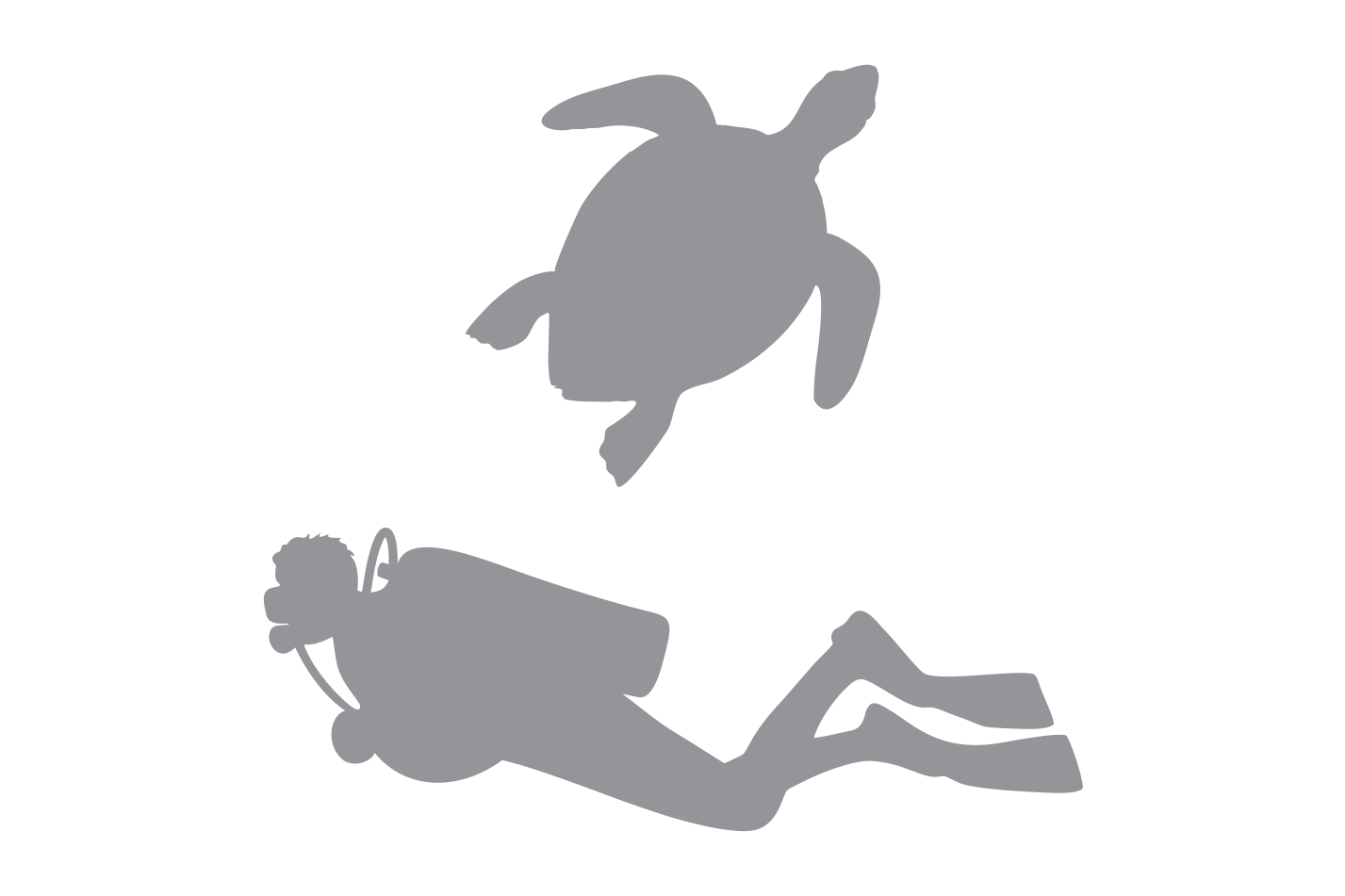
Size
Typically, the green turtle grows up to four feet long and weighs up to 400 pounds. The largest green sea turtle on record was over five feet long and 800 pounds.
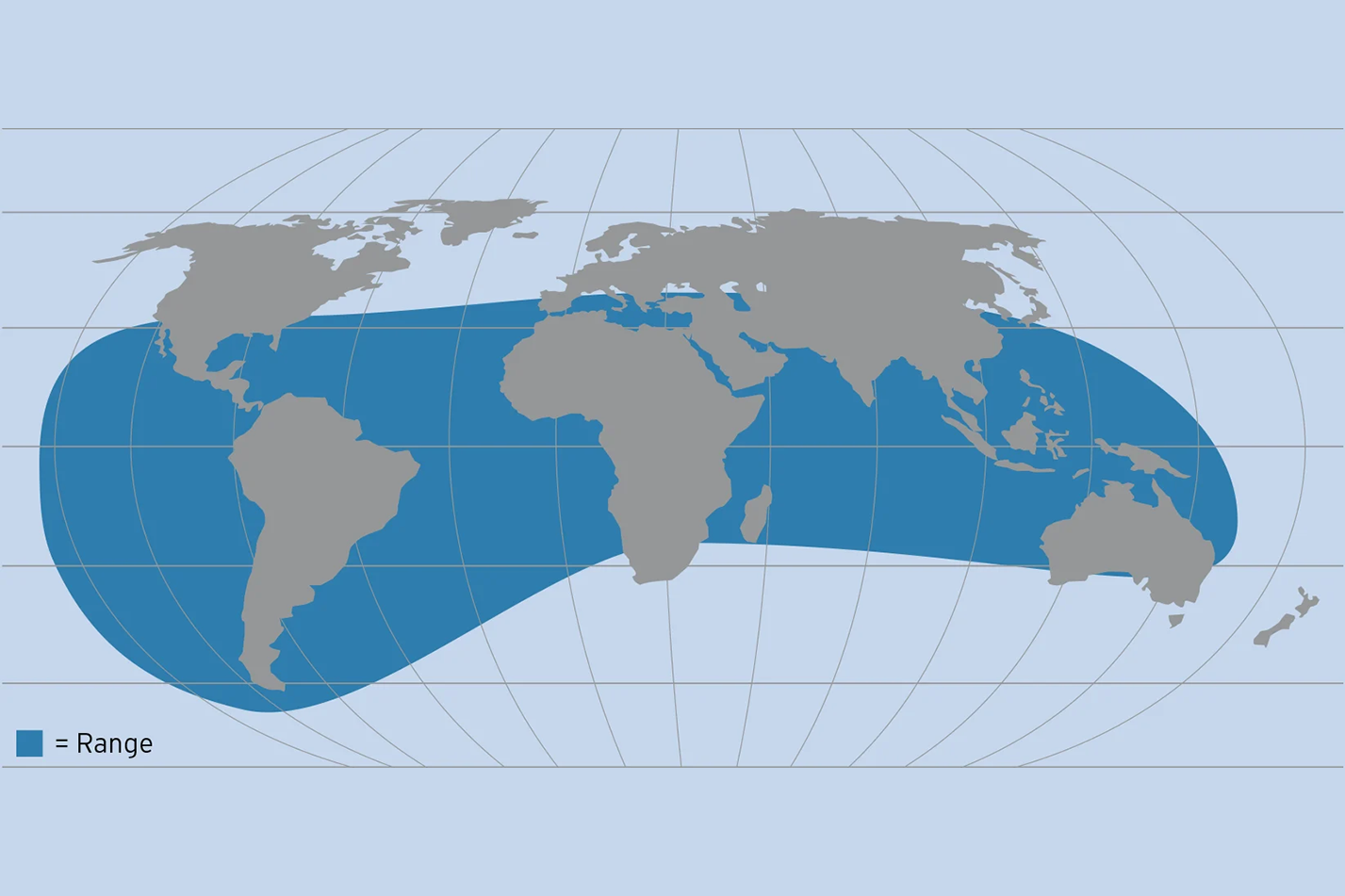
Range
Green turtles are found throughout the global ocean, in tropical and subtropical waters.
Diet
Ocean-dwelling hatchlings are opportunistic omnivores, eating algae and whatever animals they can find, including crustaceans, zooplankton, worms, and jellies. Juveniles and young adults live in nearshore shallow environments, but not necessarily close to seagrass beds. As a result, they feed on invertebrates and jellies as well as bits of seagrass. As it gets older, a green sea turtle begins to dine almost exclusively on sea grasses and seaweed.
Lifespan
The exact lifespan of the green turtle is unknown, but it is estimated to live up to 80 years.
Reproduction
Adult green turtles begin to reproduce as young as 16 years old and as late as 50 years old. Populations in different regions mature at different ages. For example, juveniles in the Caribbean and Florida were found to reach sexual maturity at 16-20 years old, while those in the Great Barrier Reef were found to reach sexual maturity at 25-50 years old.
The males and females find each other relatively close to shore, near or on the beaches where they themselves hatched.
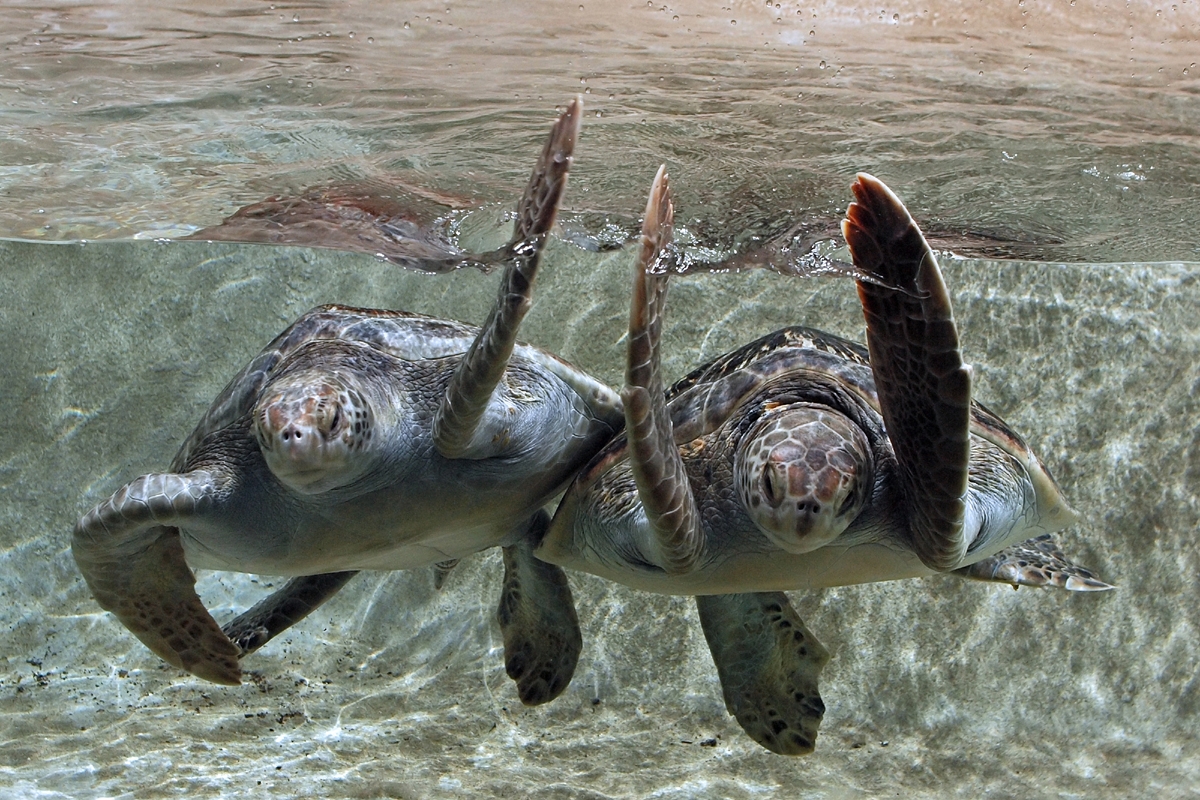
They’re in ship shape! A group of sea turtles is called a flotilla, which is also what you can call a group of warships. Another name for a group of sea turtles is a bale.
Anatomy
Shell
The shell is a natural suit of armor that protects the green turtle from predators. Although it can't draw its arms, legs, or head into its shell, its leather-like, tough skin also provides some defense.
Mouth and beak
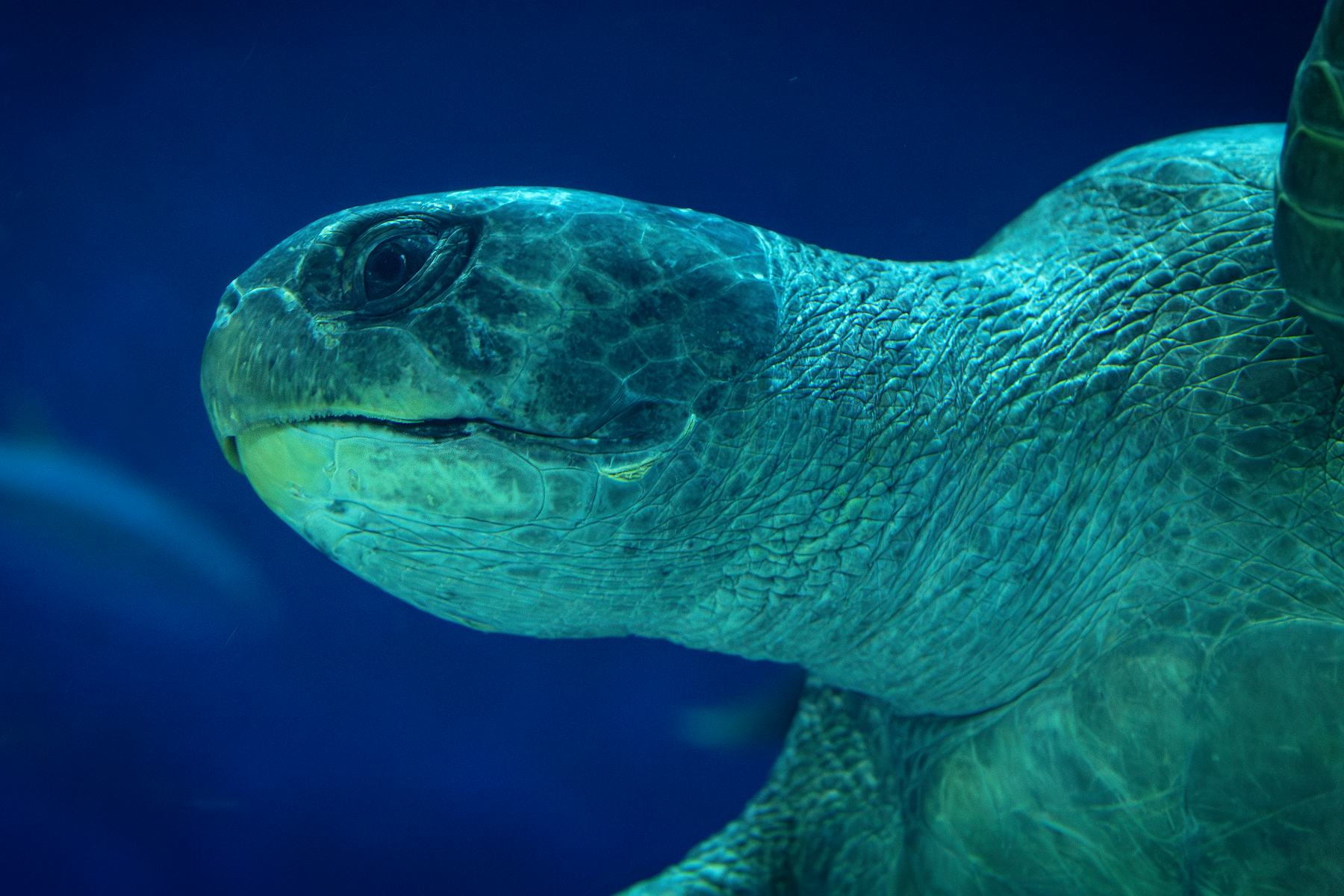
How does a green sea turtle eat? Instead of teeth, this sea turtle has a round beak with serrated edges that help it cut and tear food. A green turtle can drink seawater, thanks to a pair of glands near its eyes that remove excess salt. The excretions from the glands sometimes give the sea turtle the appearance of crying.
Flippers and feet
Over millions of years, the forelegs of the sea turtle have changed to blade-shaped flippers, which help it "fly" through the water—sometimes as fast as 15 miles (24 km) per hour! A green turtle uses its hind feet as rudders. It can also use its flippers to help it forage for food, and even hold its prey.
Related videos
Turtles take a sunbath
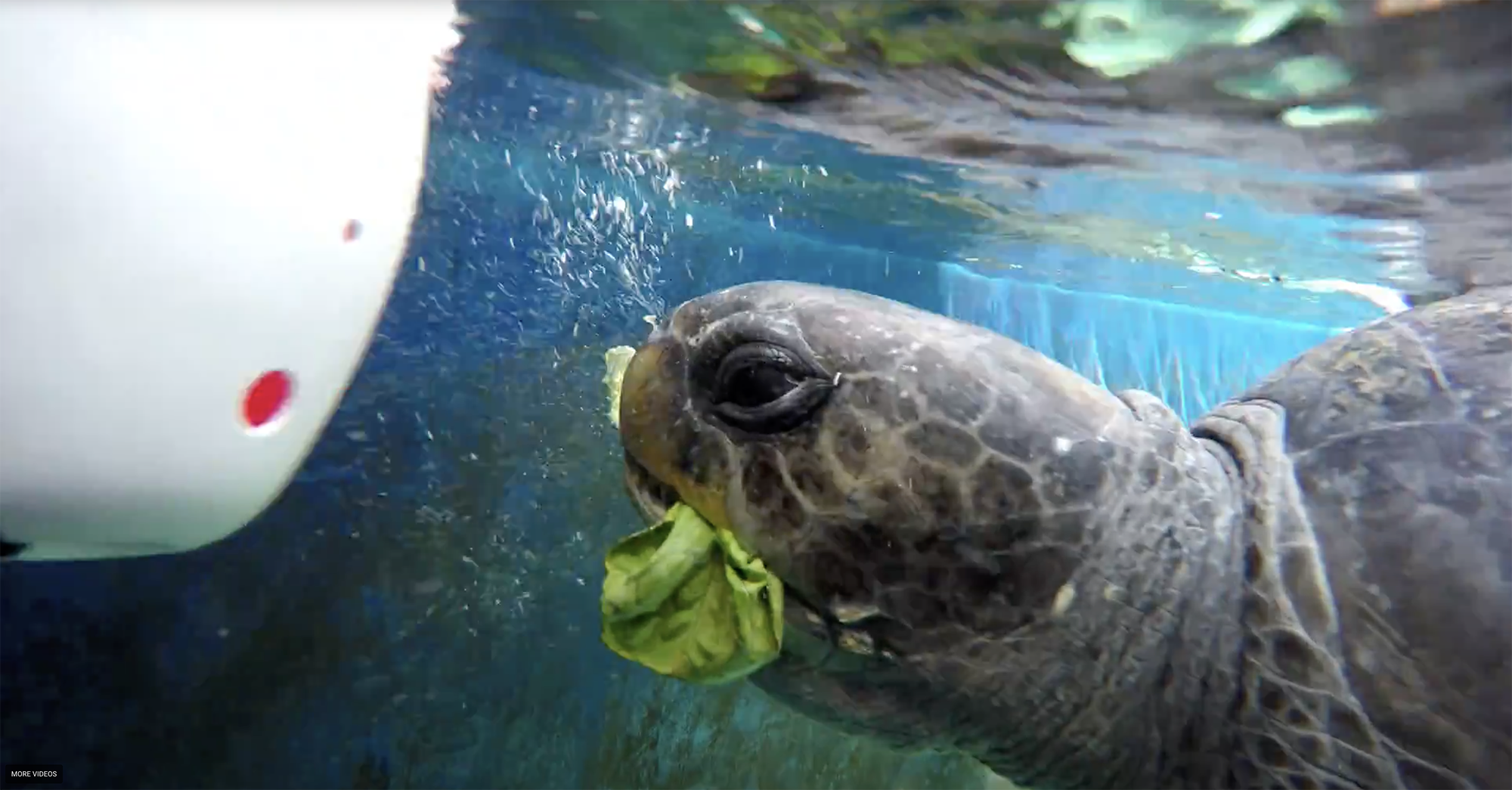
Fun in the sun! Our green sea turtles take regularly scheduled breaks from the Open Sea exhibit to catch some rays on the roof and generate vitamin D. Snacks are always a plus!
Conservation
Why are green sea turtles important?
The green turtle helps keep nearshore ocean habitats healthy—acting a bit like a gardener. Just like mowing the lawn keeps your lawn full and green, a sea turtle’s grazing helps keep seagrass beds healthy and plentiful because trimming the ends of the seagrass stimulates new growth.
On the beach, a green turtle’s unhatched eggs can act as a fertilizer for plants that help stabilize beach dunes. When the eggs and shells—rich in marine nutrients—compost into the sand or get eaten by predators, they help feed the plants and animals in the area.
Trapping sea turtles—accidentally and on purpose
Illegal and unregulated harvesting of sea turtles and their eggs continues to threaten green turtle populations. Sea turtles are also frequently caught by mistake in commercial fishing operations, which increases the threat to their survival.
Since sea turtles spend most of their lives at sea and come ashore only to nest, they often get caught by fishing gear meant for other animals. A turtle trapped in a net or hooked on a line often can’t surface to breathe—and eventually drowns.
To help with this problem, the fishing industry has developed "turtle excluder devices" such as trap doors in shrimp nets that allow turtles to escape. Visit Seafood Watch to learn about bycatch (fish or other marine species caught unintentionally) and find seafood caught with turtle-friendly gear.
Extinction risk
All geographical groups of green turtles are listed as either endangered or threatened under the Endangered Species Act. Some populations are doing better than others. The populations in Hawaii and Costa Rica, for example, have been on the rise for decades thanks to effective conservation work. But in the south and west Pacific, populations face many threats and are endangered—primarily due to climate change, fishing, egg harvesting, nest destruction, and other human activity.
A new assessment by the International Union for Conservation of Nature (IUCN) was last completed in 2024, and rates green sea turtles as least concern. However, there are still several subpopulations listed as threatened, and global populations are still considered to be depleted compared to historical numbers.
Predators
When sea turtle eggs are still in their nests, they are at one of the most vulnerable stages in their lives. Dogs, raccoons, birds, crabs, and ants all enjoy a sea turtle egg snack. Protecting these nests has aided in some recovery of sea turtle populations.
Other threats
Rising temperatures, as well as unpredictable weather and ocean conditions, affect the sea turtle’s habitat and the food available to this species. Other threats include loss of nesting beaches due to development, egg harvesting, and pollution such as plastic.
As the ocean warms and sea levels rise, sea turtles will struggle to find enough food, mates, and nesting beaches. A warmer ocean means more intense storms, more beach erosion, and more flooded nests.
Like many reptiles, when sea turtles lay their eggs, the developing babies inside are initially neither male nor female. Temperature differences within the nest determine the sex of the hatchlings—warmer nest average temperature results in female and cooler temperatures result in males. Temperatures have been climbing on beaches, which means more female sea turtles are being born. In some places, there are many more females than males. This could make it tricky to find a mate later in life.
Cool facts
- The green turtle’s shell isn’t actually green! This sea turtle was named for a subdermal layer of green fat—which turns green due to the turtle’s diet of sea grasses and algae.
- Can you say turtle-saurus? A turtle is a reptile! It’s related to snakes, crocodiles and even dinosaurs.
Common questions
Can green turtles live in freshwater?
No—sea turtles and freshwater turtles are different groups of animals that have different physical characteristics to adapt to their unique environments. For example, sea turtles have special glands that excrete extra salt from drinking sea water. Without ingesting saltwater, sea turtles would actually become dehydrated. Life at sea and life in freshwater are totally different!
Can green turtles live on land?
No—although they come ashore to lay their eggs, they return to the sea to forage most of the year.
Can green turtles breathe underwater?
Nope— the sea turtle cannot breathe underwater, and must surface to breathe air. Sea turtles don’t have gills like fish; they have lungs like you. Though they are talented at holding their breath, they can hold their breath for four to seven hours during a dive.
Up next in open ocean
Animal
Yellowfin tuna
Although it’s not technically considered warm-blooded, the yellowfin tuna is one of the few species of bony…
Keep exploring
Animal
Moon jelly
This dreamy jelly is named for their translucent, moon-like bell.