

Skeleton shrimp
Caprella sp
- On view
- Monterey Bay Habitats
- Animal type
- Invertebrates
- Ecosystem
- Coastal waters
- Relatives
- Sand fleas, whale lice, other amphipods; Class: Crustacea; Order: Amphipoda
- Diet
- Diatoms (microscopic plants), detritus, filtered food particles, amphipods
- Range
- Low intertidal zone and subtidal waters in bays, central and southern California
- Size
- Up to 1.5 inches (4 cm) long
Meet the skeleton shrimp
Look closely to see these tiny skeleton shrimp clinging to bryozoans, hydroids or algae. Their body shape and color help to camouflage the shrimp. Their bodies are long and cylindrical, and range from pale brown and green to rose. Some species can quickly change color to blend into their surroundings.
Did you know?
Skeleton shrimp look like, and are sometimes called, "praying mantises of the sea." They have two pairs of legs attached to the front end of their bodies, with three pairs of legs at the back end. The front legs form powerful "claws" for defense, grooming and capturing food. The rear legs have strong claws that grasp and hold on to algae or other surfaces. They use their antennae for filter feeding and swimming.
Conservation
Skeleton shrimp are abundant and live in many habitats, including the deep sea. They play an important role in the ecosystem by eating up detritus and other food particles.
Cool facts
- Shrimp, sea anemones and surfperch prey on skeleton shrimp. The females of some skeleton shrimp species kill the male after mating.
- Skeleton shrimp use their front legs for locomotion. To move, they grasp first with those front legs and then with their back legs, in inchworm fashion. They swim by rapidly bending and straightening their bodies.
- To grow, skeleton shrimp shed their old exoskeletons and form new, larger ones. They can mate only when the female is between new, hardened exoskeletons. After mating, the female deposits her eggs in a brood pouch formed from leaflike projections on the middle part of her body. Skeleton shrimp hatch directly into juvenile adults.
Animals & the ocean
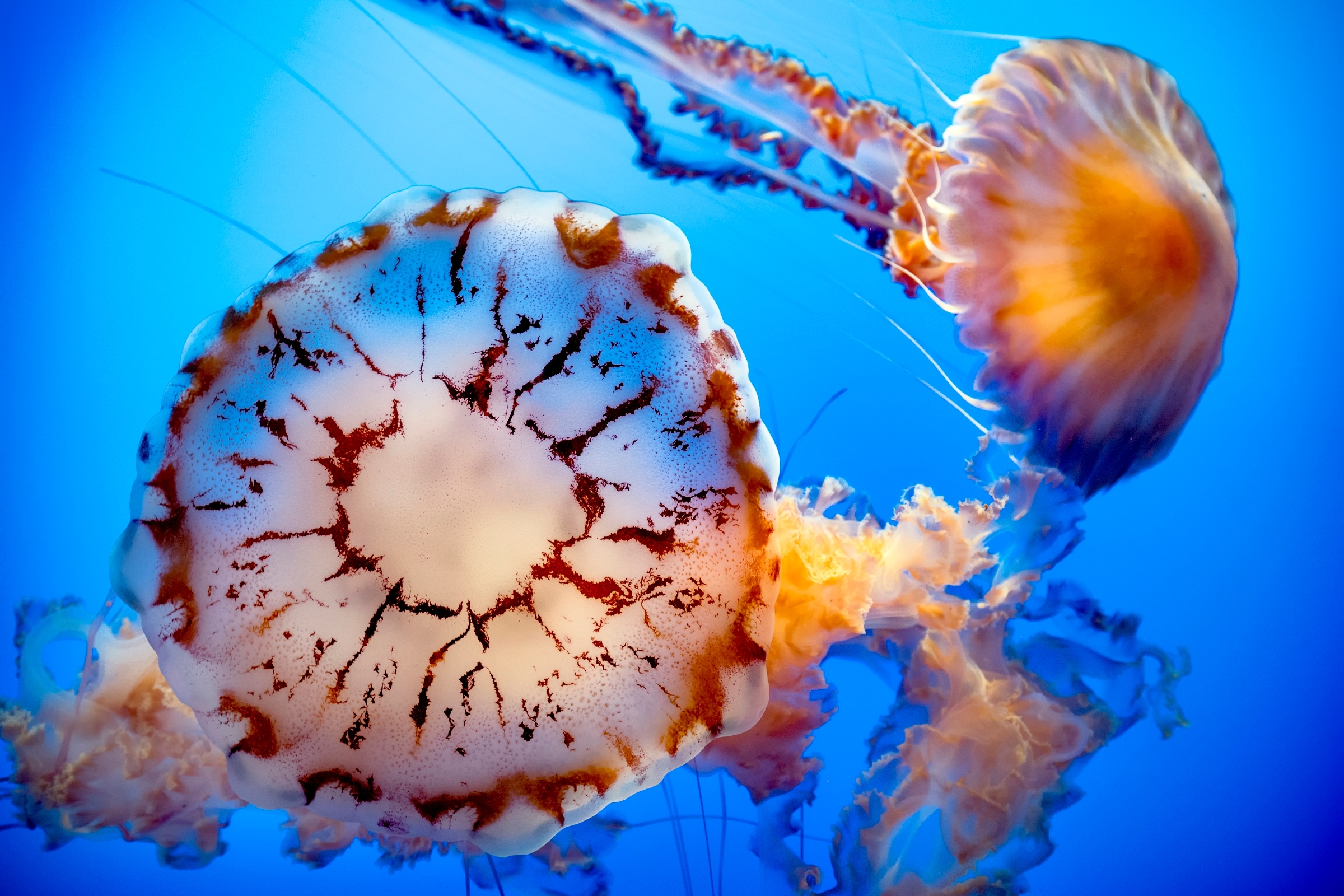
Jellies
Jellies are nature’s strangest wonders—no bones, brains, teeth, blood, or fins, but far from simple.
Read more – JelliesUp next in coastal waters
Animal
Red-footed booby
This social seabird lives in colonies near warm coastal waters around the world.
Keep exploring
Animal
Sea otter
Beyond their cute faces and fluffy fur, sea otters play an irreplaceable role in their coastal habitats.