

Jellies
An introduction to the ocean’s most unusual drifters
An introduction to jellyfish—the ocean’s most unusual drifters.
Brainless beauties
Jellies are one of mother nature’s strangest wonders. They have no bones, brains, teeth, blood or fins—but don’t let their simple anatomy fool you. These animals are spectacularly diverse and beautiful. Find these enchanting animals gently pulsating throughout the world's ocean, from its surface to its darkest depths.
All about the jelly
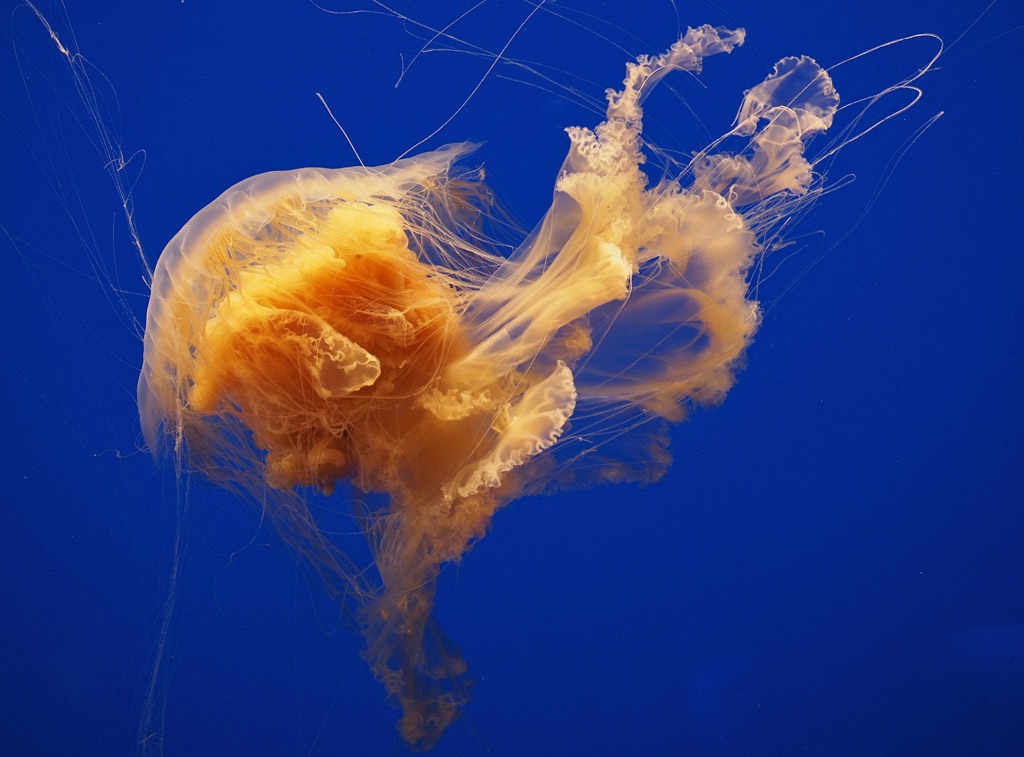
"Jellies" are any animals that have a gelatinous body and live in the water column. They are called gelatinous zooplankton, or just "gelata" for short. Their bodies are made up of more than 95 percent water. Graceful and sometimes dangerous, jellies range in size from miniscule to enormous. One of the largest, the lion’s mane jelly, has a giant-sized bell eight feet (2.4 m) across. Its flowing tentacles can reach 100 feet (30.5 m) or more—longer than two school buses parked end-to-end! Despite their unique and varied physiology, jellies thrive throughout the world's ocean.
Jelly anatomy
Jellies are composed of three layers: the epidermis, which is the outer layer; the mesoglea, a middle layer made up of a thick, elastic, jelly-like substance; and the inner layer known as the endoderm gastrodermis. Often, their bodies have radial symmetry, which means that a jelly’s body parts branch out from its center much like the spokes of a wheel. In other instances, like with Ctenophores, the animals have biradial symmetry—when it’s divided along an axis, the two halves of its body are mirror images of each other.
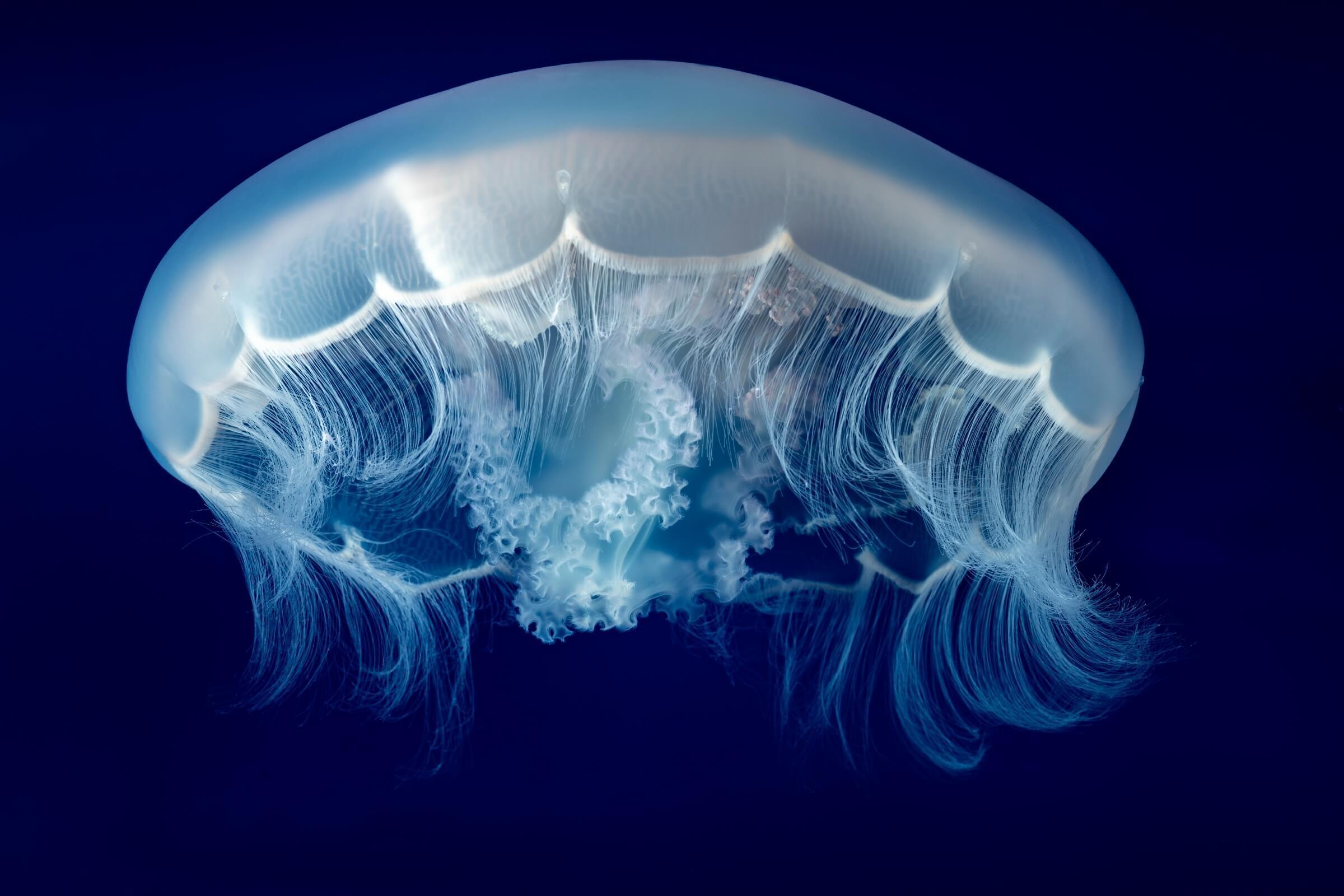
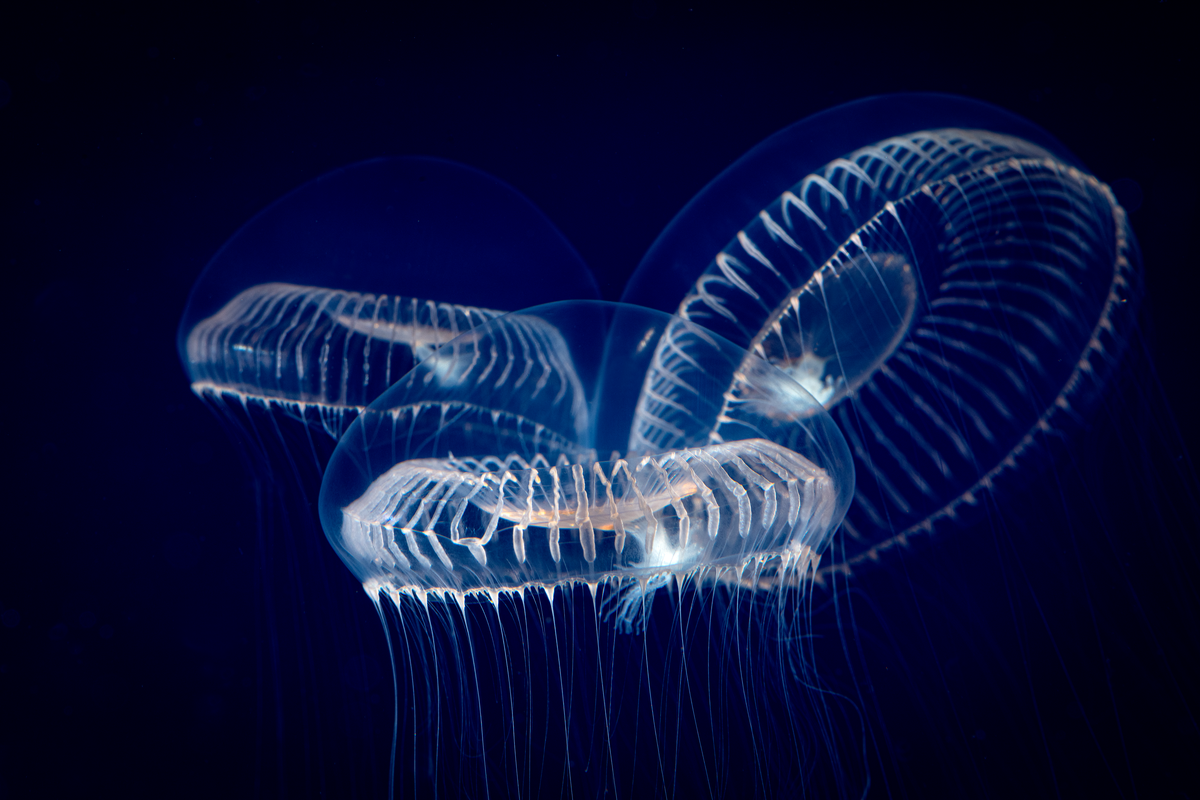
Moon jelly (Aurelia labiata)
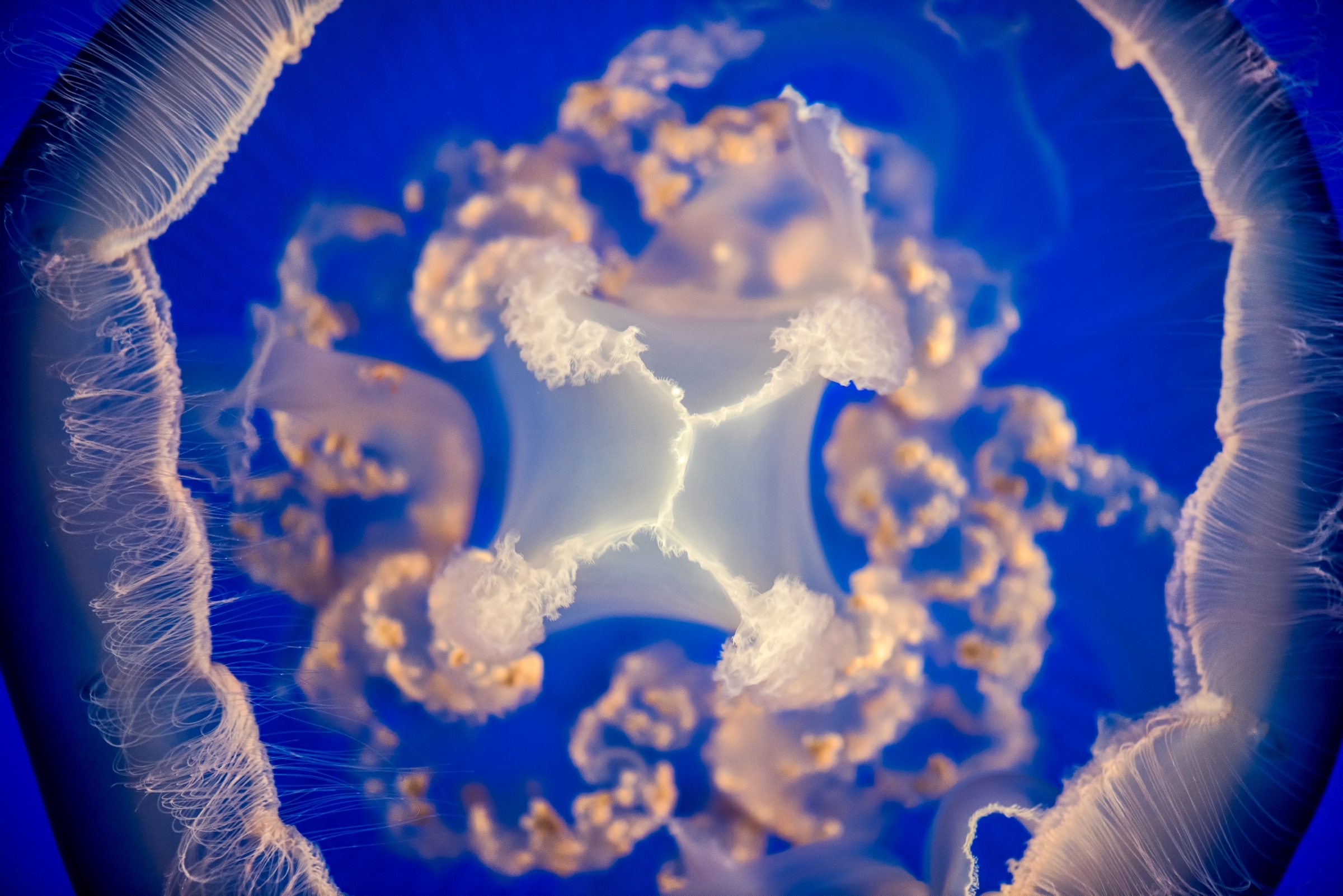
Moon jelly (Aurelia labiata)
Senses
Though brainless, jellies have simple tools that allow them to sense the world around them. Jellies detect light, gravity and hormones using rhopalia—mall sensory structures— located on the edge of their bells.
Bodies—muscle and rhythm
Jellies are not the strongest animals in the ocean, but if you've ever been mesmerized by a group of them pulsing to their own rhythms, you've seen them flex their muscles. The transparent muscle fibers are arranged in rays that stretch from the center of the bell to the margin. With a synchronized squeeze of these muscles—coordinated by the eight rhopalia along the edge of the bell—the jelly throws its body into a wave that moves smoothly outward from the bell, pushing it forward. The motion also stirs up the water and pushes it past the jelly's tentacles.
Diet
The typical jelly eats small, swimming organisms called plankton: a mixture of tiny creatures like amphipods, copepods and krill. It also eats larval shrimps, crabs, fish and even other jellies.
How jellies eat
Some jellies use stinging cells—called nematocysts—to catch, sting and inactivate prey. When sensitive stinging cells brush up against an object, they burst—and out pops a tiny, sharp barb. The barb pierces the prey and injects it with venom. Once the prey has been captured in the oral arms, digestion begins. The jelly's oral arms guide the prey to its stomachs in the center under its bell.
Inside the bell there are open chambers, like stomachs, that further digest the prey. The digested remains of the prey are then passed around the body through a series of interconnected canals. Most jellies that sting have mild toxins that don't bother humans. But some can be as painful as bee stings, and a few species, like box jellies, can be extremely dangerous.
Other feeding strategies
Sticky cells
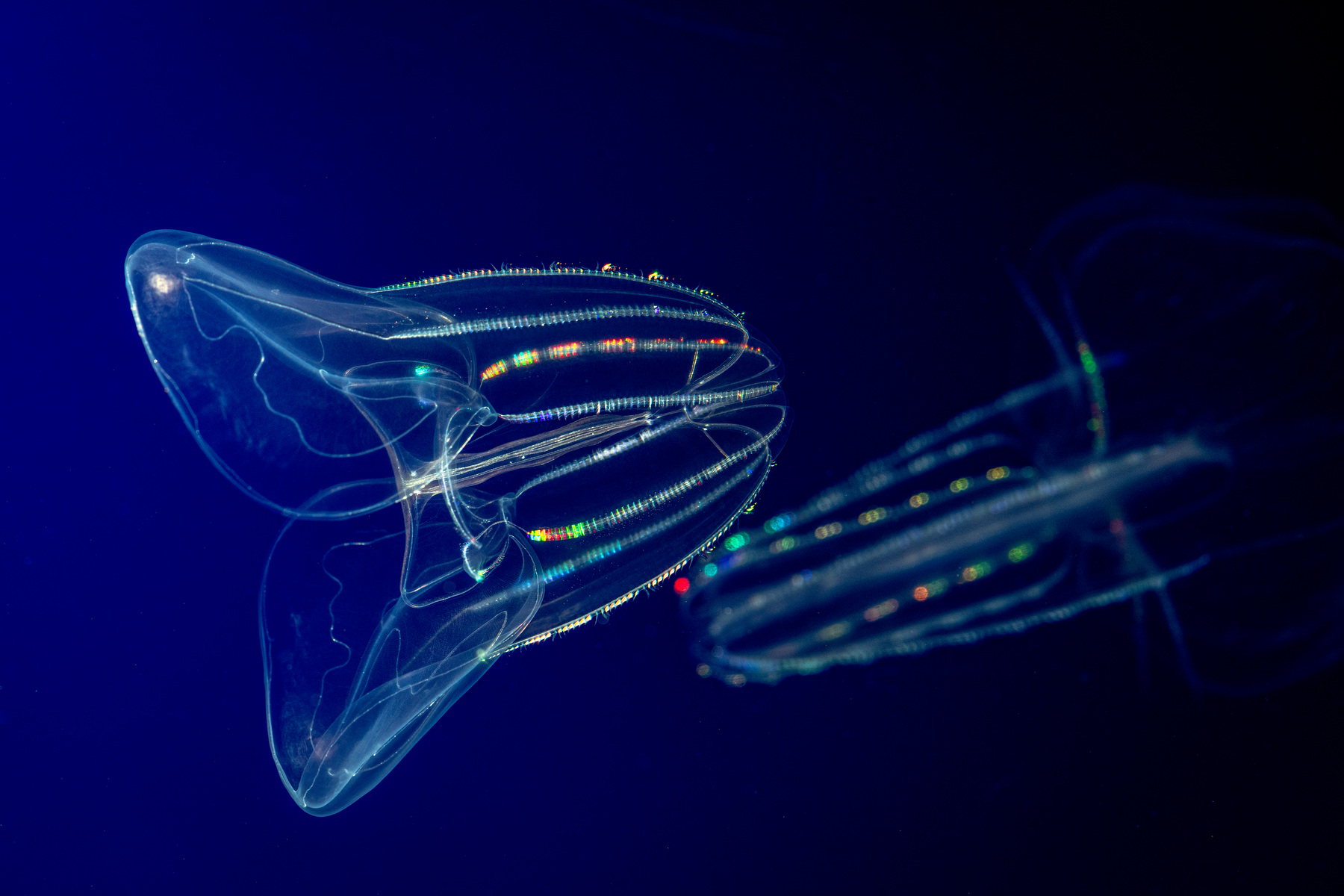
Other jellies, like comb jellies, use sticky cells—called colloblasts—to catch their prey. They then retract their tentacles into the mouth and digestion begins soon after using a variety of cilia to quickly break down their prey.
Mucus nets
Some jellies secrete large sheets, or nets, of mucus to help them capture the smallest plankton—prey too small for most other animals to catch. Secreted by a special organ called an endostyle, a jelly’s mucus net can be located either inside or outside its body. Mucous nets range in size from an inch (2.5 cm) to over 6 feet (1.8 m).
Predators
Some fish turn the tables, eating the jelly for dinner: blue rockfish, molas, dogfish, anchovies, chum salmon and mackerel have all been recorded eating jellies. The jelly is also a favorite food of sea turtles.
Jelly “friends”
There are some fish that spend time swimming amid the tentacles of a jelly. This strange choice of hangout may help them avoid being eaten by bigger fish. They also get the chance to pick at scraps the jelly has caught, or nibble parasites off the jelly.
Related videos
Jellies 101: Basics
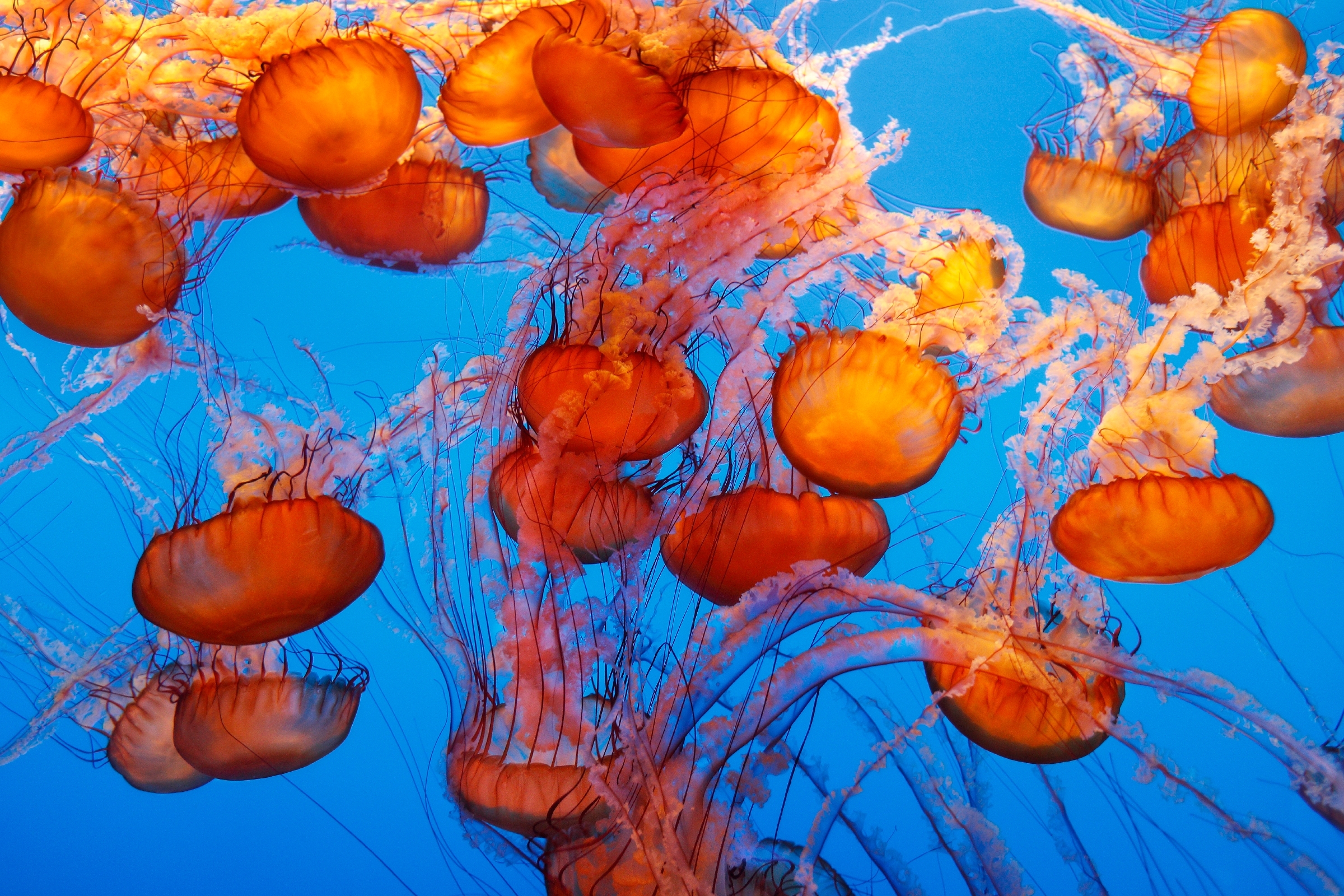
Why are jellyfish important? Why do they wash up on beaches? And most crucially—can you call them “jellyfish”?! Aquarist extraordinaire Mackenzie answers all those questions and more in “Jellies 101—The Basics!”
Types of jellies
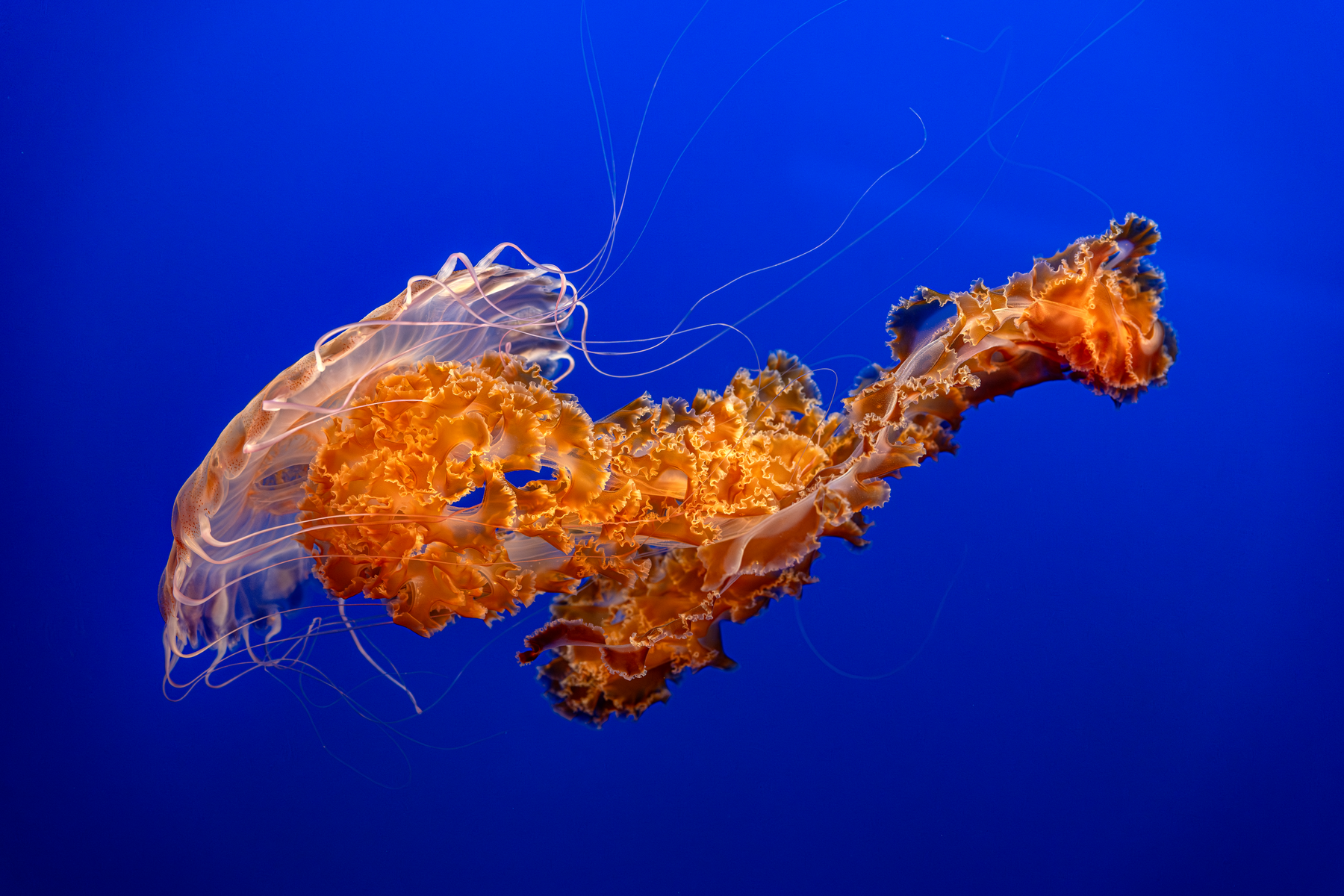
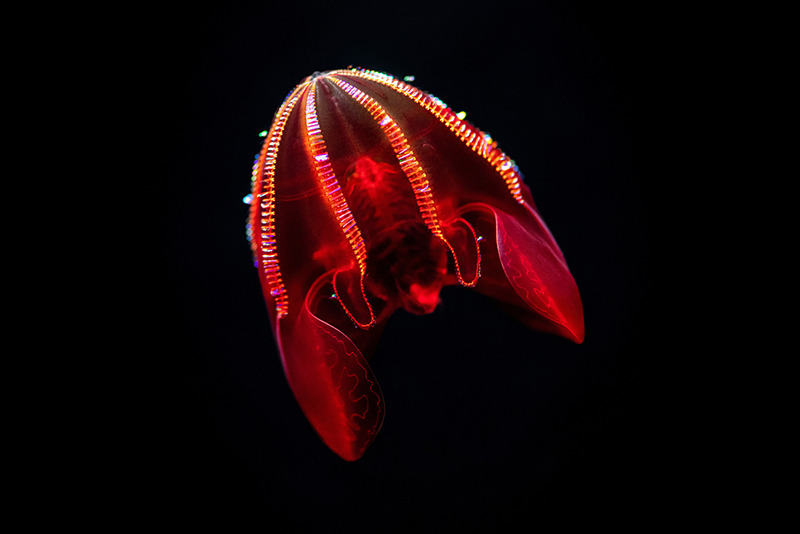
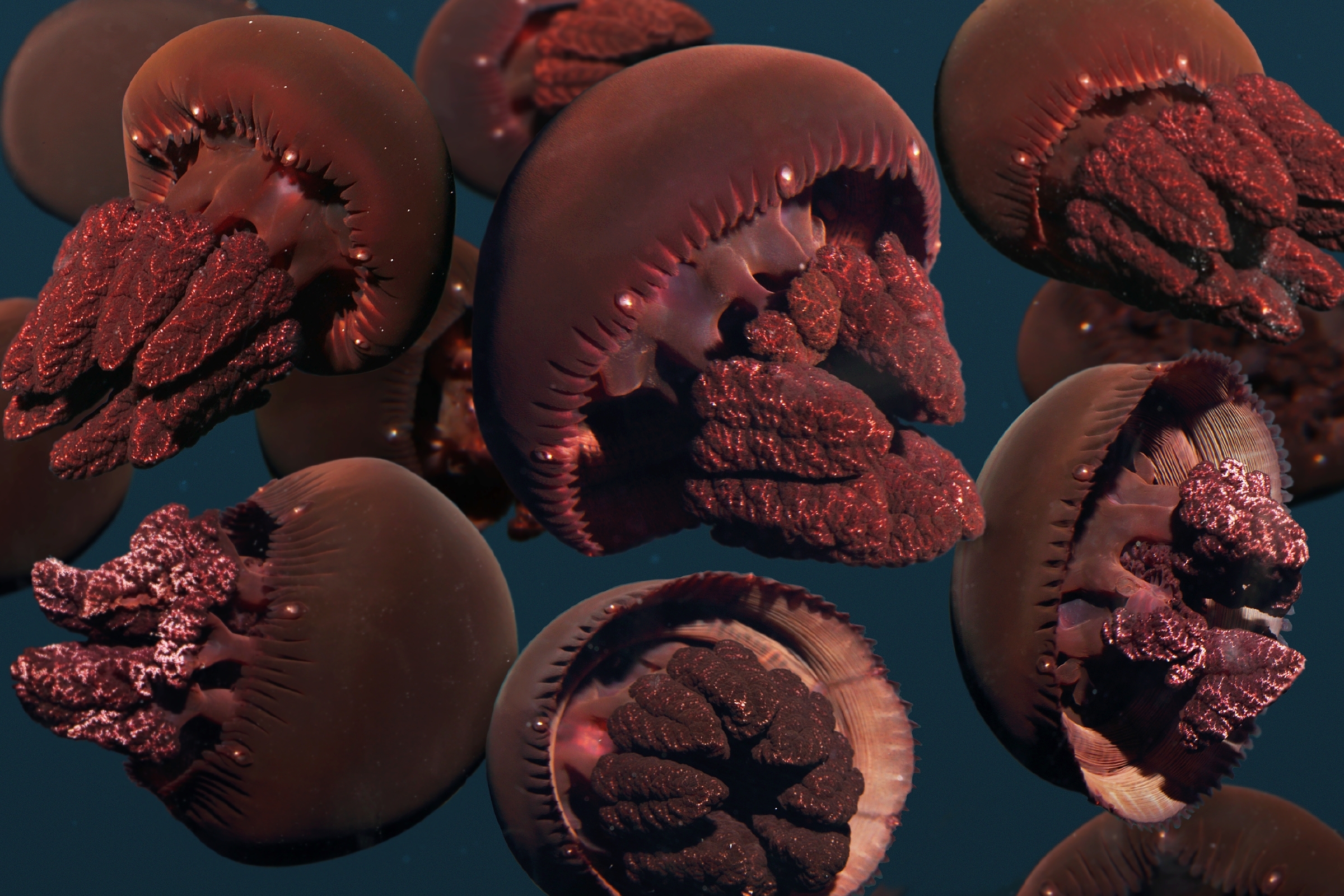
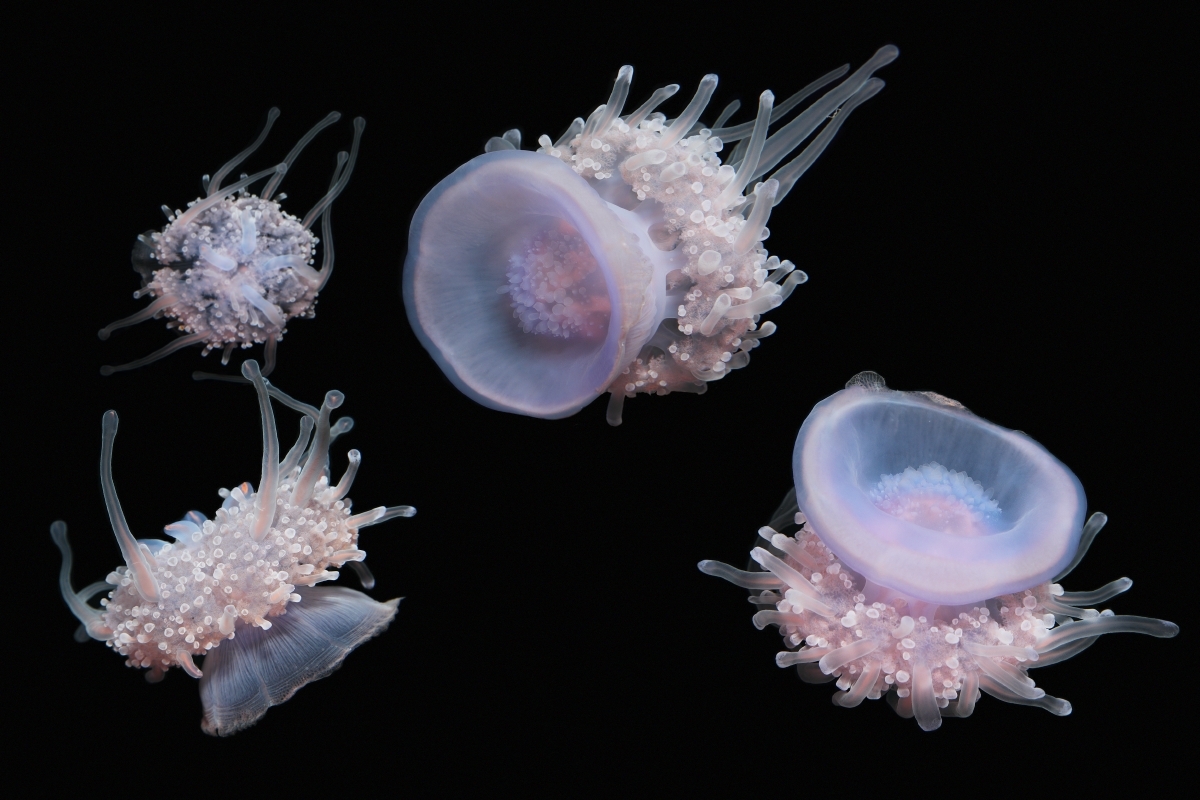
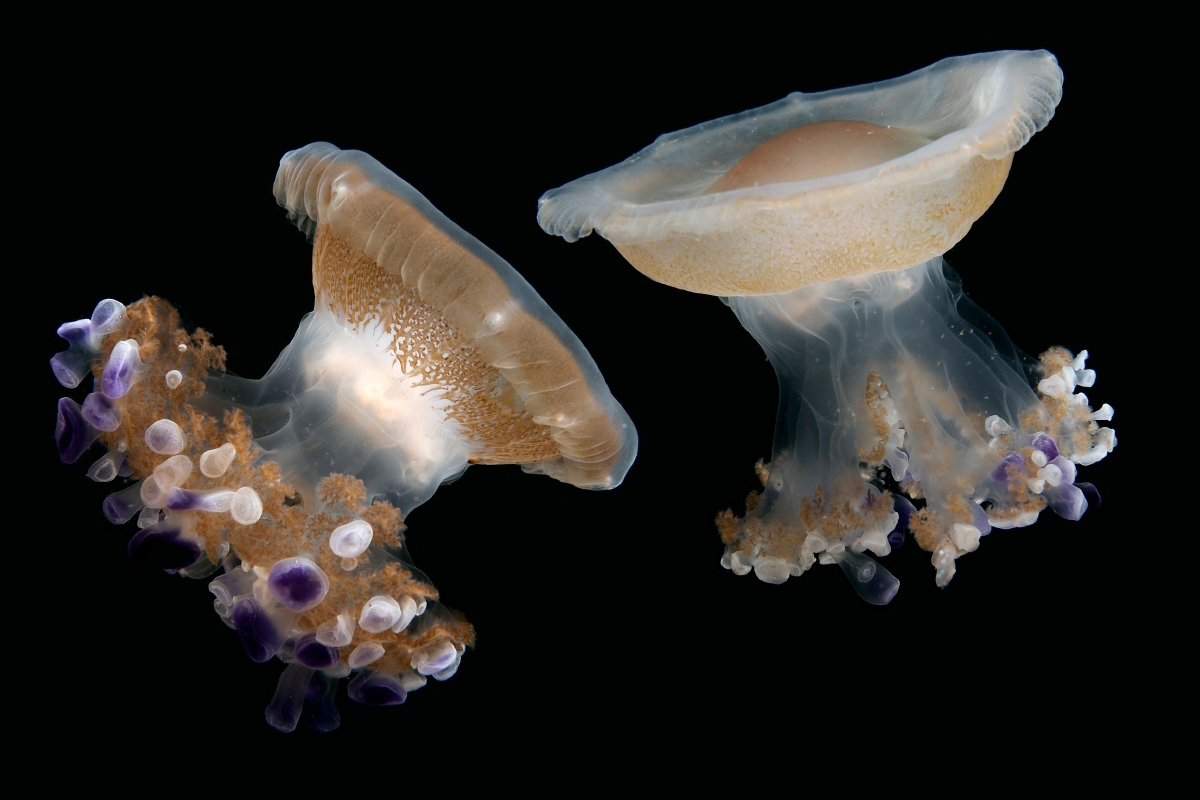
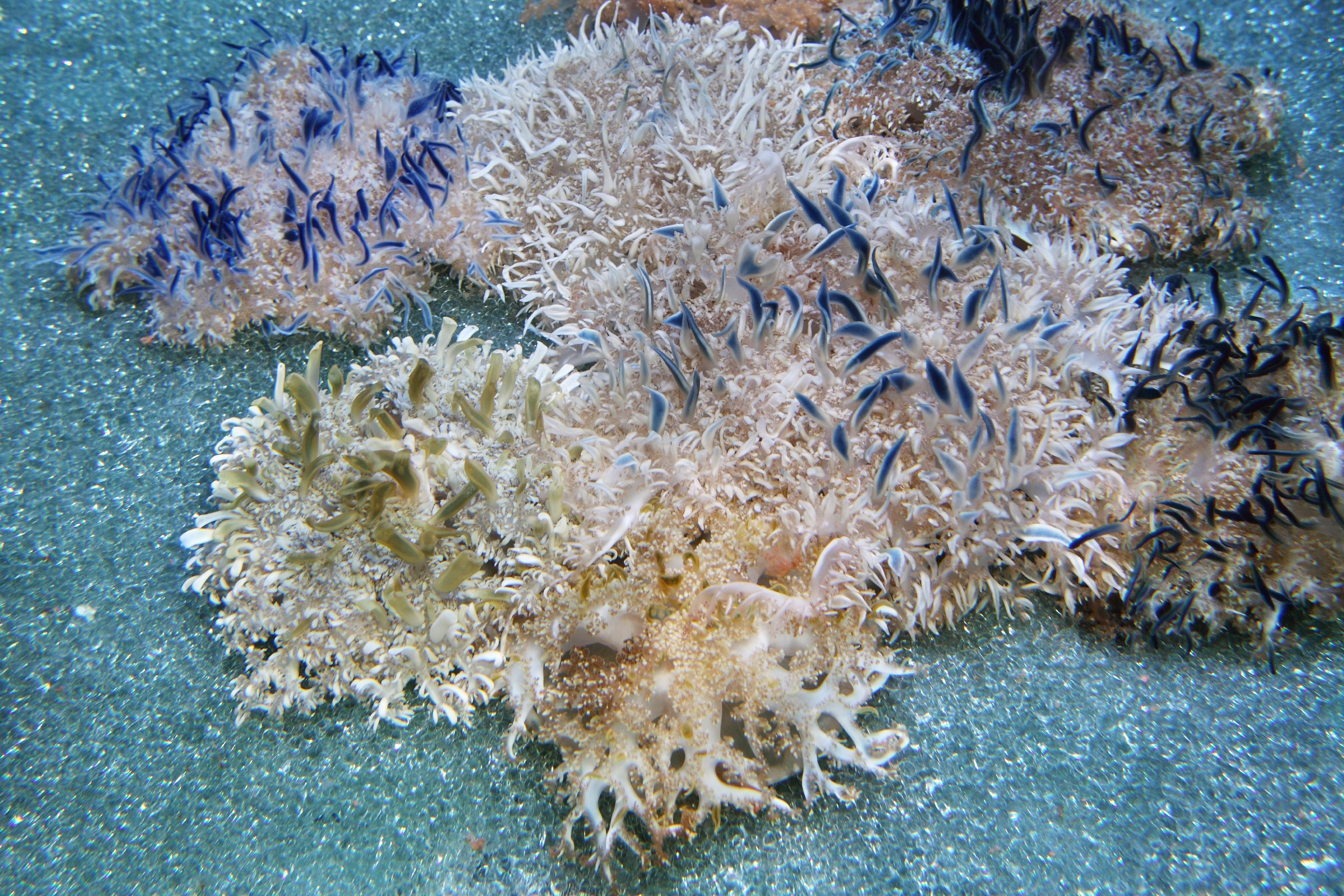
They’re elegant and they’re elaborate. Explore our jelly animal guides to dig into delightful details about different species of fascinating jellies!
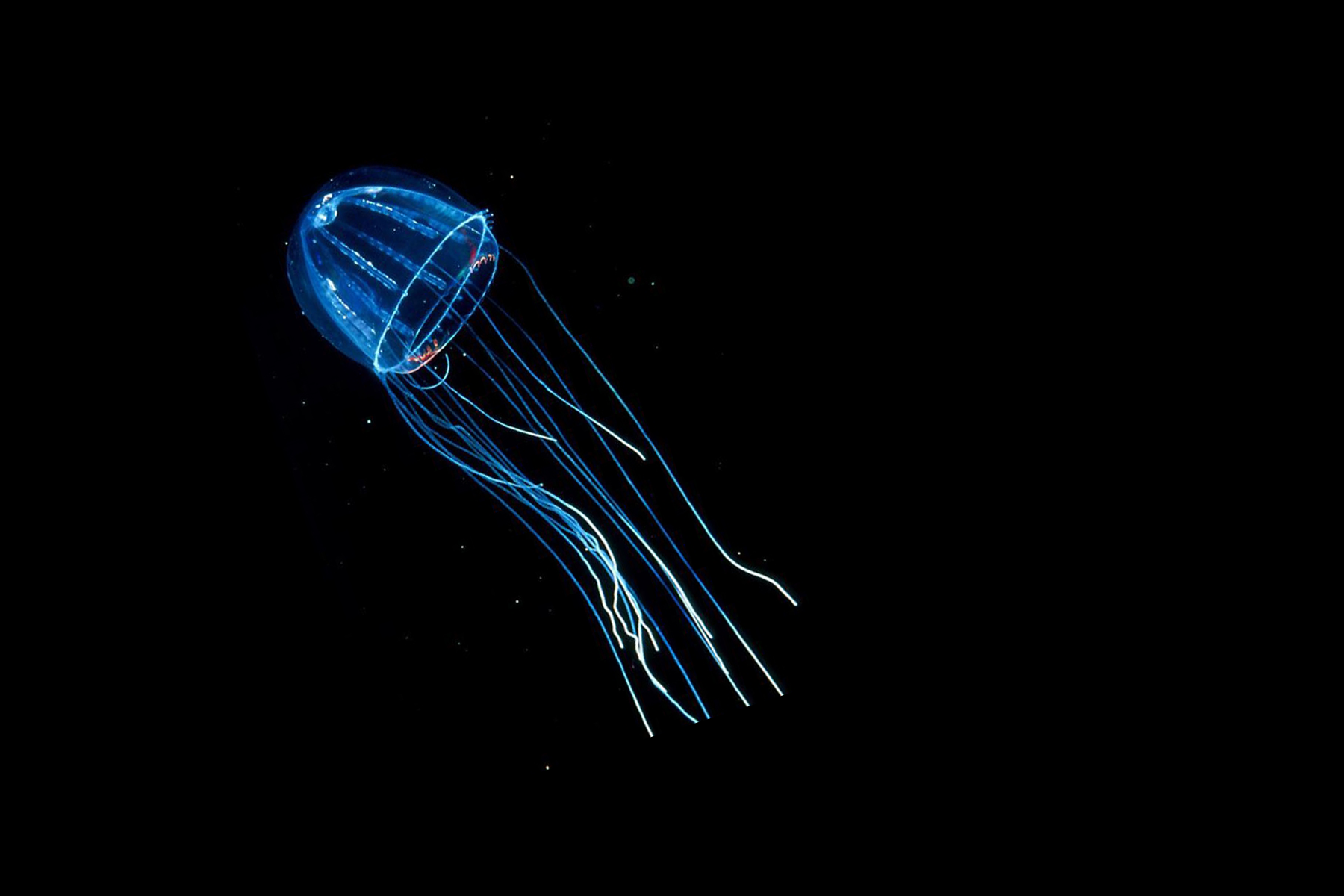
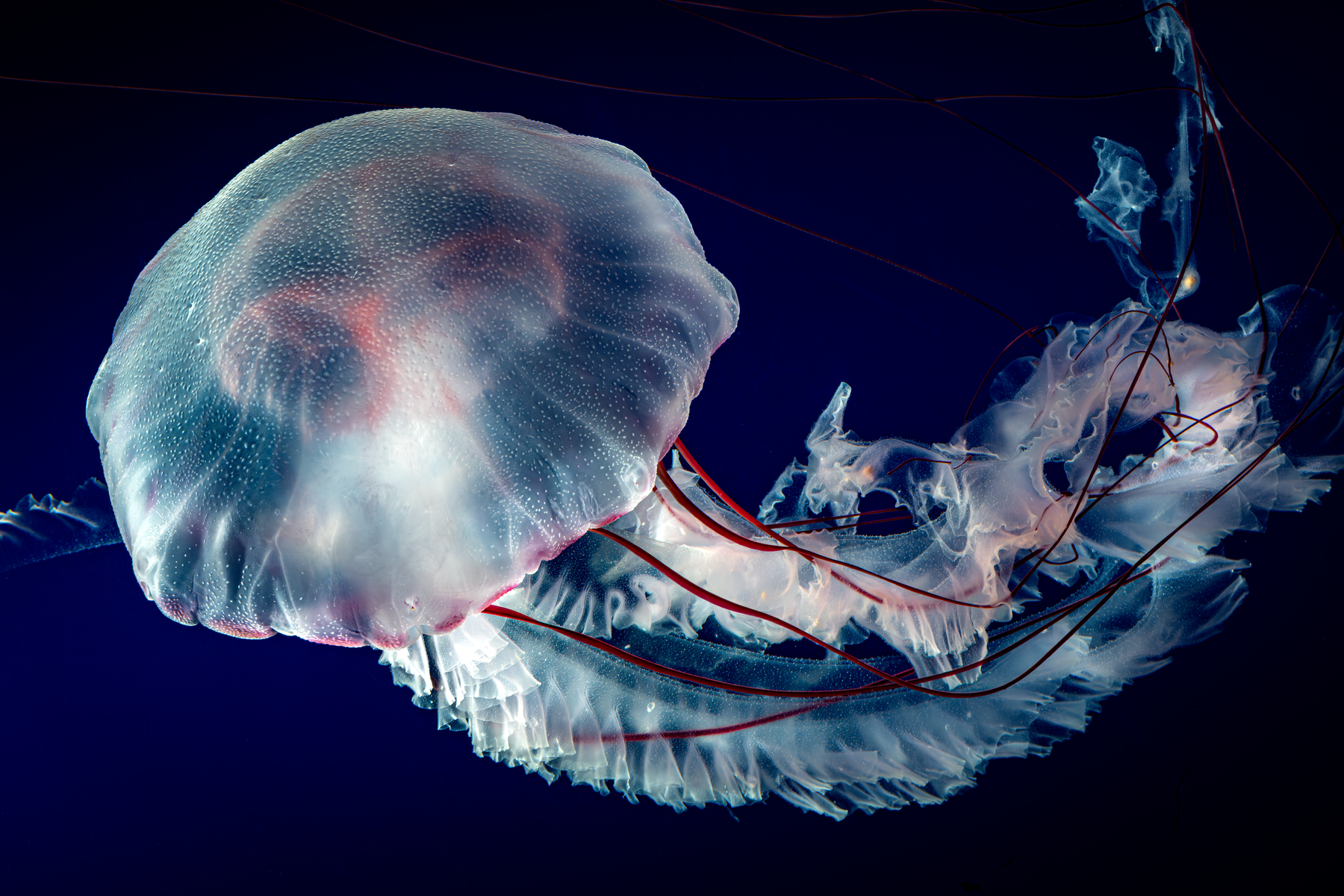
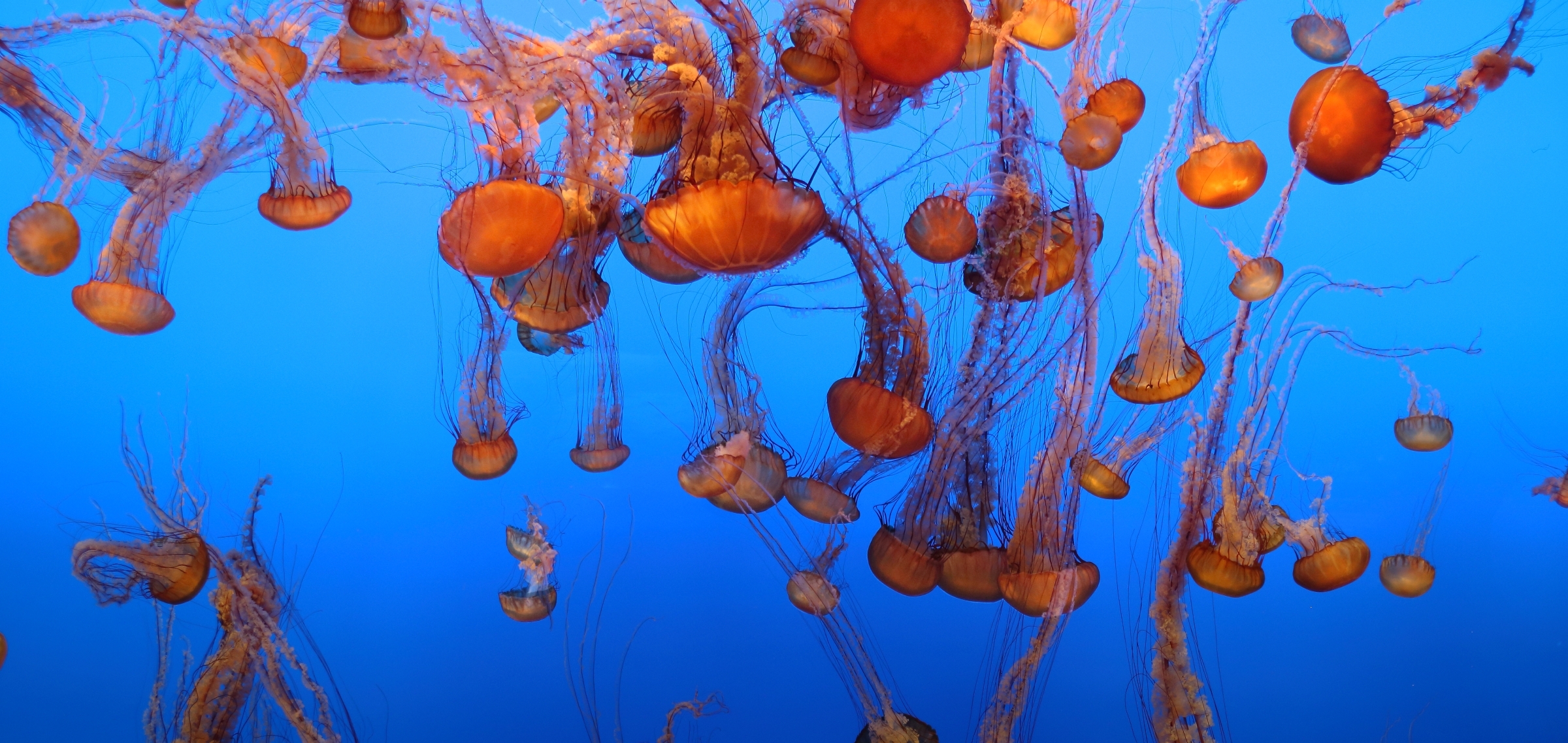
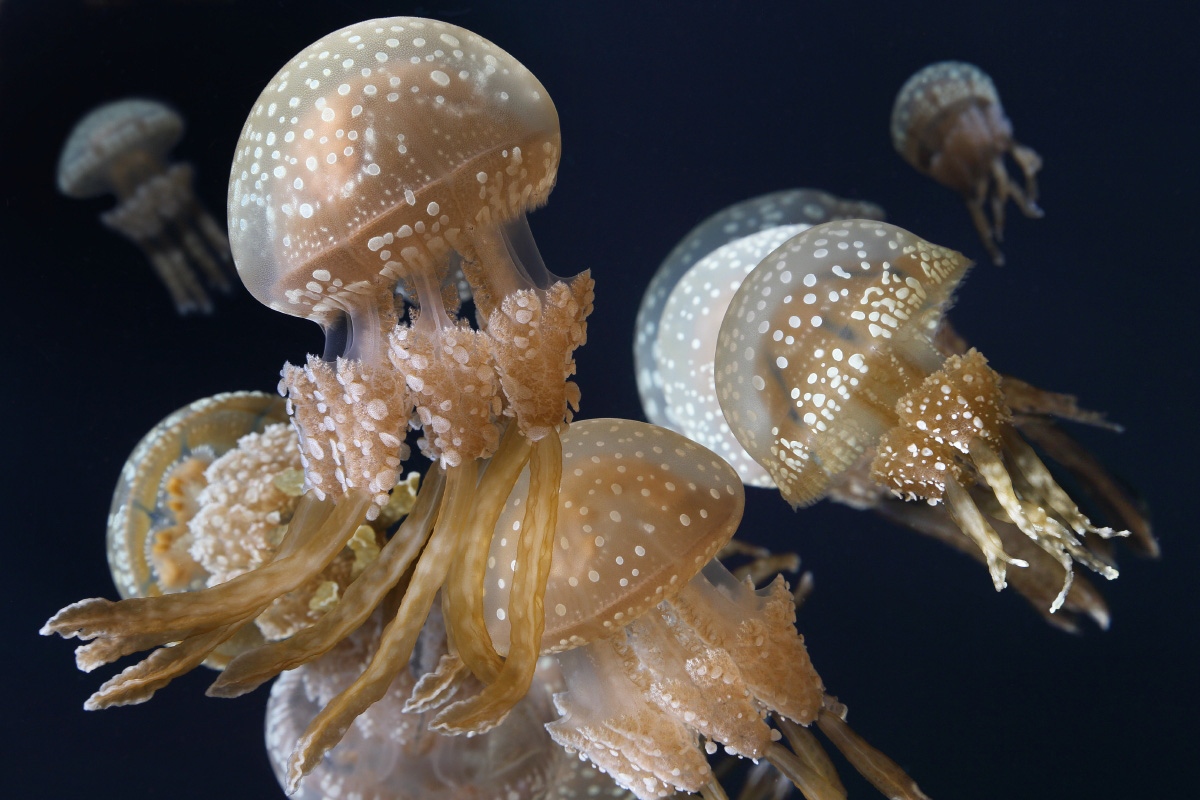
Jellies and humans
The most dangerous jelly
The sea wasp (Chironex fleckeri), or box jelly, is widely regarded as one of the most dangerous jellies in the world. Its potent toxins can cause great pain, scar or even kill people unlucky enough to swim into its tentacles. But as long as you're not getting stung, a box jelly is a remarkable creature to behold. The body is square rather than umbrella-shaped, and each corner of the "box" has a set of eyes. The box jelly lives in the waters off Northern Australia. Slightly less dangerous species live in other tropical waters, including near Hawaii, where they often gather in shallow waters eight to 10 days after a full moon.
Hungry? Pass the jellies
Some jellies are popular as food in Asia. Worldwide, an estimated 321,000 metric tons of jellies are caught for food every year. Japan alone imports up to 10,000 tons of jellies annually, where they can sell for $10 to $12 per pound. Preparing jellies is a competitive business complete with trade secrets practiced by respected "jellyfish masters."
Some jellies sold for human consumption have been known to contain excessive levels of aluminum due to lack of regulation on how jellies are dried and preserved. Consumers have been advised to limit their consumption of products made from jellies.
Jellywatch.org is a database created by our sister organization, the Monterey Bay Aquarium Research Institute (MBARI), to monitor jellyfish populations. Report your own jellyfish sightings to help scientists learn more about jelly blooms!
Blooms
Groups of jellies are known as “blooms.” Some view the jelly as a problematic animal—or worse, an underwater pest—due to large jelly blooms. These attitudes have led to the intentional destruction or removal of jelly populations. It is important to keep in mind that jellies have been blooming on this planet for over 600 million years and that jelly blooms are not new phenomena.
Recent jelly "blooms" are also being studied for their potential as sentinels of ocean change.
Most jelly populations are seasonal, but recently some jellies have appeared in areas they've never been seen before. For example, massive blooms of Mediterranean jellies appeared in the Mar Menor coastal lagoon after a regional agricultural boom. The agricultural development caused excessive nutrients to seep into the ground and eventually run into the lagoon through coastal runoff. Scientists are investigating causes for jellyfish blooms like these by studying their life cycles.
The life cycle of jellies
Jellies can reproduce both sexually and asexually. During the adult (and most recognizable) medusa phase of their life cycle, jellies reproduce by broadcasting egg and sperm that develop into free-swimming planula larvae. These larvae float around until conditions are just right and then attach themselves to a substrate. Once attached, they develop into polyps and start to grow and feed.
When the time and water conditions are just right, some of these polyps will metamorphose and release ephyrae—infant jellies. These baby jellies grow into the mature medusa phase. Thus, the cycle begins again.
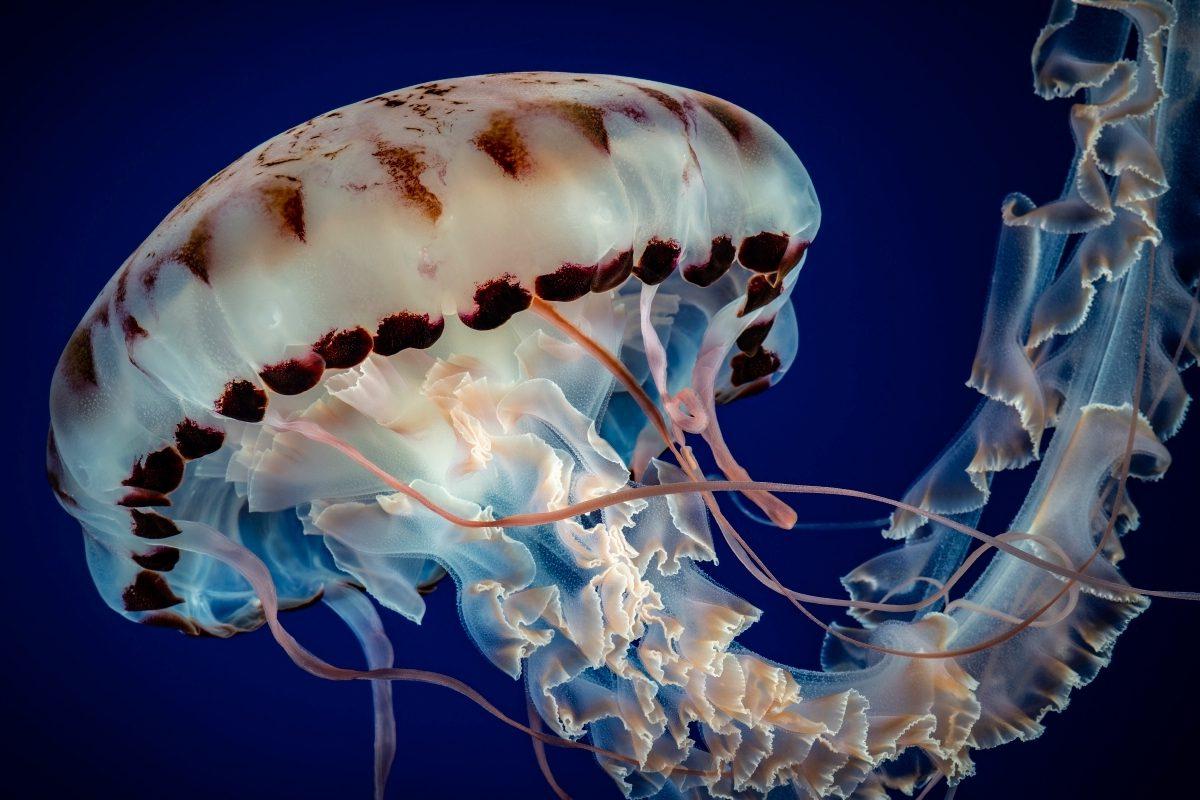
Purple-striped jelly
Conservation
Why jellies are important
Jellies play a vital role in ocean ecosystems. Not only do they eat plankton, but some are food for large animals like sea turtles. In Monterey Bay, for example, the enormous Pacific leatherback sea turtle travels across the Pacific Ocean, all the way from Indonesia, to feed specifically on sea nettles.
A recent study led by the Aquarium showed that jellies are also threatened by microplastics, and that they serve as an entry point for microplastics in the open ocean food chain. This shows how important jellies are as a food source for many animals.
Jelly research
Our jellies research helps us understand the life cycles and growing conditions of jellies.
In addition to developing animal care methods for jellies that are now used by aquariums and scientists worldwide, our aquarists have described the life cycles of five species of jellies displayed in the Aquarium: the cross jelly (Mitrocoma cellularia), the egg-yolk jelly (Phacellophora camtschatica), the flower hat jelly (Olindias formosus), the Pacific sea nettle (Chrysaora fuscescens) and the purple-striped jelly (Chrysaora colorata).
Our jelly aquarists also have described the full life cycles of two new species of deep-sea jellies—Earleria corachloeae and Earleria purpurea—and are studying several more.
Innovating on jelly tagging
We have also collaborated with other institutions to help publish the first comprehensive how-to tagging paper for jellyfish researchers everywhere.
Related videos
Pioneering comb jelly care

It took our team years to figure out how to culture comb jellies—the process took exhaustive testing and research! This research allows us to continue learning about comb jelly biology and understand how these animals may react to ocean acidification and other results of climate change.
Frequently asked questions (FAQ)
Do we call them “jelly” or “jellyfish”? What’s the difference?
A more accurate term for these marine animals is just “jellies” because, technically speaking, they’re not fish. The term "jellies" refers to a large number of organisms including tunicates, salps, cnidarians and ctenophores.
Why do jellies sting?
Jellies’ nematocysts only sting when triggered by touching an object. The activator of the nematocyst can detect different cell types, triggering only on certain prey and by physical disturbance—such as a human hand.
How venomous are jellies?
Most jellies have mild toxins that don't affect humans, although some can hurt as much as a bee sting. However, the stings of species like the sea wasp, box and Irukandji jellies can be extremely dangerous to humans.
What should I do if I’m stung by a jelly?
There haven't been enough medical studies on treating jelly stings to say for certain if one treatment works better than another. That said, topical pain blocking medications such as lidocaine are effective at relieving pain and burning. In a joint study with Stanford Medical, we found that most common treatments are ineffective at treating pain. Only lidocaine was an effective pain reliever.
Note: If you’re in an emergency situation involving a jelly sting or are having an allergic reaction, please go to the emergency room immediately.
Which species of jelly is dangerous to humans?
Chironex fleckeri, otherwise known as the sea wasp, is the most venomous animal in the world. Its venom attacks the heart, nervous system and skin cells of whatever animal swims into its tentacles. One meter of tentacle contact for an adult human is fatal within just minutes. The venom’s effect is so painful, in fact, that humans have gone into shock and drowned or died of heart failure while swimming ashore. Luckily, most Chironex stings are mild and do not require hospitalization.
Can you survive a box jelly sting?
Those who have been lucky enough to survive an encounter with one are known to experience pain for several weeks afterwards, often developing scars on the areas of skin where the venomous nematocysts made contact.
Did you know?
- Jellies are older than the dinosaurs. Scientists have fossilized evidence that suggests jellies have been around for 600 millions years or more, making them one of the oldest multicellular life forms on our planet.
- Diet plays a role in how some jellies are colored. Look closely and you’ll notice that the contents of a jelly’s four stomachs can often be seen after feeding time at the Aquarium.
- There’s a jelly species whose name was inspired by the punk rock movement. The Amphinema rollinsi was named after musician and writer Henry Rollins by the Aquarium’s own marine biologist Chad Widmer, who is a big fan of his work.
- One of the most toxic jellies is also one of the tiniest. The body’s reaction to the toxic venom of the Irukandji, which is found off the coast of Australia and has bells less than one inch wide, is so overpowering that it has its own name: Irukandji syndrome. Symptoms include shooting muscle pains, nausea and fluid in the lungs.
More jellies
Animal
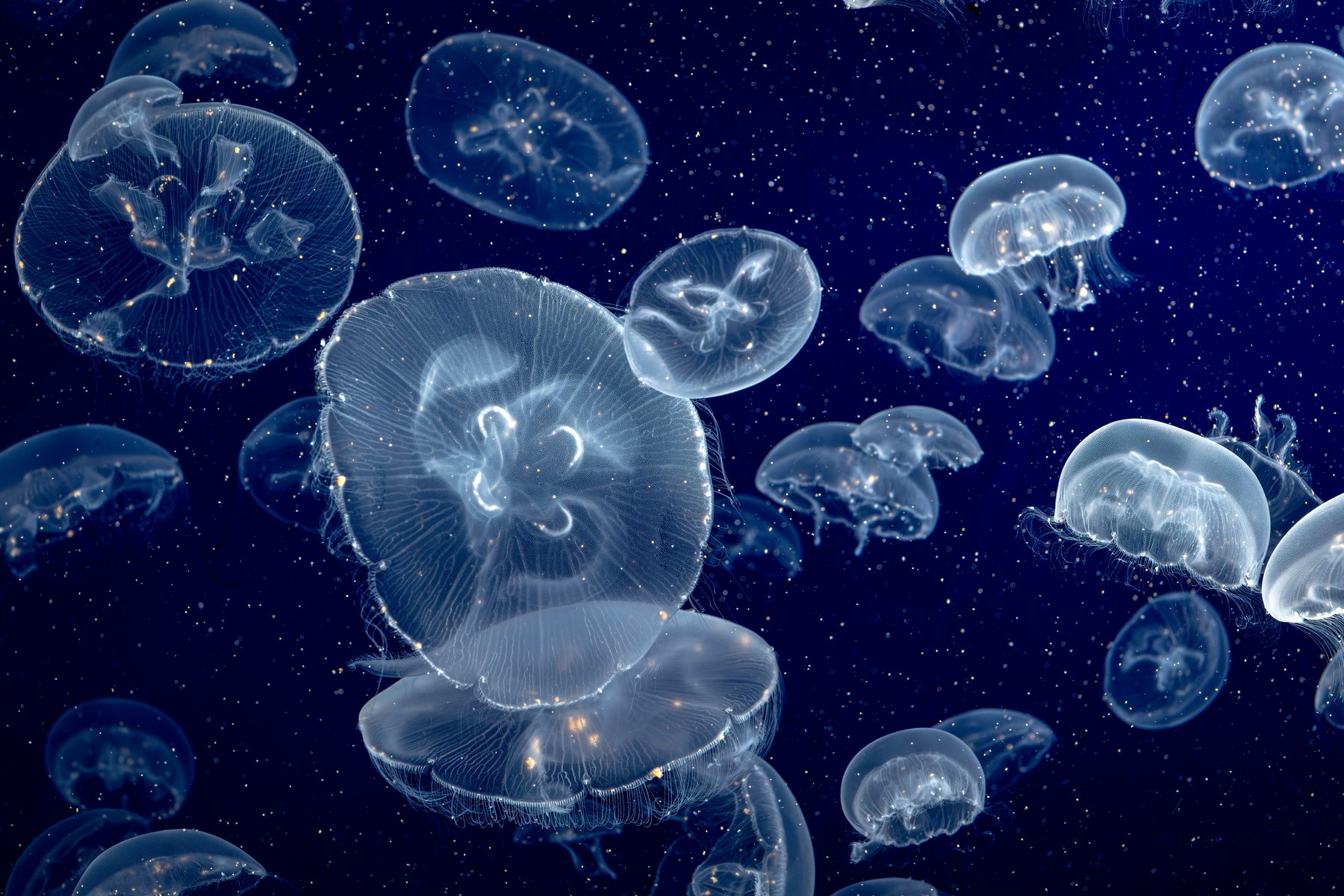
Moon jelly
This dreamy jelly is named for their translucent, moon-like bell.
Check out this animal – Moon jelly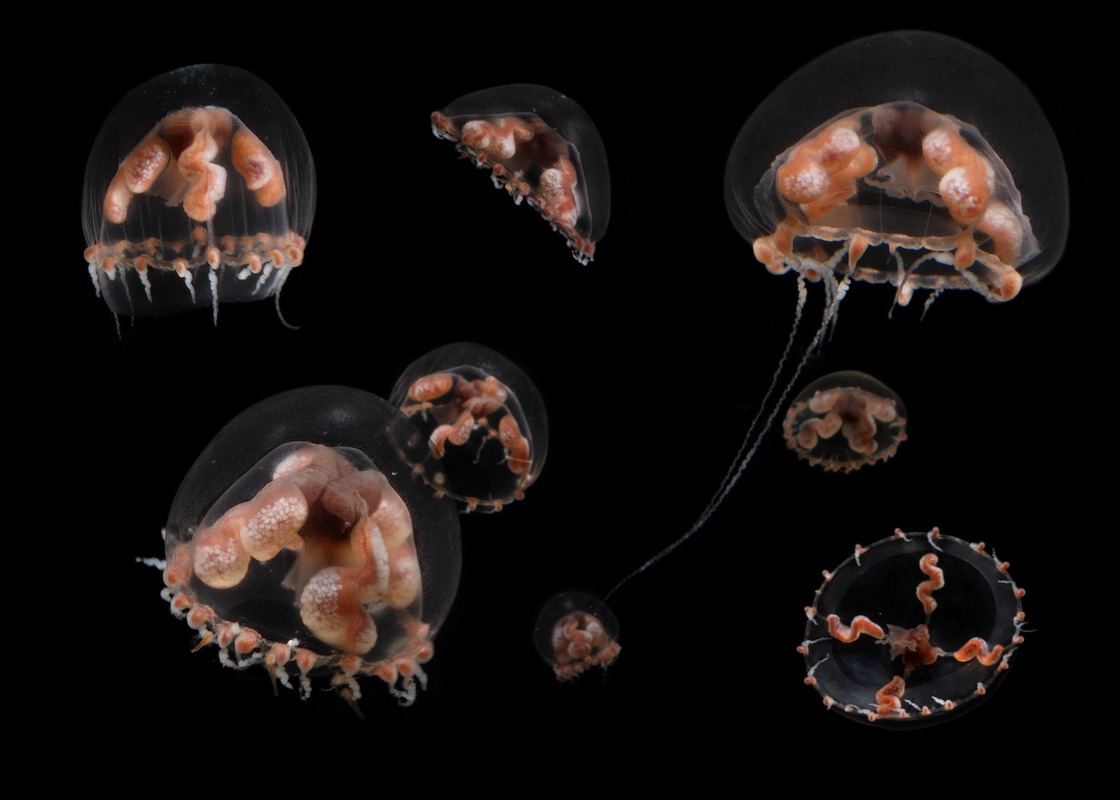
Animal
Wigdroid jelly
With no hard surfaces in the midwater, this jelly’s polyps settle on the heads of live shrimp instead.
Check out this animal – Wigdroid jelly