

Tufted puffin
Fratercula cirrhata
- On view
- Open Sea
- Animal type
- Birds
- Ecosystem
- Coastal waters
- Relatives
- Horned puffin, Atlantic puffin
- Diet
- Small fishes, anchovies, capelin, lanternfishes, rockfishes, squid, krill, invertebrates
- Range
- Breeding along the Northern Pacific coast from Japan to Russia and California to Alaska; and wintering throughout the open waters of the Northern Pacific
- Size
- From 14.2 to 15.8 inches (36–40 cm); 1.1 to 2.2 pounds (520–1000 g)
Meet the tufted puffin
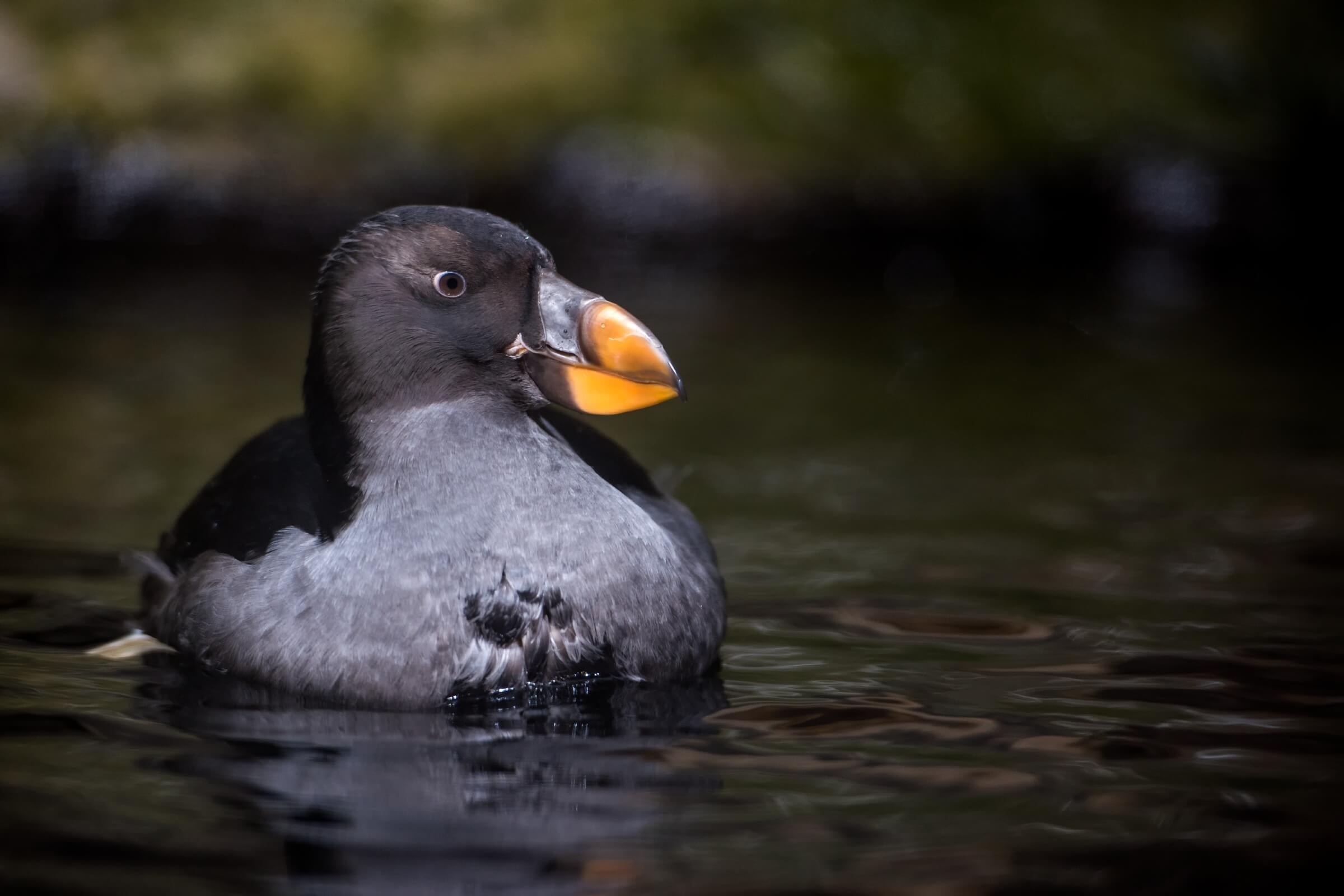
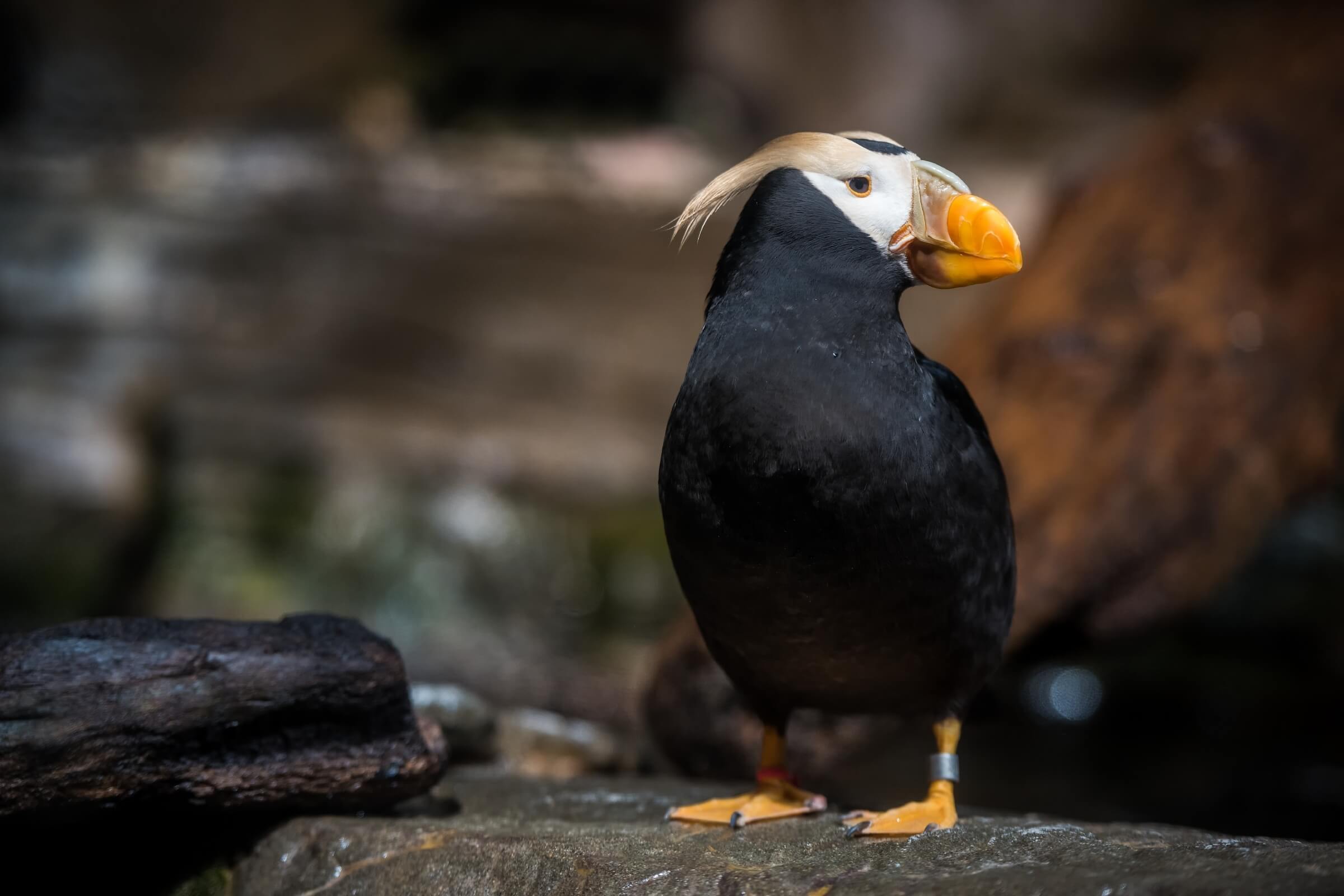
This bird's bright colors have earned them the nickname “parrot of the sea,” though they're at home on land as well. In early spring, their beaks and feet turn a vibrant orange in preparation for breeding season. In winter, they fade to dark plumage and duller orange shades compared to their summer colors. Juveniles are less colorful than the adults.
At the Aquarium
Our puffins at the Aquarium eats capelin, whitebait, sand lances, squid, krill, and silversides. They come right over for their hand feedings and also dive right in for broadcast feeds in the water. Hand-feeding is a form of enrichment that keeps our birds happy and stimulated, but it also has practical benefits. By using food as reinforcement, our puffins have learned to get onto a scale to make sure each bird is a healthy weight. During regular vet exams, they stand on a clear box with a mirror inside called a "footbox" and voluntarily let us check the health of their feet. They also learn to walk into a travel kennel on their own when it’s time to leave exhibit for routine vet exams.
Broadcast feeds are fun for the birds and the guests, too! An aviculturist tosses fish into the pool, encouraging our puffins and other seabirds to engage in natural behaviors such as swimming, diving, and foraging. This helps keep our birds physically and mentally healthy.
Related videos
Puffins in the Open Sea exhibit

See a puffin "fly" underwater at the diving birds display in our Open Sea wing. These seabirds usually dive for 20 to 30 seconds but can stay underwater for up to a full minute.
Natural history
The tufted puffin nests in burrows or tunnels on inaccessible rocky cliffs and offshore islands. You'll find them in dense, large colonies during the breeding season in the spring and summer. While nesting, the puffin is very social; flocks of ten to 25 birds may leave the colony to gather food for their mates and chicks. But in the winter after the breeding season, tufted puffins become solitary and disperse far and wide. They venture far out to sea and experience a range of conditions from the frigid seas of the Bering Strait to subtropical waters off California. When it’s time to breed again, the tufted puffin returns to the colony where they were born, and usually to the same mate.
Conservation
Tons of plastic trash swirls on ocean currents, and seabirds searching for flashing fishes frequently mistake shiny plastic debris for food. With their stomachs full of plastic instead of fish, many oceanic birds risk starvation. You can help by reducing your use of plastic overall. Less plastic on land means less plastic in the ocean.
Cool facts
- A puffin’s beak can hold many fish. Their raspy tongue holds fish against spines on their roof palate so the puffin can open their beak and capture more prey. An average catch is ten fish per trip!
- A puffin looks like a hybrid of a fish and a bird as they “fly” under water. Heavy bones also allow the bird to dive deep in search of food. Scientists aren’t quite sure how deep a puffin dives, but based on similar diving birds, they may reach as deep as 300 feet.
- To nest on rocky cliffs, the tufted puffin relies on sharp nails on their feet to climb over rocks.
- A group of puffins is called a circus.
Up next in coastal waters
Animal
Wunderpus
Named after the German word “Wunder” meaning “marvel” or “wonder,” the wunderpus has long, thin arms and…
Keep exploring
Animal
Sea otter
Beyond their cute faces and fluffy fur, sea otters play an irreplaceable role in their coastal habitats.