

Western snowy plover
Charadrius nivosus
- On view
- Sandy Shore & Aviary
- Animal type
- Birds
- Ecosystem
- Beaches & dunes
- Relatives
- Killdeers, black-bellied plovers, other species of plovers and lapwings; Family: Charadriidae
- Diet
- Small crustaceans, soft invertebrates, small insects
- Range
- Along the west coast of North America, in tidal waters of the Pacific Ocean from Damon Point, Washington to Bahia Magdelena, Baja California, Mexico. Snowy plovers can also be found along the gulf coast and scattered inland localities of North America, and some coastal parts of South America.
- Size
- From 6 to 7 inches (15–17 cm), 1.1–2 oz (32.5–58 g)
Meet the snowy plover
This small, white plover wears two black patches on its shoulders. It makes its home on sand, dry mud, or salt flats on the edges of ocean beaches, rivers, lakes, or ponds along the Pacific coast of North and South America. It nests in shallow nooks in the sand, sometimes using human footprints to keep its eggs.
Endangered Species Act (ESA)
The ESA is a U.S. law that protects plants and animals at risk of extinction by classifying them as either Threatened or Endangered.
Threatened(active)
Endangered
International Union for the Conservation of Nature (IUCN)
The IUCN Red List is a global system that evaluates the conservation status of species and classifies them based on their risk of extinction.
Least concern
Near threatened(active)
Vulnerable
Endangered
Critical
Extinct in wild
Extinct
Conservation
Since 1993, the U.S. Pacific coast population of snowy plovers has been listed as threatened under the Endangered Species Act. It’s estimated that only about 2,500 snowy plovers breed along the Pacific Coast from early March to late September. Today, only 28 major nesting areas remain.
Plover nesting areas, which are out in the open in mere divots on sandy beaches, are destroyed as a result of human disturbance, predation by animals and inclement weather. An adult snowy plover scurries away when its nest is approached, and it may be hours before the bird can return. While it’s away, its eggs can be crushed, overheat in the sun or become a meal for a watchful predator.
The snowy plover’s nesting season occurs during the summer months when people visit beaches the most. Human activities, such as walking, jogging, running pets, horseback riding and vehicle use, are key factors in the ongoing decline in breeding sites and populations. Non-native European beachgrass and urban development also contribute to habitat destruction for the declining snowy plover population.
A research organization called Point Blue Conservation Science has a team of biologists that monitor snowy plovers in the wild. When they find an injured chick or abandoned eggs, they bring them to a snowy plover rehabilitation facility.
As part of the U.S. Fish and Wildlife Service’s Snowy Plover Recovery Plan, California State Park employees, biologists and volunteers fence off some vulnerable nesting areas during breeding seasons to fend off people and predators, and keep an eye on snowy plover nests.
The snowy plover is considered “Near Threatened” by the International Union for the Conservation of Nature and Natural Resources (IUCN).
You can help snowy plovers by sharing the beach during the breeding months—March through August. Keep pets on a leash and stay below the tide line while strolling on the beach to minimize disturbance of nesting sites.
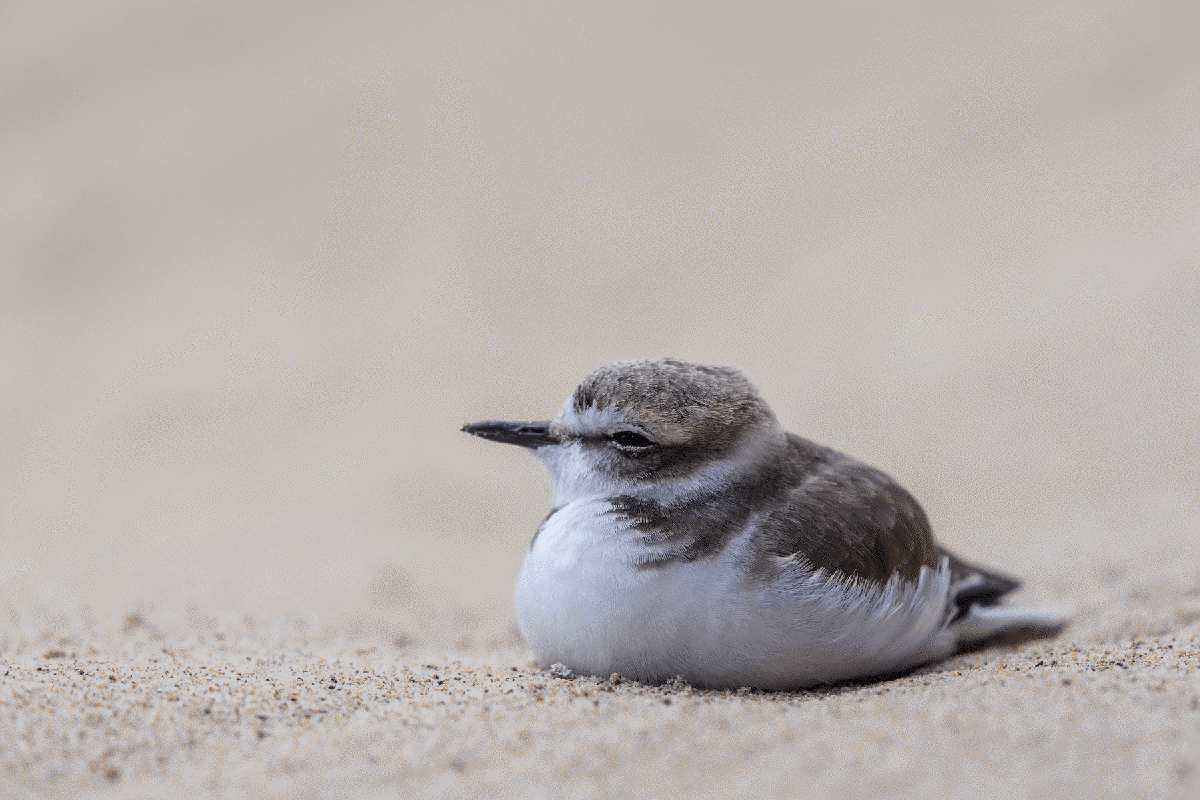
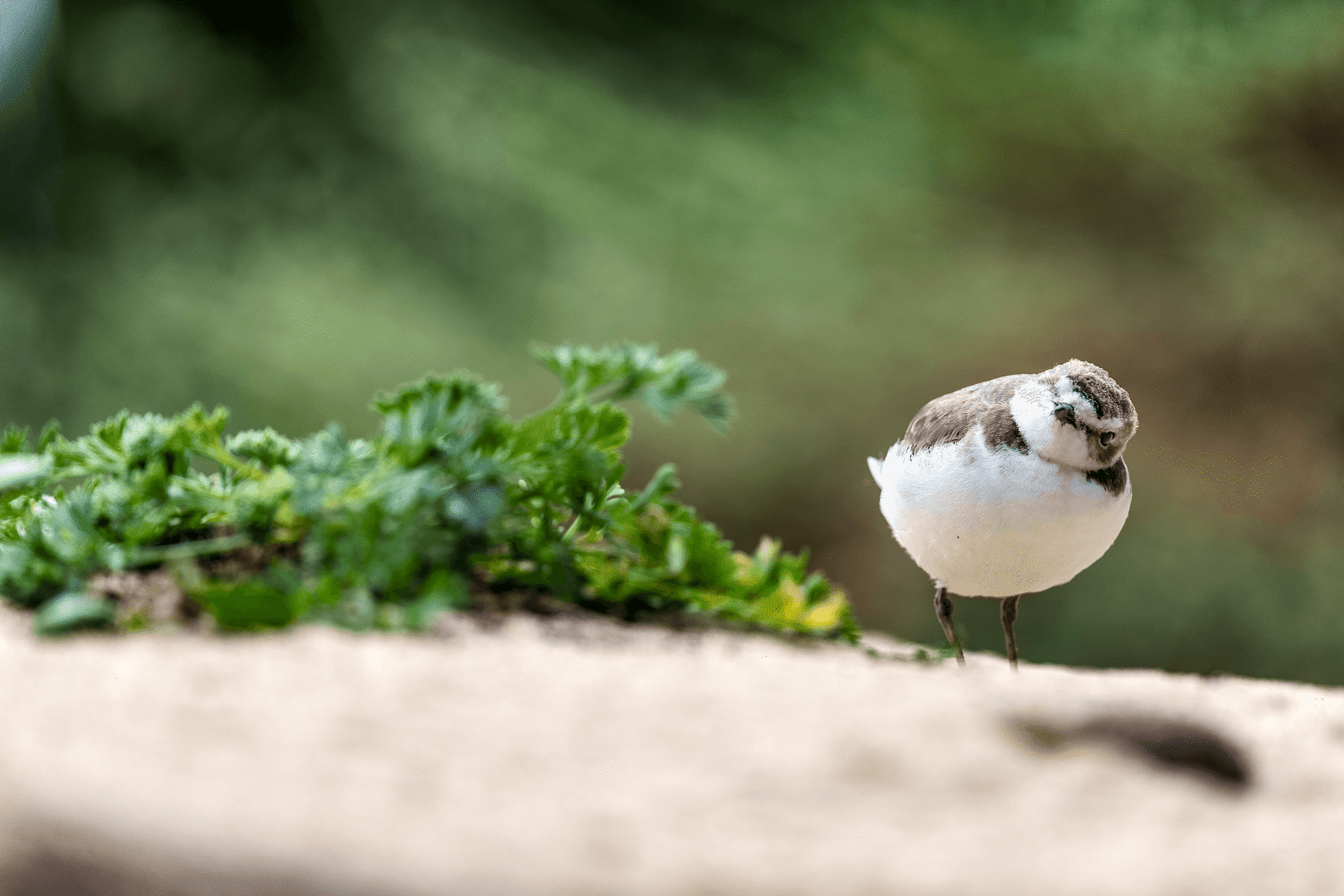
Cool facts
- A snowy plover chick is about the size of a person’s thumb when it hatches, but its legs are the size they will be as an adult.
- A male and female share incubation duties. The female typically deserts the chicks shortly after hatching, leaving the early chick-rearing duties to the male, which looks after the chicks for about a month until they fledge.
- A female snowy plover may breed with more than one male, re-nesting if another male is available and if there’s enough time remaining in the season. For the last brood of the season, the female generally assists the male in caring for the chicks.
- The male and female defend their nest territories from other plovers by posturing, chasing or fighting. Sometimes a bird may use its bill to grab and pull on its enemy’s tail feathers, turning in circles all the while.
- An adult plover doesn’t feed its chicks—instead, it leads them to suitable feeding areas. The chicks leave the nest within hours after hatching to search for food. The snowy plover typically forages for small invertebrates in wet or dry beach sand, among kelp washed ashore by the tide and in low foredune vegetation.
Up next in beaches & dunes
Animal
Killdeer
The black-and-white bands on a killdeer's head and neck make it harder to see as it sits quietly.
Keep exploring
Animal
Sand crab
No bigger than a thumb, a sand crab spends most of its time buried in shifting sand.