

Yellowfin tuna
Thunnus albacares
- On view
- Open Sea
- Animal type
- Fishes
- Ecosystem
- Open ocean
- Relatives
- Bluefin and albacore tuna; mackerel; bonito; Family: Scombridae
- Diet
- Fish, krill, pelagic red crab, squid
- Range
- Found globally in all tropical and subtropical waters
- Size
- Up to 7 feet (2 m), 450 pounds (200 kg)
Meet the yellowfin tuna
The yellowfin, like all tuna, never stops swimming. As it moves, water passes over its gills, allowing it to exchange gases with the surrounding water. This continuous swimming supplies the fish with oxygen it needs to fuel its metabolic rate.
Watch in real time
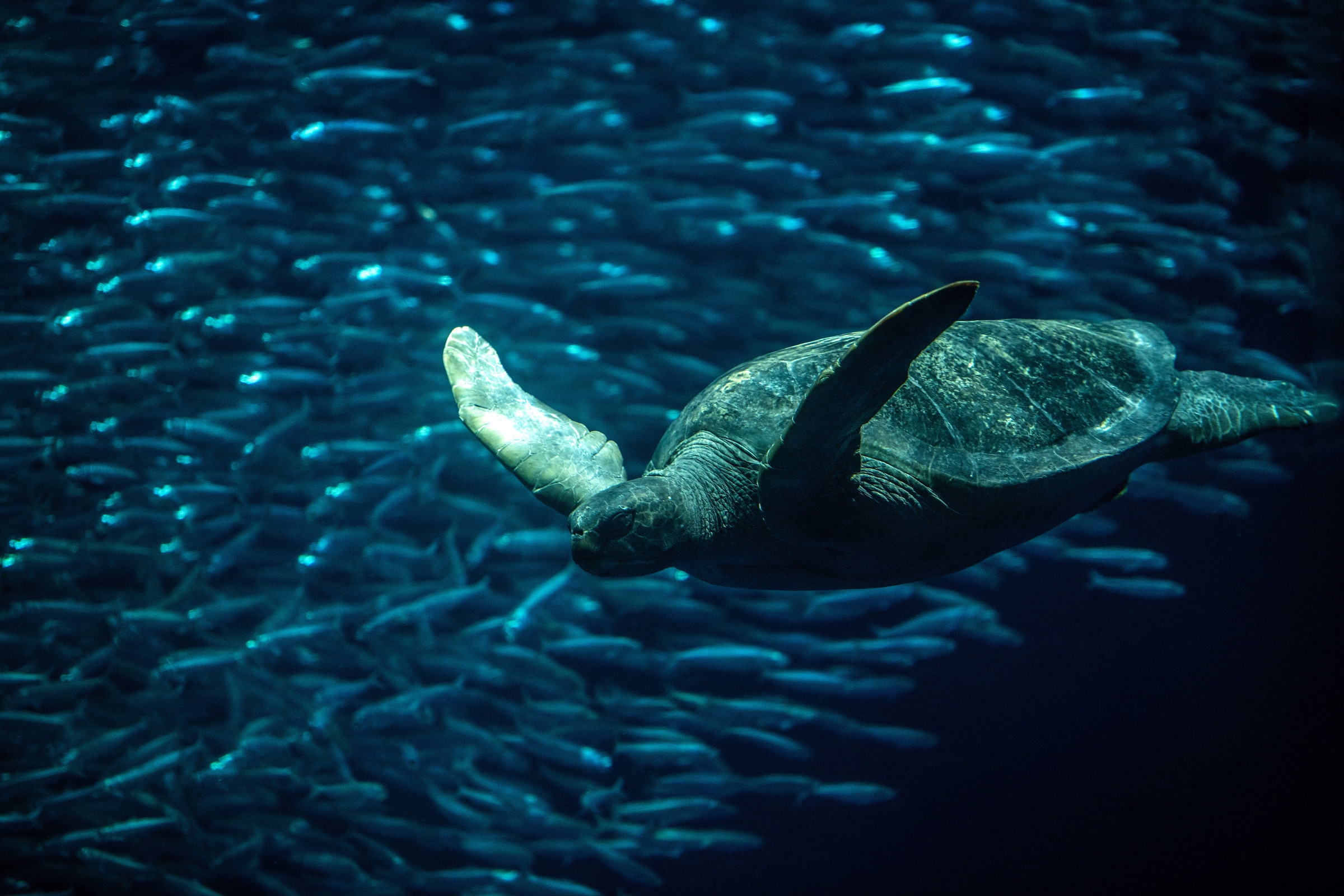
Open Sea Cam
Check out this live cam – Open Sea CamAll about the yellowfin tuna
The tuna and other members of the family Scombridae are some of the only bony fishes to physiologically alter their body temperature above their environmental water temperature. Although it’s not technically considered warm-blooded, it comes close. Other fishes that maintain a higher body temperature are five species of cartilaginous fishes including the white shark, the shortfin and longfin mako sharks, the porbeagle shark and the salmon shark.
Staying warm is hard work
A tuna maintains its high body temperature with help from its circulatory system. Heat derived from digestion and increased muscle activity is stored in the blood, keeping the fish warmer than the surrounding water temperature. When blood passes through the gills, it is at its coolest: the water that comes into contact with the gills will temporarily cool the blood before being reheated as it flows through the body.
The tuna’s warmer temperature requires it to eat more. Body processes such as muscle efficiency increase at the warmer internal temperature, thereby requiring more energy. Because of this high energy use, a tuna is known to have a higher metabolic rate. This also means that when the tuna eats, its body can quickly extract energy from the food. Did you know a tuna often eats as much as 5 percent of its body weight each day?
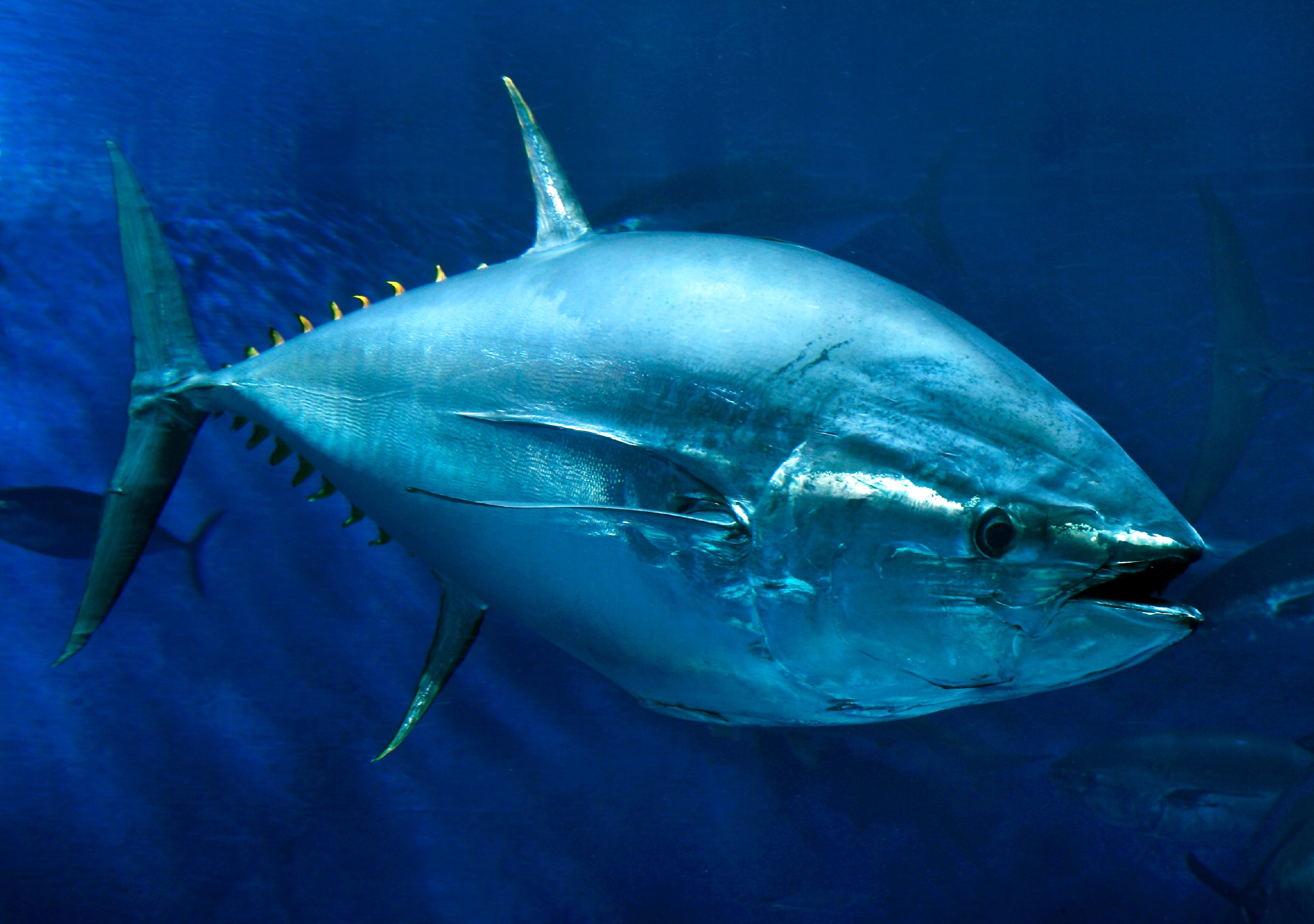
Magnetite, a mineral found in the sensory pits of a tuna’s nose, may be used to detect the earth’s magnetic field for navigation.
Don’t stop, won’t stop
The tuna is a speedy cruiser. A 200-pound (91 kg) tuna can swim steadily at 2.5 to 3 miles per hour (4 to 4.8 kph) with bursting speeds of nearly 30 miles per hour (48 kph).
The tuna has many adaptations that allow it to swim efficiently:
- A streamlined, torpedo-shaped body
- Long pectoral (side) fins—for lift and turning
- Crescent-moon-shaped tail fin—for speed and efficiency
- High proportion of red muscle fibers—let the fish make continuous muscle contractions with lower oxygen consumption
- Dorsal and anal finlets (those small triangular “spikes” along the top and bottom of the fish’s body)—to help stabilize water flowing over its body
- Eyes that are flush with its head—for efficient hydrodynamics
- Specially modified scales just behind the head—for decreasing drag around the widest part of its body
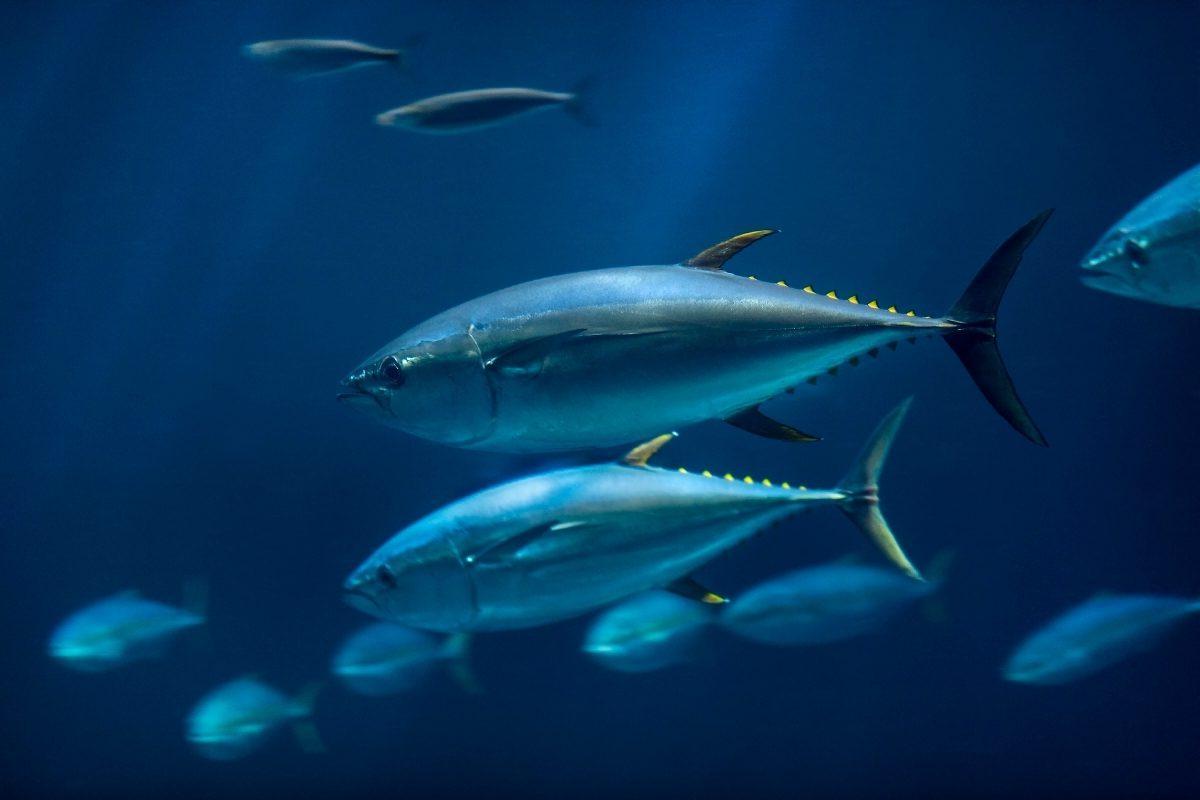
A tuna has binocular vision. This means both eyes focus simultaneously at the same visual target, allowing the tuna to see objects in three dimensions and accurately assess distance. Since a tuna will often hunt small fish, this type of sight allows it to accurately identify a fish it wants to eat and efficiently catch its prey.
Yellowfin vs bluefin
You might think yellowfin tuna have yellow fins, and bluefin tuna have blue fins, but this isn’t always the case. At a glance, these two fish can look almost identical—even experts say that distinguishing bluefin from yellowfin tunas can be challenging.
Instead of looking for different colors, look at how long the pectoral fin—or side fin—is. In bluefin tuna, the pectoral fin is shorter and ends below the middle of the first dorsal. In yellowfin tuna, the pectoral fin is longer, extending nearly to its anal fin (located on the belly-side of the fish nearest to the tail, or caudal fin).
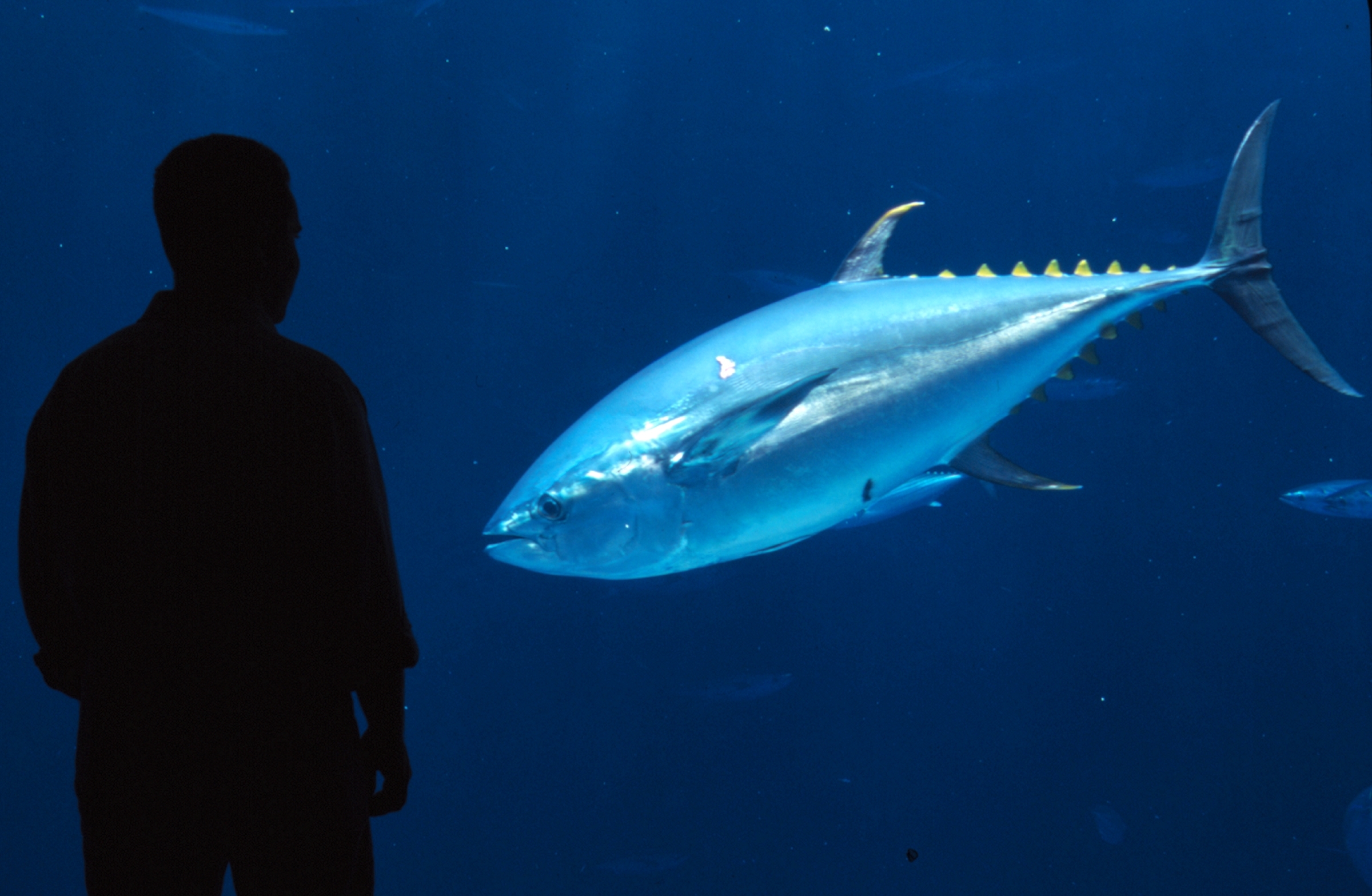
In yellowfin tuna, light-colored, vertical bars often appear on the sides of the fish while they are feeding. See if you can spot this color change when you view our Open Sea exhibit.
At the Aquarium
Tuna are challenging to display and research because of their size, strength and speed. We're pioneering techniques for collecting, handling, transporting, caring for and displaying tuna.
At any given time dozens of tunas representing two species are swimming in the tanks at the Aquarium and our nearby Tuna Research and Conservation Center (TRCC). By having tuna at the Aquarium, biologists and aquarists can improve animal care and veterinary techniques, learn from these amazing animals and develop electronic tagging techniques prior to use in the field.
Conservation
Yellowfin tuna travel in huge schools, making it possible for fishermen to net tons of tuna quickly—a modern fishing net can scoop up an entire school of tuna. If unmanaged, this could threaten the survival of some tuna populations.
In the United States, yellowfin tuna are classified as a highly migratory species. The yellowfin tuna fishery is managed by the NOAA Fisheries Highly Migratory Species Division. Highly migratory species, who move great distances, require international cooperation to ensure proper population management. The International Commission for the Conservation of Atlantic Tunas (ICCAT), established in 1966, develops data-driven scientific advice on the management and conservation of tuna and tuna-like species.
On restaurant menus, yellowfin tuna is often called by its other common name: ahi. The popularity of ahi remains high, and consumers are strongly encouraged to review current information on SeafoodWatch.org. Remember, the simplest and most important question to ask before ordering is, “do you serve sustainable seafood?”
Like all fish, yellowfin tuna rely on a healthy global ocean. Issues such as climate change and overfishing not only affect tuna but also their food sources.
What you can do
Our Seafood Watch program can help you identify sustainable yellowfin choices—we offer global recommendations for tuna species.
Up next in open ocean
Animal
Moon jelly
This dreamy jelly is named for their translucent, moon-like bell.
Keep exploring
Animal
Ocean sunfish
Ocean sunfish are one of the world's heaviest bony fishes, growing up to 1,000 pounds.