

Sea angel
Clione sp.
- On view
- Into the Deep
- Animal type
- Invertebrates
- Ecosystem
- Deep sea, Open ocean
- Relatives
- Sea butterflies, sea slugs, and snails
- Diet
- Other pteropods; sea butterflies
- Range
- Worldwide in cold and temperate waters from the surface to 2,000 feet (600 m) deep
- Size
- Less than an inch (1-2 cm) in length
Meet the sea angel
A sea angel flutters through the open ocean with the rhythmic flapping of their wings. Don't be fooled by the graceful movements of this celestial snail—they’re also keen predators. Using a structure called buccal cones, the sea angel removes its prey directly from its shell
All about the sea angel
A sea angel is a type of swimming snail. The muscular foot found in land snails evolved into parapodia, wing-like structures for swimming in open water. Sea angels have transparent, gelatinous bodies with no shells.
Sea angels vs. sea butterflies
Both sea angels and sea butterflies are pteropods—a specialized group of free-swimming sea slugs and snails. The main difference is that sea angels have no shell; their scientific name Gynmnosomata means “naked body.” Sea butterflies, or Thecosomata, are usually smaller and have shells.
Diet
Sea angels are predators that devour other swimming snails, including sea butterflies. One species, Clione limacina, is a very selective eater — it feeds exclusively on sea butterflies in the genus Limacina.
When the sea angel comes in contact with a prey item, it pushes out finger-like tentacles from its head that grab onto the prey. The sea angel then uses hook-like appendages to pull the prey out of its shell and into the sea angel’s gut. The whole process can take from two to 45 minutes.
Predators
Sea angels are an important food source for several animals including jellies, ctenophores, fishes, baleen whales, and birds. In the dimly lit waters of the deep sea, the sea angel’s transparent body helps it hide from predators.
Habitat
Sea angels are found worldwide in cold and temperate waters. They typically live in the midwater zone stretching from the surface down to 2,000 feet (600 m) deep. Remotely operated vehicles piloted by our research and technology partners at MBARI have observed sea angels as deep as 5,900 feet (1,800 m)!
Related videos
The deadly sea angels

Sea angels are pretty adorable. But they’re also predators in an evolutionary race with their prey, the sea butterfly. Dive deep into the lore of these mysterious mollusks on this episode of SciShow.
How do sea angels reproduce?
Clione are hermaphroditic, meaning they have both female and male reproductive organs. During mating, sea angels come together for several hours at a time and fertilize each other. Once fertilized, a sea angel releases their eggs in a free-floating round mass.
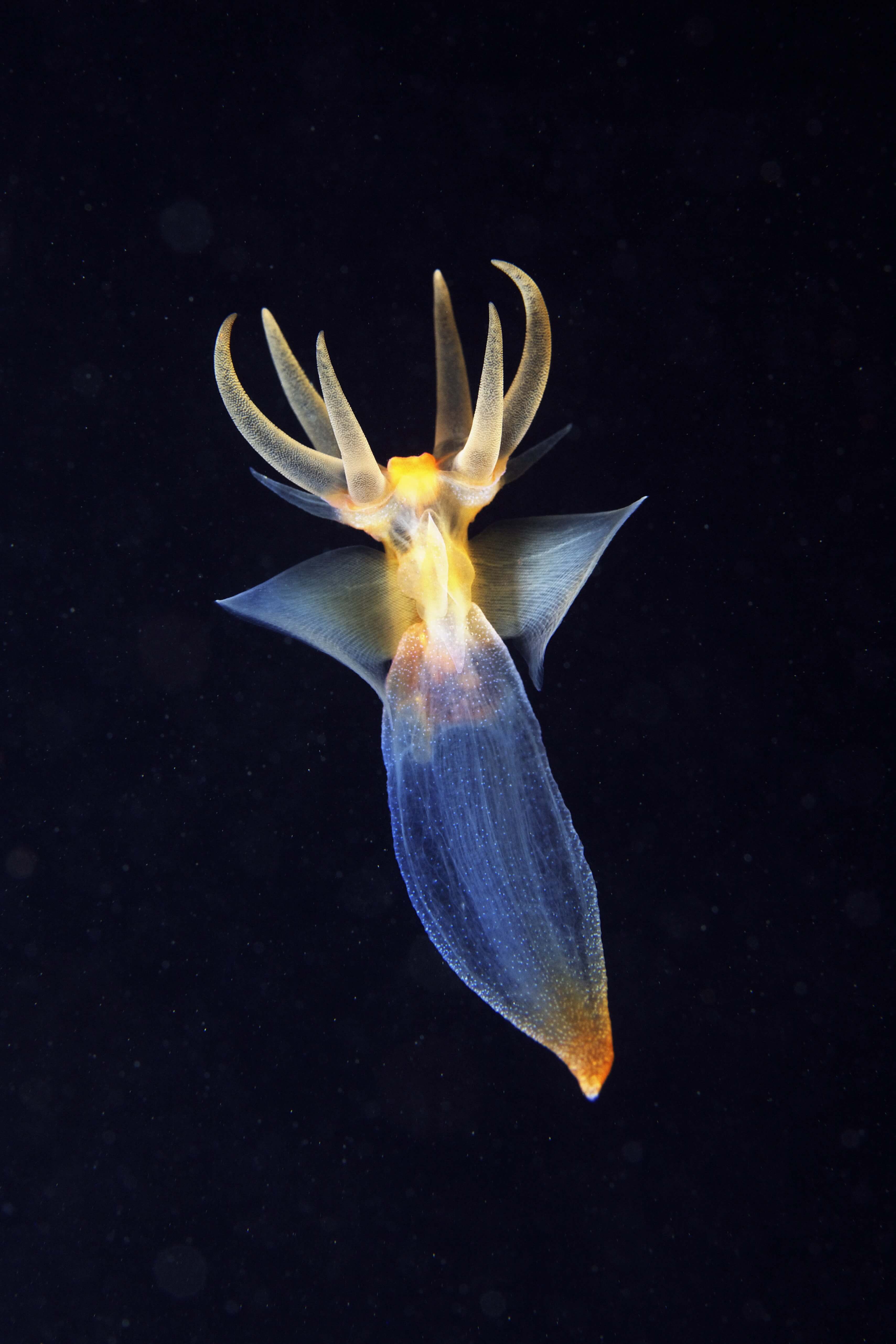
The sea angel pushes out finger-like tentacles from its head to capture prey.
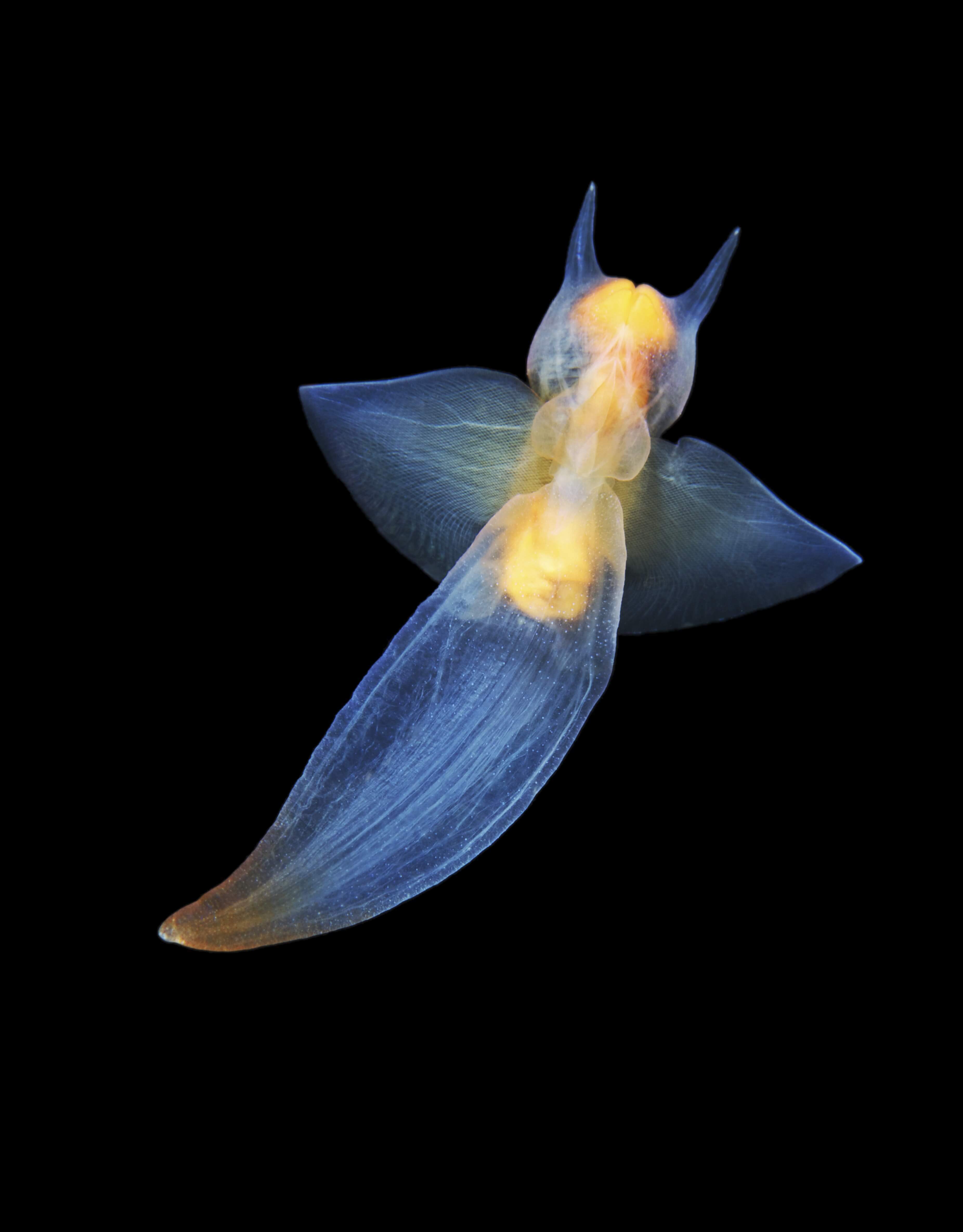
In the dimly lit waters of the deep sea, the sea angel’s transparent body helps them hide from predators.
Conservation
Ocean acidification and increasing ocean temperatures may leave sea angels with little to eat. They feed on sea butterflies whose shells are made from calcium carbonate. As the chemistry of the ocean changes, less calcite and aragonite are available to animals to build their shells and can result in smaller populations.
Cool facts
- Sea angels have small wings compared to sea butterflies, but they are very strong swimmers. Sea angels are able to swim fast and maneuver quickly by moving their fins in a sculling motion.
- A study found that salmon from the sea of Okhotsk get some of their red-pink color from pigments found in the gonads of sea angels. The sea angels get those pigments from the sea butterflies, which in turn get them from phytoplankton.
Want to see amazing deep-sea creatures up close? Visit our exhibition, Into the Deep: Exploring Our Undiscovered Ocean (En lo Profundo: Explorando Nuestro Océano Desconocido).
Up next in deep sea
Animal
Vampire squid
This scavenger floats through the deep sea collecting debris called marine snow with long feeding filaments.
Keep exploring
Animal
Giant siphonophore
When startled, the giant siphonophore glows with bright blue light.