

FAQs about offshore wind development off of California
Over the past four years, the U.S. federal government and the State of California have set ambitious goals for moving away from fossil fuels and transitioning to renewable energy sources, including offshore wind energy.
Monterey Bay Aquarium is committed to combating climate change and protecting the wildlife and ecosystems off the California coast. We support the transition to renewable energy sources. Now, we’re working to ensure that decisions made about offshore wind development off California safeguard the health of the ocean and coastal communities by making sure science and information are available to decision-makers, and by championing an inclusive planning process.
FAQs
What is offshore wind energy? How does it work?
Offshore wind energy is renewable energy generated from wind turbines in the ocean. Like land-based wind energy, electricity is produced as winds rotate blades on the turbines. The energy is then transported back to shore through undersea cables. Ocean winds are stronger and more consistent than winds on land, and the goal is to use ocean winds to increase renewable power generation in California.
Why do we need renewable energy?
Climate change is the biggest threat to our ocean and planet. To avoid the worst impacts of climate change, we must significantly reduce global carbon emissions from burning fossil fuels. This requires both energy conservation and shifting to renewable energy resources.
What could offshore wind look like off California?
California's continental shelf is narrow and the ocean floor drops to thousands of feet deep not far from the shoreline. Most existing offshore wind farms in Europe and the U.S. are located in shallow waters up to 300 meters (984 feet) deep and have turbines that are fixed to the ocean floor. California’s deep seafloor requires offshore wind turbines to sit on floating platforms, attached to the ocean floor by lines and anchors in waters up to 1,300 meters (4,200 feet) deep. This is a new, evolving technology worldwide.
Is offshore wind development happening off the California coast?
Five wind energy sites in federal waters off of Humboldt Bay and Morro Bay in California were leased to five companies in 2023, following an auction in December 2022. These sites range from about 18 to 60 miles offshore. Offshore wind companies are currently in the “site assessment phase,” collecting information about each site to guide their next steps in potential development. There are still many steps to come, including environmental reviews, before any development can take place, which is not likely to occur until after 2030.
What do we know about the effects of offshore wind energy on the ocean?
Offshore wind energy development off California’s coast would be a new use of the ocean, and there are many questions about its effects. Research and monitoring are vital to understand how development might impact California’s marine environment and how those impacts differ from effects due to climate change or other issues.
What are the potential impacts of offshore wind energy on marine life?
Impacts on marine life can happen at all stages of offshore wind development, from site exploration to construction to operations. For example, there can be direct effects such as wildlife colliding with turbines or becoming entangled in cables, disturbance from increased noise, or the loss of habitat. Broader changes to the ecosystem might include alterations to the seafloor or the disruption of wind and ocean circulation patterns. Research and monitoring can help to identify and measure these and other impacts, and make sure marine ecosystems and ocean wildlife are protected in plans for offshore wind energy.
Are there sea otters where offshore wind will be developed?
The potential locations for offshore wind farms off California are at least 18 miles offshore in federal waters, and would not overlap with habitat of the threatened southern sea otter. However, sea otters in these areas could be affected by increased vessel activity and other activities in nearshore areas, such as ports. The Aquarium is advocating for decision-makers to draw on existing knowledge to establish the current status of sea otters and their habitat. Along with ongoing monitoring, this will help detect any future changes from offshore wind development and ensure these activities pose the least possible threat to otters.
How does offshore wind development impact whales?
Based on the best available scientific information, current offshore wind development activities on the U.S. East and West Coasts are unlikely to cause the direct injury or mortality of marine mammals. Expert investigations into recent whale deaths on the East Coast have found no connection to offshore wind development. Since offshore wind development in the U.S. is still in its early stages, especially off the West Coast, research and monitoring are vital to understand and avoid potential impacts on marine mammals and other ocean wildlife.
How is offshore wind energy planned?
Offshore wind planning is a complex process (see graphic below), involving several phases over many years. Led by the federal Bureau of Ocean Energy Management, part of the Department of the Interior, it involves collaboration with states, developers, and the public. These phases include state and federal environmental reviews, opportunities for input from local communities, labor groups, and other members of the public, and consultation with Tribal Nations and Indigenous groups.
What is the Aquarium doing?
The Aquarium works with partners to advocate for a better understanding of the effects of potential offshore wind development off our shores. Our goal is that decision-makers have the essential information they need to make science-based decisions that protect marine life and habitats. We are championing the creation of a West Coast Science Collaborative to bring together scientific experts and Indigenous knowledge holders to identify and plan for the research needed to inform how offshore wind is developed and managed. Throughout the planning process, Monterey Bay Aquarium and our partners are submitting technical comments to advocate for stronger environmental review and protective measures. These comments have helped strengthen requirements to protect ocean wildlife and ecosystems by state and federal agencies, and have advanced plans for a West Coast Science Collaborative.
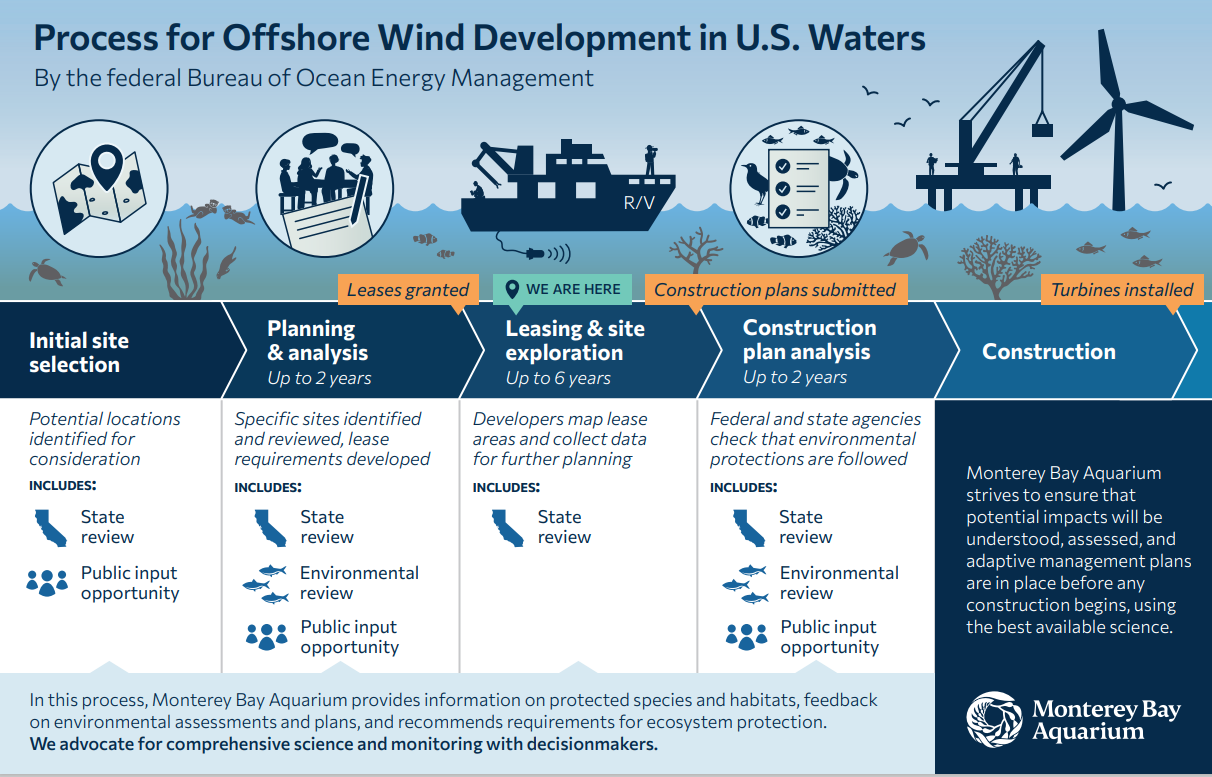
Graphic showing the process for offshore wind development in U.S. waters, including site selection, planning, leasing and exploration, construction plan analysis, and turbine installation, with environmental review and public input throughout.
Be a voice for the ocean
Sign up for our quarterly ocean action emails and get inspiring conservation stories, tips on living a sustainable lifestyle, and opportunities to take action to protect the ocean—delivered to your inbox.
Keep exploring
Animals & the ocean
Causes of climate change
Learn the causes of climate change and take hopeful action—discover how you can help.
Read more – Causes of climate change
Animals & the ocean
Impacts of climate change on our ocean
Holy Mackerel! The ocean has absorbed more than 90 percent of the extra heat caused by our greenhouse gas emi…
Read more – Impacts of climate change on our ocean
Animals & the ocean
Solutions to climate change
By making small lifestyle changes, we have the power to control the negative impacts of climate change.
Read more – Solutions to climate change