
Sustainable swordfish & marlin buying guide
Swordfish and marlin may look like they’re related, but they’re not. Swordfish is in the Xiphias family, and marlin is in the Istiophoridae family. However, they share many similarities. They slash their long bills to slow and capture prey, and these speedy, powerful predators are also prized game fish. Another similarity is a lot of the global catch is considered unsustainable by Seafood Watch standards or hasn’t been evaluated for sustainability. Consumers can find environmentally sustainable or friendly options, but it’s important to know what to buy and what to avoid.
Quick buying guide
- Buy swordfish caught by U.S. fisheries.
- Buy swordfish caught in the Pacific that’s labeled pole-caught or pole-and-lines.
- Buy swordfish caught in the Atlantic that’s labeled harpoon-caught, pole-caught, pole-and-lines, or troll-caught.
- Buy blue marlin caught by U.S. fisheries.
- Buy Marine Stewardship Council (MSC) certified swordfish.
- Avoid all other imported swordfish.
- Avoid all other marlin.
What to buy or avoid?
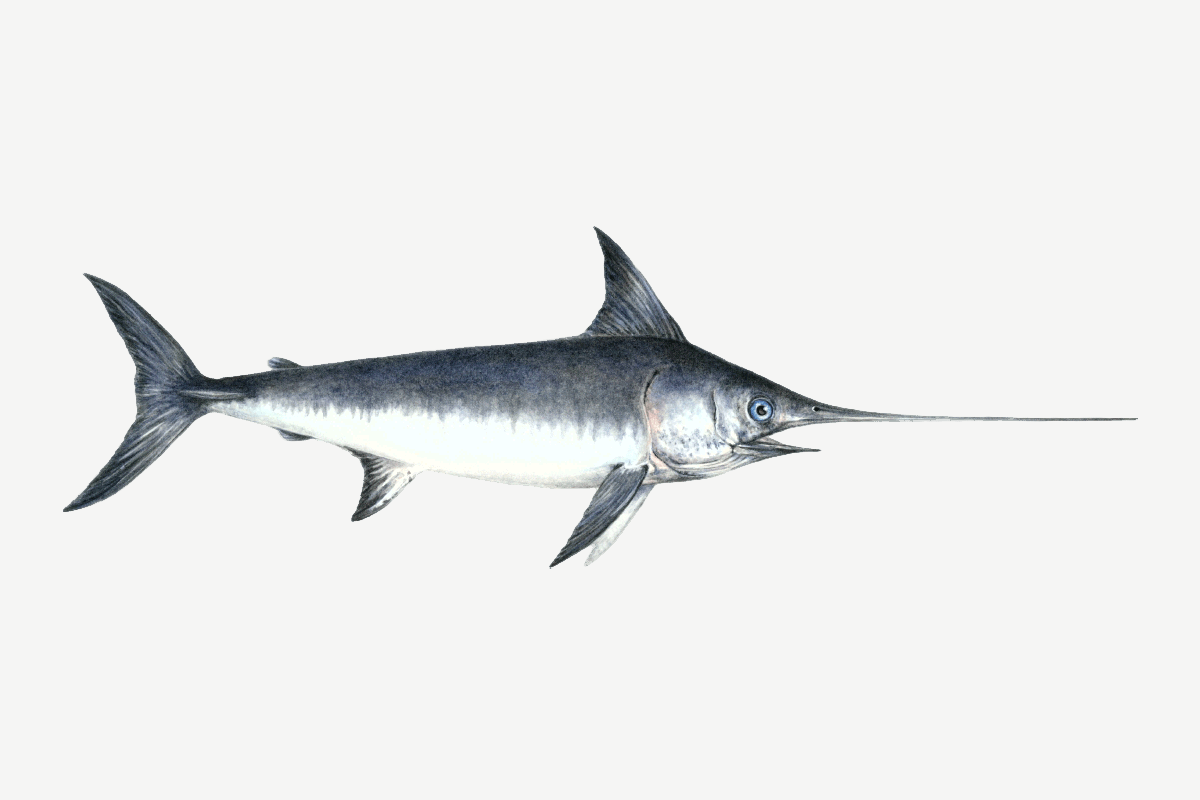
Swordfish
Swordfish populations are healthy in the North Pacific and are unlikely to be depleted or experiencing overfishing in the South Pacific. In the Atlantic, populations are generally healthy in the North Atlantic, but they're depleted and experiencing overfishing in the South Atlantic. Swordfish in the Indian Ocean are considered healthy, but these fisheries are red-rated due to bycatch and ineffective management. Swordfish is sometimes sold as broadbill, espada, or emperador.
- Buy swordfish caught by U.S. fisheries. Swordfish is green-rated when caught in Hawai‘i or labeled buoy gear, harpoon-caught, pole-caught, or pole-and-lines. All other U.S. sources are yellow-rated.
- Buy swordfish caught in the Pacific that’s labeled pole-caught or pole-and-lines.
- Buy swordfish caught in the Atlantic that’s labeled harpoon-caught, pole-caught, pole-and-lines, or troll-caught.
- Avoid all other imported swordfish.
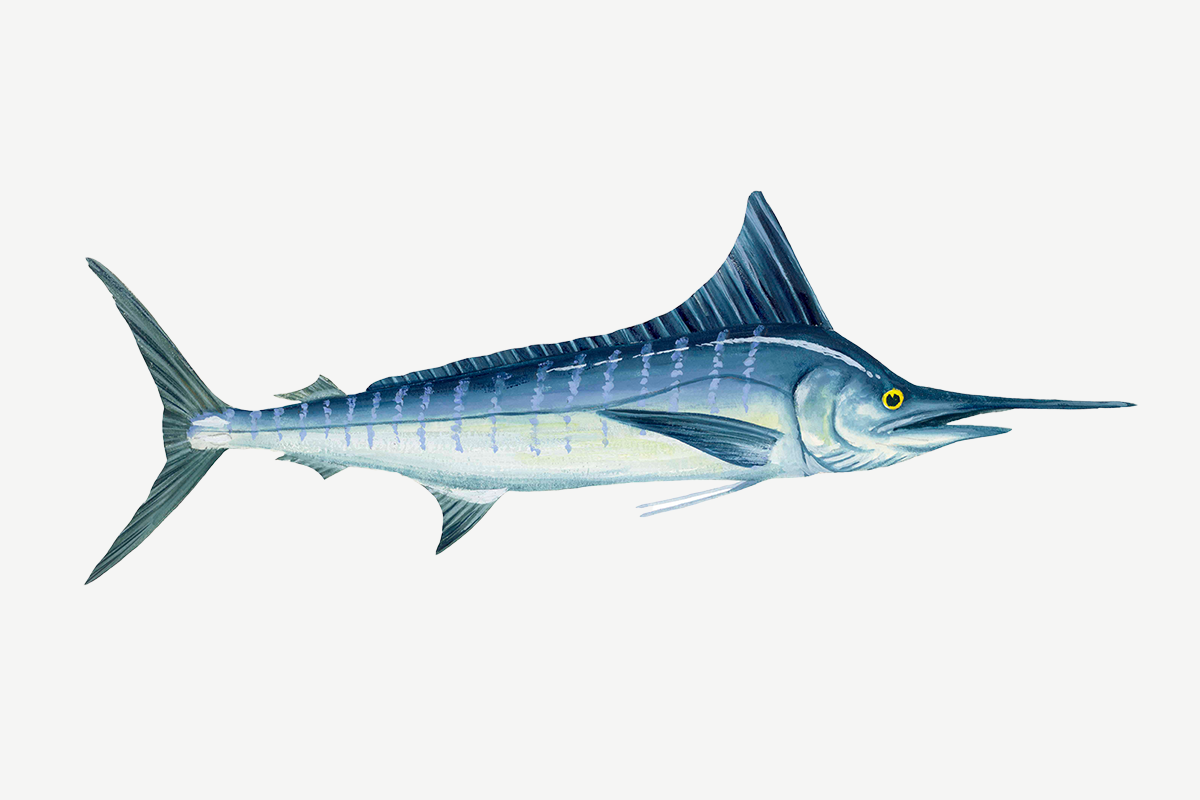
© Scandposters
Marlin
We have recommendations for three species of marlin caught in the Pacific Ocean: blue, black, and striped. The blue marlin stock is likely healthy, while black marlin’s status is unknown. In the North Pacific, the striped marlin stock is depleted and experiencing overfishing, whereas the South Pacific stock was last assessed in 2017 and showed low abundance, though overfishing wasn’t occurring.
- Buy blue marlin caught by U.S. fisheries.
- Avoid black and striped marlin caught by U.S. fisheries.
- Avoid imported marlin.

Certified swordfish
- Buy Marine Stewardship Council (MSC) certified swordfish.
View certified swordfish recommendations on SeafoodWatch.org
Sushi
Seafood Watch’s recommendations note the following sushi names, but there are others for the different marlin species.
- Marlin: Kajiki
- Swordfish: Kajiki Maguro or Mekajiki
Follow the above tips and check the Seafood Watch Sushi Guide for quick reference.
More about our swordfish and marlin recommendations
When are swordfish and marlin environmentally sustainable?
Swordfish and marlin rated green by Seafood Watch are the most environmentally sustainable because they come from healthy populations, and there's minimal to no impact on other marine life and habitats.
Swordfish and marlin rated yellow mean fishery management is considered moderately effective, but bycatch impacts are significant. In some cases, bycatch isn't the issue, but there are concerns that the stock is overfished or being harvested at unsustainable levels.
Swordfish and marlin rated red by Seafood Watch are not environmentally sustainable because there are two or more significant concerns, such as depleted populations, overfishing, bycatch impacts, or ineffective management.
What are the main swordfish and marlin fishing methods?
Swordfish and marlin rated green by Seafood Watch are the most environmentally sustainable because they come from healthy populations, and there's minimal to no impact on other marine life and habitats.
Swordfish and marlin rated yellow mean fishery management is considered moderately effective, but bycatch impacts are significant. In some cases, bycatch isn't the issue, but there are concerns that the stock is overfished or being harvested at unsustainable levels.
Swordfish and marlin rated red by Seafood Watch are not environmentally sustainable because there are two or more significant concerns, such as depleted populations, overfishing, bycatch impacts, or ineffective management.
Here’s a quick look at these fishing methods:
- Drifting longlines have a mainline supported by floats and evenly spaced branch lines with baited hooks. They can be up to 50 miles long and have thousands of baited hooks.
- Drift gillnets are long nets that drift with the current. Swordfish are entangled when they swim into the netting.
- Buoy gear is used to catch swordfish. They consist of one to three lines with baited hooks that are attached to a free-floating buoy. Fishermen set 10 to 15 buoys in a straight line and watch for the signs that swordfish have been hooked.
- Harpoons are spear-like gears with a detachable sharp point (with one or more barbs) attached to a retrieving line. When fishermen target a fish, they thrust or shoot the harpoon into the animal and haul it aboard. Modern harpoons are shot with guns.
- Trolling lines or handlines and hand-operated pole-and-lines catch swordfish with one or more fishing lines with baited hooks.
How to use this guide
Our green, yellow, and red ratings indicate environmental risk. We use our ratings and third-party certifications to make our recommendations.
Choose
- Green-rated seafood because environmental risks are low.
- Yellow-rated seafood because environmental risks are moderate.
Avoid
- Red-rated seafood because environmental risks are high, often due to overfishing, poor management, or harm to marine life and habitats.
Where to find sustainable seafood
Finding sustainable seafood is easier than you might think. Here’s how to get started.
- Use Seafood Watch guides. Our Popular Seafood Guide covers the seafoods you’re most likely to encounter and is the easiest place to start. Our national guide covers many more seafoods and works anywhere in the U.S. Our six regional guides are tailored to what you’re likely to find in your part of the country. Our 14 species guides cover all of our recommendations for each species, including salmon, shrimp, tuna, crab, and other popular seafood.
- Shop at businesses committed to sustainable seafood. Some retailers have made formal commitments to follow Seafood Watch recommendations. MOM's Organic Market and PCC Community Markets follow our recommendations. Whole Foods Market sources green-rated, yellow-rated, and MSC certified wild seafood and has a proprietary standard for farmed seafood.
- Dine with one of our partners. The Cheesecake Factory and California Fish Grill have commitments to serve sustainable seafood, and Seafood Watch Best Choice Restaurant Program partners offer at least one green-rated seafood dish on their menus. For a meal-kit option, all HelloFresh seafood is green-rated, yellow-rated, or certified.
- Ask a question. Next time you’re at a seafood counter or restaurant, ask “Do you sell sustainable seafood?” It’s a simple question that does more than you might think. When you ask this question, you’re helping create demand for sustainable seafood and encouraging businesses to offer it.
Explore more species guides
Animals & the ocean
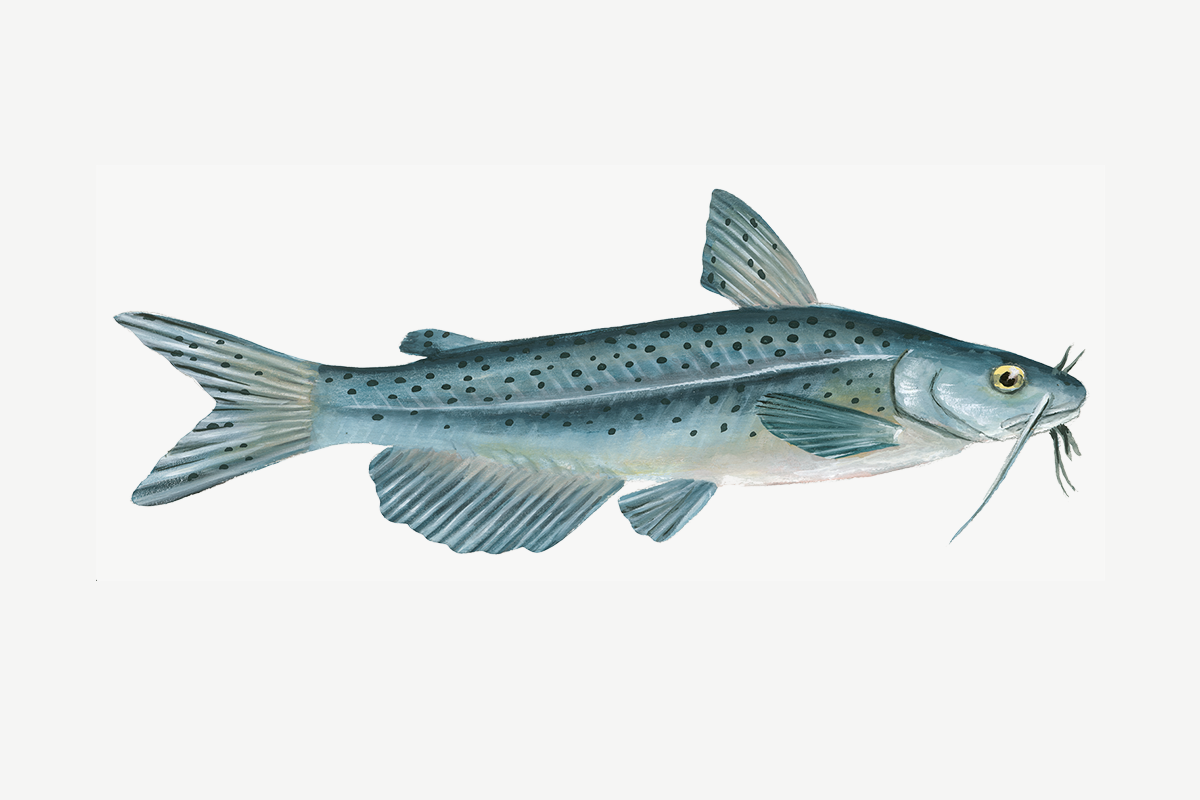
Sustainable catfish & pangasius buying guide
Catfish and pangasius—use this guide to choose wisely.
View this buying guide – Sustainable catfish & pangasius buying guide
Animals & the ocean
Sustainable clams, mussels, oysters & scallops buying guide
Clams, mussels, oysters, and scallops are among the most sustainable seafood choices.
View this buying guide – Sustainable clams, mussels, oysters & scallops buying guide
Animals & the ocean
Sustainable cod & haddock buying guide
Know which cod and haddock to buy and avoid the next time you order fish and chips.
View this buying guide – Sustainable cod & haddock buying guide
Animals & the ocean
Sustainable crab buying guide
Crab can be tricky, but this guide makes it easy to know what to buy and avoid.
View this buying guide – Sustainable crab buying guide