

Giant clam
Tridacna sp.
- On view
- Ocean in Motion
- Animal type
- Invertebrates
- Ecosystem
- Coral reefs
- Relatives
- Other clams and mussels, scallops, oysters; Phylum: Mollusca; Class: Bivalvia
- Diet
- Sugars and proteins produced by the algae living in its tissues; tiny, drifting plants and animals filtered from the water
- Range
- Coral reefs, lagoons, or bare sand between depths of 6–65 feet; shallow waters of the Indo-Pacific and the Great Barrier Reef
- Size
- Up to 5 ft. (1.5 m) wide
Meet the giant clam
Like corals, the giant clam lives in a mutually beneficial partnership with tiny plantlike algae that reside inside the clam's tissues. The algae gain protection from grazing animals, while the clam grows large with the benefit of food produced by the algae.
International Union for the Conservation of Nature (IUCN)
The IUCN Red List is a global system that evaluates the conservation status of species and classifies them based on their risk of extinction.
Least concern
Near threatened
Vulnerable
Endangered
Critical(active)
Extinct in wild
Extinct
Natural history
The shells of giant clams are thick and heavy with deep folds. Their bodies are often yellowish-brown to olive-green and have numerous small, brilliant blue-green rings. Once fully grown, they cannot close their shell.
The giant clam feasts on algae, and they have windows that allow light to pass through, so the algae living inside can perform photosynthesis. This explains why they're found in shallow reef flats no deeper than 66 feet in the ocean. Below that, the algae they depend on to survive wouldn’t have enough sunlight to grow.
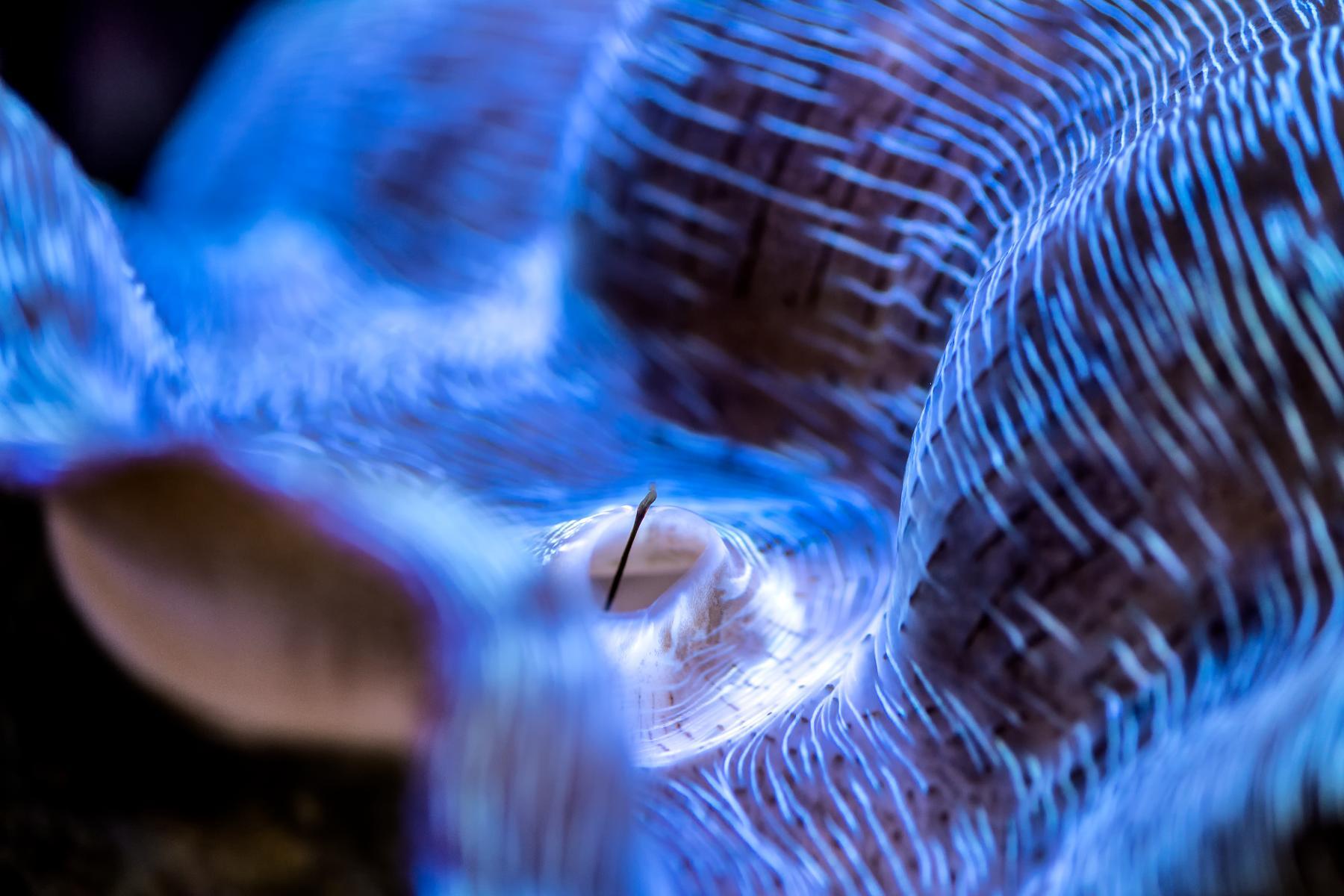
Giant clams have siphons, which are holes used to draw in and exhale seawater to filter feed.
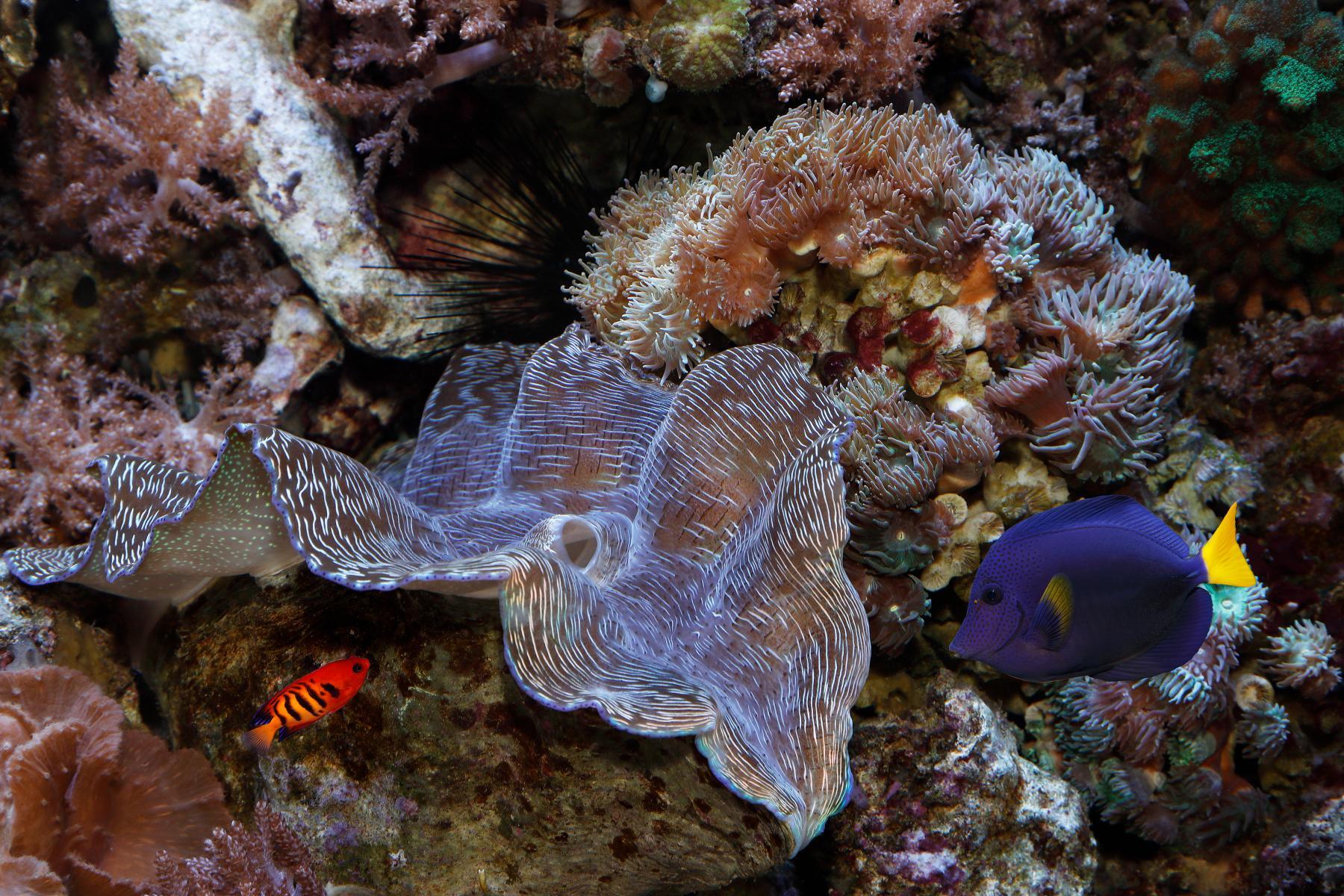
Many reef fish benefit from giant clams, by sheltering around them or feeding on what they release.
Conservation
The giant clam, Tridacna gigas, is rarely found among coral reefs these days due to years of overharvesting. However, giant clam aquaculture has become a successful alternative to wild collection. Giant clams are listed as critically endangered with populations decreasing by the International Union for Conservation of Nature. And they are a highly regulated species, protected under the Endangered Species Act.
Cool facts
- As its name implies, the giant clam is the world’s largest living marine bivalve (clam, mussel, or oyster).
- Their soft bodies account for only about 10 percent of their total weight.
- Once a giant clam settles into a place and begins to grow, it stays permanently attached to that spot for life. A giant clam can live 100 years or more!
- The clam’s bright colors are the result of the algae living inside its body.
- The giant clam has falsely been called a “human killer”; no human death has ever been attributed to this animal.
- Juvenile giant clams are eaten by fishes, octopus, crabs, and predatory snails.
- The largest species can grow close to 500 pounds!
Up next in coral reefs
Animal
Peacock mantis shrimp
A small but mighty marvel of the ocean wields devastating blows that pulverize prey with lightning speed.
Keep exploring
Animal
Brain coral
These corals get their name from the grooves on their surfaces that look like the folds of the human brain.