

Wild-caught blue swimming crab in the Philippines
Healthy ecosystems in the Visayan Sea are critical not only for crab populations, but also for the communities whose livelihoods depend on them. We want to create a seafood industry that values people as much as the planet.
Meet the fishery
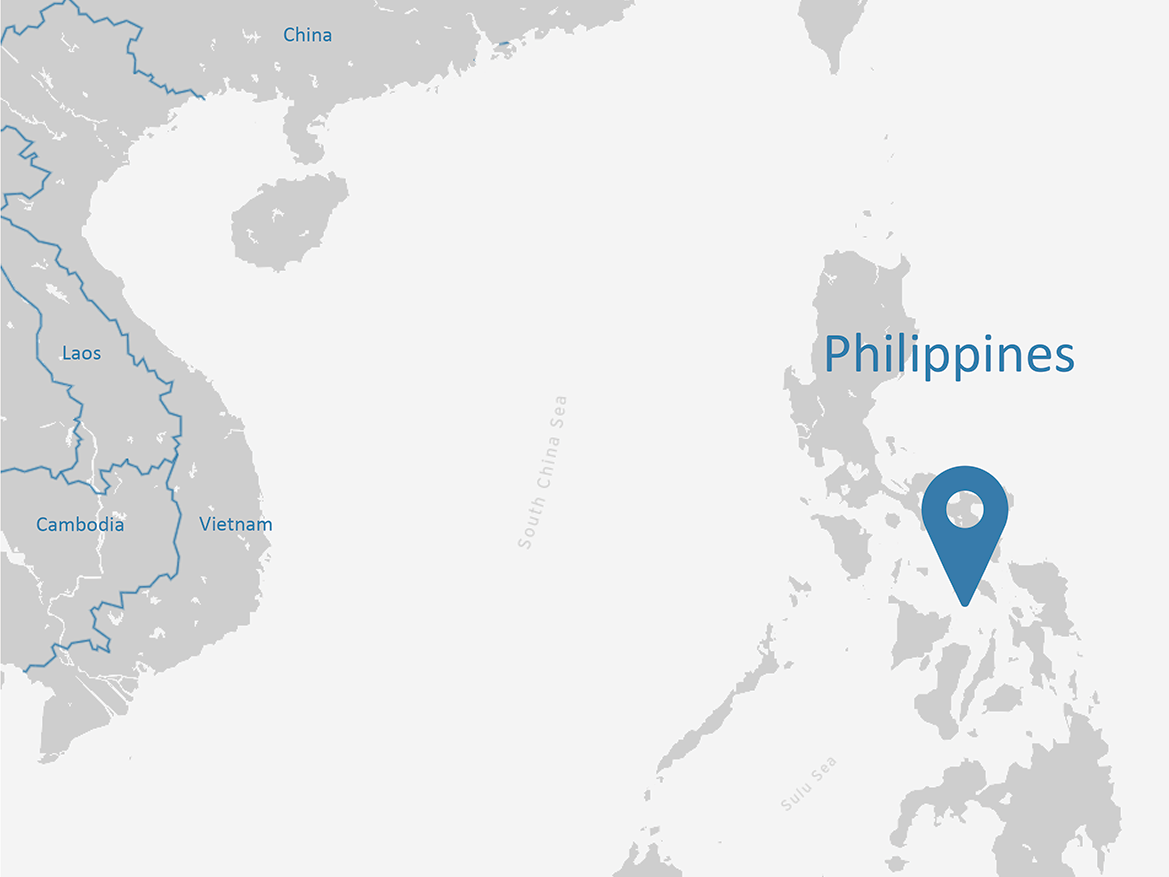
The Visayan Sea is a premiere habitat for blue swimming crabs (Portunus pelagicus). Its warm, shallow waters and coastal mangroves and seagrass beds provide essential feeding grounds and nursery areas. Small-scale fishers head out each day in wooden boats to set pots, gillnets, and lift nets, while workers at local crab picking stations handpick meat that is shipped to markets around the world.
Why it matters
This area alone produces around 40% of the Philippines’ blue swimming crab harvest, supporting the livelihoods of an estimated 8,000 to 10,000 crab fishers and processors.
How it connects to you
Nearly 90 percent of Philippines’ blue swimming crab exports are sent directly to the United States, making the US the primary economic driver for Philippine crab fishers and pickers. You likely find this sweet, delicate meat in canned products, frozen aisles, or restaurant crab cakes.
Related videos
Sustainable crab fishing in the Philippines

In the Visayan Sea, thousands of families depend on blue swimming crab fishing as their sole livelihood. Through our Global Ocean Conservation program, a holistic approach to sustainability is taking shape—balancing ecological protection with inclusive economic growth.
The challenge
Local fishers in the Visayan Sea are trapped in a difficult cycle: their profits are shrinking because they are catching fewer crabs and facing unpredictable market prices. On top of that, their earnings are often eaten away by debt, while inflation pushes up the cost of both fishing equipment and daily necessities. When you add in frequent storms that halt their work and sudden emergency expenses, along with limited access to alternative income sources and social protection, these fishers face an overwhelming financial strain.
As they are struggling just to make ends meet, it is incredibly hard for them to reduce fishing efforts to address the key threats to blue swimming crab fishery, including overfishing, and the harvesting of juvenile crabs and egg-bearing mothers, which contribute to declines in blue swimming crab populations in the Visayan Sea. A lack of data on bycatch, particularly that of endangered, threatened, and protected species, limits understanding of the ecological impacts of the fishery.
Our solution
We collaborate with partners to implement a strong blue swimming crab national management plan that secures a healthy future for blue swimming crabs. Protecting young crabs and mothers carrying eggs helps the population grow back so there are plenty of crabs for years to come. This plan ensures the population can recover while providing local fishing families with a reliable, stable living.
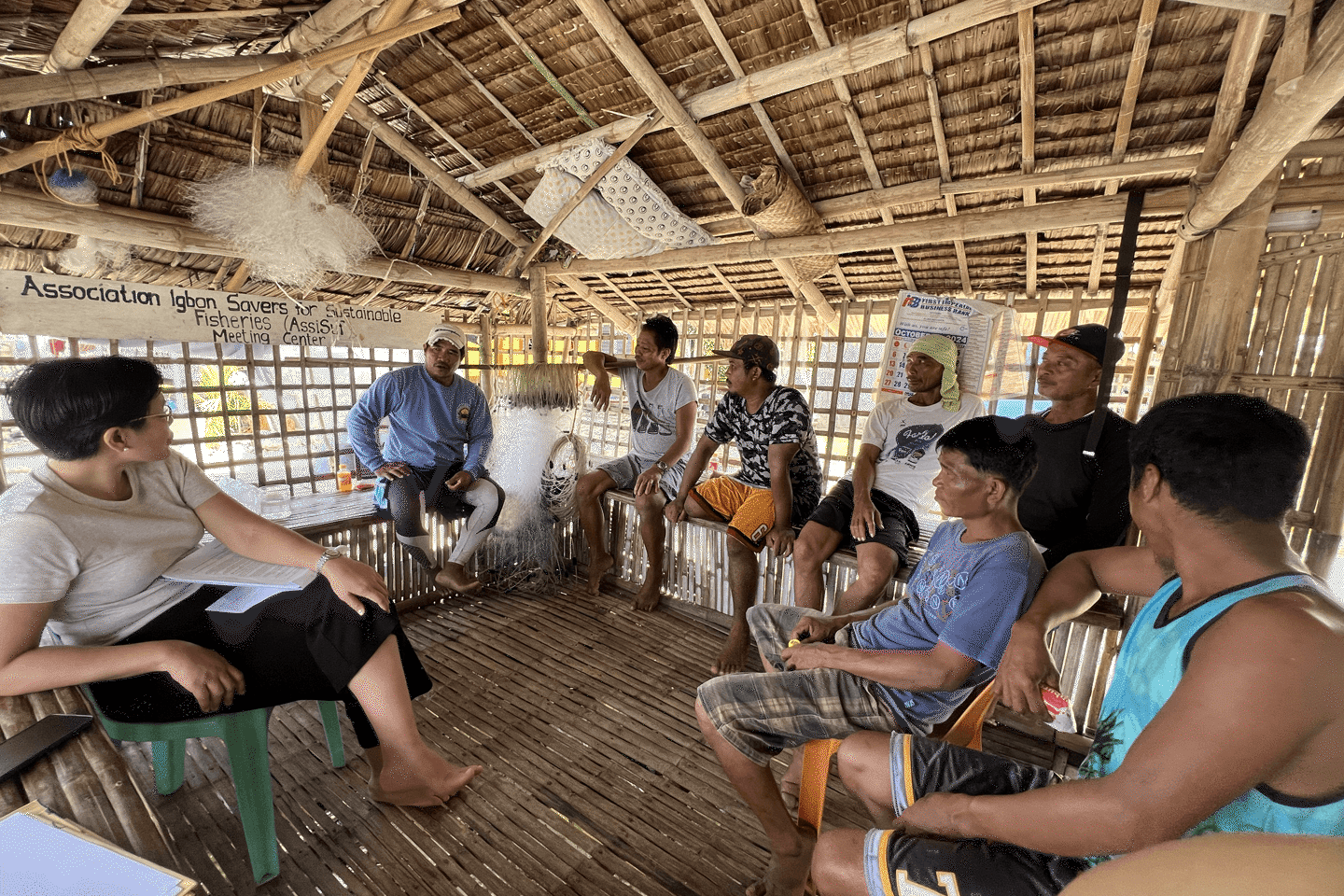
In the Visayan Sea, Model Villages try out new ways to protect the ocean while earning a better living. Launching initiatives at a small, local level allows for faster implementation and communities can quickly learn what works on the ground, creating a proven blueprint that neighboring towns can easily follow. Our work includes collaborating with local partners to share data and align science, support new market opportunities for fishers to sell their catch, and help support evidence-based rules to ensure the crab population stays healthy for years to come.
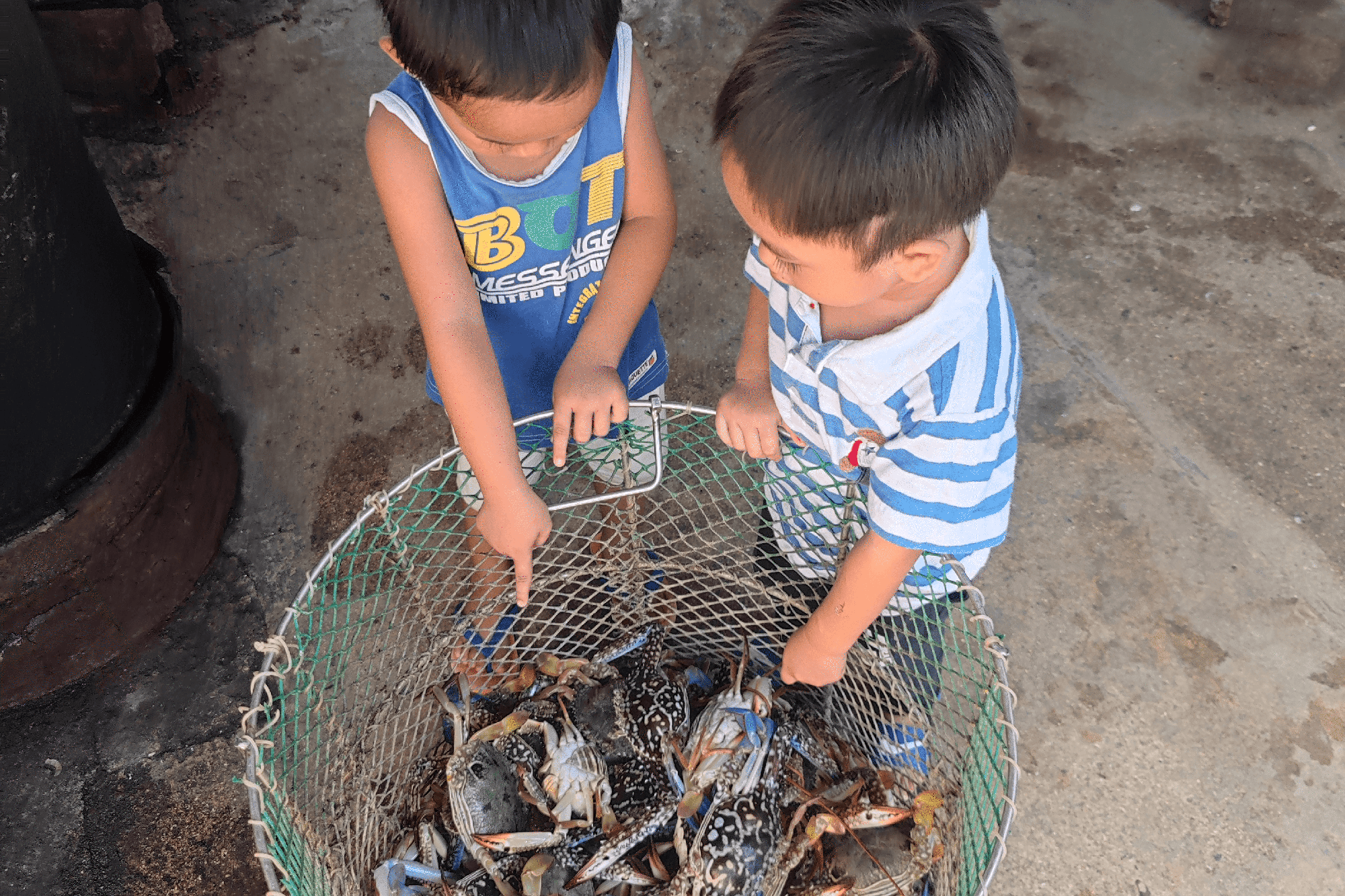
Domestic and regional market engagement
After scoping new opportunities for selling crab to domestic buyers, the Model Village in Concepcion, Iloilo partnered with the Courtyard by Marriott hotel in Iloilo City to sell their catch directly to the hotel every week at favorable prices.
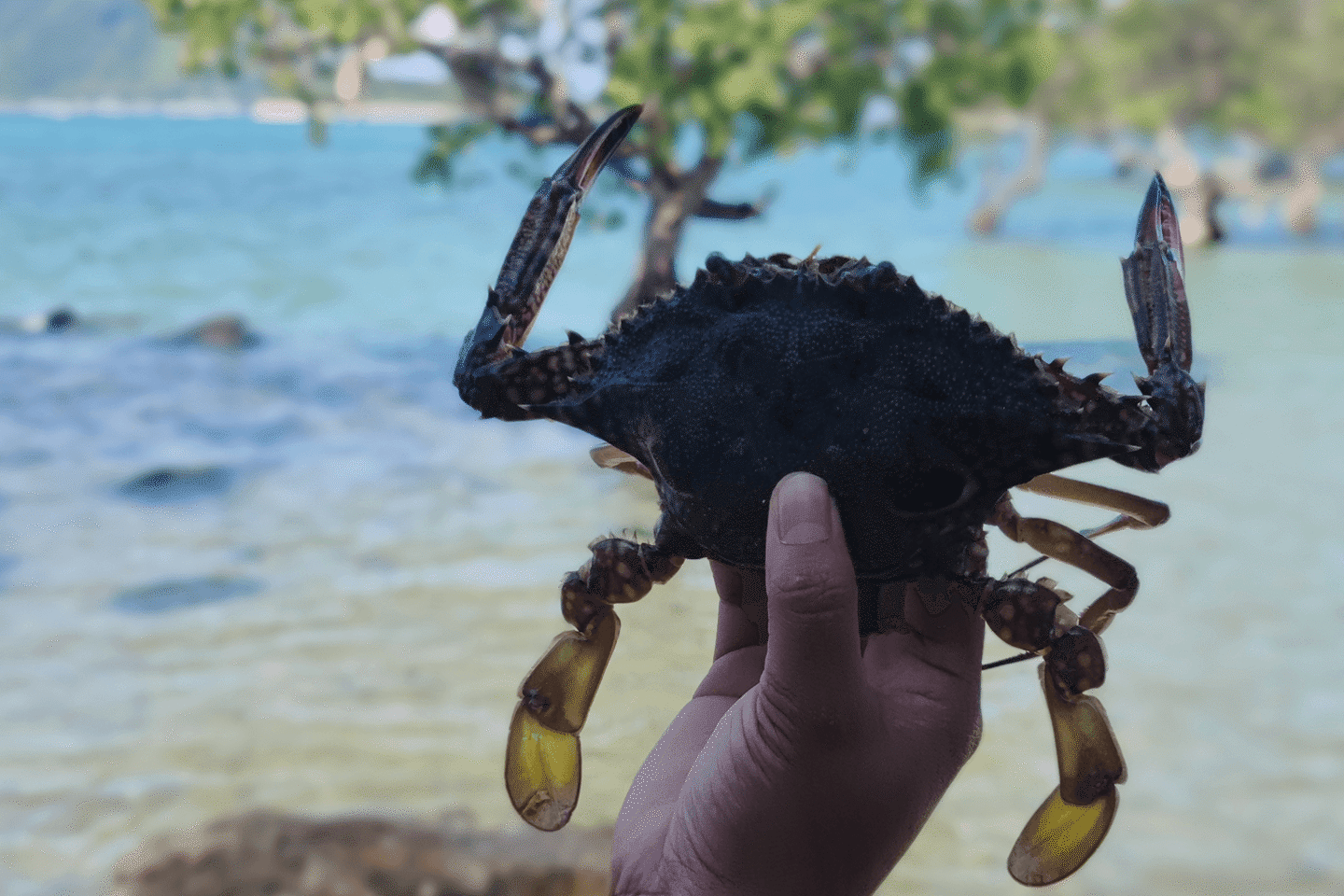
University-community collaboration
Local fishers collect critical data on crab habitats, and encounters with at-risk marine mammals, turtles, sharks, rays and other species while regional universities provide the training and analyze the findings. The results are intended to directly inform marine protected area planning and help establish risk-reduction systems, while the community science methods build capacity for joint research on a local level and facilitate the adoption of the recommendations and next steps.
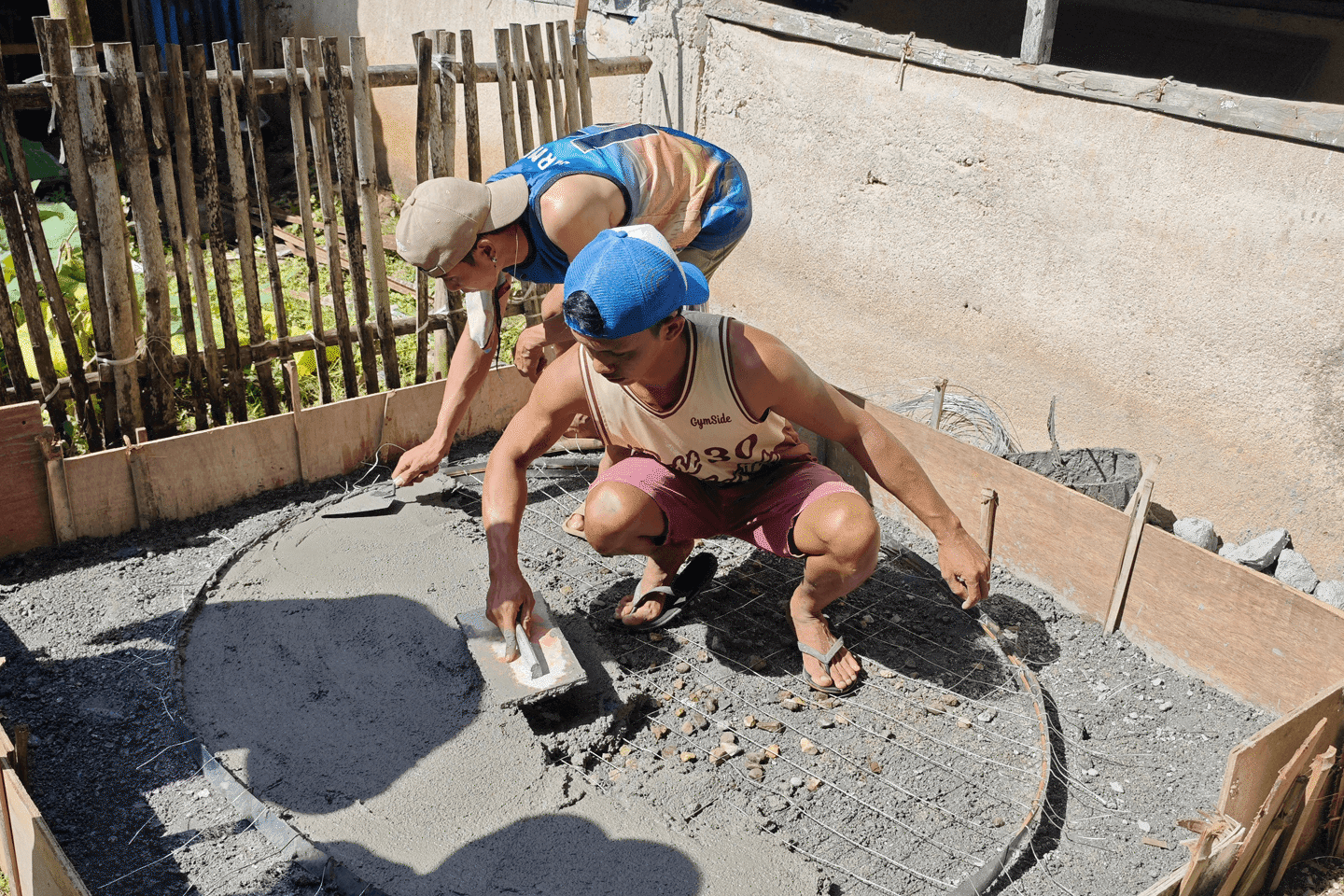
Integrated effort reduction and social protection
Building on Monterey Bay Aquarium’s global work and the Food and Agriculture Organization (FAO)’s leadership in sustainable fisheries and social protection, the Aquarium is advancing a pilot effort with the FAO and the Bureau of Fisheries and Aquatic Resources (BFAR), in the Philippines to align fisheries management with social protection and livelihood diversification. Supported by the Climate and Ocean Adaptation and Sustainable Transition (COAST) Facility, the pilot combines socio-economic research with inclusive planning to support coastal communities with harvest controls and compensation models for voluntary compliance.
We’re implementing stronger measures to manage the fishery so it can thrive, and so our families and communities can continue to depend on it for years to come.
Patrick Co
Senior global fellow, Philippines program manager
The partnership
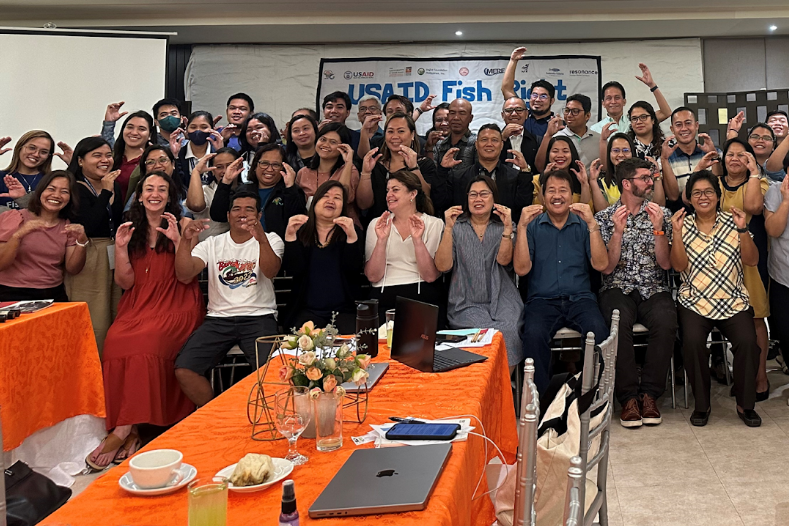
The Philippines' Bureau of Fisheries and Aquatic Resources, the Philippine Association of Crab Processors Inc., the USAID Fish Right Program, Saravia Blue Crab Inc., Northern Iloilo State University, State University of Northern Negros, Region 6 LGUs, Marriott and the Aquarium are working together to improve this fishery.
In addition, building on Monterey Bay Aquarium’s global work and the Food and Agriculture Organization (FAO)’s leadership in sustainable fisheries and social protection, the Aquarium is advancing a pilot effort with the FAO and the Bureau of Fisheries and Aquatic Resources (BFAR), in the Philippines to align fisheries management with social protection and livelihood diversification.
Progress in action
2026: Fishers receive training to expand their work and income options
This year local fishing families attended training to learn new ways to earn income. Building skills in electrical repair, solar panel installation, rainwater catchment construction, crab shell upcycling, and food production among others. To help participants start earning money right away, they receive startup equipment and connections to potential clients. Participants must agree to follow upcoming rules that limit fishing while ocean resources recover.
The team also expanded its reach by completing assessments for blue swimming crab, mangrove crab, and spiny lobster in the provinces of Sorsogon, Northern Samar, and Eastern Samar, providing environmental, socio-economic and climate adaptation recommendations to local governments and stakeholders to ensure the long-term sustainability of these diverse fisheries.
2025: Exploring income opportunities and partnerships
The Aquarium team presented the socio-economic baseline assessment and domestic markets assessment to blue swimming crab stakeholders and explored partnerships for livelihood diversification.
In addition, state universities and blue swimming crab fishing communities engaged in a citizen science collaboration, working together for the first time to trial research methods for improving endangered, threatened, and protected species interaction reporting and response as well as identifying essential habitats for crucial life stages.
2024: Government and university partners came together to build a shared data system
More than 20 government and university partners came together early in the year to build a shared data system, a key step toward giving fishers clearer rules and more stable markets. By September, the fishing community in Manapla, Negros Occidental province, launched the region’s second Model Village program. By testing new conservation methods on the water, these fishers are actively protecting their local environment and long-term livelihoods, with their sights set on achieving a recognized Seafood Watch yellow or green rating.
Additionally, the real-world benefits of these community efforts gained wider recognition in October. International government officials, environmental groups, and culinary representatives gathered at the Philippine Sustainability Movement Event to officially celebrate the ongoing success of Concepcion’s fishers and their new direct-to-market hotel partnership with the Marriott.
2023: Local leaders in Iloilo City formalized their commitment to the national management plan
By December 2023, local leaders in Iloilo City formalized their commitment to the national management plan. Through a Public-Private Community Partnership and the Aquarium, community advocates and fishers secured a concrete path forward to bring the Model Village project to life in their own waters.
2022: A successfully unified national management plan was drafted
At the close of 2022, fisheries stakeholders, local communities, and management agencies successfully drafted a unified national management plan to safeguard the future of the blue swimming crab.
Team
Patrick Co
Senior Fellow, Philippines program manager
Gerald Hulleza
Senior fellow, Philippines field operations
Keep exploring
Global projects
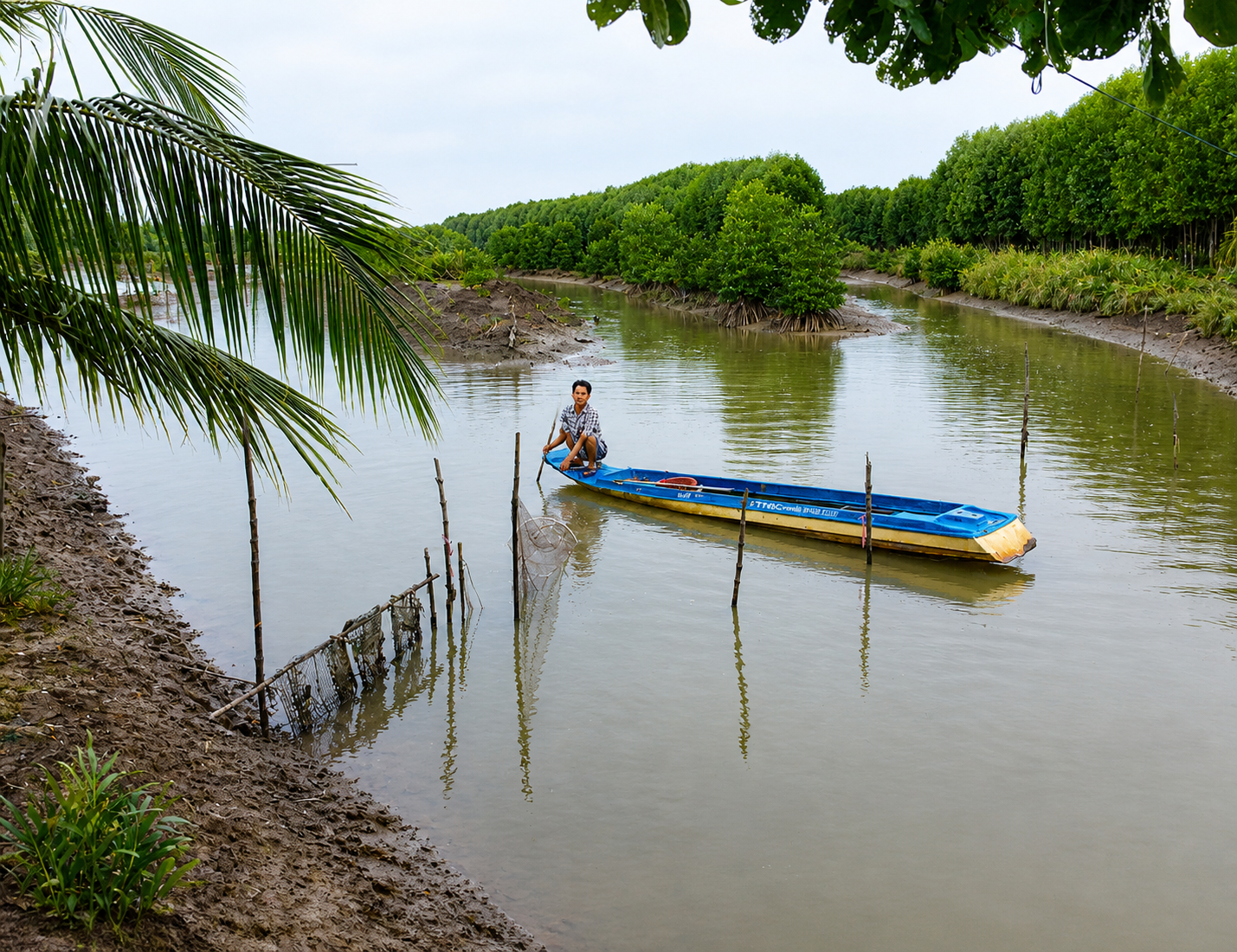
Farmed giant tiger prawns in Vietnam
Vietnam is the top giant tiger prawn producer, yet struggles with chemical use and habitat impacts.
Read more – Farmed giant tiger prawns in Vietnam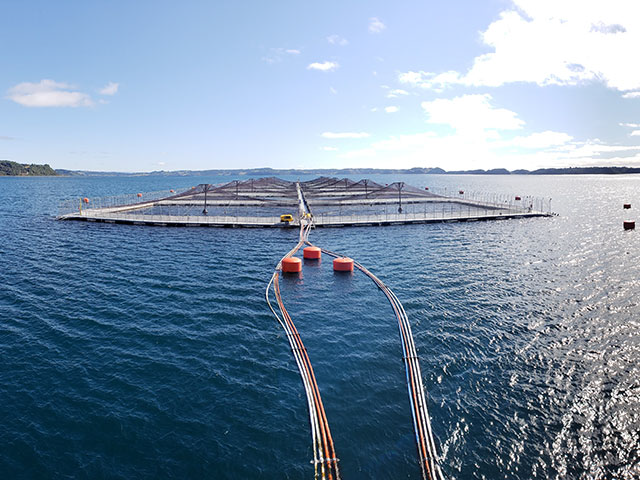
Global projects
Farmed salmon in Chile
Chile is a top global salmon producer but faces ongoing challenges with disease outbreaks and antibiotic uses.
Read more – Farmed salmon in Chile
Global projects
Farmed whiteleg shrimp in India
India's rapidly growing shrimp industry faces sustainability challenges including chemical use and management.
Read more – Farmed whiteleg shrimp in India
Global projects
Farmed whiteleg shrimp in Indonesia
Indonesia's rapidly growing shrimp industry faces significant sustainability challenges including habitat…
Read more – Farmed whiteleg shrimp in Indonesia