

Giant sea bass
Stereolepis gigas
- On view
- Kelp Forest, Monterey Bay Habitats
- Animal type
- Fishes
- Ecosystem
- Kelp forest
- Relatives
- Wreckfish; Family: Polyprionidae
- Diet
- Crustaceans, fish
- Range
- Eastern Pacific Ocean from Humboldt Bay to southern Baja California; mostly south of Point Conception, California and in the northern Gulf of California
- Size
- Maximum reported length 7.5 feet (2.3 m); maximum reported weight 557 pounds (253 kg)
Meet the giant sea bass
The giant sea bass is California's largest nearshore bony fish and can be found at depths of 35 to 130 feet (11 to 40 m). This top kelp forest predator cruises slowly over rocky reefs, shallow sands, ledges, and dropoffs. With a sudden gape of their immense mouths, a giant sea bass can suck up stingrays, squid, lobster, sardines, white croaker, flatfishes, and even small sharks!
Watch in real time
Shark Cam
Check out this live cam – Shark CamNatural history
Don’t be fooled by their slow and steady speed. The giant sea bass is a short-distance sprinter, deftly chasing down fast-moving prey like the Pacific bonito.
Giant sea bass come together each summer to spawn, returning to aggregate in the same locations where generations have spawned before them. A female can release up to 60 million eggs for fertilization.
It takes time for giant seabass to grow into their big name–juveniles only reach about seven inches in length in their first year of life. These juveniles sport large fan-like pelvic fins decorated with orange scales and black spots. They gradually turn gray and black over the dozen or so years it takes for a giant seabass to reach reproductive age.
Age by ear bone
The giant sea bass, along with all other vertebrates (even humans!) have three pairs of otoliths, otherwise known as ear bones, ear stones, or ear crystals. Otoliths aid in hearing, balance, sensation, and movement. When a human displaces an otolith, we call it vertigo.
The largest of the three otolith pairs across all species is called the sagitta. As a giant sea bass grows, the saggita grows new layers of calcium carbonate that helps scientists determine the age of an individual fish. A cross section of sagitta otolith will reveal a ring for each year of the giant sea bass’s life, much like the rings of a tree trunk.
Using this method, scientists have determined that giant sea bass live for at least half a century and can even survive for over 70 years, barring a fateful encounter with a great white shark or a human angler. Much about these massive fish remains mysterious, complicating recovery efforts as the species teetered on the edge of extinction.
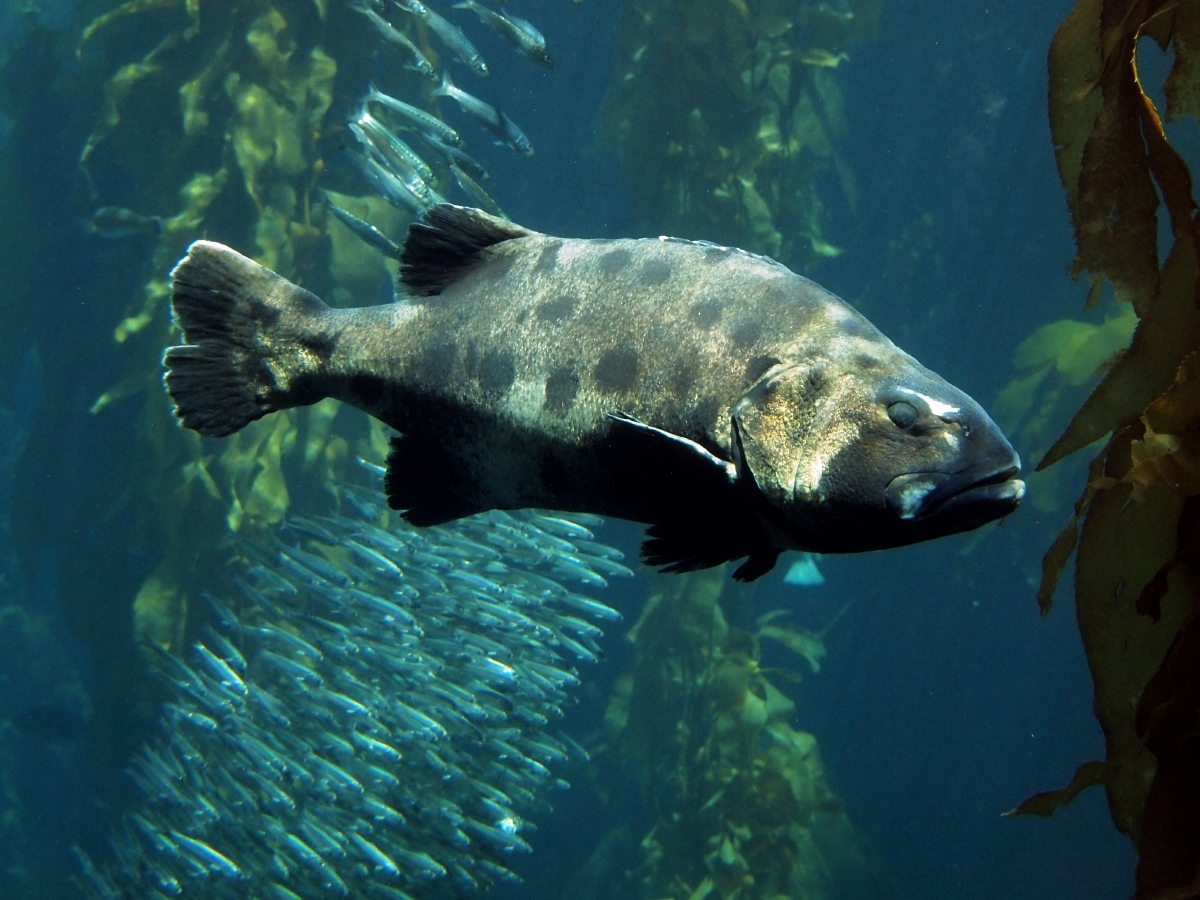
Giant sea bass in the Kelp Forest exhibit at the Monterey Bay Aquarium; a school of sardines swims in the background. Photo © Charlene Boarts
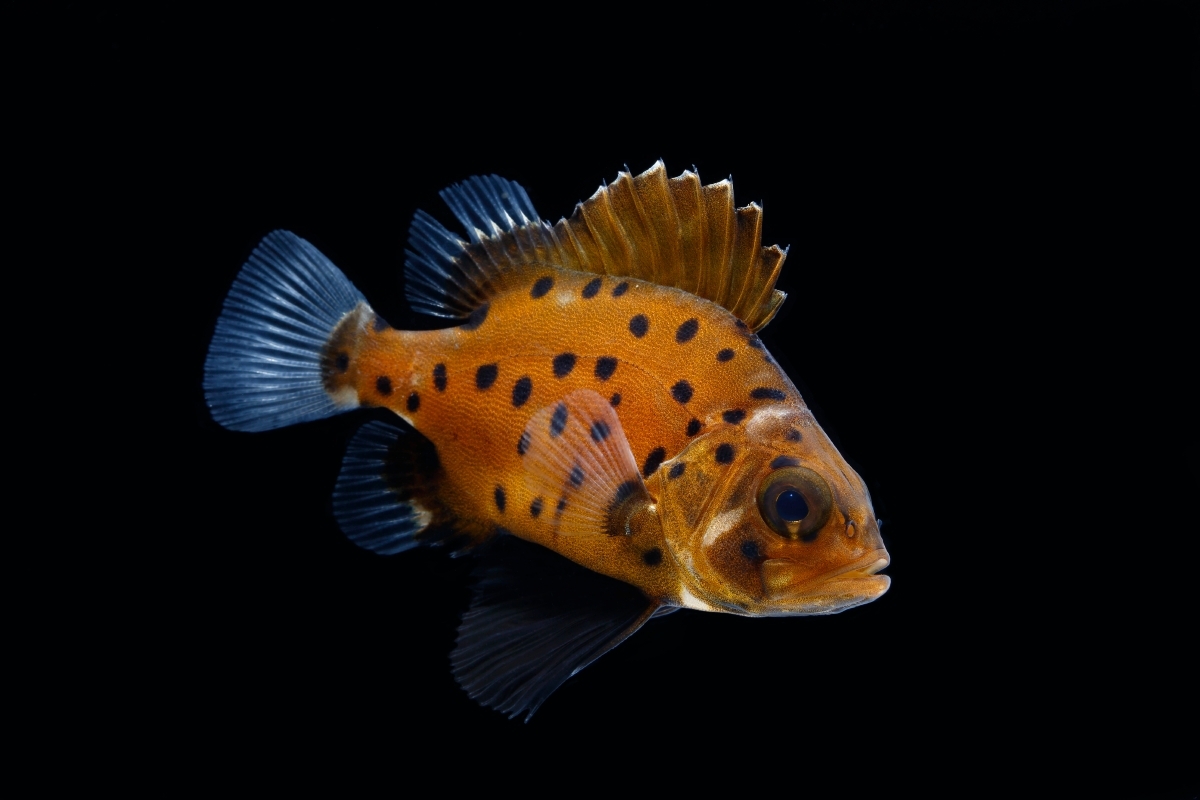
This juvenile giant sea bass (Stereolepis gigas), estimated to be 4 to 5 months old, is 3.5 inches (7.25 cm) long and weighs 0.35 ounces (10 g).
In Monterey Bay
Giant sea bass once ranged from Humboldt Bay in northern California to the southern tip of Baja California. Now they’re only occasionally spotted along the Central Coast, and rarely occur north of Point Conception. They’re far more likely to be found around the Channel Islands or in the northern portion of the Gulf of California.
Conservation
Once a conspicuous target of commercial and recreational fishing, giant sea bass were often caught by fishing barges stationed along central and southern California in the 1920s and 1930s. Commercial catch for the species peaked in 1932, leading to dramatic population decline in the waters of California and Mexico. The fishery shrank by 95% before there was legislation protecting giant sea bass.
In 1981, the California government banned intentional fishing for giant sea bass in coastal waters, and restricted how many could be caught in Mexico and brought back to California. A 1994 ban on gill netting along the southern California coast reduced accidental capture of these apex predators. Any incidental catch must be returned alive to the water according to these laws.
Since 1996, the International Union for Conservation of Nature has placed giant sea bass on its Red List as a critically endangered species. There’s hope for giant sea bass as their numbers seem to be rising, but more data is needed to confirm an upward trend. The population of breeding female giant seabass could total just a few hundred fish. Further conservation challenges include the species' limited geographic range, depleted genetic diversity, and their prolonged maturation.
California implemented a statewide network of Marine Protected Areas, as part of the Marine Life Protection Act, which covers the locations where giant sea bass aggregate to spawn. In combination with state law banning gillnets and closing the giant sea bass fishery, scientists hope giant sea bass populations will recover over time.
Cool facts
- The giant sea bass isn’t technically a sea bass at all! They are one of only two species in the family Stereolepididae, while true sea bass belong to the family Serranidae.
- Researchers at the University of California, Santa Barbara, and California State University, Northridge came together to create the Giant Sea Bass Collective. Divers and citizen naturalists took part in the Great Giant Sea Bass Count to document sea bass numbers and locations in 2014. The Collective continues to monitor population trends and receive updates from avid divers and other friends of the giant sea bass.
- Señorita fish and other "cleaners" voluntarily pick parasites from the skin of giant sea bass.
Related videos
California comeback
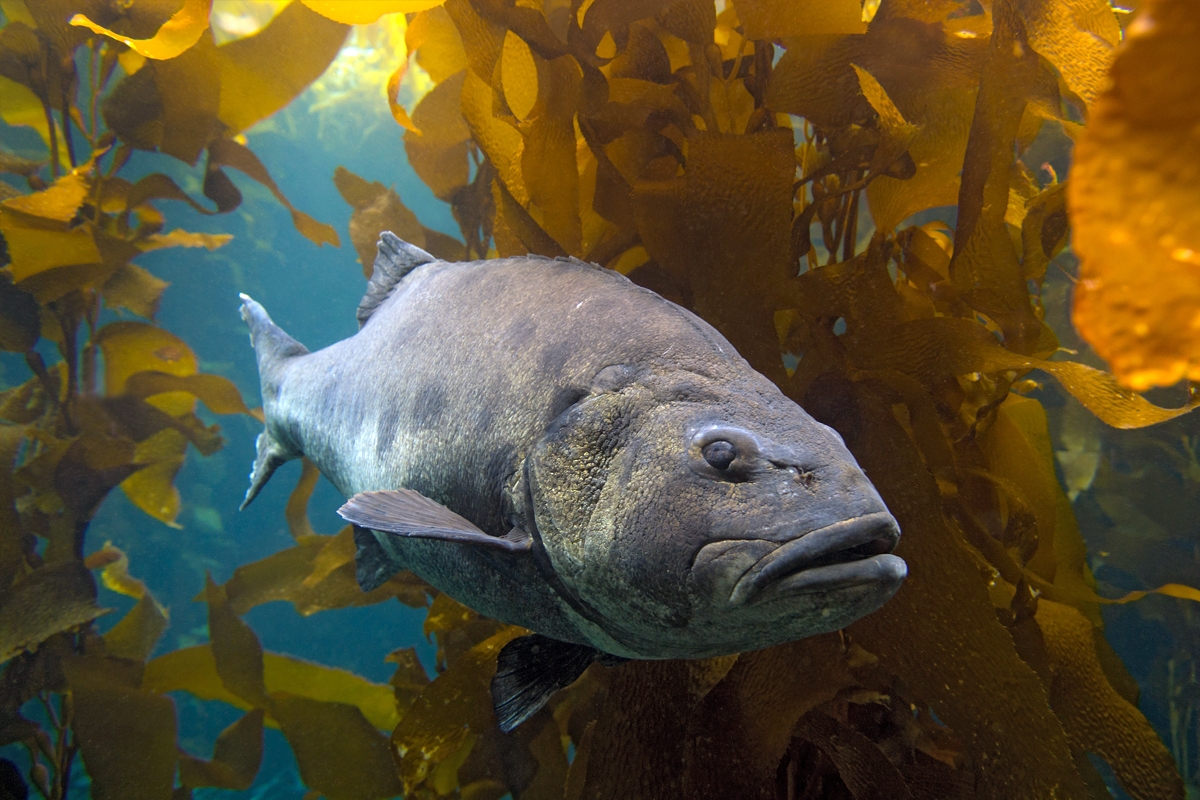
Find out how the Aquarium is helping this critically endangered gentle giant recover from overfishing.
Up next in kelp forest
Animal
Red octopus
A red octopus's normal color is red or reddish-brown. But to hide, it may change its skin texture to blend in…
Keep exploring
Animal
Leopard shark
Leopard sharks live in shallow waters of bays and estuaries and occasionally patrol the kelp forest.