

Amazing ocean athletes
The sleek silver bodies of Pacific bluefin tuna are built for speed. These powerful ocean athletes can sprint through the water at up to 18 miles per hour to catch the squid and fish they eat. That’s faster than a world-record middle-distance runner. They’re equally adept at rapid long-distance travel. They can cross the Pacific from Japan to Mexico in less than two months.
They’re champions of another sort: They’re the most expensive fish you can buy. A single bluefin tuna can fetch tens of thousands of dollars at auction in Japan, where the prized first fish of the new year has sold for as much as $3 million.
And that’s a problem. High prices and rising demand among sushi lovers drove fishing fleets to catch Pacific bluefin so fast that they couldn’t keep up—even though each spawning female can produce millions of eggs at a time. By 2014, their population had fallen by 98 percent from historical levels.
Acting together to end overfishing
Now the future is much brighter, thanks to international cooperation informed by solid science. Monterey Bay Aquarium’s multi-faceted and decades-long approach to tackling the problem of overfishing has played a key role. The seeds of change we planted so many years ago are bearing fruit in our 40th anniversary year.
Just today, for the first time ever, the Aquarium’s Seafood Watch program moved some Pacific bluefin tuna fisheries out of the red as a species to avoid, putting them back on the menu for seafood lovers. There are still reasons to be cautious. But this is real progress.
I’ve always said the ocean is resilient and can recover, if we give it half a chance. What we’re seeing with Pacific bluefin tuna is a dramatic demonstration of how true that is.
Julie PackardMonterey Bay Aquarium Executive Director
How Monterey Bay Aquarium helped bluefin tuna recover
Our work to recover bluefin tuna has ranged from inspiring millions of guests with exhibits of bluefin and yellowfin tuna, bolstering the science by tagging and tracking tunas in the Atlantic and Pacific and highlighting management problems through science-based Seafood Watch ratings that evaluate the sustainability of global fisheries. Aquarium policy staff took on official advisory roles with U.S. government delegations to international fisheries management bodies, coordinated with other NGOs, and worked directly with other national delegations.
Over the years, we’ve educated and encouraged a range of people—including businesses, consumers, and governments—to increase the urgency for international management bodies to take action to recover Pacific bluefin tuna. They ranged from then-Secretary of State John Kerry to members of Congress, leaders within Democratic and Republican administrations, and even popular musician Jack Johnson.
We generated wide media attention through advocacy by chefs and major businesses, including a call by nearly 200 high-profile chefs and culinarians who vowed to keep Pacific bluefin tuna off their menus until they were better managed and the population was recovering.
And, slowly, the status of Pacific bluefin tuna took a turn for the better.
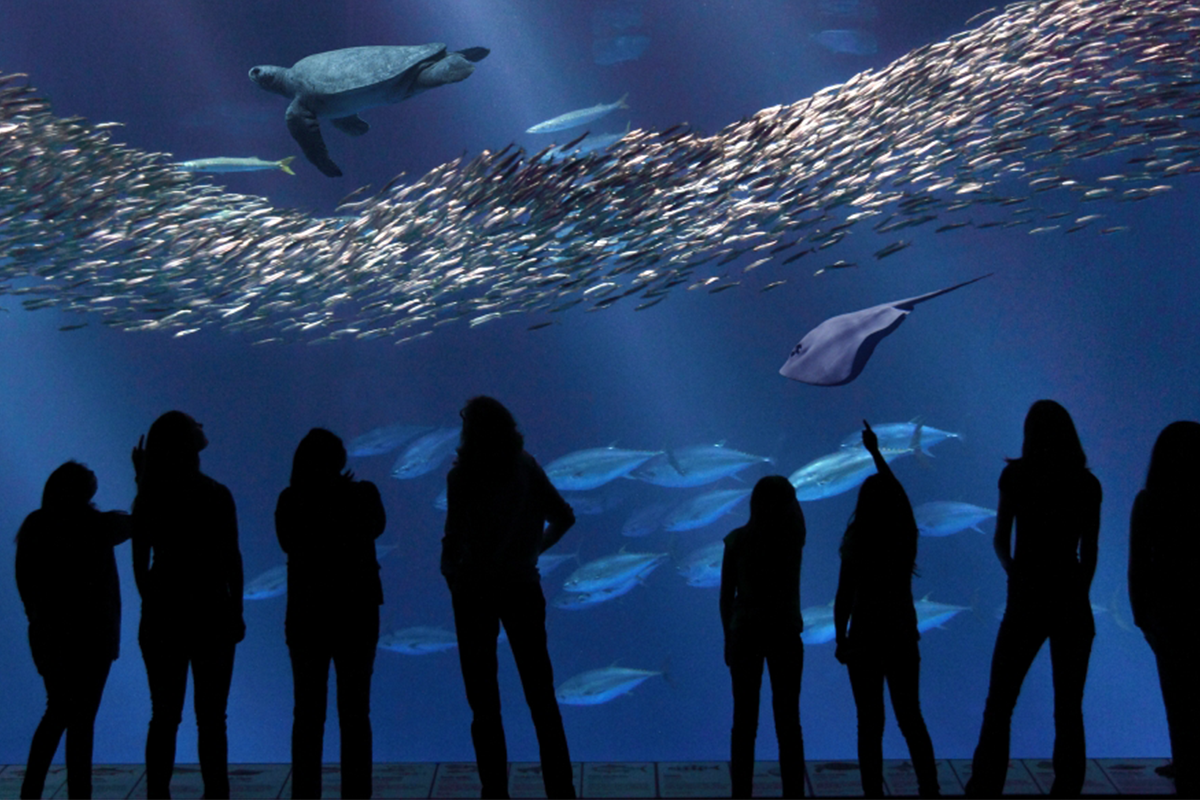
We were the first in the United States to feature bluefin and yellowfin tunas in our multi-species Open Sea exhibit. It introduced millions of people to these far-ranging ocean animals.
Progress—with more work to do
Pacific nations that fish for tuna will meet early in 2025 to consider long-term rules and fishing quotas that will keep Pacific bluefin tuna on a path to recovery. This follows a July 2024 meeting in Japan, where they learned that Pacific bluefin have rebounded tenfold in recent years, from barely two percent of their historical numbers to more than 23 percent.
The dramatic turnaround was the result of earlier decisions to cut the number of bluefin that fleets could catch each year – particularly the catch of juvenile fish. This allowed more of the fish to live long enough to become adults that spawn and rebuild the population.
At their July 2024 meeting, national delegations modified fishing quotas in response to the new scientific information, allowing the Pacific bluefin tuna population to continue to grow. In July 2025, they have a real opportunity to put a long-term fishing strategy in place. If the two regional management bodies—the Inter-American Tropical Tuna Commission, which manages tuna fishing in the Eastern Pacific, and the Western and Central Pacific Fisheries Commission, which oversees fishing in the rest of the Pacific—adopt a precautionary and long-term sustainable management plan, Pacific bluefin tuna will continue to recover and thrive.
“I’ve always said the ocean is resilient and can recover, if we give it half a chance,” said Aquarium Executive Director Julie Packard. “What we’re seeing with Pacific bluefin tuna is a dramatic demonstration of how true that is.”
First, a vision: bluefin on exhibit
From its inception, the Aquarium intended to tell the full story of Monterey Bay and its habitats, from the shoreline to the open ocean and the deep sea. When we opened, the storytelling stopped with the bay’s coastal habitats: kelp forests, rocky shores, wetlands, beaches, and dunes. But there was so much more to share.
Before we celebrated our fifth anniversary, expansion plans were well underway. Our original animal care leaders had experience working with tunas in the wild, surveying albacore populations for what is now the California Department of Fish and Wildlife. They wanted to exhibit these fast-swimming open-ocean animals.
That vision leaped forward in 1990 through a new sister aquarium relationship with Japan’s Tokyo Sea Life Park. It was one of the only aquariums in the world to exhibit bluefin and yellowfin tuna and its team generously shared its expertise with our staff.
We’d already started planning our Open Sea wing, with an exhibit large enough to house tunas, sharks, ocean sunfish, and other far-ranging ocean animals. And we began perfecting our ability to care for tunas at a temporary research center in Moss Landing.
When we opened the new wing in 1996, bluefin and yellowfin tunas were among the featured species. (We stopped exhibiting bluefin as their numbers declined in the wild. Today, Aquarium guests can see yellowfin tuna in the Open Sea exhibit.)
Contributions to conservation science
It wasn’t enough just to keep animals on exhibit. We knew we had an opportunity to contribute to the science needed to understand and recover threatened populations.
As we planned the Open Sea exhibit, scientists and the ocean conservation community were raising the alarm about overfishing of tunas globally—especially bluefin tuna. We started building a research program for bluefin tuna around our exhibit, just as we'd done with sea otters.
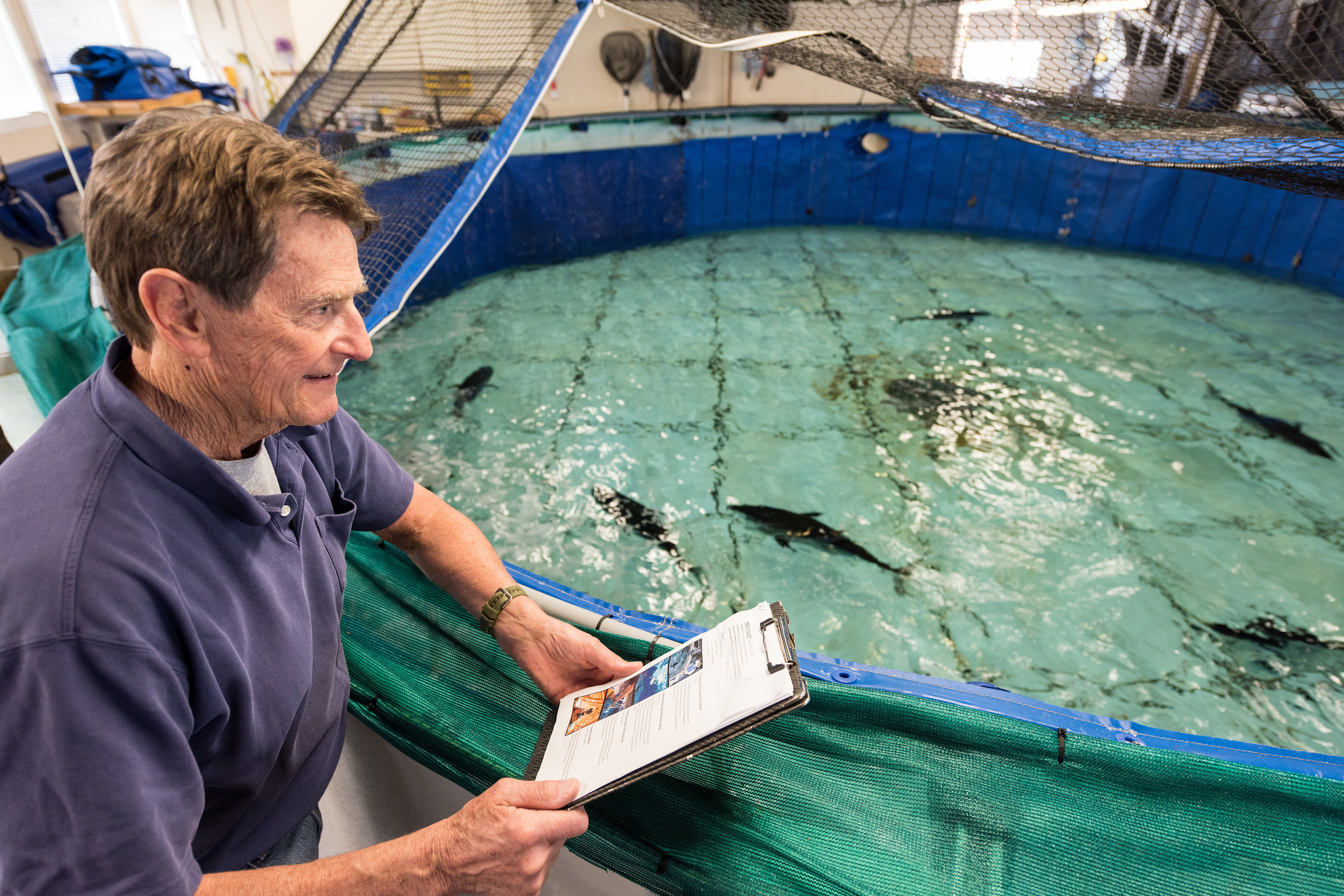
Chuck Farwell, who directed our tuna research program, monitors bluefin tuna in a holding pool at the Tuna Research and Conservation Center (TRCC).
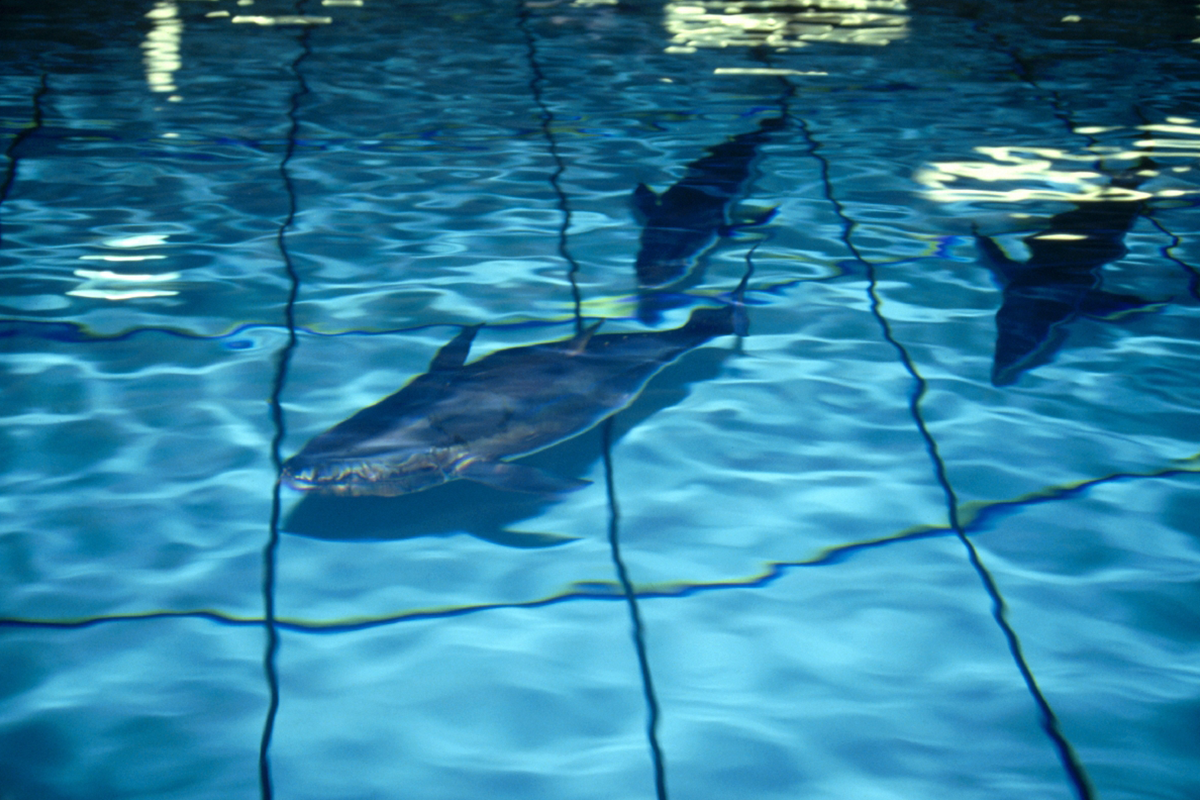
The Aquarium and Stanford University partnered to create the TRCC. It houses tunas for the Open Sea exhibit and others that advanced studies to help bring back wild bluefin tuna populations.
In 1994, we partnered with Stanford University to open the Tuna Research and Conservation Center at Hopkins Marine Station. The Center included holding facilities for the tunas we’d exhibit and established a world-class center to study tuna physiology and develop techniques for using electronic data tags to monitor bluefin tuna migrations in the wild.
“There is a real threat to the tuna population from overfishing,” then-life sciences director Dr. Chris Harrold said. “Anything we can learn about them is a direct contribution to conservation.”
Stanford University scientist Dr. Barbara Block noted that “the tuna fishery is a billion-dollar business with tremendous impact on many species. Its future is THE issue of the high seas. What we're starting (here) will bring the Aquarium into the central arena for pelagic fish management and conservation.”
Tagging and other scientific information have helped answer questions on migration patterns, mortality rates, population structure, and spawning behavior. All of these data are crucial to inform management of bluefin tunas.
Dr. Andre BoustanyDirector of Science, Global Ocean Conservation
Tagging tunas in the Atlantic, Pacific, and Southern oceans
The Center quickly fulfilled its promise. Tunas collected by our Animal Care team both inspired visitors in our Open Sea exhibit and gave our Stanford colleagues animals they could tag and observe in a controlled setting before heading into the field to tag giant Atlantic bluefin tuna in the wild.
In 1997, a joint Aquarium-Stanford team headed to Cape Hatteras, North Carolina, and tagged 200 bluefin tuna – the first of what has become 28 years of field seasons, tagging more than 3,000 bluefin tunas on both sides of the Atlantic Ocean, in the Eastern Pacific off Mexico, the Western Pacific off Japan, and in the Southern Ocean off New Zealand.
The electronic tags recorded the tunas’ migrations, the temperature of the waters through which they moved, and their internal body temperatures. When the tags popped free and reported their data via satellite, or the fish were caught and the tags returned for a reward, they delivered a bounty of new information about the tunas’ lives.
Those data, published in peer-reviewed journals, formed the basis in science for new tuna management approaches that are putting bluefin tuna back on a path to sustainable populations.
“Tagging and other scientific information have helped answer questions on migration patterns, mortality rates, population structure, and spawning behavior,” says Dr. Andre Boustany, director of science for our global ocean conservation program. “All of these data are crucial to inform management of bluefin tunas.”
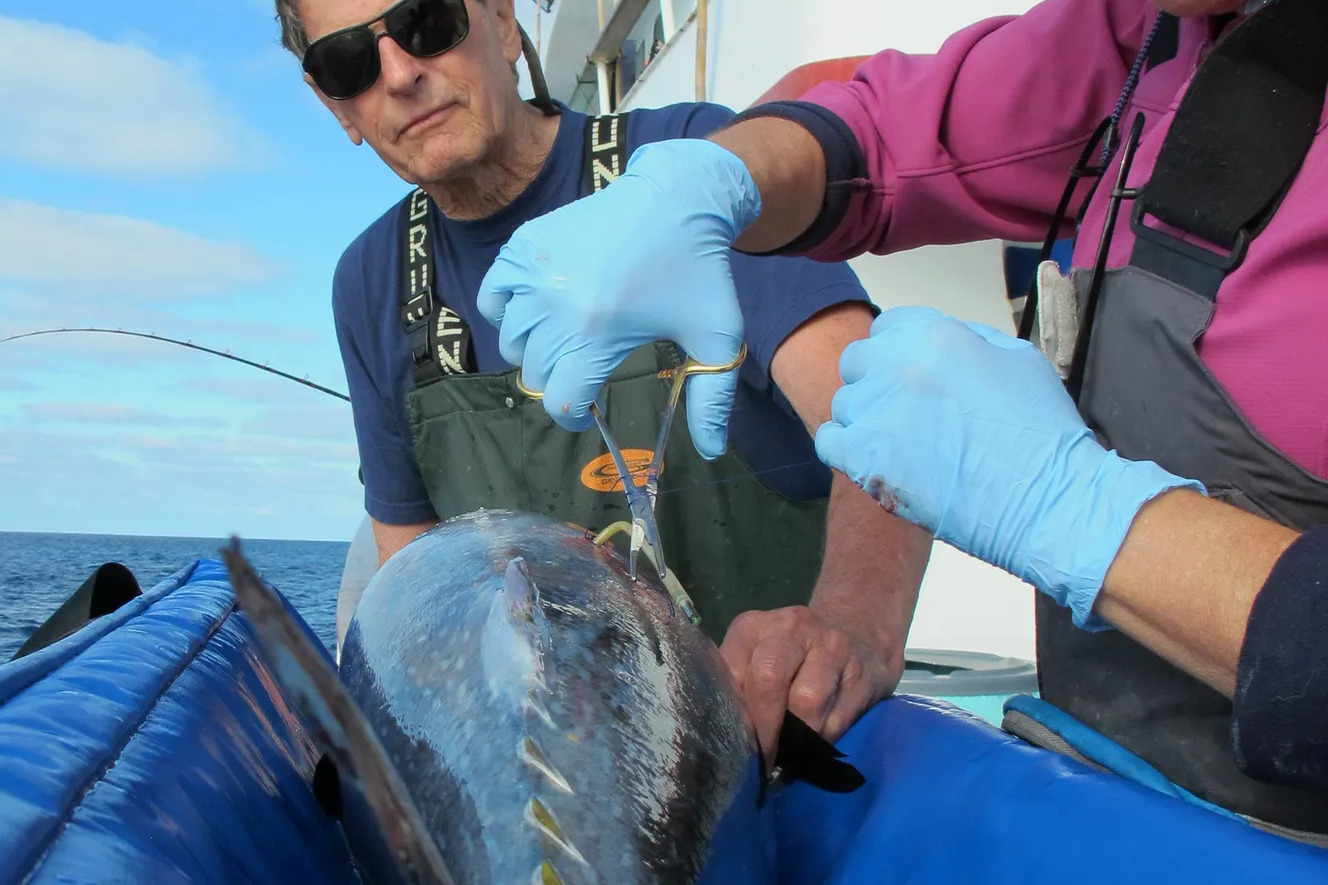
Chuck Farwell and Dr. Barbara Block tag an Eastern Pacific bluefin tuna off the coast of Mexico.
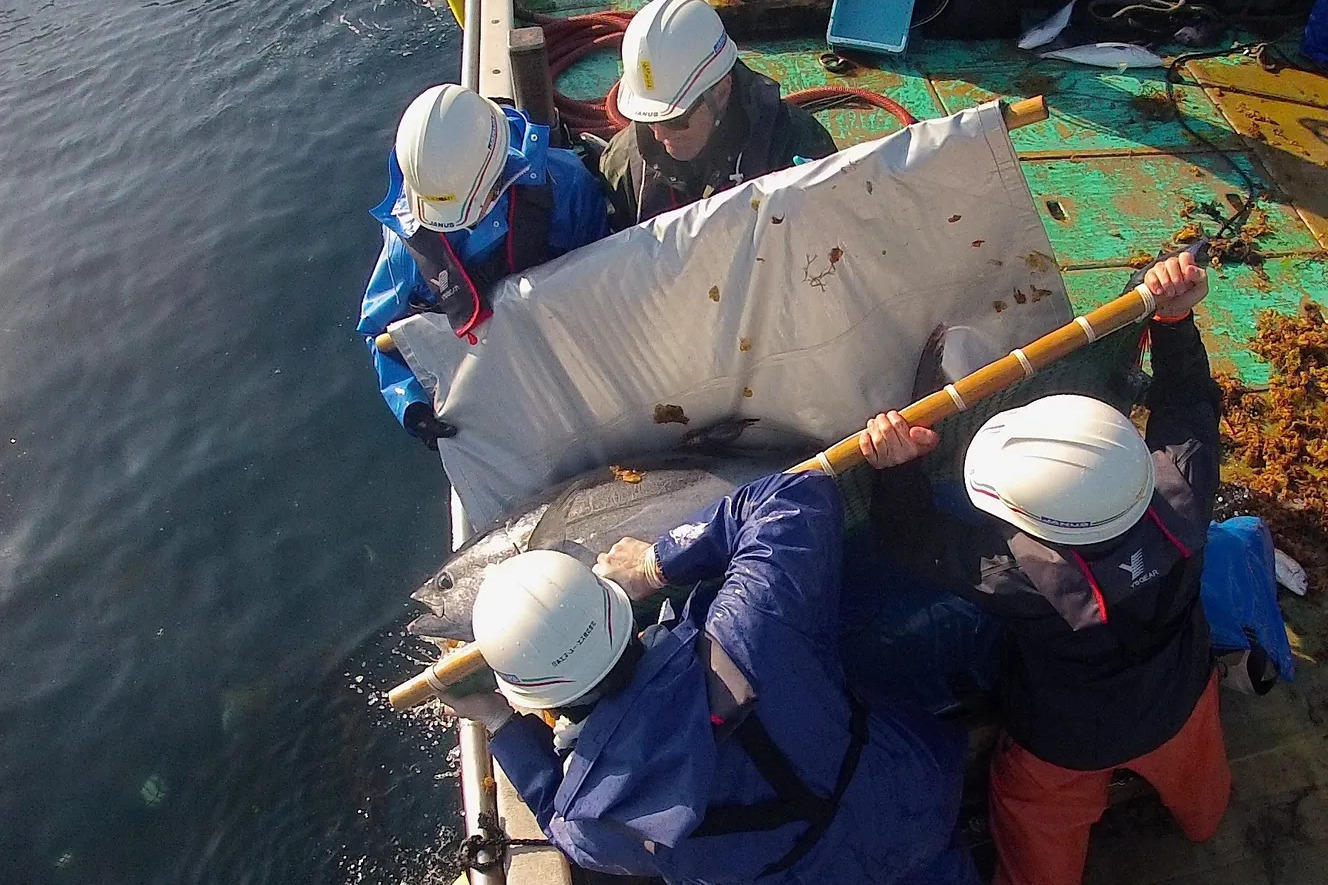
Aquarium researchers work with Japanese colleagues to release a tagged adult bluefin tuna in the Western Pacific off the coast of Japan.
Chefs and consumers drive change
In 1997, we opened our first entirely conservation-focused exhibit. “Fishing for Solutions: What’s the Catch?” highlighted for Aquarium guests how overfishing, bycatch of unwanted species, and habitat damage from destructive gear or poorly managed aquaculture operations were depleting ocean wildlife populations worldwide.
The response took everyone by surprise. People turned to the Aquarium for answers about how to make responsible seafood choices. We put tent cards on our cafe tables sharing the changes we’d made to our own menus – and visitors took them home. We mailed photocopied sheets of information when people asked. Demand only grew.
So, in 1999, we launched our Seafood Watch program, with our science-based sustainable seafood recommendations on a pocket guide that used a stoplight green-yellow-red system to identify species to choose, those with some concerns, and others—like bluefin tuna—to avoid.
Consumer demand caught the attention of chefs, supermarkets, and foodservice companies. We built a network of conservation and business partners that followed Seafood Watch recommendations. And a growing number of chefs—many of them with high public profiles—joined our Blue Ribbon Task Force. They advocated among their peers, lobbied legislators and government agencies, and took public positions—including a pledge not to serve Pacific bluefin tuna until it was managed sustainably.
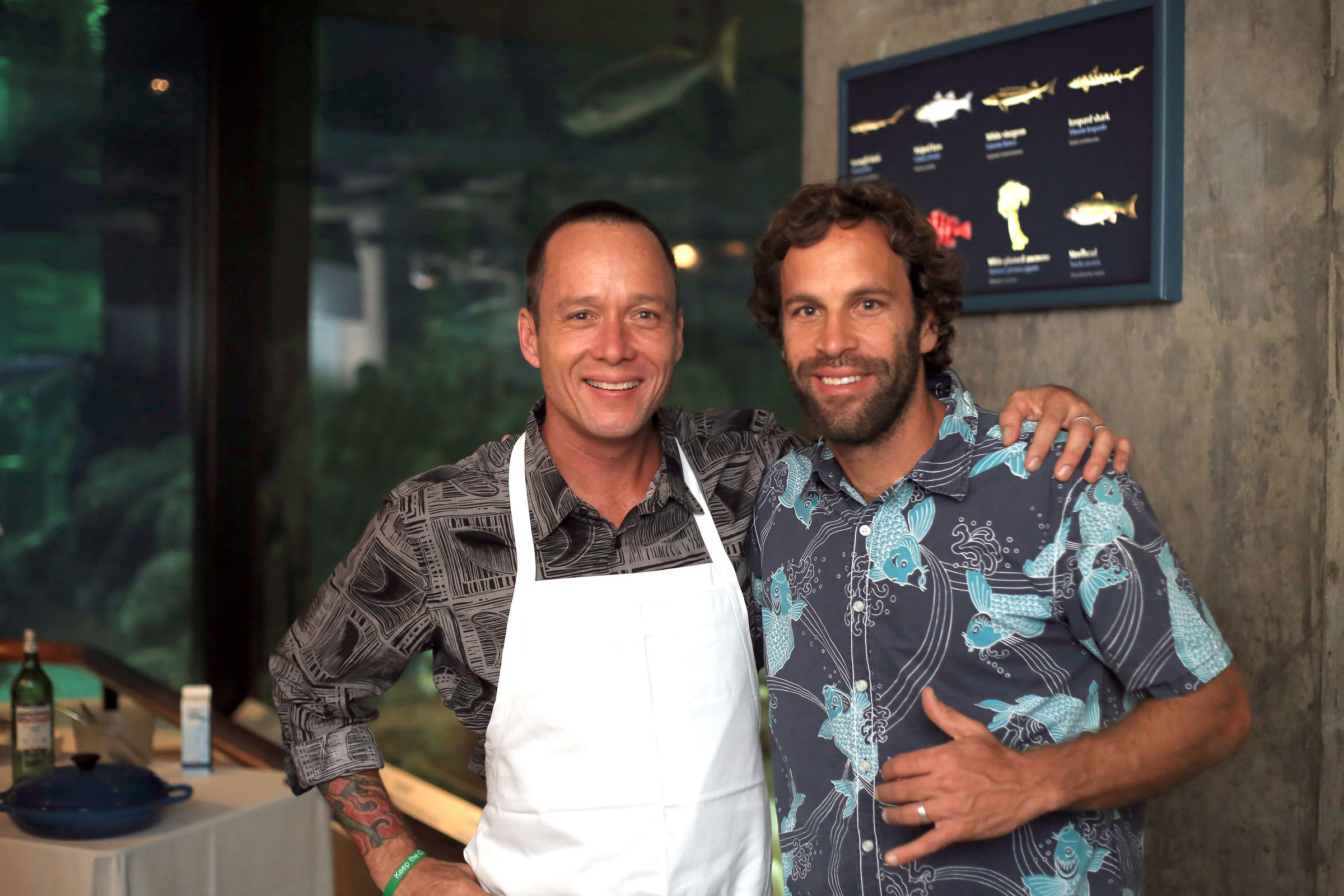
Seafood Watch Blue Ribbon Task Force Chef Ed Kenney and musician Jack Johnson used their voices as celebrities to support better management of Pacific bluefin tuna fisheries.

Chef Virginia Willis published a commentary saying she wouldn't feature bluefin tuna recipes until the fishery had begun to recover. She joined 200 other chefs and called on international authorities to manage Pacific bluefin sustainably.
A new trajectory for Pacific bluefin
Pacific bluefin tuna are highly susceptible to overfishing and managing them sustainably has been a challenge for decades. Multiple jurisdictions have a voice in the process because bluefin migrate across the Pacific and spend time in national and international waters. Two separate international Regional Fisheries Management Organizations (RFMOs) set the rules governing Pacific bluefin catch quotas and other policies. And there’s a perpetual tension between the economic desire to catch as many fish as possible and the long-term goal of not depleting the population.
In 2014, the Aquarium stepped up its engagement with these bodies as the next step toward bringing back Pacific bluefin tuna. Our policy work complemented what we were already doing: inspiring visitors who could see tunas swimming in our Open Sea exhibit; engaging consumers and businesses to demand sustainably sourced seafood through our Seafood Watch program; and tagging and tracking tunas on both sides of the Pacific, to fill gaps in what we knew about their life history and migrations.
In the international arena, we worked closely with country delegates and the two key Pacific fisheries management organizations: the Inter-American Tropical Tuna Commission and the Western and Central Pacific Fisheries Commission.
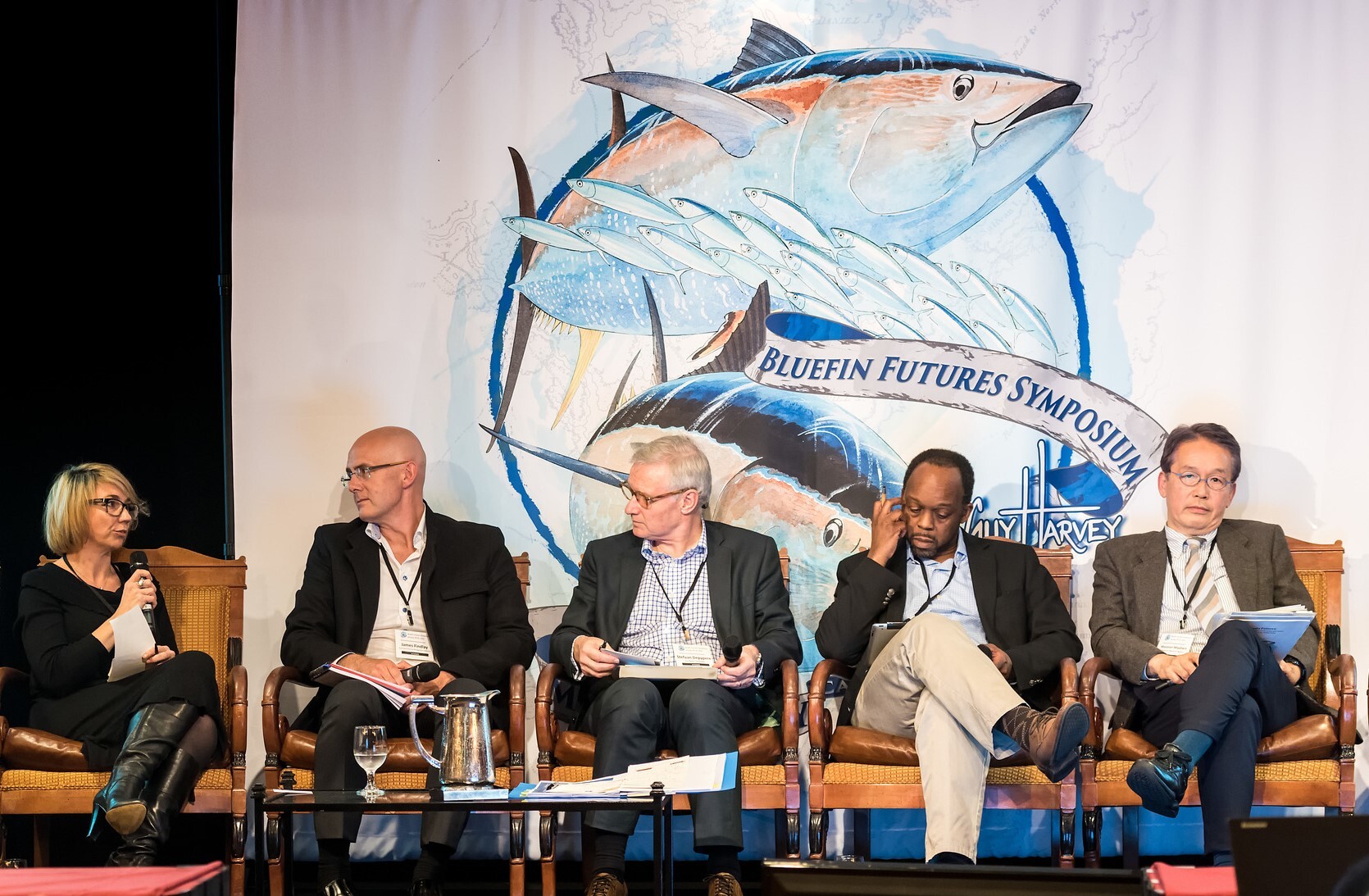
A panel of scientific and management experts presents to participants at 2016 Bluefin Futures Symposium in Monterey.
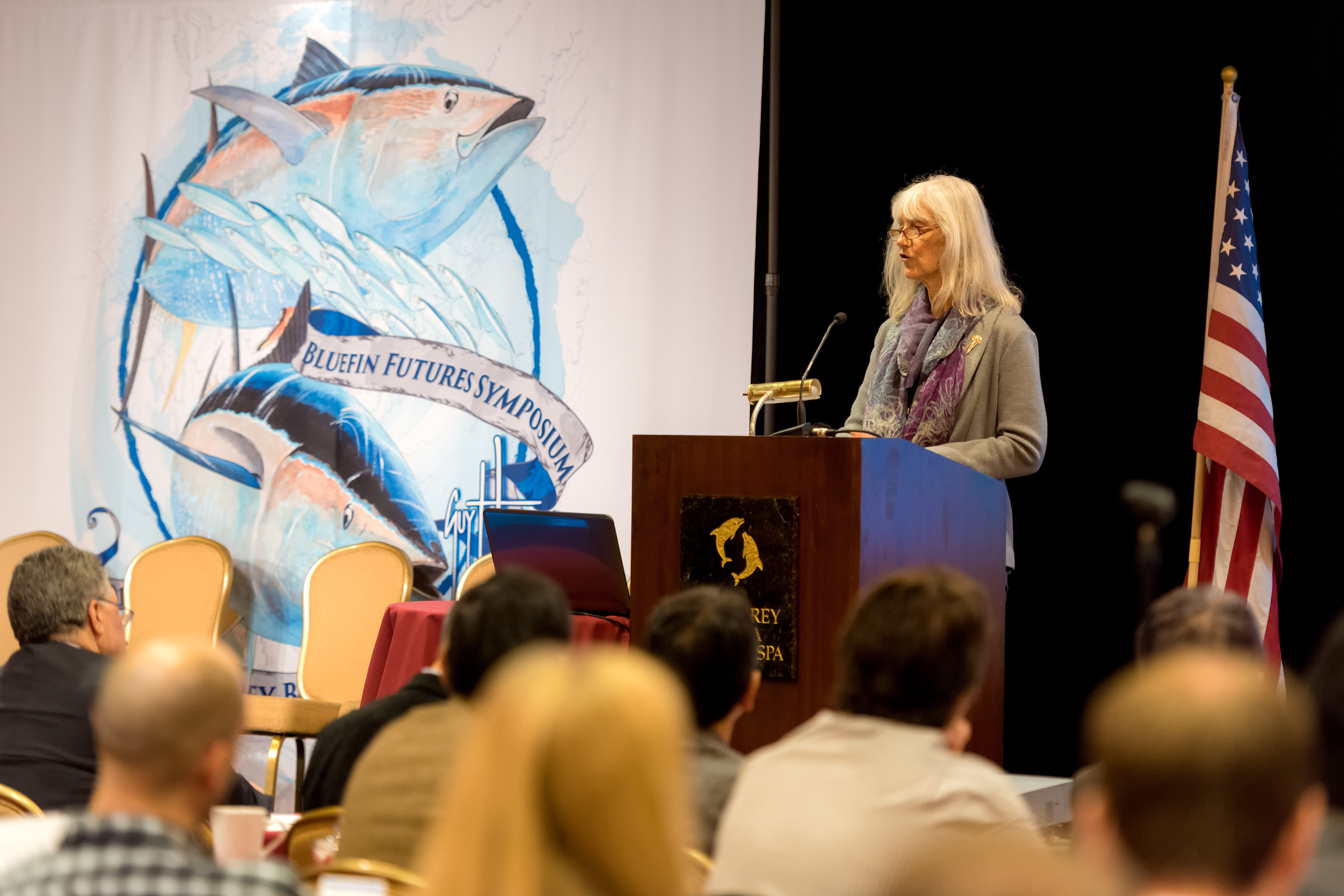
Executive Director Julie Packard offered opening remarks at the symposium, which was convened by Monterey Bay Aquarium and Stanford University.
Convening global leaders
In 2016, with Pacific bluefin tuna populations near historic lows, the Aquarium recognized the urgent need to engage scientists, policymakers, and the seafood industry to act and rebuild their numbers. In the face of skepticism that any consensus for action could emerge, the Aquarium—with Stanford University—convened the Bluefin Futures Symposium in Monterey to change minds and move Pacific bluefin toward recovery.
The three-day symposium brought together the world’s foremost bluefin experts to discuss the central issues needed to shape a sustainable future for the planet’s bluefin tuna populations. The right people were in the room. Participants included global leaders in bluefin research, policy, and management to help elevate the urgent need to establish science-based recovery and sustainable management strategies for these iconic and important species.
In her opening remarks, Julie Packard endorsed the need for more research to inform strong science-based management, and for the full participation of industry, governments, researchers, and conservation advocates to reverse the steep decline in bluefin tuna populations worldwide.
Just a year and a half later, transformation was no longer a dream. International management authorities in the Pacific made the first significant progress toward shaping the future outlined at the symposium.
There are no shortcuts to international cooperation. It takes time, a long-term commitment, and a willingness to build trust. But look at the results.
Josh MadeiraDirector of policy and stakeholder engagement
Working together brings success
In a polarized world, building trust and finding ways to cooperate is the key to bringing about significant change. Josh Madeira, the Aquarium’s director of policy and stakeholder engagement, has led that effort for the past decade—and delivered real results.
“There are no shortcuts to international cooperation,” Josh says. “It takes time, a long-term commitment, and a willingness to build trust. But look at the results. The rapid recovery of Pacific bluefin tuna illustrates that we can make major progress on even the most dire conservation challenges if we can all work together.”
Starting in 2014, after years of overfishing countries agreed to new management measures to limit the catch of Pacific bluefin. In 2017, with the formation of a new international joint working group, country delegates agreed to major new recovery goals. Several years of reduced catch quotas were often challenging for fishing communities in the U.S. and other countries, but the science showed that these measures were working. In fact, they were so effective that the Pacific bluefin tuna population reached its interim recovery goals years ahead of schedule. The latest scientific assessment released in June 2024 confirms the trend.
With the rapid recovery of the Pacific bluefin tuna population in recent years, international collaboration has shifted to developing a long-term sustainable management plan. Pacific countries aim to complete this plan, known as a long-term harvest strategy, in 2025. Securing an international agreement on a precautionary long-term harvest strategy would be a significant step to ensure a healthy future for Pacific bluefin tuna.
“It’s amazing how far we’ve come,” Josh says. “It’s a testament to how much you can accomplish with a dedicated international effort by so many people.”
Keep exploring
Story
Introducing the Seafood Watch Best Choice Restaurant Program
Seafood Watch Best Choice partners offer at least one green-rated, sustainable seafood dish on their menu.
Read story – Introducing the Seafood Watch Best Choice Restaurant Program
Story
From Vietnam to California
From farms to CA schools, your food choices help wildlife, fishers, and global coastal food systems thrive.
Read story – From Vietnam to California
Story
Earth Month 2026
This Earth Month, embrace wonder. Ask questions, dive in, and join our community caring for the ocean.
Read story – Earth Month 2026