

Giant kelp
Macrocystis pyrifera
- On view
- Kelp Forest
- Animal type
- Plants & algaes
- Ecosystem
- Kelp forest
- Relatives
- Sea palms, bull kelp; Family: Laminariaceae
- Diet
- Photosynthesis converts the energy of light to the energy of carbohydrate molecules
- Range
- Along the coast from Santa Cruz to Turtle Bay, Mexico, and along the temperate coasts of South America, New Zealand and Australia
- Size
- Up to 100 feet (30 m); 175 feet (53 m) in ideal conditions
About giant kelp
This majestic giant grows incredibly fast—anywhere from three to five inches (7–13 cm) each day in our exhibit, and 10 to 12 inches (25–30.5 cm) in the bay. Under ideal conditions, giant kelp can grow two feet each day, creating towering underwater forests that serve as vibrant marine habitats.
Watch in real time
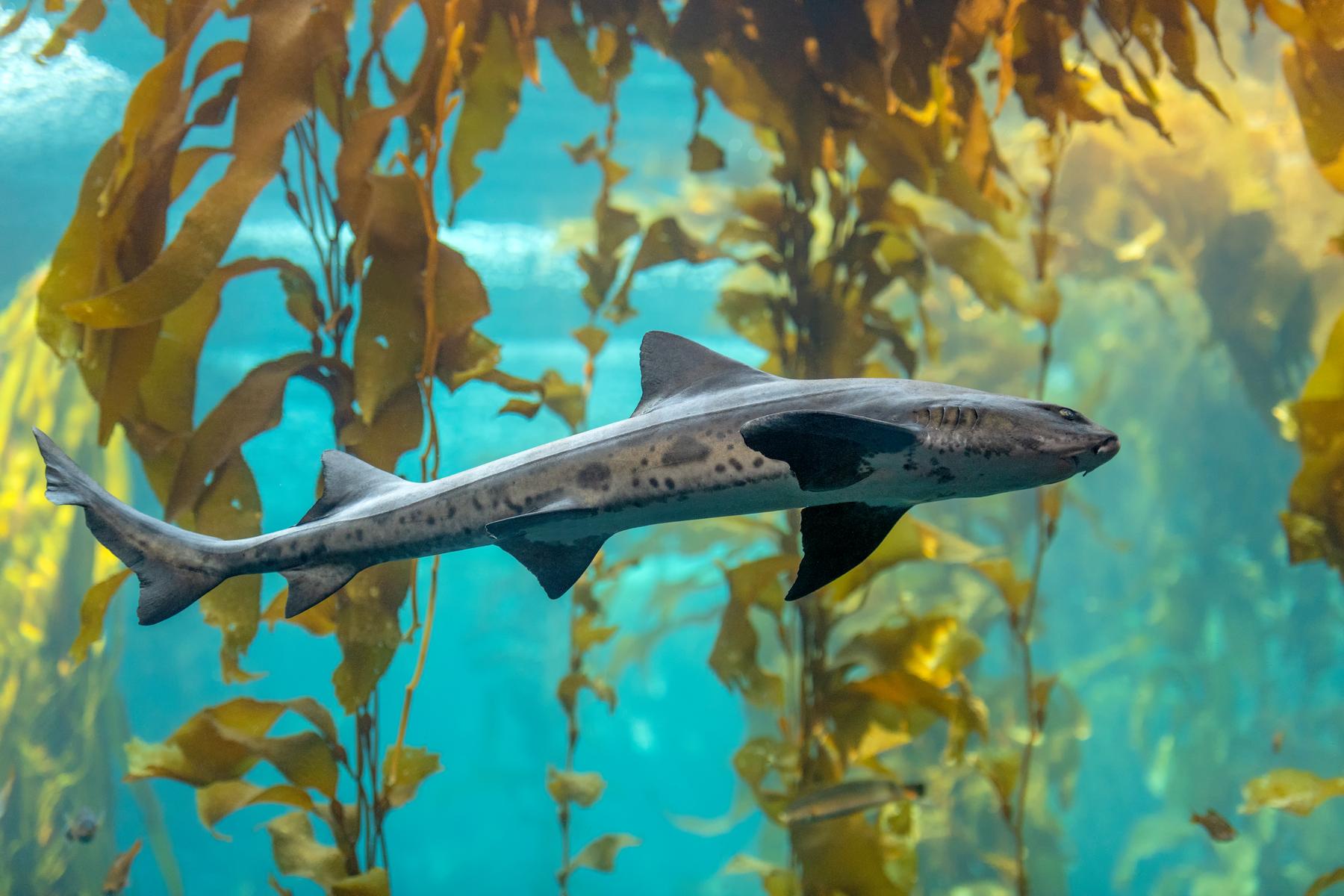
Kelp Forest Cam
Check out this live cam – Kelp Forest CamNatural history
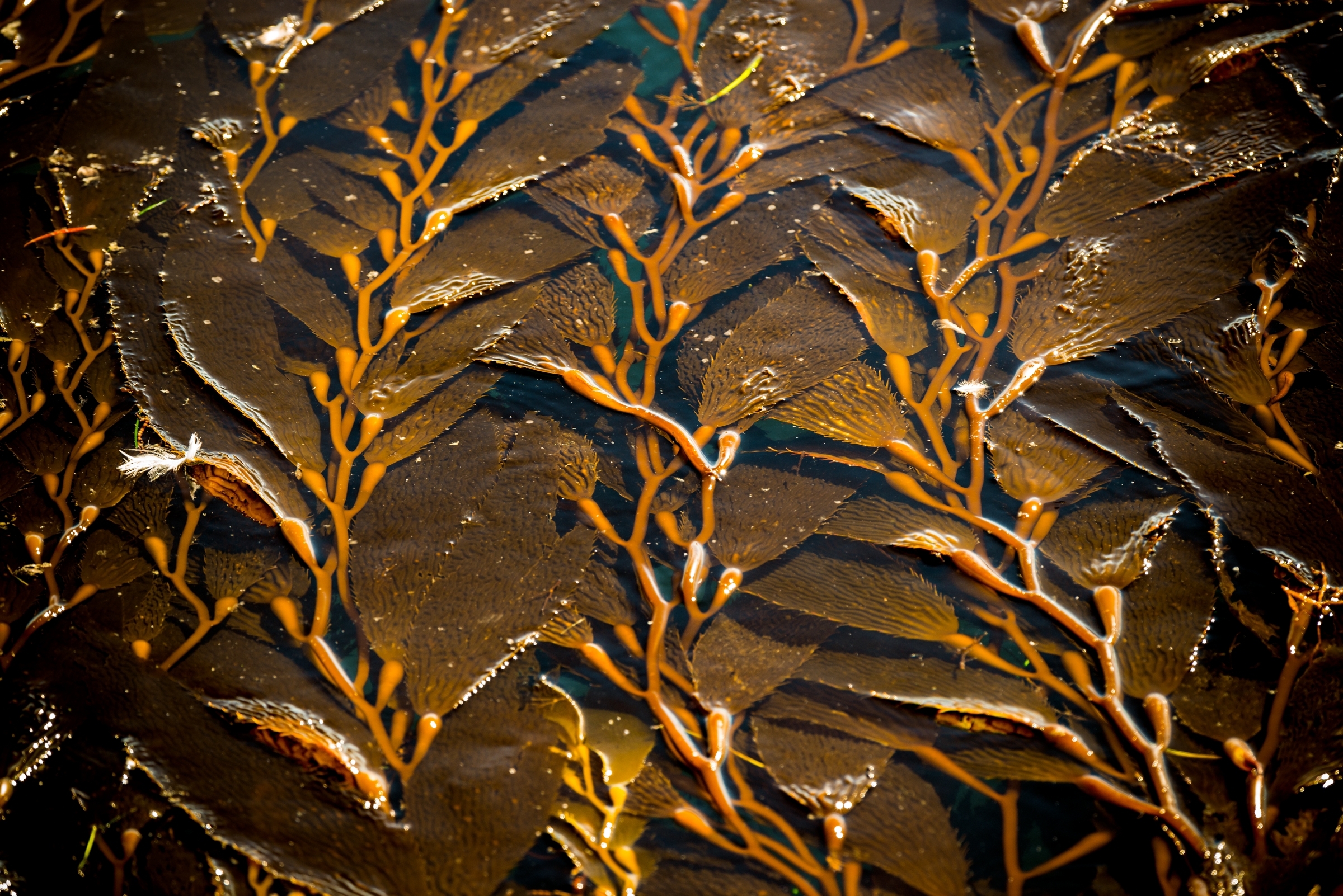
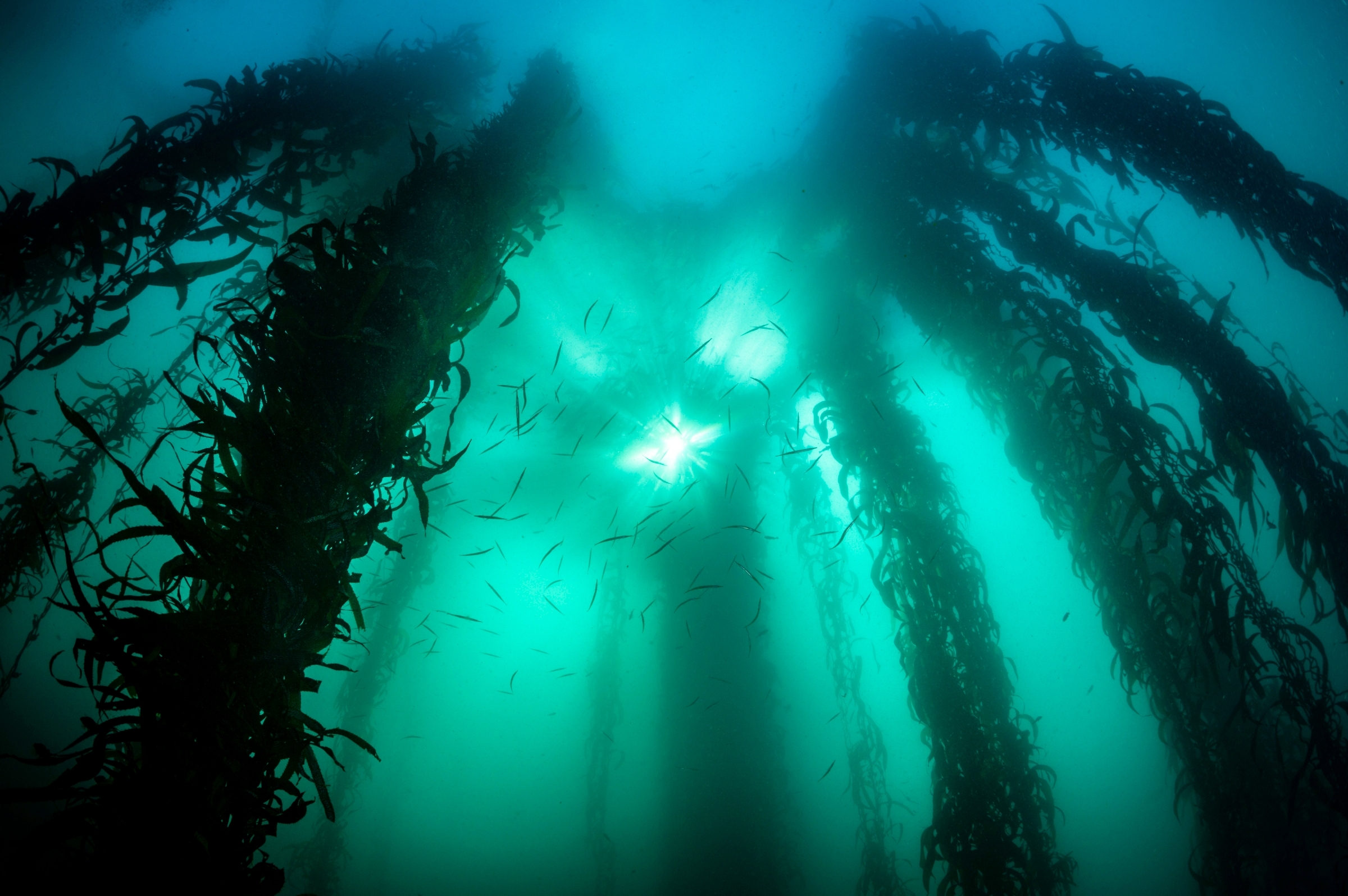
Held upright by gas-filled bladders at the base of leaflike blades, kelp fronds grow straight up to the surface toward sunlight, where they spread across the top of the water to form a dense canopy. Giant kelp often grows in turbulent water, which brings renewed supplies of nutrients. This allows the kelp to grow to a possible height of 175 feet (53.4 m).
The stemlike stipes are tough but flexible, allowing the kelp to sway in ocean currents. Giant kelp absorbs all necessary nutrients from the sun and the surrounding water—it doesn’t require a root system like typical land plants. It uses a tangle of branching extensions called a holdfast to anchor itself to a rocky surface on the seafloor.
In Monterey Bay
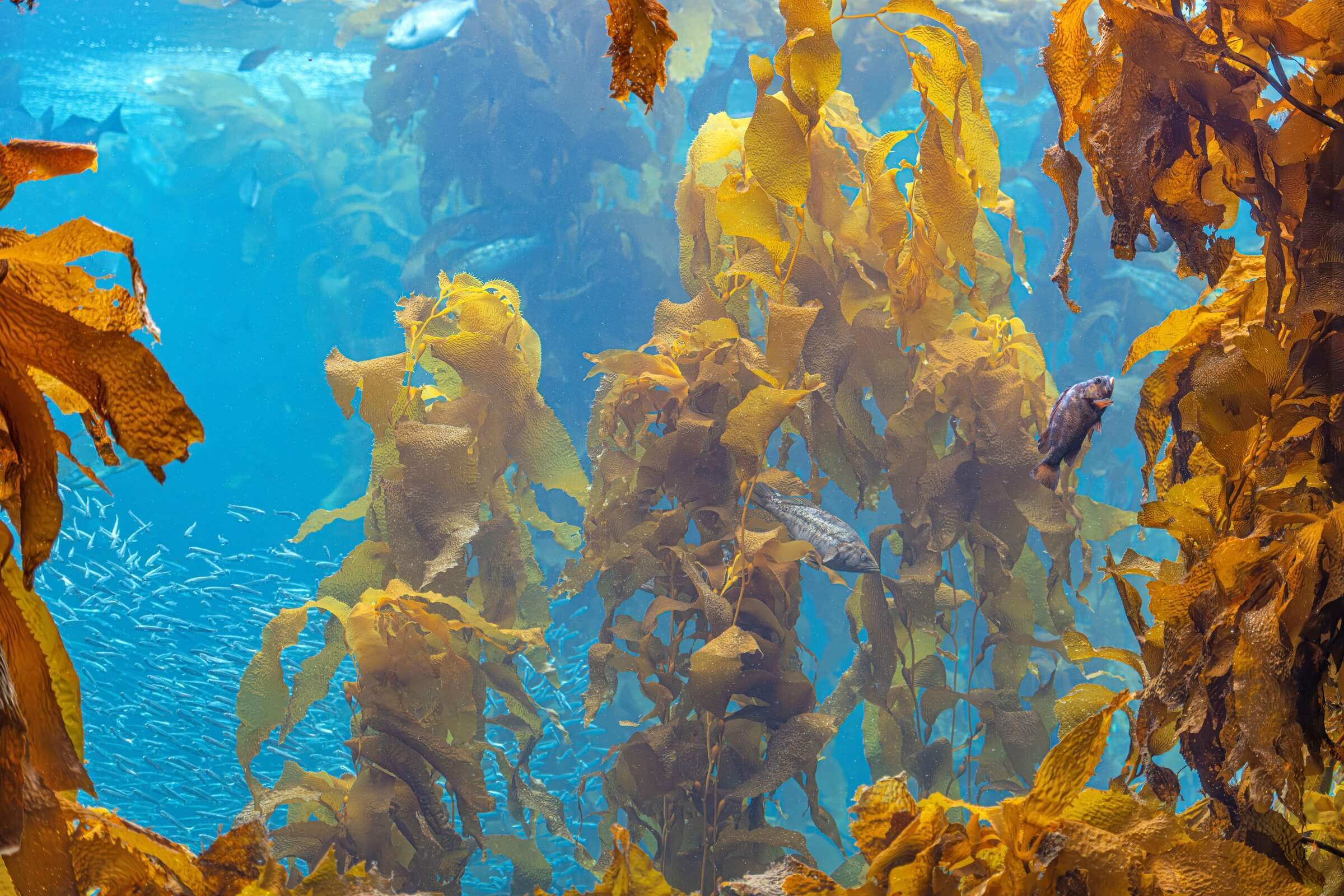
Found mostly in nearshore waters, this kelp is perennial. Its luxuriant fronds carpet the bay year-round. Like an apartment building, the kelp provides a wide variety of places to live, from the basement and middle stories to the penthouse up top. Food is plentiful here as well. Invertebrates graze on the blades, fish seek shelter in the fronds, and thousands of invertebrates live in the rootlike holdfast, including brittle stars, sea stars, anemones, sponges, and tunicates.
Sea otters also like to hang out in the kelp forest, where they find their favorite foods and can wrap up in a kelp frond to keep from drifting away at naptime. (The Aquarium’s back decks are a great place to spot them!) Sea otters play a particularly important role in the health of the bay’s kelp forests; without them, sea urchins—which normally eat pieces of kelp that fall to the seafloor—will feed on the stipes of plant-like giant kelp algae and can destroy a kelp bed. Otters keep the urchin populations in check so the kelp forests can thrive.
Conservation
Kelp is harvested for use in aquaculture and can be found in many food products. Due to it’s fast growth rate, kelp is often viewed as a sustaining resource. Factors such as climate change, pollution, habitat degradation, boating and kelp harvesting can play a role in the health of a kelp forest.
In California, 100,000 to 170,000 wet tons of kelp are harvested each year. Commercial harvesting in California is highly regulated to protect our kelp forests from improper or over harvesting. In addition to possessing a license, harvesters must trim kelp from the top, may not go more than four feet (1.2 m) below the surface of the water and may only collect in designated areas.
Sludge, silt or sewage dumped near kelp forests can bury new shoots of giant kelp.
Cool facts
- Giant kelp is harvested as a source of algin, an emulsifying and binding agent used in the production of many foods and cosmetics, like ice cream, cereal and toothpaste.
- Pieces of decomposing kelp (known as detritus) sink to the depths of the ocean, providing food for deep-sea creatures.
- As kelp grows, a blade at the tip of each frond separates, producing a series of tiny new blades. The logo of the Monterey Bay Aquarium represents the tip of a growing giant kelp.
- It’s the world’s largest species of marine algae.
Up next in kelp forest
Animal
Gumboot chiton
A thick, leathery, and brick-red mantle hid the gumboot chiton's eight shell plates and the muscular foot…
Keep exploring
Animal
Leopard shark
Leopard sharks live in shallow waters of bays and estuaries and occasionally patrol the kelp forest.