

Laysan albatross
Phoebastria immutabilis
- Not on exhibit
- Animal type
- Birds
- Ecosystem
- Open ocean
- Relatives
- Other albatrosses; Family: Diomedeidae
- Diet
- Squid, fish, fish eggs, crustaceans and floating carrion
- Range
- Across the northern Pacific Ocean, from Costa Rica north to the Aleutian Islands and southern Bering Sea
- Size
- Up to 32 inches (81 cm) in length; wingspan from 77 to 80 inches (195–203 cm)
Meet the Laysan albatross
Magnificent mariners of lore and literature, albatrosses are the largest seabirds and among the largest flying birds. They soar effortlessly and almost endlessly, spending much of their lives aloft. With a wingspan of six feet (2 m), the Laysan albatross is one of the smaller species and is adept at diving for squid, fish and crustaceans.
Natural history
Males and females engage in elaborate courtship displays with an array of sounds and gestures for successive seasons to find a mate and strengthen a pair bond that typically lasts for life.
The most common North Pacific species, Laysan albatross number more than 660,000 breeding pairs just on Midway Atoll in the northwest Hawaiian Islands, the largest nesting colony. Most of the world's Laysan albatross breed on Midway or two other Hawaiian sites: Laysan Island and French Frigate Shoals. The species has begun nesting on Kauai and Oahu, and small breeding colonies also occur on islands near Japan and Mexico. The total population size is not easy to estimate, as perhaps a quarter of the species may be at sea skipping a nesting season or not mature enough to breed.
In Monterey Bay
Adult albatrosses head from Hawaii to Monterey to take advantage of the rich food supply in the California Current's cold, upwelling ocean water. One of three albatross species that venture here, Laysan albatross can be observed from Point Pinos in Pacific Grove. But better odds for spotting it occur well offshore aboard whale watching boats.
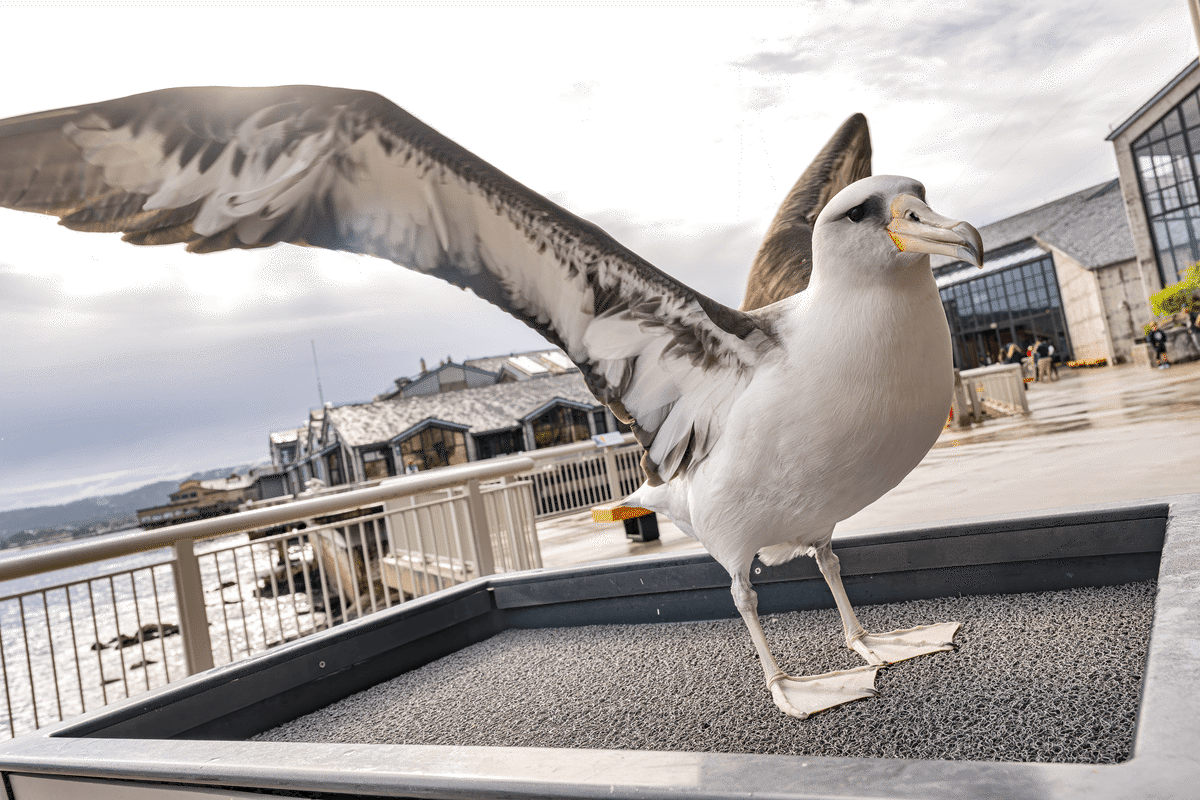
Rescued Laysan albatross Makana participating in a feeding show at the Monterey Bay Aquarium with wings outstretched.
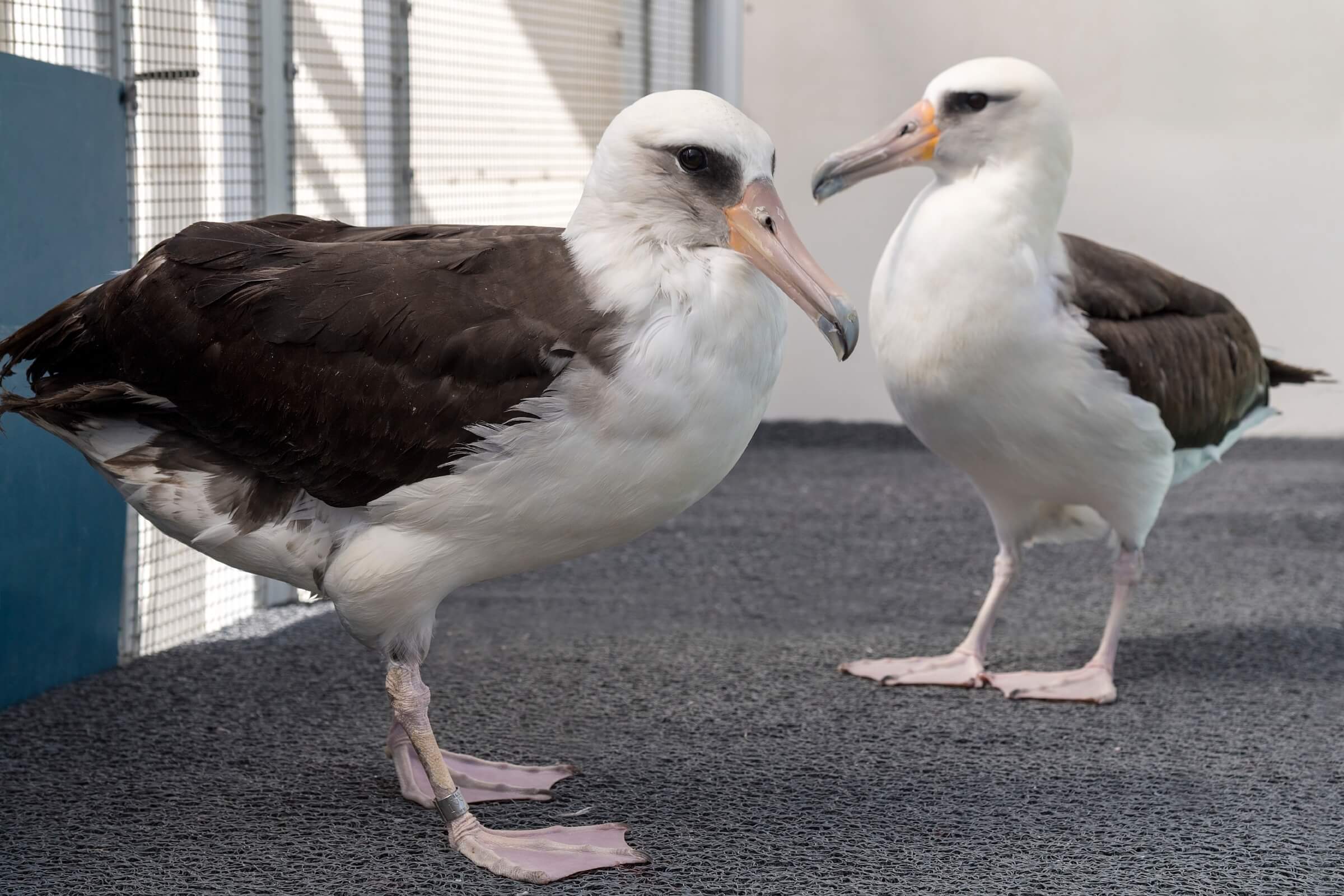
Although not officially on view, rescued Laysan albatross Makana (pictured here with Alika) often participates in feeding shows at the Monterey Bay Aquarium.
Conservation
In the late nineteenth century, hunters exploited Laysan albatross breeding colonies from Japan eastward across the Pacific. The birds' dense down became pillow stuffing and wing plumes adorned women's hats. Albatross eggs provided albumen for a photographic printing process. In 1909, U.S. President Theodore Roosevelt protected the seabirds by creating a preserve of the western Hawaiian Islands.
A more recent threat for albatross species has been birds injured or drowned as bycatch in the longline fishery for swordfish, sashimi-grade tuna and other commercial species. In this method, a main fishing line suspends shorter branch lines, each set with hundreds of baited hooks. The bait also lures birds that get tangled in the lines or snagged on the hooks. Adopting new fishing techniques such as dying bait blue and setting lines at night and with heavier weights on them greatly reduced the number of Laysan albatross and other seabirds caught by longlines in Hawaii.
Lead-based paint in buildings on Midway Atoll from its duty as a U.S. Navy base poisons perhaps 10,000 albatross chicks each year from exposure to paint chips or contaminated soil. Efforts to remove the sources of lead contamination continue.
The projected rise in sea level from melting polar ice may impact Laysan albatross breeding on low-lying atolls. If critical nesting space were to submerge, higher elevation colony sites elsewhere in Hawaii could be crucial to this species' future.
A deadly diet
Albatrosses fly hundreds, sometimes thousands of miles in search of food for their chicks. They look for squid and fish eggs floating on the surface of the water. Unfortunately, plastic floats, and Laysan albatross are particularly attracted to it. They eat the plastic, mistaking it for food, then they fly back to the nest and feed bottle caps, beads, buttons, pens, lighters, fishing lures and other pieces of trash to their young. The chicks starve to death, their stomachs full of plastic. One study found that 97.5 percent of dead chicks had plastic in their stomachs.
Trash travels
Many people think that the biggest source of pollution in the ocean is oil spilled from ships, but most marine pollution is litter that starts out on land. Even hundreds of miles from the ocean, trash is washed by rain into city storm drains and out into streams and rivers that lead to the ocean. From there, wind and currents carry our trash far out to sea. Scientists estimate that over half of all sea turtles and 90 percent of all seabirds on the planet have ingested some form of plastic.
You can help the albatross
We can keep trash from traveling by recycling, putting trash in trash cans, and choosing reusable alternatives over single-use plastic. Less plastic on land means less plastic in the sea. By making changes now, we can reduce the amount of plastic that harms all sea life.
Related videos
Meet Makana and Alika

Watch a day in the life of two rescued Laysan albatrosses here at the Aquarium.
Cool facts
- The eyes of Laysan albatross contain a high concentration of rhodopsin, a light-sensitive pigment that sharpens nocturnal vision and may help to spot squid at night.
- A Laysan albatross named Wisdom is the world's oldest known albatross or wild bird of any kind. Wisdom is still laying eggs and raising chicks. She is now estimated to be 74 years old and hatched her newest chick in January 2025.
- Lack of variation in plumage due to age or sex earned the Laysan albatross its scientific species name immutabilis, or "unchanging."
- Albatrosses can lock their wing bones in place to enable more efficient gliding.
Up next in open ocean
Animal
Pacific bluefin tuna
At up to 10 feet long and weighing over half a ton, bluefin tuna are among the world’s largest fish.
Keep exploring
Animal
Moon jelly
This dreamy jelly is named for their translucent, moon-like bell.