

Leaping blenny
Alticus spp.
- On view
- Ocean in Motion
- Animal type
- Fishes
- Ecosystem
- Rocky shore
- Relatives
- Combtooth blenny family
- Diet
- Primarily algae
- Range
- Indo-Pacific
- Size
- 3–5 in. (8–12 cm)
Meet the leaping blenny
Leaping blennies are well-adapted to rocky shores, changing tide levels, and can hop from rock to rock to avoid incoming waves. These mystical fishes live most of their lives on land and change color to communicate.
Natural history
The leaping blenny is a small, scaleless fish, that has a low, thick median crest extending from its head to the gill cover. Its dorsal fin extends along the length of its body. Their bodies can be bluish-gray, tan, or brown with darker spots and parallel blotches on their sides. Adults spend nearly all their time out of water in the splash zone above the waves, grazing algae off wet rocks and moving around by flicking their tails to hop between crevices.
Blennies can appear similar to gobies but can be distinguished by looking at their resting position. Blennies typically rest with curved bodies, while gobies rest with straight bodies.
When on land, blennies are vulnerable to predators like birds, land crabs, and lizards. Underwater, they must avoid predators like flounders, eels, groupers, and wrasses.
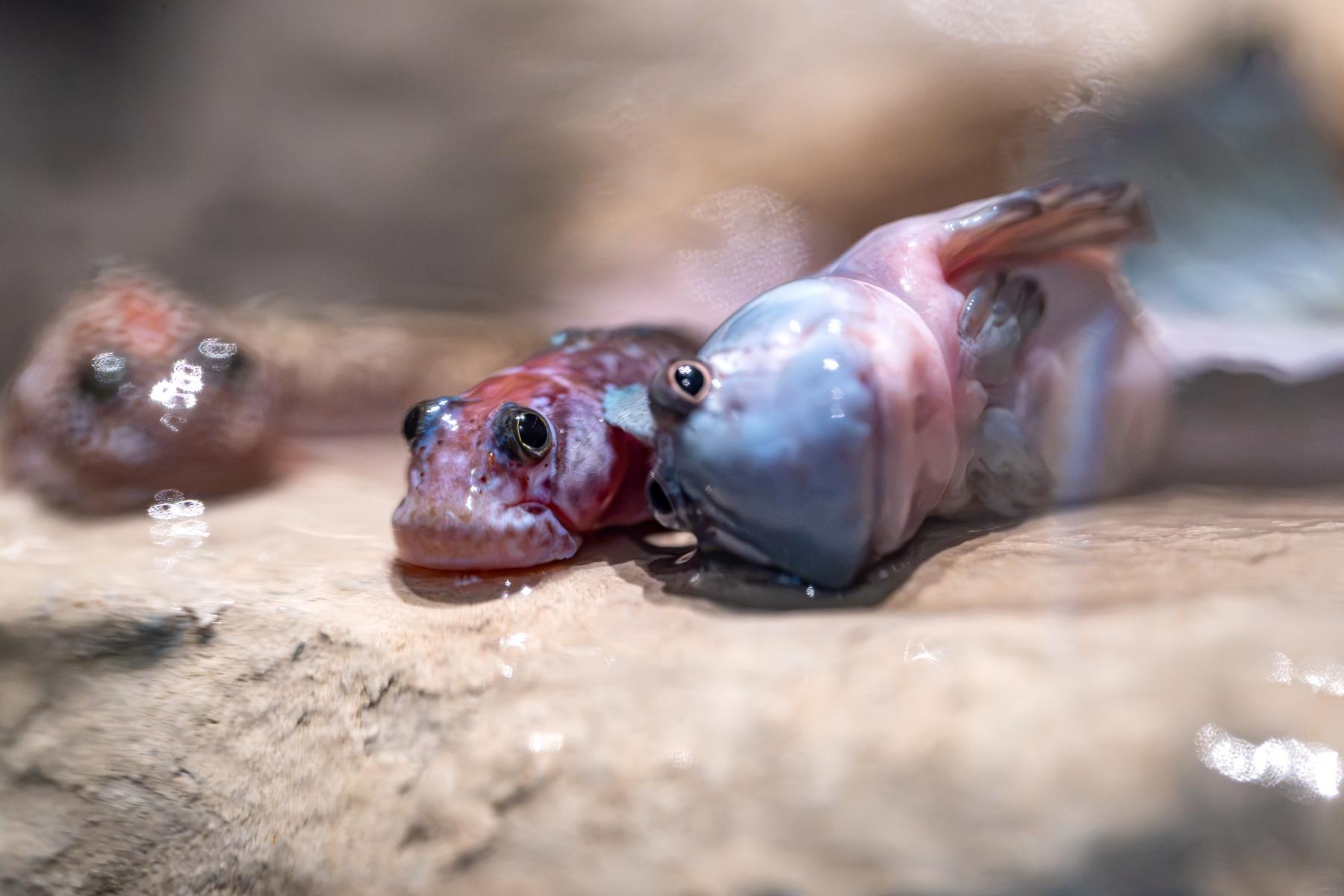
The two species (pictured above) are difficult to differentiate. Leaping blenny Alticus orientalis tend to be smaller in size.
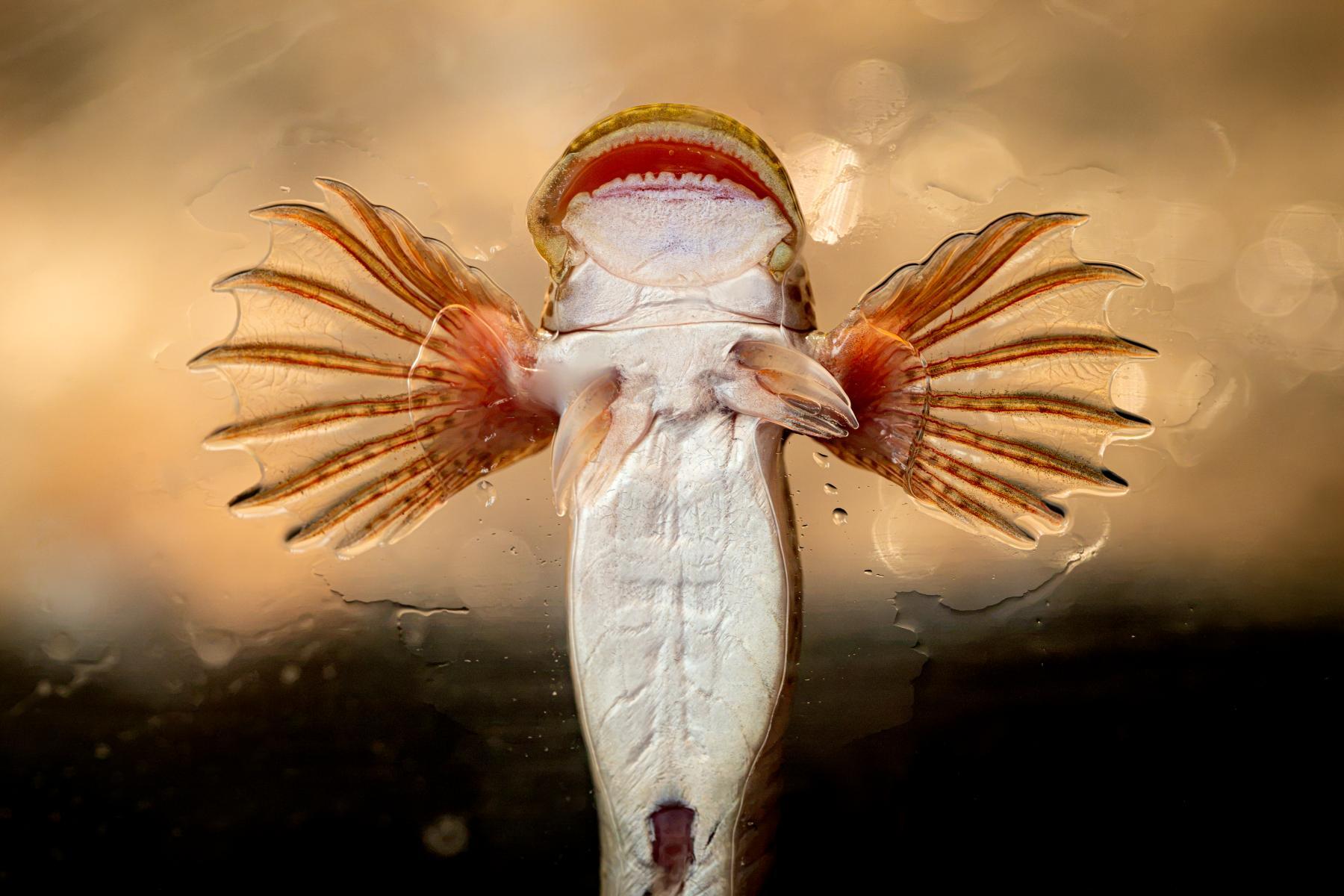
Leaping blenny Alticus orientalis (pictured above) has a smaller range than the leaping blenny Alticus orientalis.
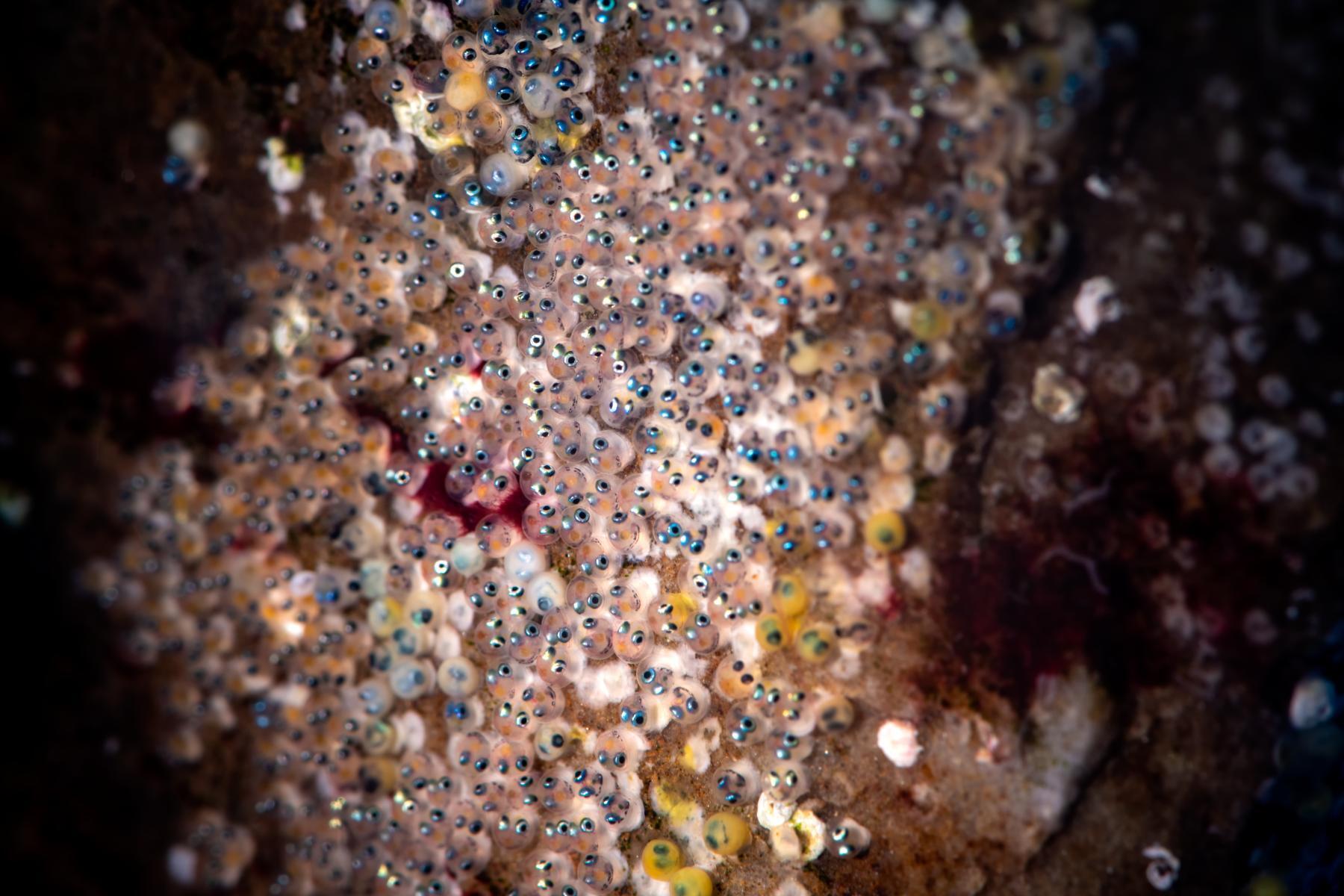
After the eggs are laid, a single male guards them until the larvae hatch. The larvae are planktonic and often turn up in shallow coastal waters.
Cool facts
- A leaping blenny's eggs are demersal and adhesive, meaning the eggs sink and stick to surfaces.
- They flash bright red dorsal fins to talk to other blennies.
- They breathe air through their skin and gill membranes, requiring just a thin layer of moisture from crashing waves to survive.
The exact size of the leaping blenny depends on the species. The Ocean in Motion / La Danza del Mar has two species of blennies on exhibit:
Alticus saliens is the widespread, well-documented species. Its range spans the Indo-Pacific from the Red Sea to the Society Islands, north to the Ryukyu and Bonin Islands, south to Queensland, and into the Mariana Islands. It grows to about 4 inches.
Alticus orientalis is a much more obscure species with a narrow range. It is known only from the Northwestern Pacific and was originally identified in Hachijo-jima, a volcanic island in Japan. The recorded maximum length is 3.5 inches, slightly smaller than A. saliens.
Can you spot the differences between the two species on exhibit?
Social media
How far can a leaping blenny jump?
Up next in rocky shore
Animal
Big-belly seahorse
The largest species of seahorse, big-belly seahorses, move vertically by adjusting air in their swim bladders.
Keep exploring
Animal
African penguin
Not all penguins live in snow—African penguins thrive along South Africa's coast in a mild climate.