

Melibe
Melibe leonina
- On view
- Kelp Forest
- Animal type
- Invertebrates
- Ecosystem
- Kelp forest
- Relatives
- Sea hares, sea lemons, Hopkin's rose; Order: Nudibranchia; Phylum: Mollusca
- Diet
- Copepods, ostracods, and other small planktonic animals
- Range
- Alaska to the Gulf of California
- Size
- To 4 inches (100 mm)
Meet this melibe
This melibe is like no other nudibranch (sea slug). Instead of a rasping tongue, it sports a unique oral hood that captures small planktonic animals. To feed, a melibe firmly attaches itself to a kelp blade and then sweeps its raised hood downward or to the side. When food lands on the lower surface of the hood, the melibe sweeps together the two sides of the hood, and its fringing tentacles lock in the prey. The hood contracts to force the captured food into the melibe's mouth.
Watch in real time
Kelp Forest Cam
Check out this live cam – Kelp Forest CamDid you know?
Melibe and the giant kelp plants they live on have matching colors—yellowish brown to olive green. Melibe are hermaphrodites (they have both male and female sexual organs), and fertilization is internal. The animal can lay as many as 30,000 eggs, which are enclosed in a long, gelatinous ribbon.
Related videos
Watch the melibe in action
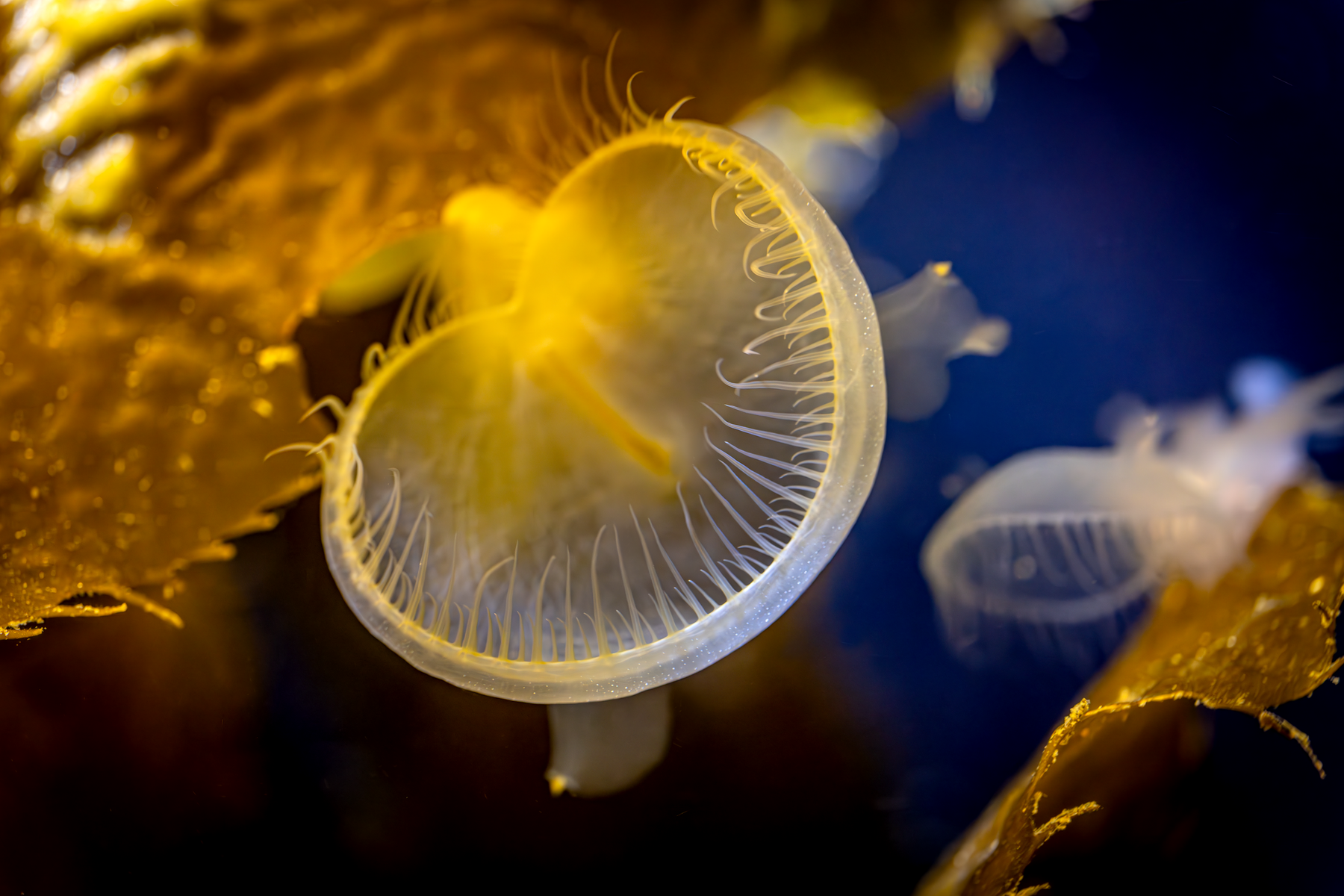
Watch Melibe leonina (commonly known as the lion’s mane nudibranch) in our Kelp Forest exhibit. Melibe have a sweet, citrusy smell which is thought to help attract other slugs or deter predators.
Conservation
This unique and amazing animal is neither collected nor hunted, but its existence depends on healthy kelp forests and other seaweed beds. Sludge and other pollutants smother tiny kelp plants during their microscopic stage. As stewards of the ocean, it's crucial that people around the world properly dispose of wastes, chemicals, solvent and paints that can harm nearshore habitats.
Cool facts
- During the warmer months, huge numbers of melibe appear in kelp canopies and eelgrass beds. Although they prefer to stay attached to a surface, melibe do swim when dislodged or if they're approached by a kelp crab—then they close their hood to reduce drag.
- Most predators avoid the noxious secretions of nudibranchs, but the kelp crab is an exception.
- The noxious secretions of the melibe smell like watermelon, according to aquarists who clean the melibe exhibit.
Up next in kelp forest
Animal
Orange puffball sponge
The puffball sponge is spherical with a flat bottom and a rough outer surface that's orange to yellow in…
Keep exploring
Animal
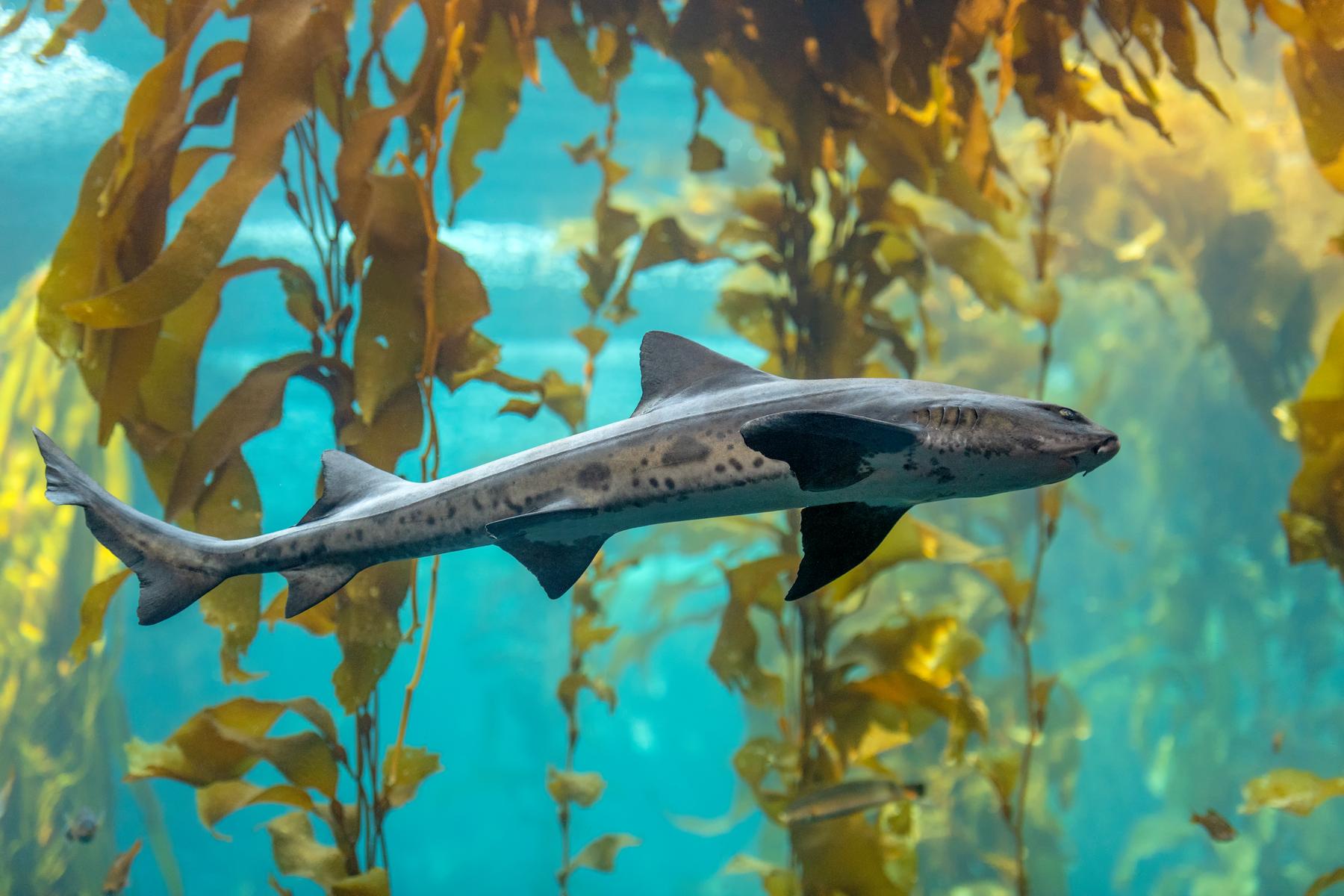
Leopard shark
Leopard sharks live in shallow waters of bays and estuaries and occasionally patrol the kelp forest.