

Northern elephant seal
Mirounga angustirostris
- Not on exhibit
- Animal type
- Marine mammals
- Ecosystem
- Coastal waters
- Relatives
- Harbor seals; Class: Mammalia; Order: Pinnipedia; Family: Phocidae
- Diet
- Octopuses, skates, small sharks, fish, squid
- Range
- Pacific coastal waters from the Gulf of Alaska and Aleutian Islands to Baja California
- Size
- Males up to 4,500 pounds (2,000 kg) and 15 feet (4 m) in length; females up to 1,500 pounds (600 kg) and 10 feet (3 m) in length
Meet the northern elephant seal
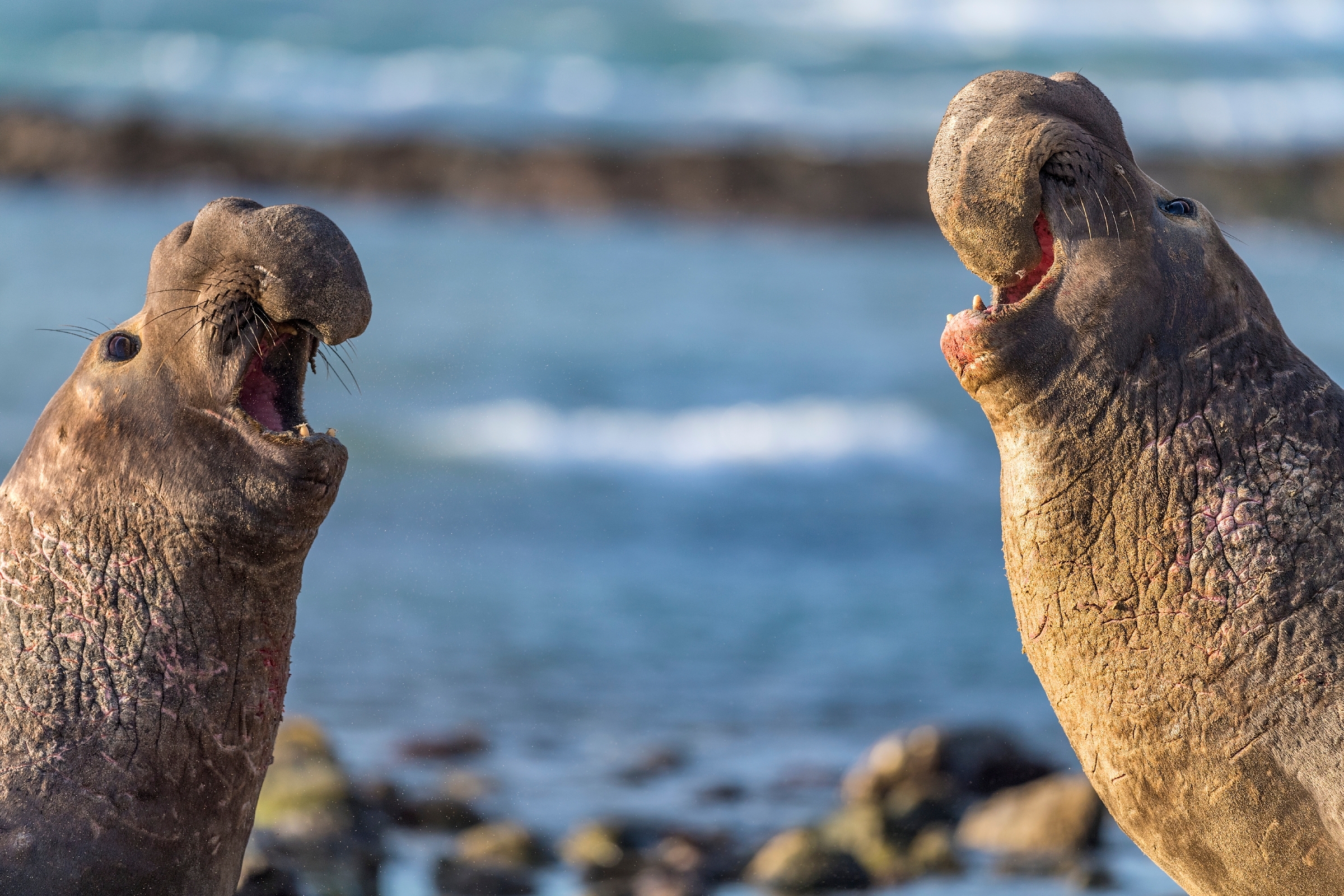
Like all true seals (phocids), the elephant seal lacks external ear flaps and crawls on land with rhythmic belly flops. In contrast, eared seals (otariidae), like sea lions, have visible ears and hind flippers that turn underneath their bodies for “walking.” The elephant seal gets its name from its enormous size and the male’s inflated nose, called a proboscis, which resembles a shortened elephant trunk.
Watch in real time
Monterey Bay Cam
Check out this live cam – Monterey Bay CamNatural history
An elephant seal dives deep and long to find food and avoid white sharks, a major predator. These master divers usually descend to about 1,700 feet (518 m). But researchers have recorded much deeper dive depths of 5,015 feet (1,529 m). Only sperm whales dive deeper and longer.
An elephant seal seldom stays at the surface for more than a few minutes. They typically dive for more than 80 minutes at a time, although much longer dive times have been recorded. One researcher who monitored a female elephant seal for 34 days recorded that the seal dove almost continuously, resting at the surface for only about three minutes between dives. Some experts believe that an elephant seal naps while gliding down to the depths.
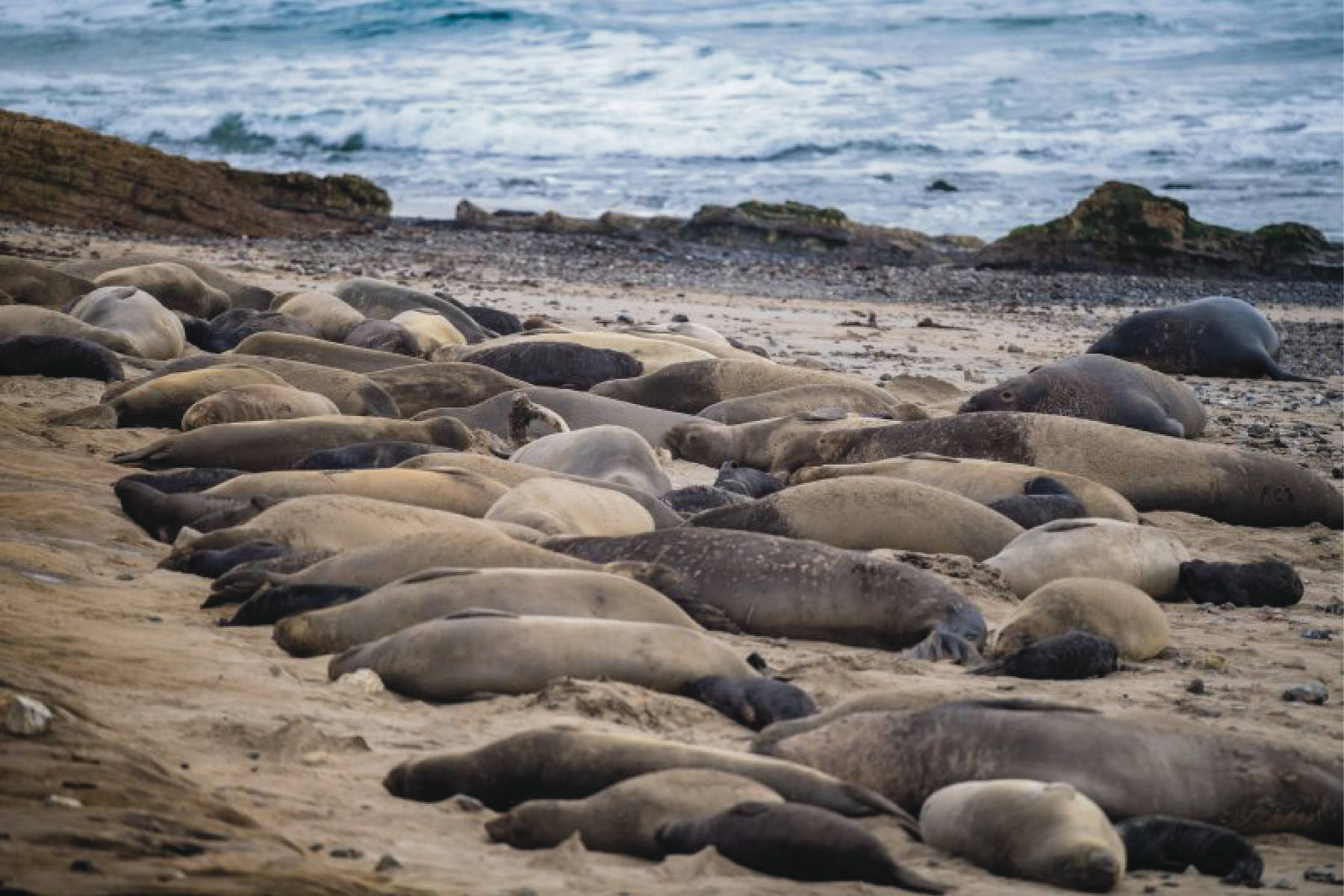
Along the California coast, the elephant seal breeds on the beaches of Año Nuevo, Piedras Blancas and the Channel Islands.
Conservation
Hundreds of thousands of northern elephant seals lived in the Pacific Ocean before hunters slaughtered them for their blubber, which was used to make lamp oil. By the late 1800s, the only remaining colony—fewer than 100 seals—lived on Mexico’s Guadalupe Island. To save them, the Mexican government gave protected status to northern elephant seals in 1922. A few years later, when elephant seals began appearing in southern California waters, the United States gave the seals the same protection. As a result, the population of northern elephant seals is about 160,000 today. The elephant seal’s mighty comeback is an example of the importance of protective status and marine sanctuaries in ocean conservation.
Related videos
Elephant seal naptime
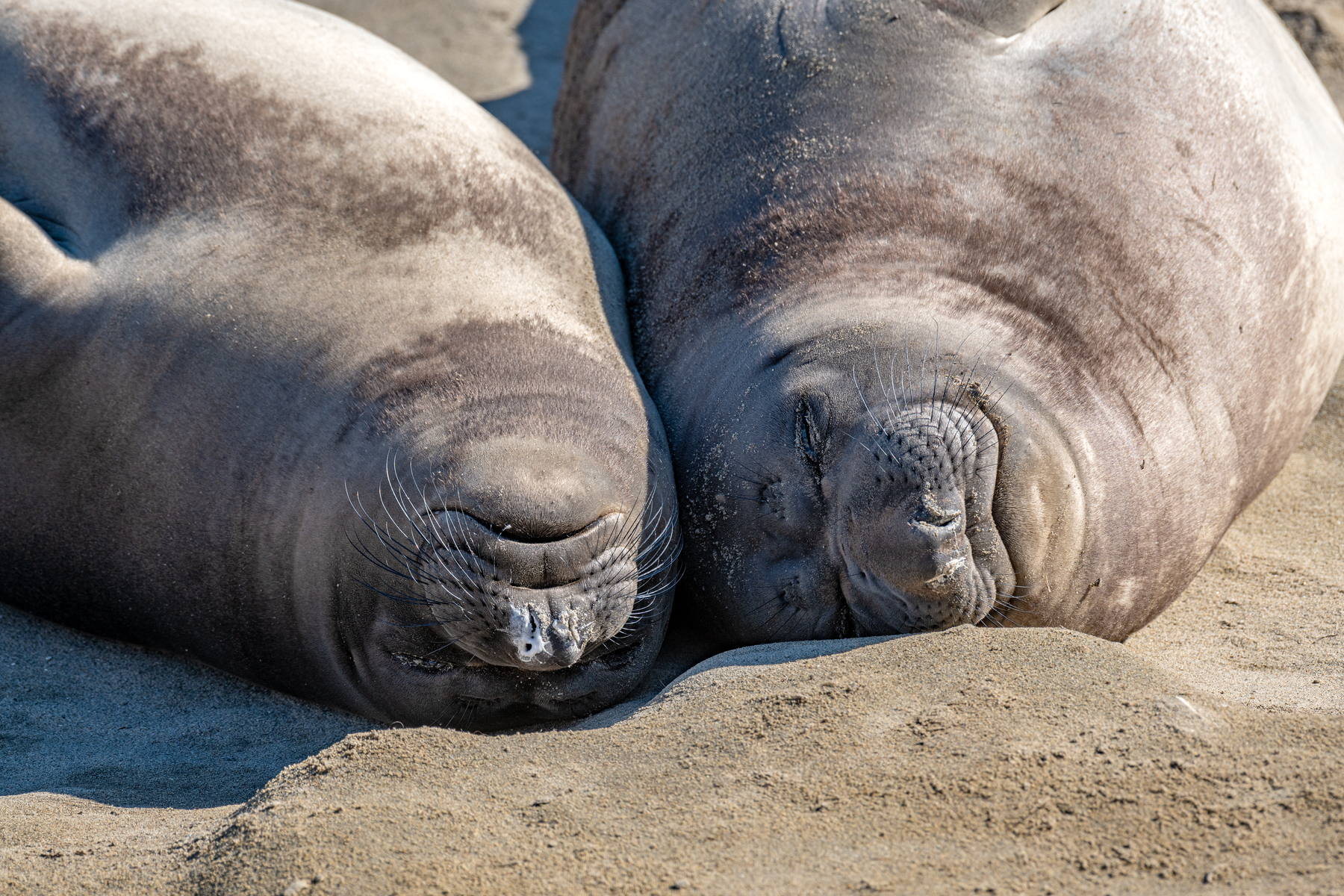
What’s blubbery, cuddly, and sounds like nothing you’ve ever heard before? See for yourself with this footage from Año Nuevo State Park.
Migration and breeding
The northern elephant seal is the only mammal known to make two migrations each year. After the breeding season (from December through March on Californian and Mexican beaches), it migrates to feeding grounds in the northern Pacific Ocean. The seal returns to warmer waters to molt, then migrates back to feeding areas until the next breeding season.
The northern elephant seal returns to the same beaches year after year during the breeding season. The male arrives at the rookeries first, ready to battle other males to decide who will be dominant and have land rights for a harem of females, which arrive later. Fighting is fierce, but the male is protected by a pink “chest shield” formed from keratinized skin.
Pups
An elephant seal pup nurses for about four weeks and gains about 10 pounds (4.5 kg) a day.
About 24 days into the weaning period, the female mates and then abruptly goes to sea. She leaves behind her pup, which must learn to swim and forage on its own before it too leaves the beach at about two to three months of age.
Blubber loss
Breeding, defending territory, birthing and caring for pups are all so intense that the elephant seal fasts while on the rookeries, using stored blubber for nutrition and energy. When males leave the breeding beaches and return to the water, they may have lost up to half their body mass.
Cool facts
- The elephant seal, like other mammals, must replace old skin and hair. Most mammals shed hair year-round, but the elephant seal does it all at once. Once each year, the seal comes ashore and sheds the first layer of skin and fur, which come off in sheets as new skin and fur replace the old.
Related videos
Time to mate!
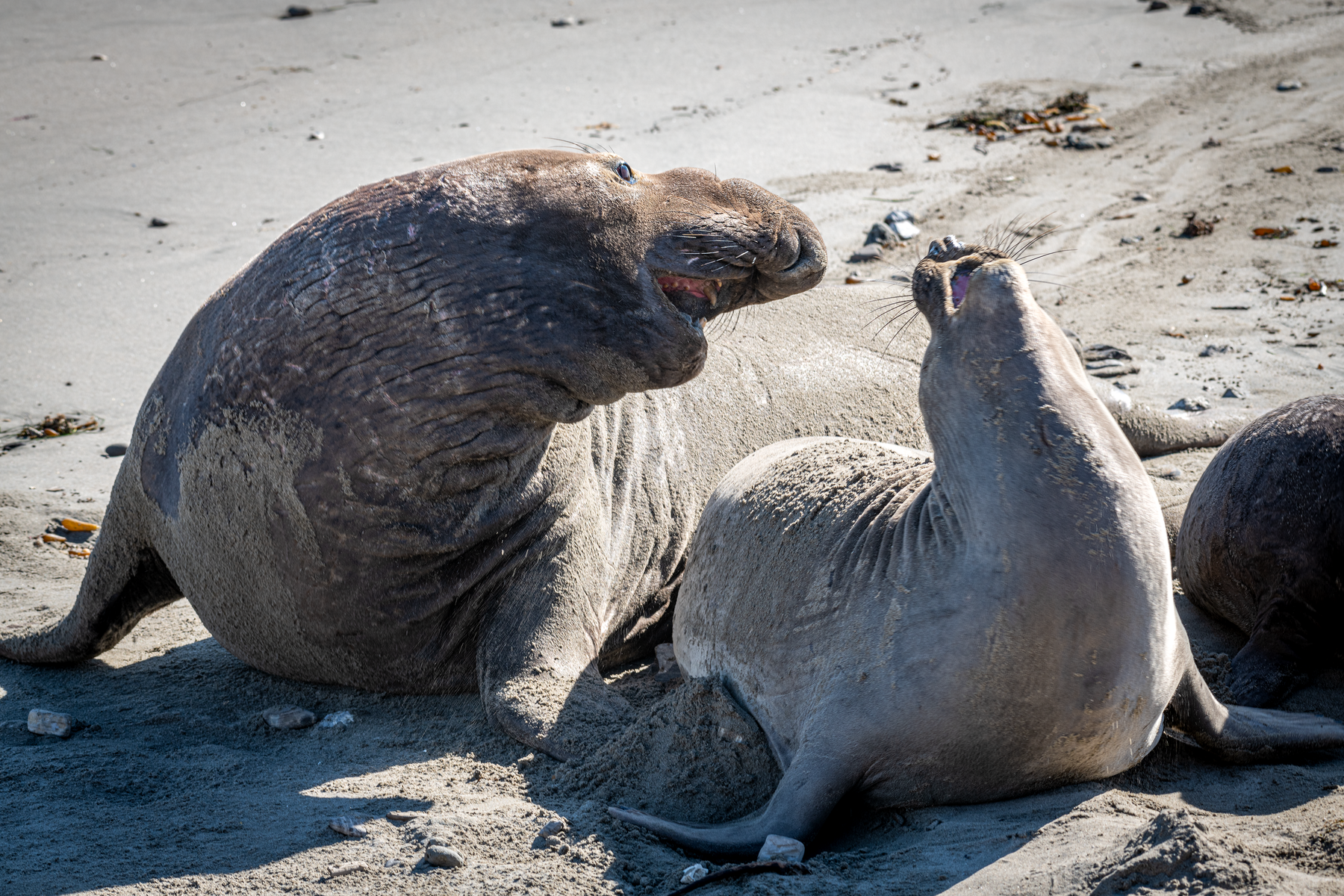
Listen to the snorting and scuffling of elephant seals at Año Nuevo State Park. These animals come here each year to mate and give birth.
Up next in coastal waters
Animal
Tufted puffin
This bird's bright colors have earned them the nickname “parrot of the sea,” though they're at home on land…
Keep exploring
Animal
Sea otter
Beyond their cute faces and fluffy fur, sea otters play an irreplaceable role in their coastal habitats.