

Red phalarope
Phalaropus fulicarius
- On view
- Sandy Shore & Aviary
- Animal type
- Birds
- Ecosystem
- Open ocean
- Relatives
- Sandpipers, red-necked phalaropes; Family: Scolopacidae
- Diet
- Plankton, small insects and aquatic invertebrates
- Range
- Arctic; circumpolar; from U.S. to Southern Hemisphere
- Size
- From 8–9 inches (20–23 cm)
Meet the red phalarope
Red and red-necked phalaropes share the same pond in our aviary. You can tell them apart by size and color. Red phalaropes are larger, with shorter, thicker bills and brighter colors. In breeding season, red phalaropes sport distinctive chestnut-red bellies.
Watch in real time
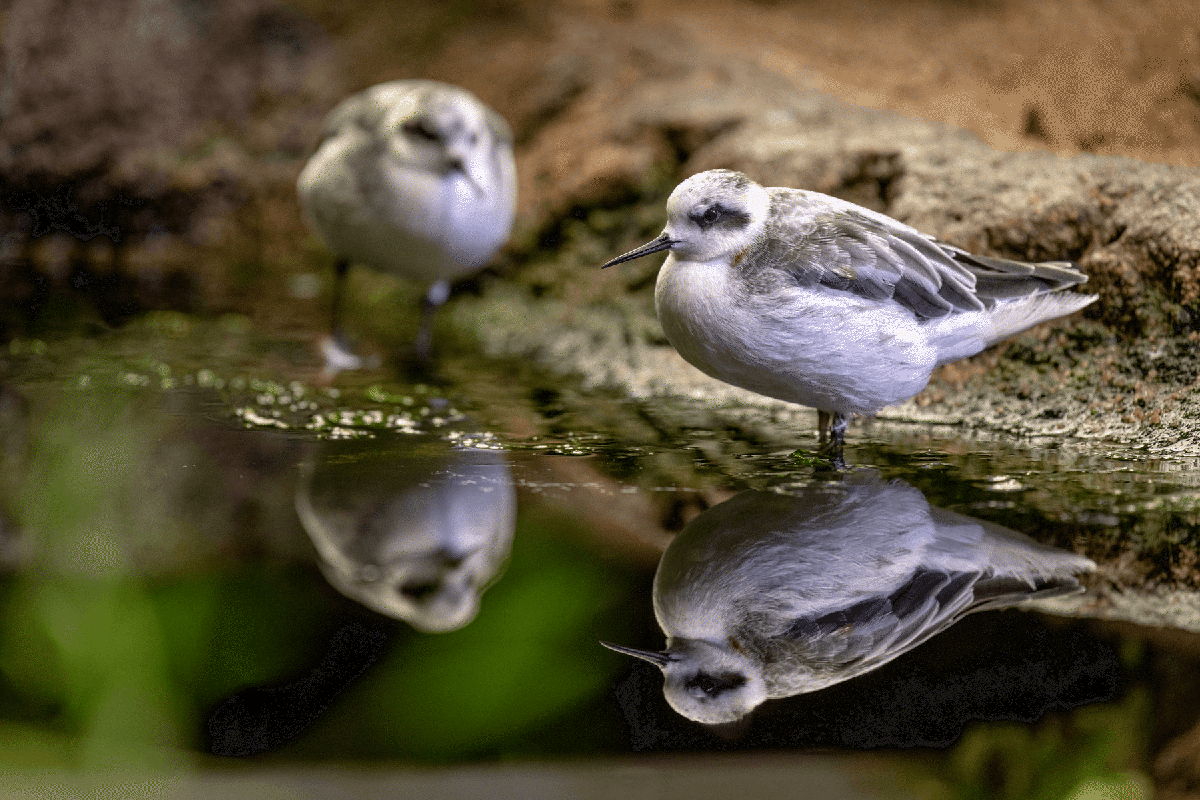
Aviary Cam
Check out this live cam – Aviary CamNatural history
Although built like other shorebirds—with short tails, sharply pointed wings and long legs for wading—red phalaropes spend most of the year at sea. In fact, they're one of the few birds classified as pelagic. Because they're not built for diving, phalaropes have developed a unique way of feeding: they swim in fast, tight circles at the surface, which creates a whirlpool of plankton they then sweep up with their bills.
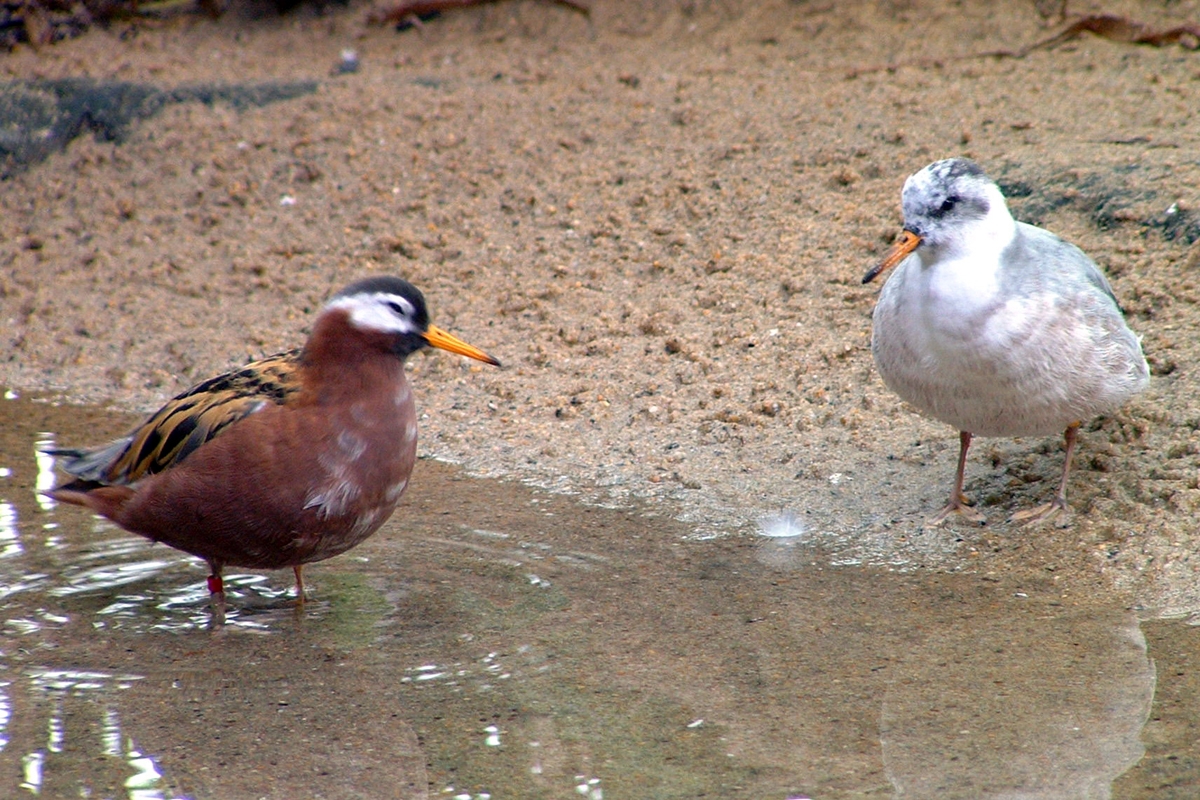
Red phalaropes: One in breeding plumage, one in winter plumage.
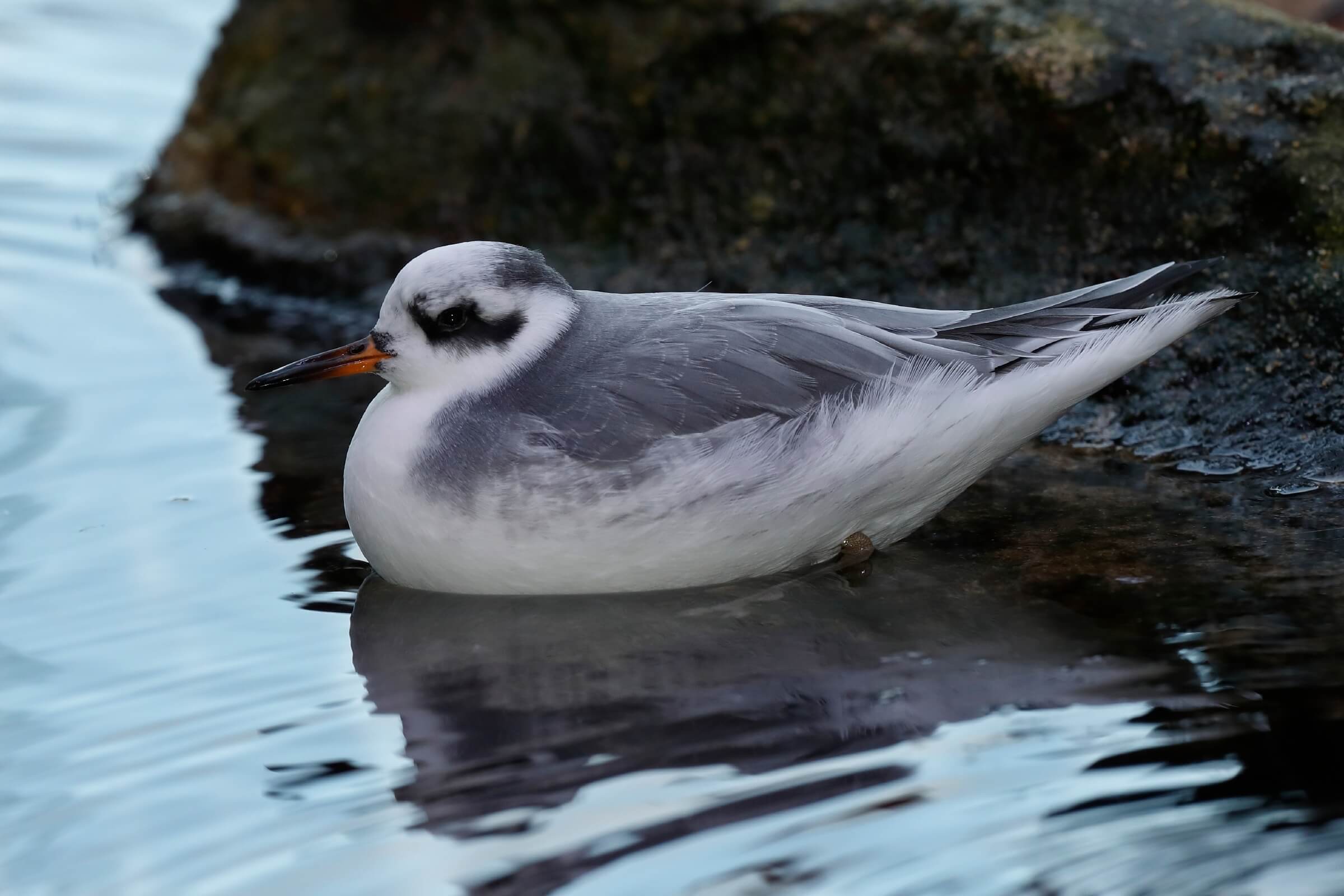
A male red phalarope (Phalaropus fulicaria) with winter plumage in the Aviary exhibit.
Conservation
During migration, these birds gather in large numbers along spits and in lagoons. This makes them vulnerable to spilled oil, which tends to concentrate in these areas as it washes to shore.
Cool facts
- The female phalarope finds a nest site while the male builds the nest, incubates the eggs and then nurtures the offspring. In the meantime the female often mates with other males.
- Like other phalaropes, red phalaropes show reversed sexual dimorphism, with females larger and more brightly plumaged than males.
- Phalaropes gather in large numbers (thousands) on Mono Lake. With water twice as salty as seawater, the lake is no home for fishes, but it does support an abundance of brine shrimp and brine flies. By devouring these small animals, phalaropes can double their body weight. This added fat helps sustain the phalaropes during their 6,000-mile migration to winter grounds.
Up next in open ocean
Animal
Scalloped hammerhead shark
With that wide, thick head shaped like a double-headed hammer, it's easy to identify a hammerhead shark.
Keep exploring
Animal
Moon jelly
This dreamy jelly is named for their translucent, moon-like bell.