

Swell shark
Cephaloscyllium ventriosum
- On view
- Kelp Forest
- Animal type
- Fishes
- Ecosystem
- Coastal waters
- Relatives
- Catsharks, including brown catsharks and deep sea filetail catsharks; Family: Scyliorhinidae
- Diet
- Fishes, crustaceans
- Range
- Monterey Bay, California to southern Mexico; also along the coast of Chile
- Size
- Up to 3 feet (1 m)
Meet the swell shark
If threatened, the swell shark has an unusual response. It bends its body into a U-shape, grasps its caudal fin in its mouth and swallows a large quantity of sea water, which makes it swell to twice its normal size. This behavior makes it difficult for a predator to bite or evict a swell shark from its rocky crevice.
Watch in real time
Kelp Forest Cam
Check out this live cam – Kelp Forest CamDid you know?
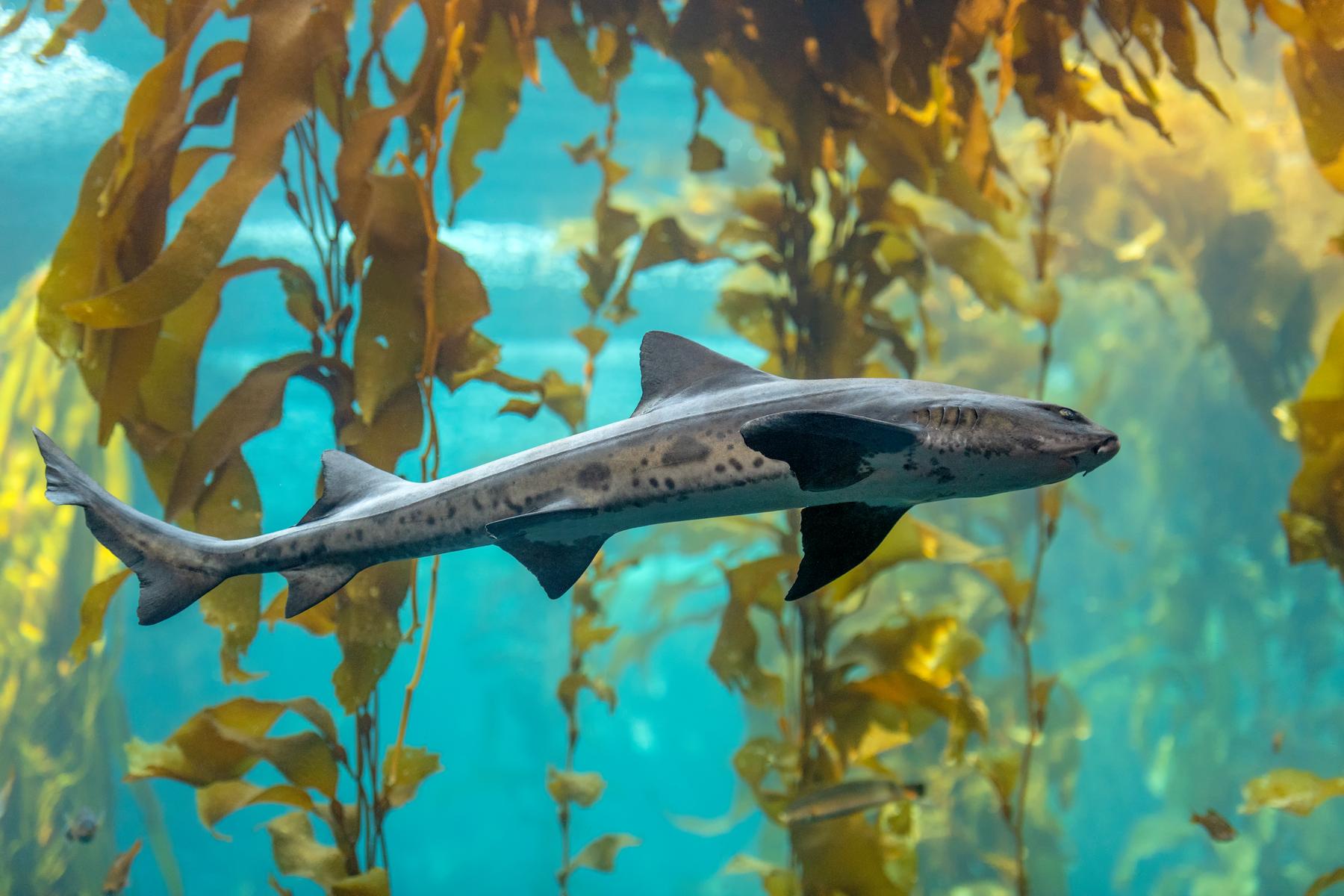
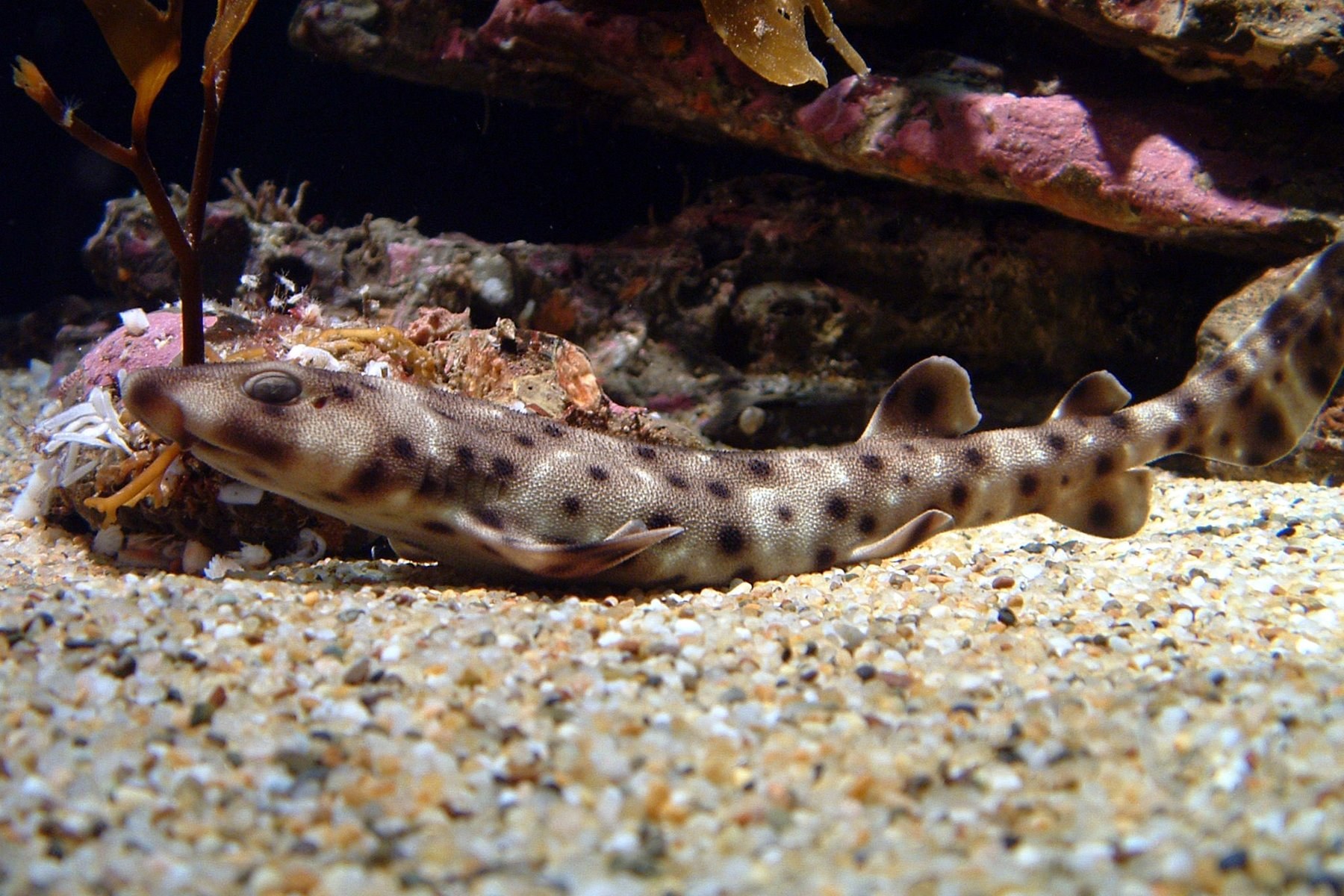
Brown blotches and white spots decorate a swell shark's yellow-brown body. By day, this small, harmless and well-camouflaged shark hides in rocky crevices. By night, a swell shark feeds. It actively sucks in some fishes, and captures others by resting open-mouthed and letting prey wander in or be carried in by currents.
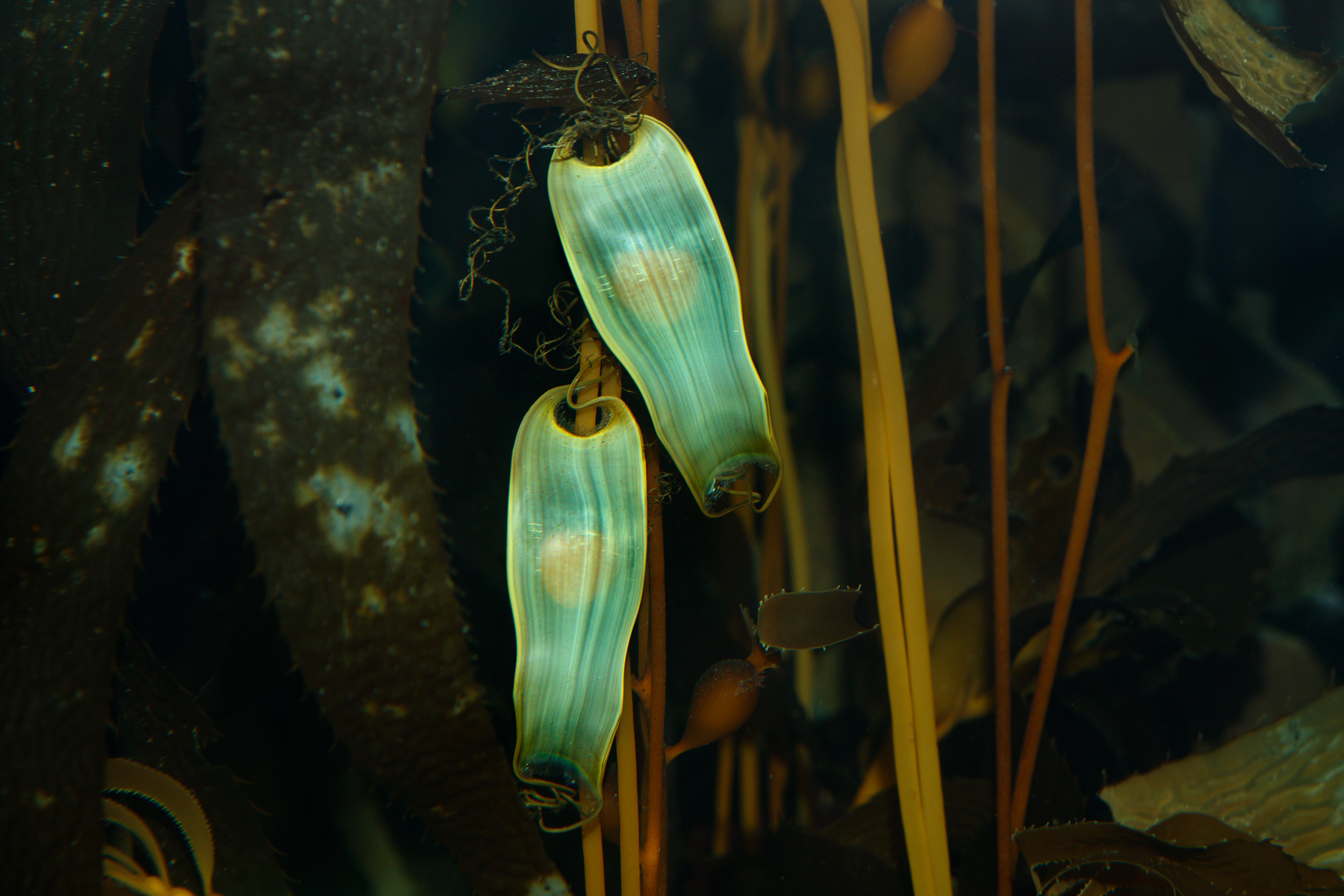
Swell shark egg cases on giant kelp fronds, in the Kelp Forest exhibit
Conservation
People don't catch swell sharks for food, but the sharks are caught accidentally as bycatch in commercial lobster and crab traps, gillnets and trawl nets. Because sharks take five to 20 years to mature and have few young, accidental catches like these threaten shark populations around the world.
Cool facts
- Sharks are cartilaginous fish—their skeletons have no bones. Cartilage is less dense and more elastic than bone, but this is not disadvantageous. Sharks need less energy to keep from sinking, and they have increased maneuverability.
- Swell sharks lay rubbery egg cases with wiry tendrils at the corners. The tendrils catch on rocks and seaweed, anchoring the egg cases and preventing them from being washed to shore. Depending on water temperature, the eggs hatch in nine to 12 months. A newborn has two rows of enlarged denticles down its back that catch on the egg case and aid the shark in pushing itself into its new life in the sea. Ancient legends named the empty egg cases that wash to shore "mermaids' purses."
Up next in coastal waters
Animal
White sturgeon
The largest freshwater fish in North America, white sturgeon have some sharklike qualities.
Keep exploring
Animal
Sea otter
Beyond their cute faces and fluffy fur, sea otters play an irreplaceable role in their coastal habitats.