

Western gull
Larus occidentalis
- Not on exhibit
- Animal type
- Birds
- Ecosystem
- Coastal waters
- Relatives
- Terns, kittiwakes; Family: Laridae
- Diet
- Fish, marine invertebrates, carrion, refuse, small mammals and both eggs and young of other birds
- Range
- Found almost exclusively on the Pacific coast from British Columbia to Baja; western gulls aren't often seen inland or beyond the reach of the tides
- Size
- From 24 to 27 inches (61–70 cm)
Meet the western gull
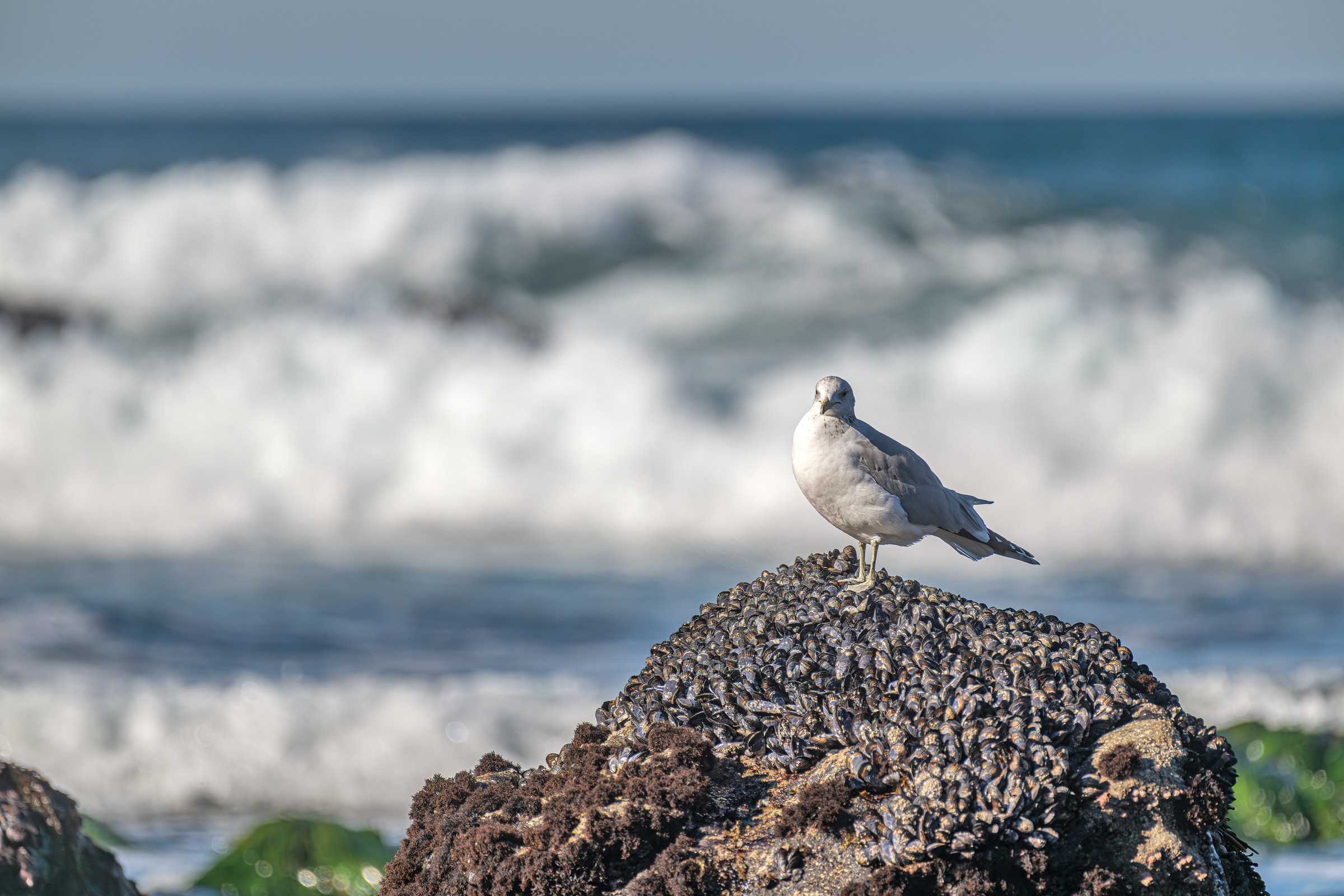
A coastal resident often seen on wharves, jetties and docks, the western gull dresses in spectacular white plumage with a dark slate-gray mantle. It catches fish by diving or wading. Often seen following fishing boats, this gull commonly feeds on scraps thrown overboard by fish cleaners.
Watch in real time
Monterey Bay Cam
Check out this live cam – Monterey Bay Cam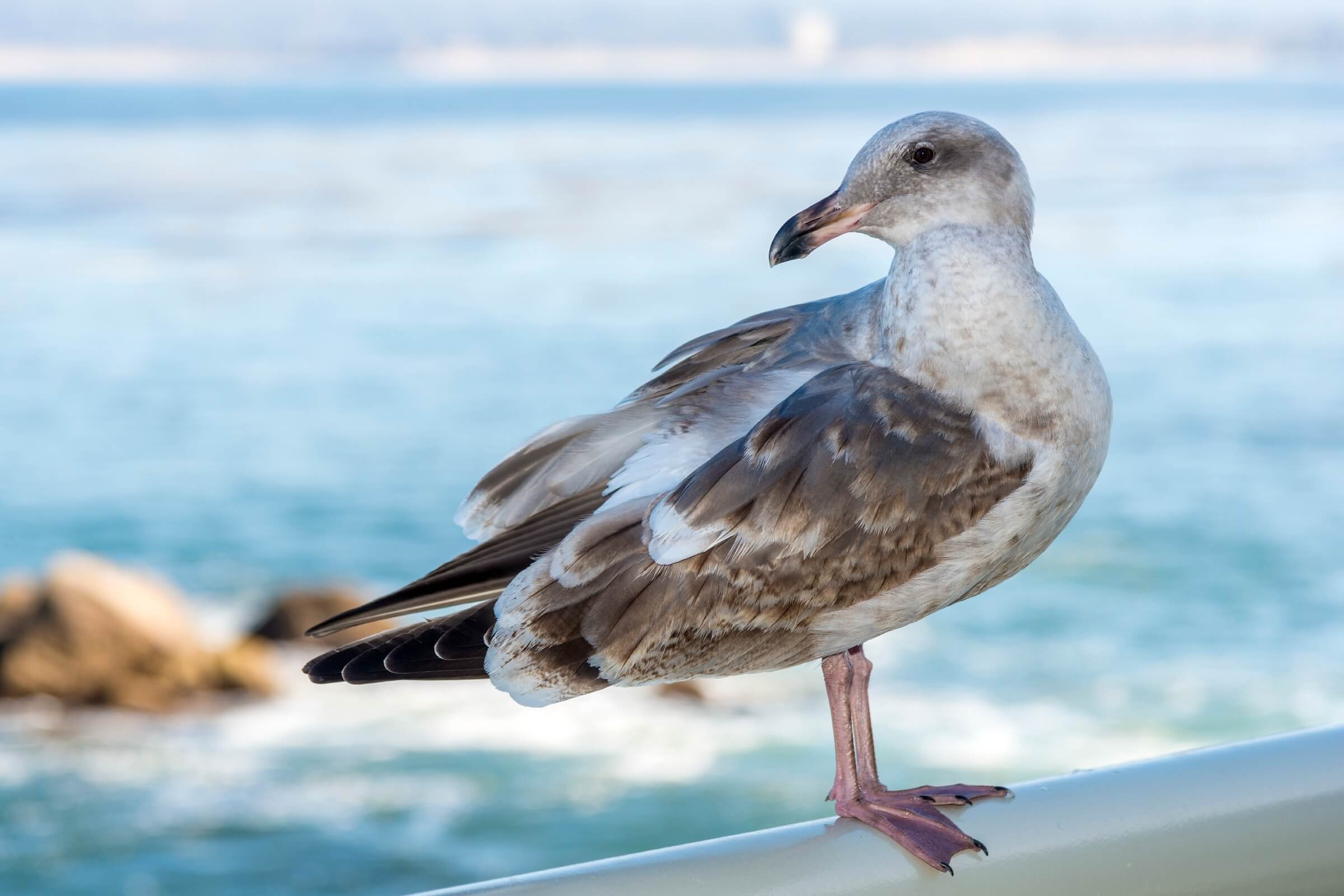
A Western gull (Larus occidentalis) on the railing near the Monterey Bay Viewing Station.
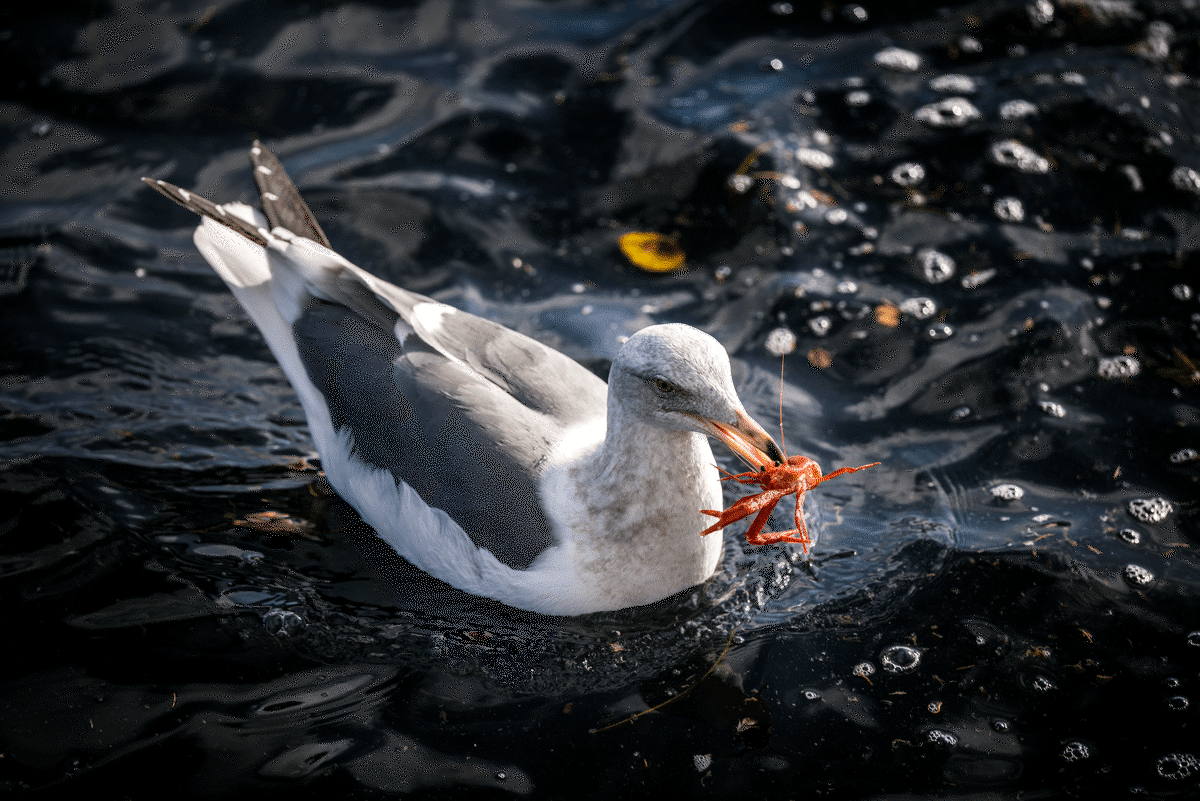
A Western gull (Larus occidentalis) eating a pelagic red crab (Pleuroncodes planipes), aka tuna crab.
Conservation
The western gull has a small population, with limited distribution along the West Coast. Even though gulls prey on other birds, they don't deserve their reputation of being a nuisance or an undesirable pest. For example, their breeding areas were once destroyed because people thought the gulls preyed on black-crowned night herons, when actually the opposite is true. The western gull feeds largely on small, surface-feeding fish of no use to sport fishermen.
The gulls are subject to contaminants in their food, especially when eating human refuse. Feeding gulls or any other birds your picnic or snack leftovers is harmful to the birds' health.
Cool facts
- To break open the shells of their prey—like sea urchins and clams—western gulls drop them from high in the air to hard surfaces below. They also harass cormorants and pelicans, forcing them to regurgitate their catch, which the gulls quickly gobble up.
- Western gulls feed on refuse only when natural prey is scarce. Birds that feed on refuse sometimes have lower breeding success.
- Western gulls aren't shy birds. They often invite themselves to the otter feeding programs at the Aquarium.
Up next in coastal waters
Animal
Blubber jelly
The blubber jelly comes in colors ranging from very light blue to dark purple and burgundy. Its bell pulses…
Keep exploring
Animal
Sea otter
Beyond their cute faces and fluffy fur, sea otters play an irreplaceable role in their coastal habitats.