

Consider climate
Seafood can have a lower carbon footprint than other animal products. As the demand for seafood continues to grow, it's critical that the industry continues to reduce its carbon footprint.
Understanding the issue
The carbon footprint of food
Climate change—caused by greenhouse gas emissions—is one of the largest threats to the planet and our ocean ecosystems. Each of us can reduce our carbon footprint by making smart choices in transportation, energy use, consumer habits, and what we eat.
It takes a lot of fuel to grow, package, and transport food around the world, which generates carbon dioxide and other greenhouse gases. In fact, our food production system is one of the largest sources of greenhouse gas emissions—contributing 20–30 percent of the global carbon footprint.
Seafood can be a low-carbon option
Choosing seafood over other animal products can be one way to lower your carbon footprint. On average, seafood generates less carbon per unit of protein than beef and pork, and has a carbon footprint similar to poultry. But not all seafood is the same.
- Seafood products vary in the amount of emissions produced. It depends on the type of fish, whether it was wild-caught or farmed, and the methods used to catch or farm it. Small fish, such as sardines and anchovies, provide large amounts of protein and have a small carbon footprint. Others, such as crab, shrimp, and lobster, tend to have a larger carbon footprint, even higher than some terrestrial animals.
- You can reduce your personal carbon footprint. Choose seafood with a low carbon footprint, such as farmed mussels, clams, sardines, or anchovies, over beef, lamb, or higher-emission seafood.
- Consider other environmental impacts when making dietary choices. While some seafood products may have low carbon footprints, it's important to also consider any negative impacts on habitats, fish stocks, and other wildlife as a result of fishing or farming methods.
As our population and demand for seafood grow, our individual choices matter more than ever—and so does the responsibility of fisheries and aquaculture operations to reduce their contribution to global emissions.
Sustainable solutions
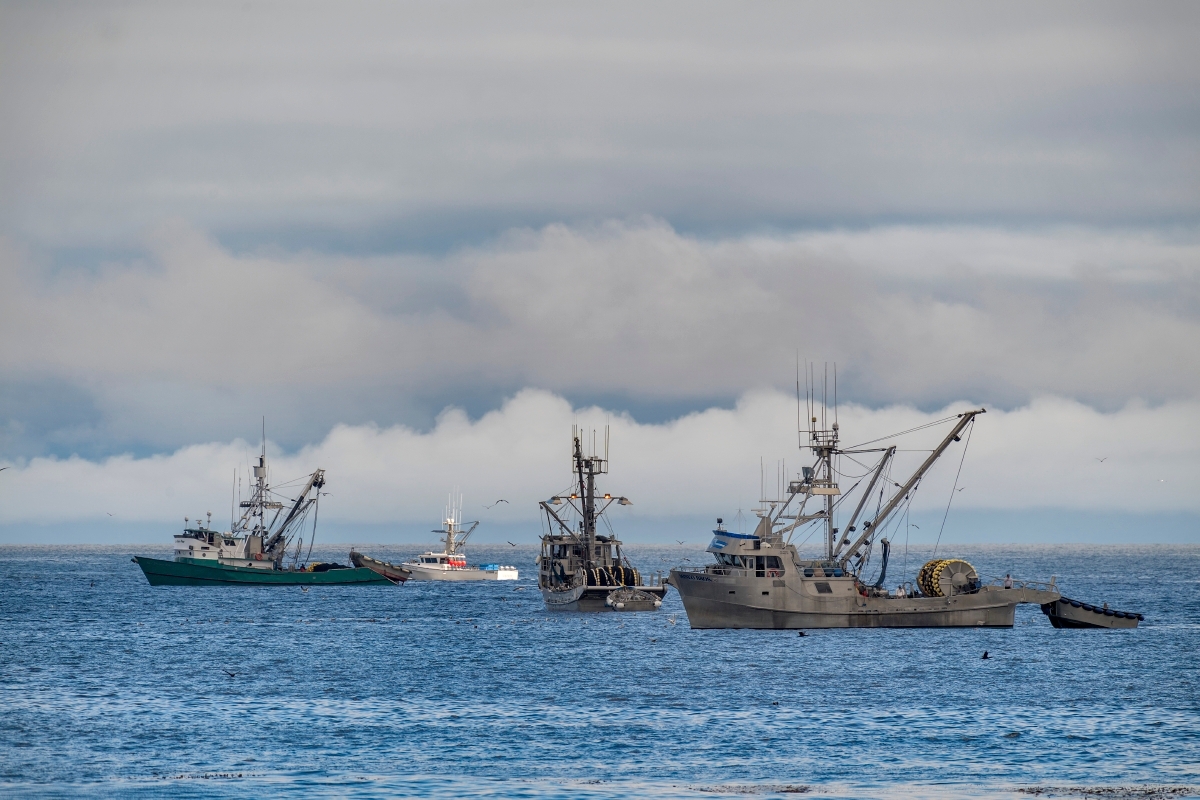
Wild-caught seafood
Fuel use
In wild-caught fisheries, the largest contributor to greenhouse gas emissions is the fuel used by diesel-powered fishing vessels. Fuel usage varies significantly depending on what seafood product is being caught and the fishing method used.
Crustaceans such as crab, lobster, and shrimp are very fuel-intensive to catch. Fishermen must motor from trap to trap or drag heavy dredges along the seafloor—both practices burn up a lot of fuel. In comparison, fishermen can set a single purse seine around a school of anchovies or mackerel, and land thousands at a time.
Fishermen can also reduce their fuel use by focusing their efforts on healthy, abundant stocks. When populations become overfished, fishermen must travel farther and longer to catch the same number of fish.
Refrigeration
After fuel, the use of hydrochlorofluorocarbons (HCFCs) by fishing boats makes up the next largest source of emissions in wild-caught fisheries. These chemicals are powerful greenhouse gases that trap heat in Earth’s atmosphere and contribute to global climate change.
There are now refrigerants with low global warming impact available for new refrigeration systems, but it's not feasible to retrofit most existing systems. The Montreal Protocol has established the goal of phasing out all HCFCs by 2050. Fishing vessels should aim to minimize the use of these refrigerants and, if possible, replace them with more environmentally friendly refrigerants.
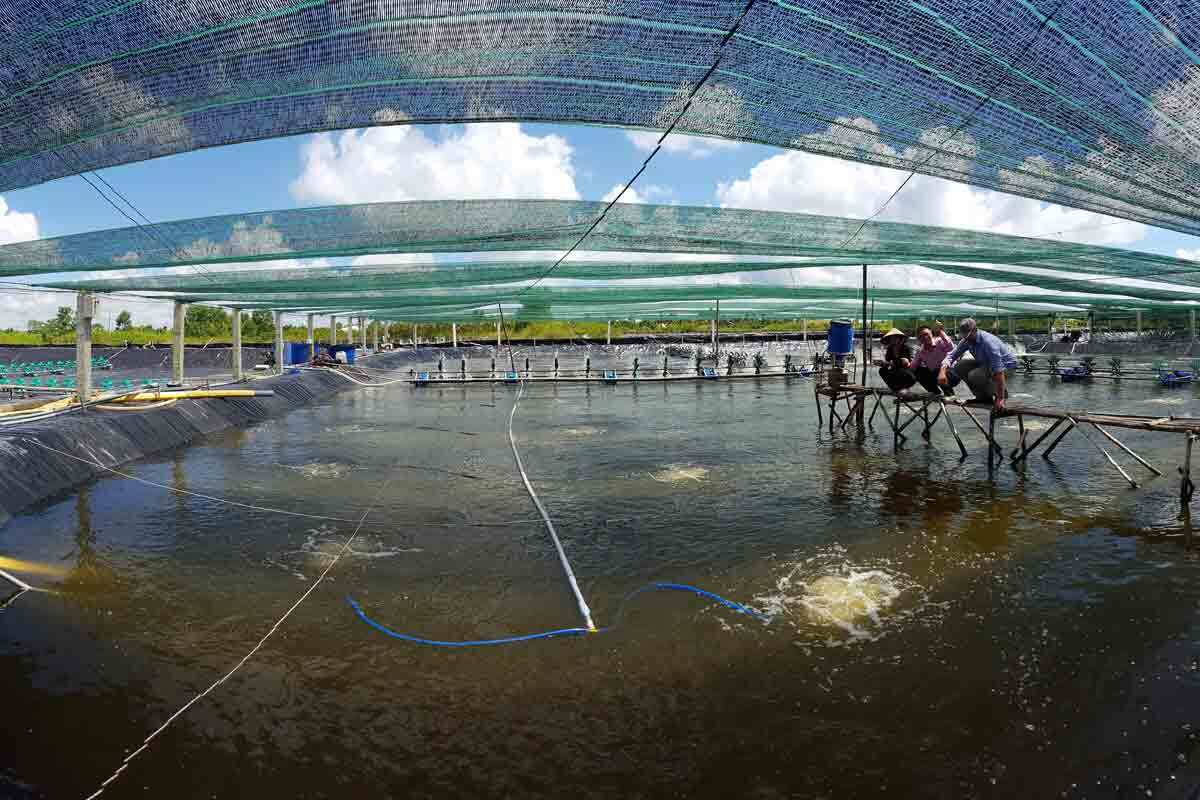
Farmed seafood
Energy use
Land-based aquaculture systems must use energy to circulate water, regulate temperatures, and power aeration systems. These systems are typically run on electricity from fossil fuel sources and contribute to the carbon emissions of aquaculture operations. These emissions can be reduced by powering farms with renewable energy.
Feed production
Most animals raised in aquaculture operations need to be fed. Feed can include fishmeal or fish oil, agricultural products like grains and soy, and more. The growing, harvesting, processing, and transporting of these materials to produce feed products emit carbon. In aquaculture, particularly operations that use marine net pens and floating cages, feed production is the main source of emissions.
To reduce emissions from aquaculture, the industry continues to improve feed conversion ratios—a measure of how much feed is needed to produce 1 kilogram of live fish. When animals convert food to body mass more efficiently, farmers can use less feed, helping to lower their farm’s carbon footprint.
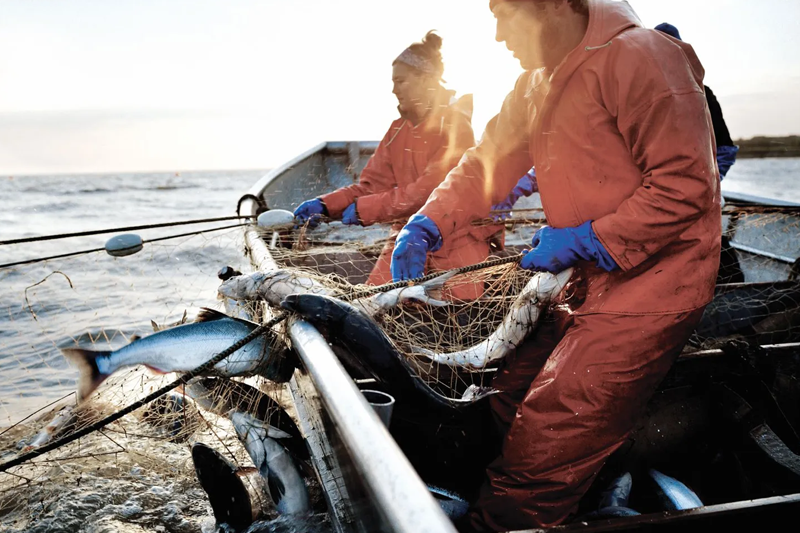
© Corey Arnold
All seafood
Transportation of fish
Once seafood products reach the dock or leave the farm, they're processed, packaged, and distributed. It’s not uncommon for many seafood items we eat to travel around the world before arriving on our plates. This long-distance transportation—especially if by plane—adds to the carbon footprint of seafood. Transporting seafood by ocean freighter, rail, or road results in significantly lower carbon emissions compared to air transportation.
Adaptive management
Many wild fish and shellfish populations are facing rising ocean temperatures and changing ocean chemistry driven by carbon emissions. Some populations are in decline, some will move to cooler, more hospitable waters, and others may thrive in the new conditions. These changes will likely affect the amount and composition of global fisheries and aquaculture harvests.
To preserve healthy and abundant populations in a changing ocean, regulators will need innovative, adaptive, and ecosystem-based management plans that take changing ocean conditions into account.
The Pacific Northwest region of the U.S. has been home to a thriving shellfish industry for generations. In recent years, changes in ocean conditions due to carbon emissions have led to massive die-offs at shellfish hatcheries that supply aquaculture facilities with their animals. Today, scientists, governments, and the seafood industry are working together to develop monitoring systems that quickly detect environmental changes and new ways to maintain the broodstock. These efforts will sustain a thriving shellfish industry and the coastal communities that rely upon it.
What Seafood Watch is doing?
While carbon footprint isn't part of our scientific assessments, we built the Seafood Carbon Emissions Tool. This website allows users to compare the carbon footprint for more than 150 seafood options, by species and how they're caught or farmed, against land-based proteins.
Explore more sustainable solutions
Animals & the ocean
Avoid overfishing
Overfishing puts pressure on ocean ecosystems, but science-based solutions can help protect fish populations.
Read more – Avoid overfishing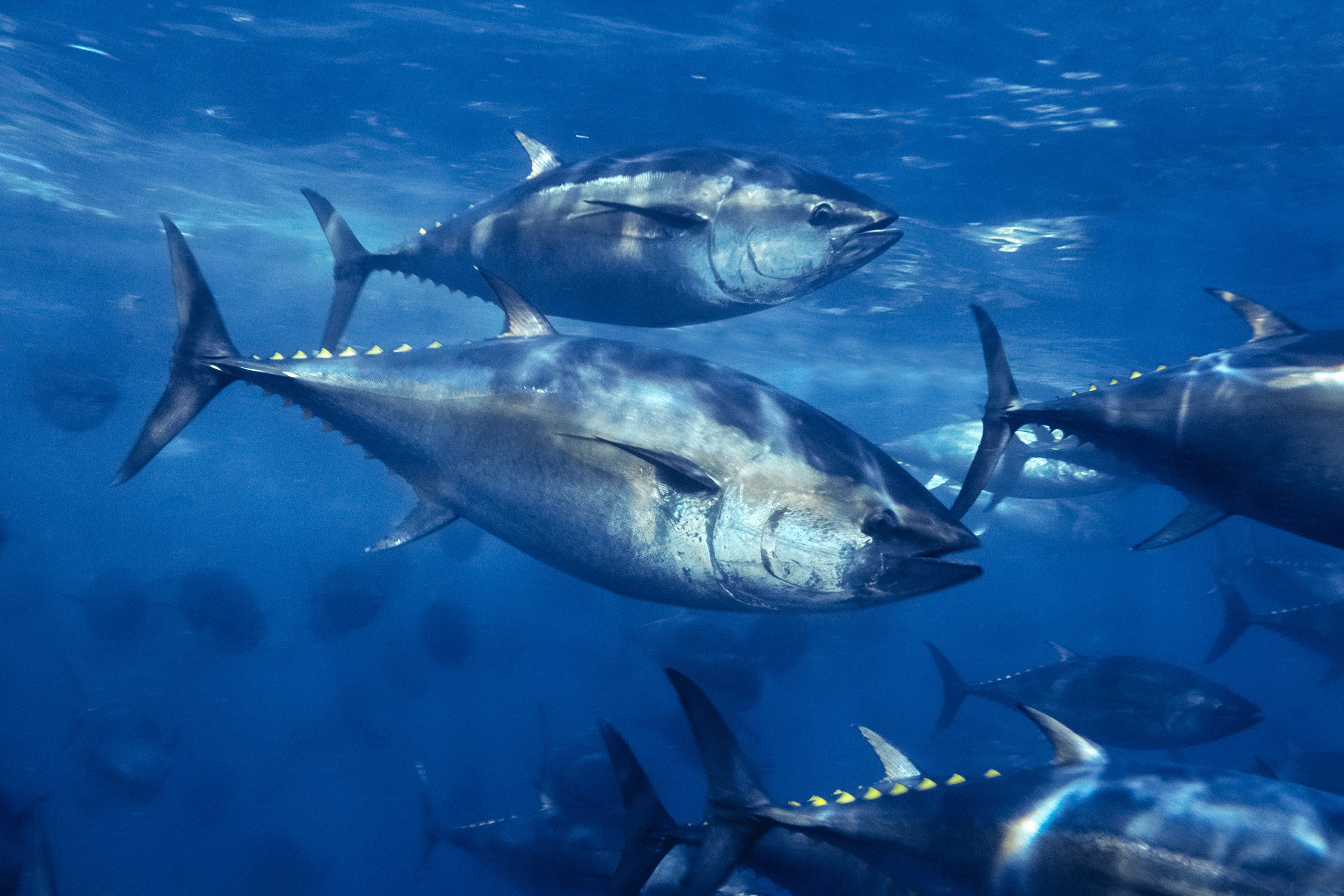
Animals & the ocean
Improve traceability
By tracking seafood through the supply chain, consumers can verify its environmental and social impact.
Read more – Improve traceability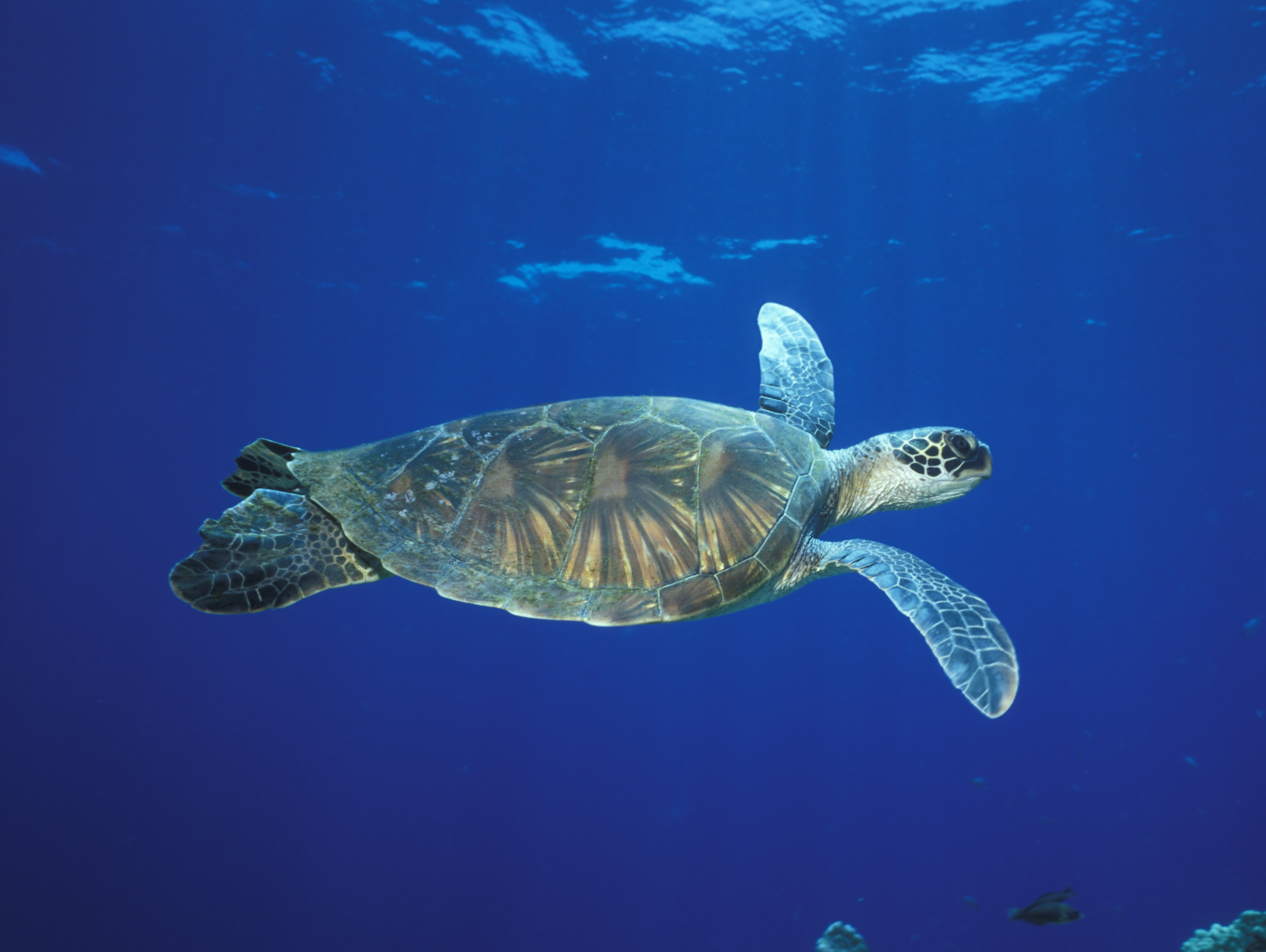
Animals & the ocean
Limit bycatch
Bycatch—when non-target marine life is caught in fishing gear—harms ocean wildlife, but solutions exist.
Read more – Limit bycatch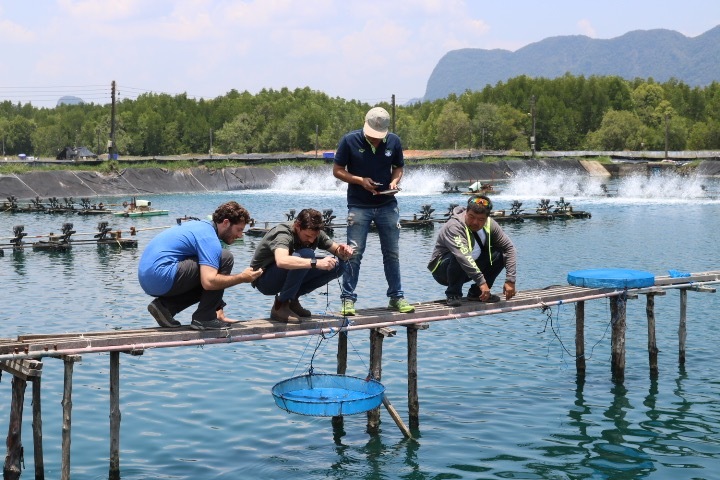
Animals & the ocean
Limit wild fish use as feed
Some aquaculture species are fed wild fish—adding to the pressure on wild fish populations.
Read more – Limit wild fish use as feed