

Limit bycatch
Bycatch refers to non-target marine life accidentally caught in fishing gear. Many animals don’t survive capture and are often discarded, but there are proven ways to reduce bycatch.
Understanding the issue
Some fishing methods are more likely to catch non-target species. Gears such as bottom trawls, longlines, and gillnets can capture a wide range of marine life in significant numbers. Animals that are accidentally caught often don’t survive and are frequently discarded if they can’t be sold.
Sustainable solutions
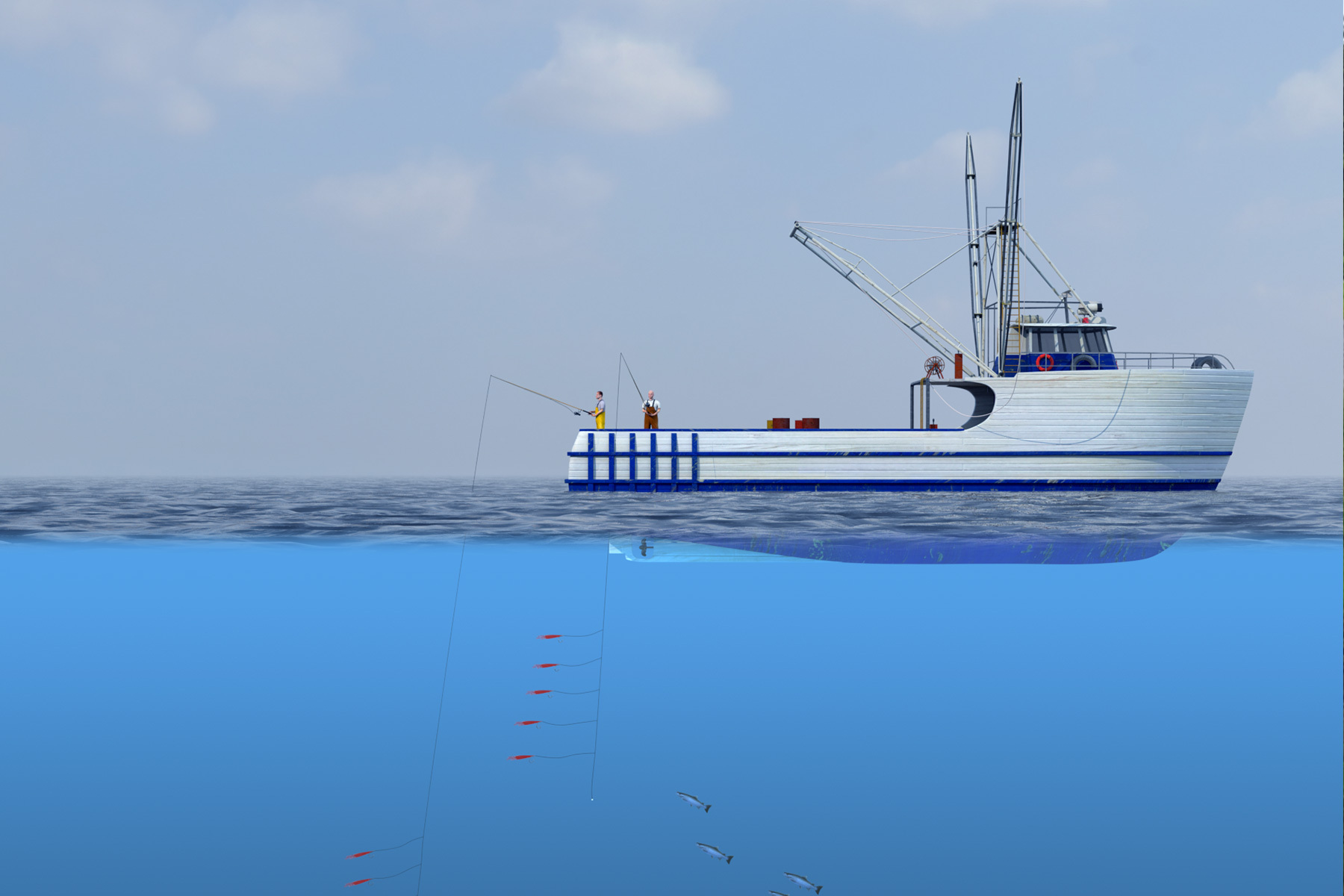
Using pole-and-lines
Some fisheries use pole-and-line gear, which greatly reduces the risk of bycatch. With this fishing technique, fishermen catch one fish at a time, making it easier to release any unwanted catch. Many canned and fresh fish are now labeled as pole-and-line caught.
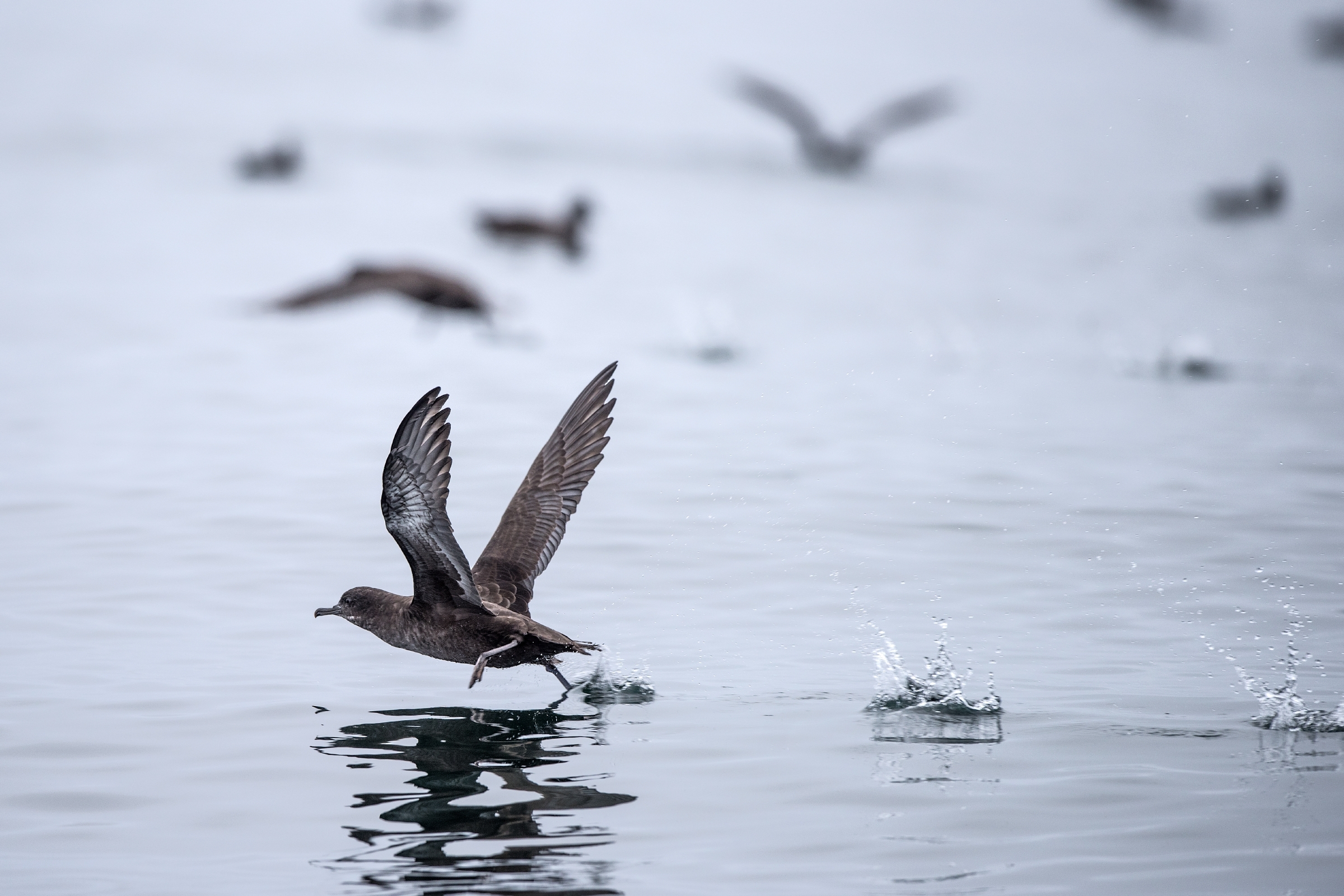
Streamers can save seabirds
Sea birds are attracted to the easy meal of baitfish put on longline hooks by fishermen. The birds grab the fish at the surface, get snared on the hook, are dragged underwater, and drown. Adding streamers—brightly colored ribbons that flap—to longlines deters seabirds and reduces their rate of entanglement. In the 1990s, seabird entanglement was a major problem for the Alaskan groundfish longline fisheries. In 2002, streamer lines became required gear. Since then, the number of albatross deaths has decreased by 89 percent, and the number of other seabird deaths has declined by 77 percent.
© NOAA
Turtle exclusion devices
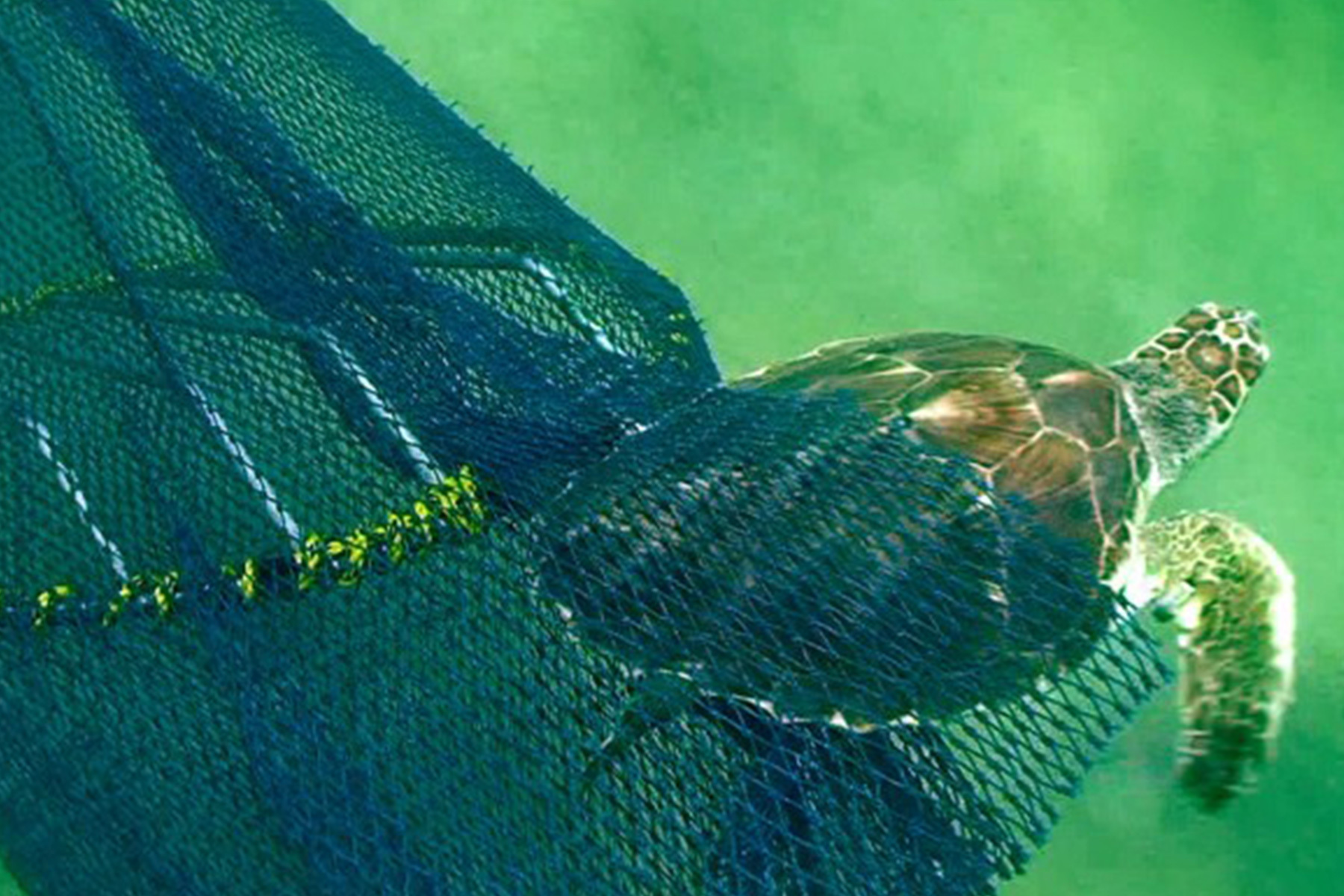
Sea turtles—nearly all of which are classified as endangered by the International Union for Conservation of Nature—are commonly caught in gillnets, trawls, and longlines. In the southeast U.S. and the Gulf of Mexico, sea turtles are often caught in shrimp trawlers' nets.
Facing a possible closure of the fishery, the industry worked with the National Oceanographic and Atmospheric Administration (NOAA) to develop Turtle Exclusion Devices (TED). These devices are fitted to trawl nets, and if a turtle is caught in the net, the device opens, allowing the turtle to escape.
While TEDs are now required by law for shrimp trawlers in the U.S. and Mexico, many fisheries around the world lack similar regulations. Many small-scale fisheries also have significant bycatch impacts, but they are harder to monitor and regulate.
Related videos
Examples of gear type

Bottom trawls drag nets across the seafloor, catching everything in their paths. Every year, millions of tons of bycatch are caught in bottom trawls.

Longlines can extend for 50 miles or more and have thousands of baited hooks. When cast out and left to "soak," longlines attract anything that swims by, from sharks to sea turtles.
What Seafood Watch is doing?
Bycatch is one of the main issues that Seafood Watch assesses for every fishery. To achieve Seafood Watch’s top ratings for environmentally responsible seafood, a fishery must meet the strict limits of allowable bycatch.
Explore more sustainable solutions
Animals & the ocean
Avoid overfishing
Overfishing puts pressure on ocean ecosystems, but science-based solutions can help protect fish populations.
Read more – Avoid overfishing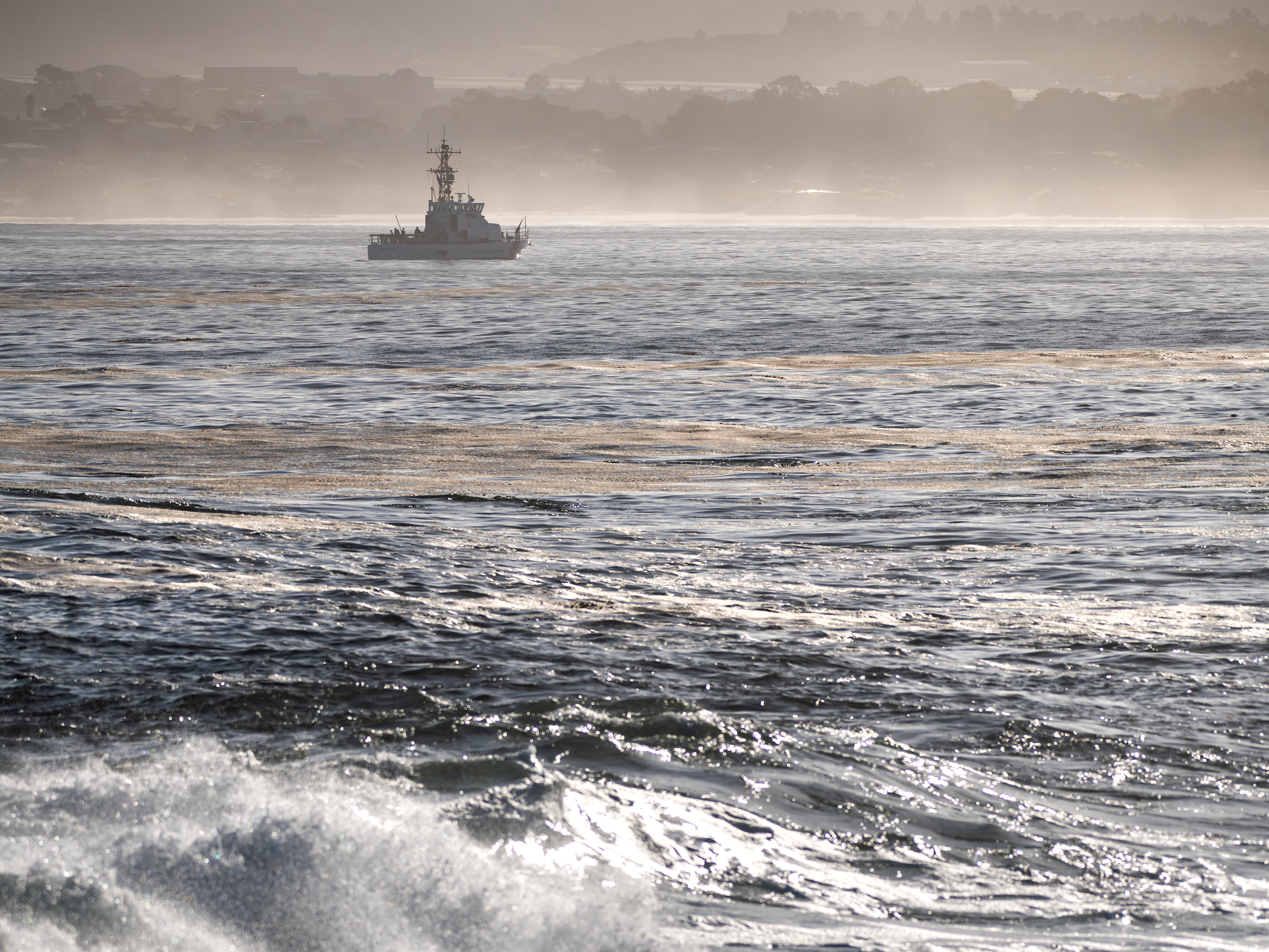
Animals & the ocean
Consider climate
It takes a lot of fuel to grow, package, and transport food, which contributes to climate change.
Read more – Consider climate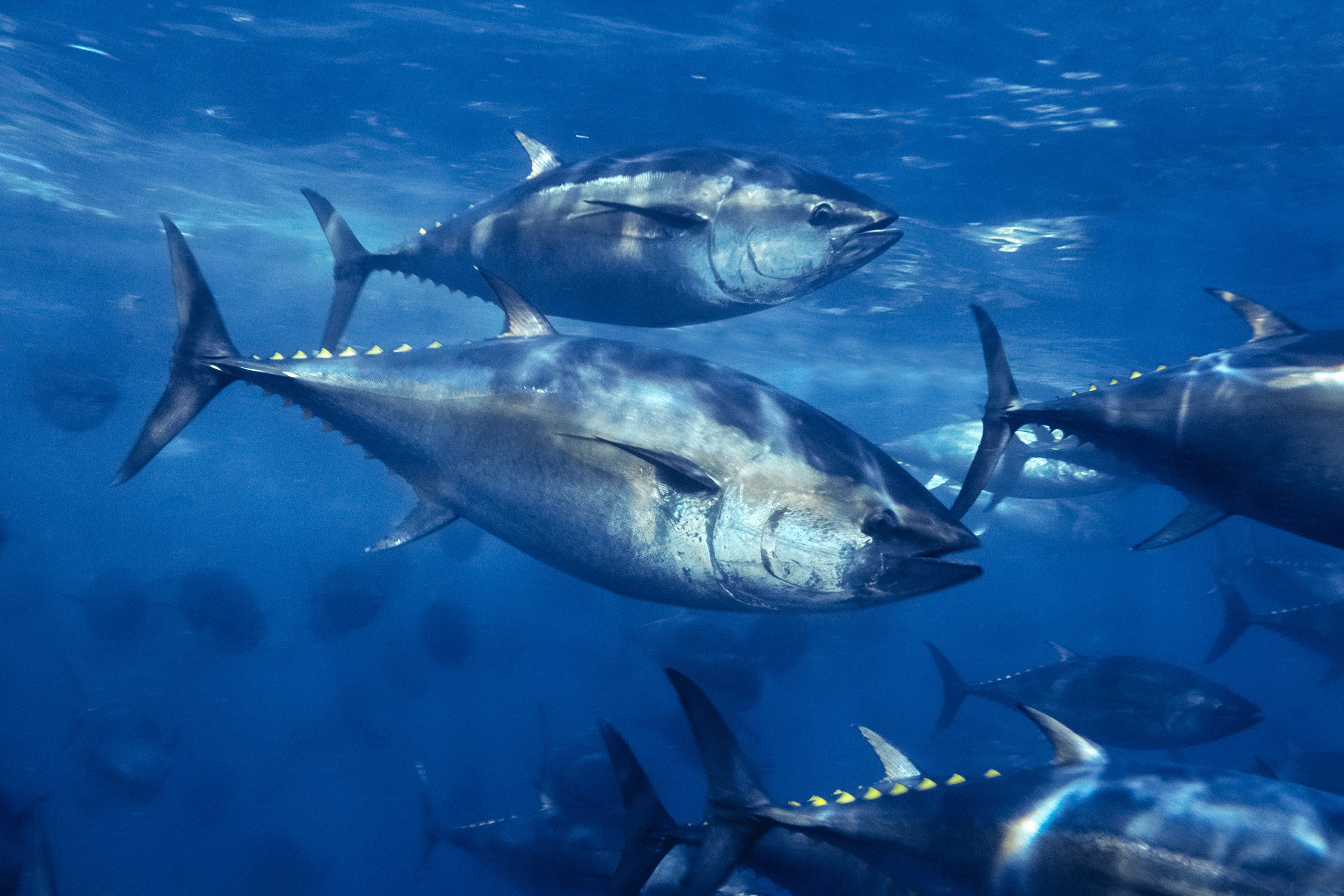
Animals & the ocean
Improve traceability
By tracking seafood through the supply chain, consumers can verify its environmental and social impact.
Read more – Improve traceability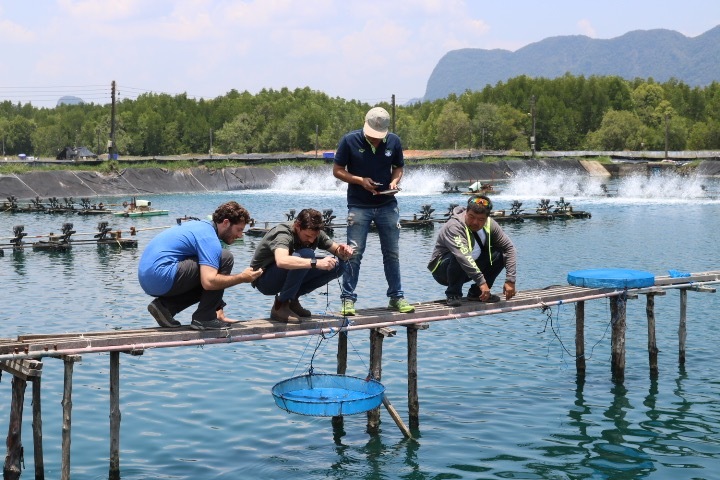
Animals & the ocean
Limit wild fish use as feed
Some aquaculture species are fed wild fish—adding to the pressure on wild fish populations.
Read more – Limit wild fish use as feed