

Looking out into Monterey Bay from the Aquarium’s back deck, you might notice kelp fronds swaying, sea otters grooming or seabirds preening in the nearshore waters. But past the serenity of the wildlife, two yellow buoys, bobbing in the distance, mark the beginning of a fascinating story.
Plunge 55 feet straight down from these buoys and you’ll find two 16-inch pipes resting just above the seafloor, pulling in water.
An automated system in the Aquarium’s basement pumps up to 2,000 gallons per minute into the building. Eventually, the same water that flows into these pipes will fill exhibits that nearly 80,000 plants and animals call home.
Treasure in our own backyard
The Aquarium is fortunate to be able to pump in our own sea water. We’re right next to a remarkable source of clean ocean water: the federally protected Monterey Bay National Marine Sanctuary. The sanctuary boasts a submarine canyon the depth of the Grand Canyon. When winds push surface water away from shore, deep-sea water from this canyon rises to the surface in a process called upwelling.
Deep-sea water comes packed with important nutrients, like nitrate and phosphate. These allow animals that live at the surface to flourish. We’re lucky to be able to provide this extraordinarily nutrient-dense water to our resident plants and animals.
Aquariums that are far from the ocean, or far from a clean source of sea water, must make their own ocean water. This takes a lot of work—and large quantities of a mixture filled with salt, minerals and nutrients.
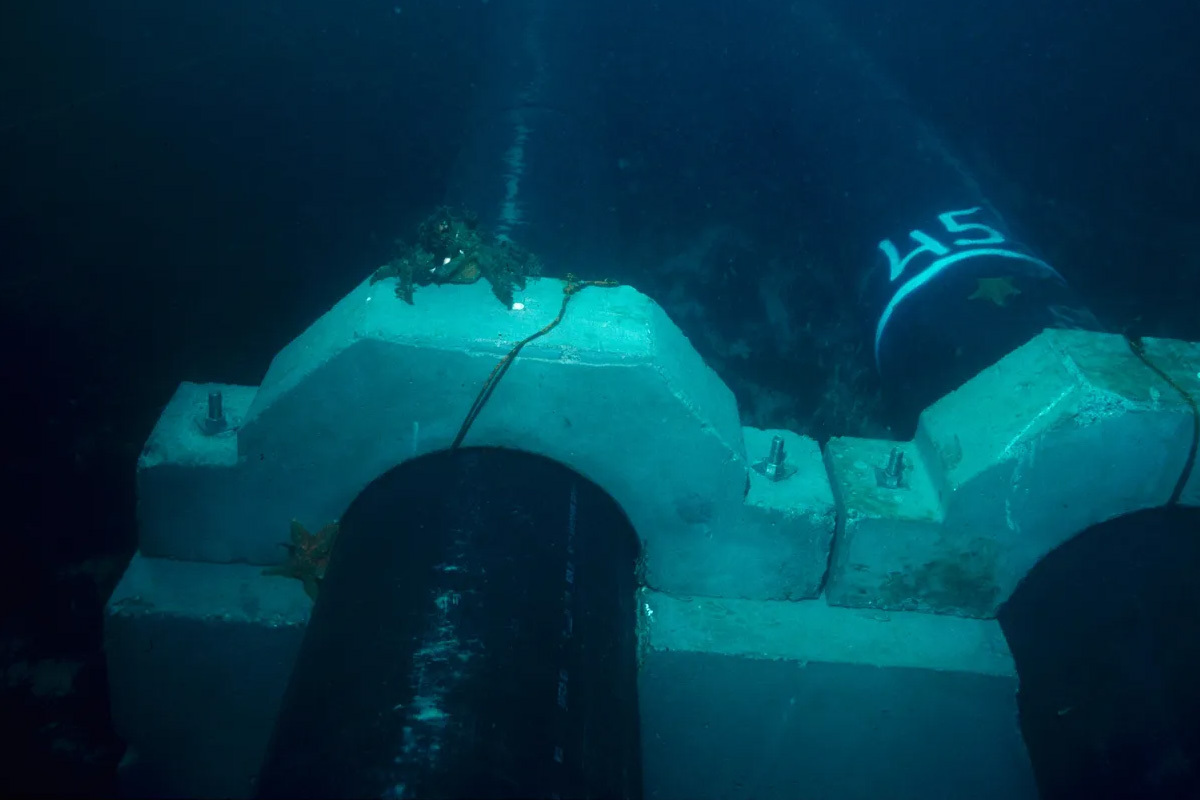
The Aquarium opened its doors in 1984. For a while, our intake pipes looked like this.
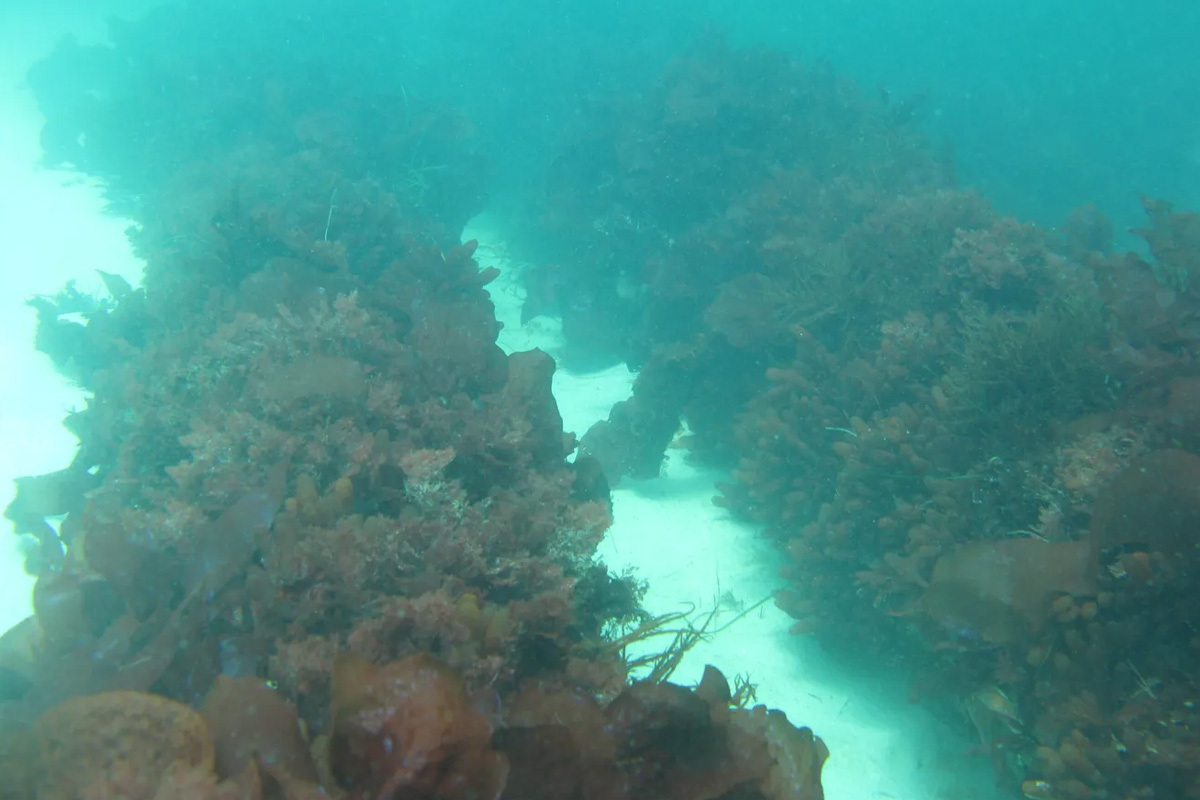
By 2010, plants and invertebrates had completely covered the intake pipes.
Good things come in raw seawater
The Aquarium’s exhibits mirror the habitats in the bay right offshore. Because of this, our raw sea water already contains most of the nutrients that our sardines, giant sea bass and anemones need. It also contains nutrients for the Aquarium’s filter-feeding animals, like barnacles.
Spores and larvae of plants from the ocean also flow in with the water. These tiny organisms then settle and grow in the exhibits and on rockwork. In this way, our exhibits become a living extension of the bay.
Making adjustments
Schooling fish, like Pacific mackerel and sardines, consume more oxygen than comes in raw sea water. For them, we bubble in extra oxygen. Our giant Pacific octopus especially loves oxygen-rich water—we keep its water 90 percent oxygen-saturated!
We regularly test and monitor the temperature, nutrients and oxygen levels of the water so they stay where they need to be for animals of all kinds.
Daily surprises
Every night, raw sea water is allowed to circulate the exhibits. Although special sensors would alert the team if anything were seriously amiss, nutrient and plankton levels may be a surprise in the morning. When the members of the Applied Water Science department come into work, their first order of business is to check what’s come in overnight. Water quality assistant Chris Reeve collects samples from different exhibits. He evaluates nutrient levels and sees whether there is an issue, like a plankton bloom, that might need to be addressed.
Hannah Ewbank, a water quality specialist, enjoys the challenge. “Every day I ask myself: What do we have today? What’s the new problem we have to solve? It keeps you on your toes, which is exciting and challenging.”
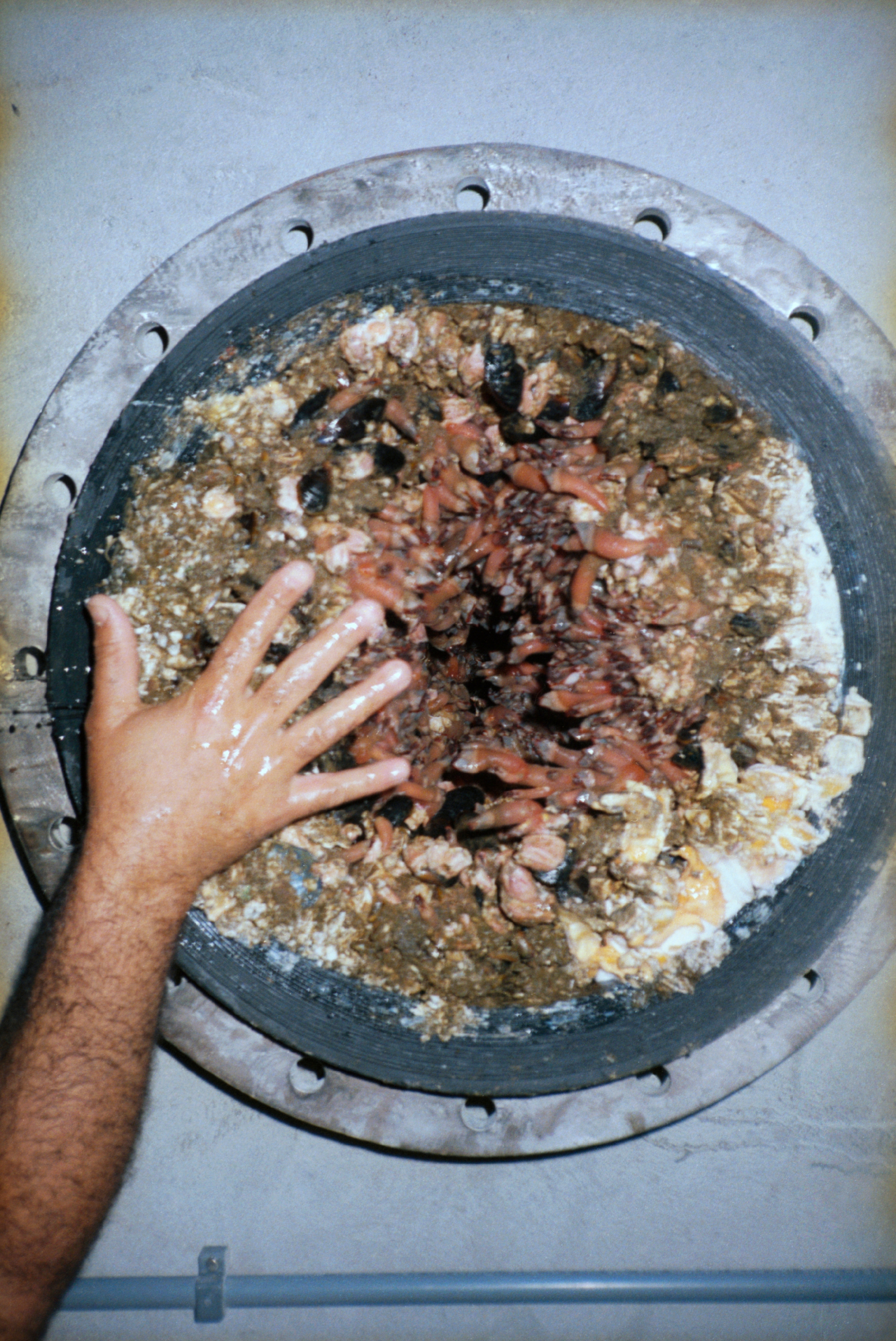
Over time, barnacles, algae, and invertebrates can clog the intake pipes.
An amazing journey
Sea water travels one of many complex paths through the Aquarium’s network of pipes, filters, and exhibits. In total, our pipes connect exhibits housing 80,000 plants and animals representing 1,700 species.
Each year, more than a billion gallons of water move through the Aquarium, tracing countless paths through this intricate system.
Keeping the pipes clean
With so much raw sea water going in and out, the pipes accumulate algae, barnacles and other invertebrates. Eventually, these animals can clog the pipes. To keep the water flowing, the Aquarium’s team does something called “pigging” every six weeks.
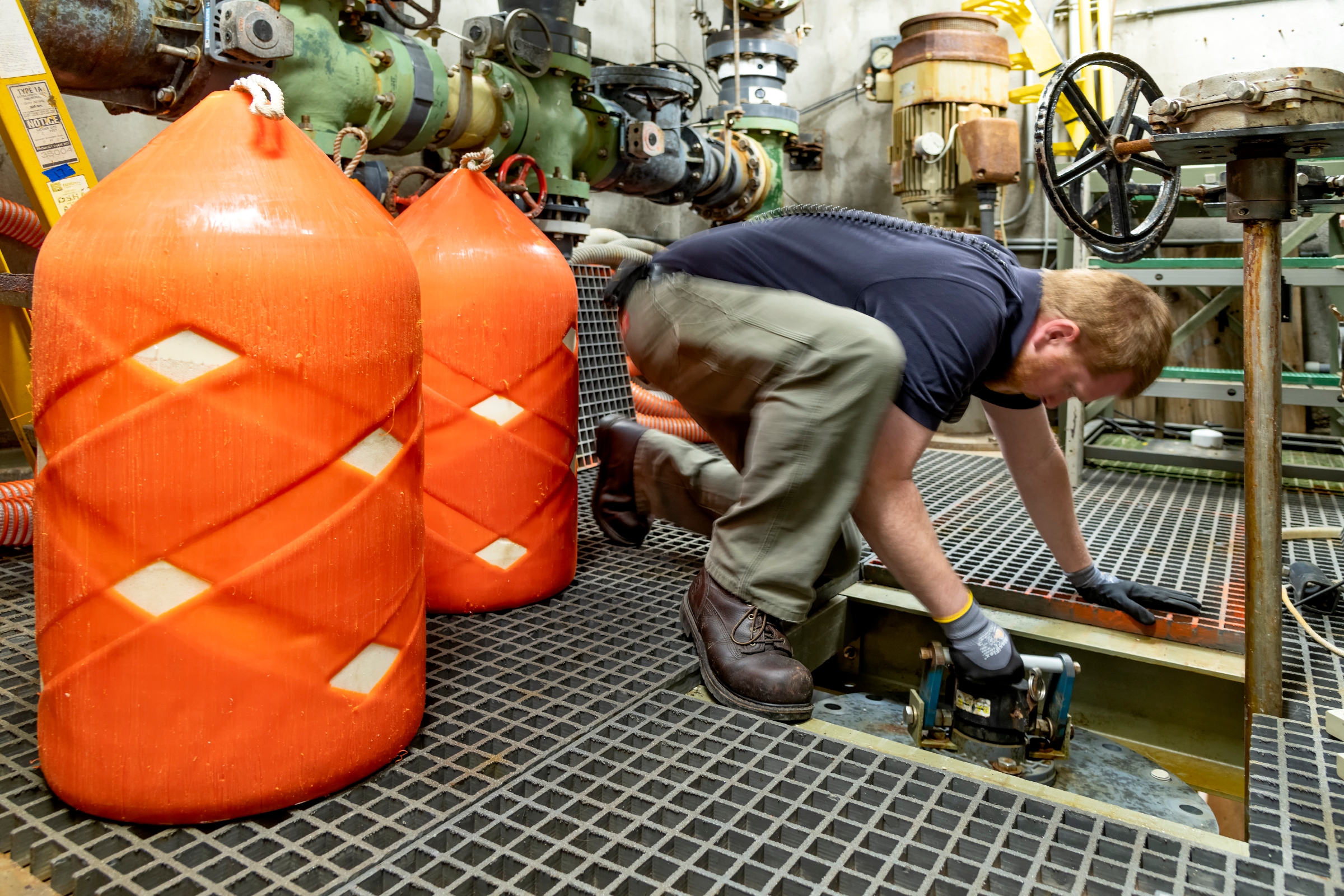
The term “pig” comes from the oil industry. Bales of hay were historically used to clean the pipes, creating a loud squealing sound as they moved through the pipes. At the Aquarium, the pig is made of dense rubber and shot through the intake pipe to clear out any growth that has been building up.
Related videos
Watch "pigging" in action
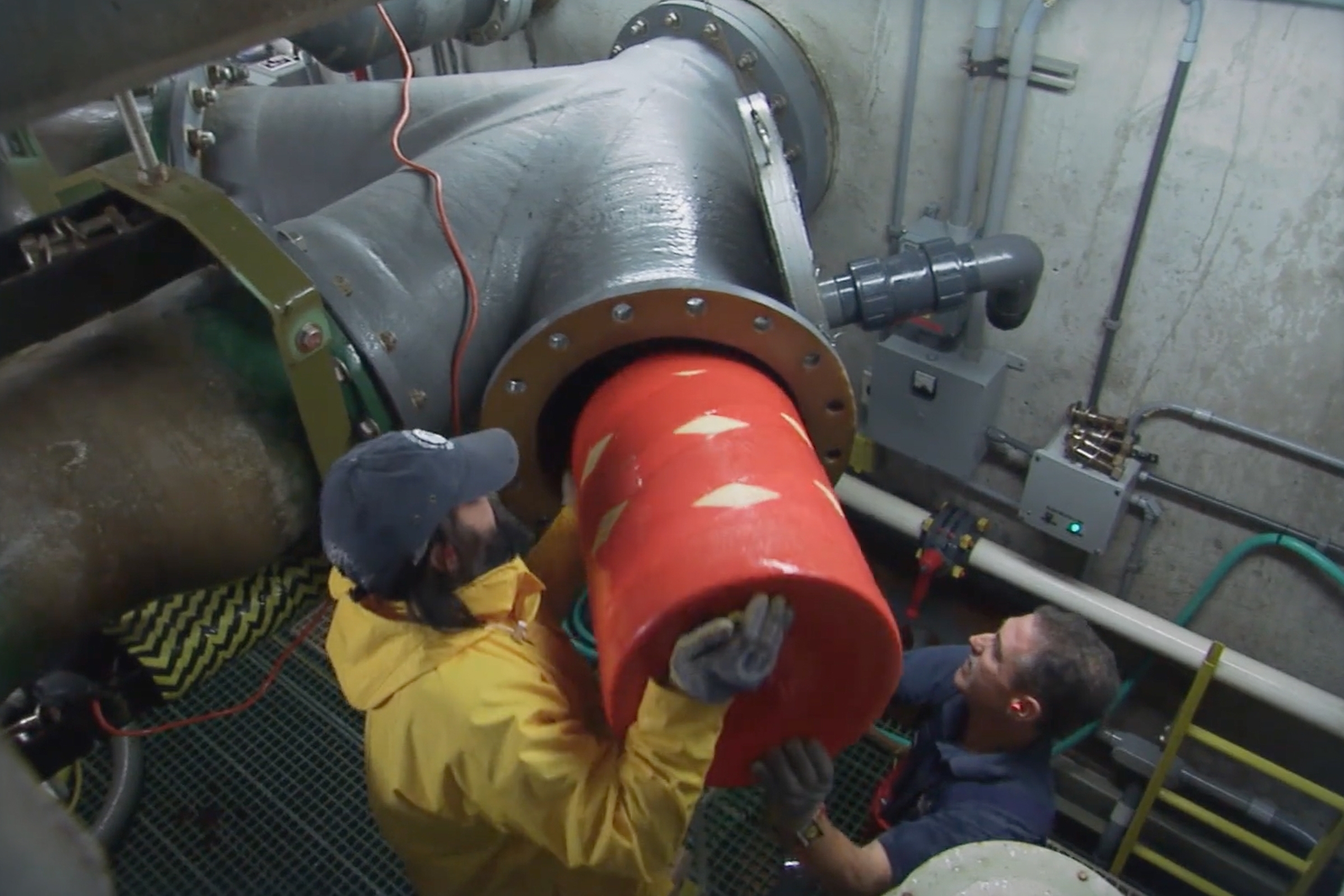
We insert the pig in one end of the pipe. Then, high water pressure forces the pig through the pipe, cleaning off the growth inside. The pig eventually pops out the other side—with a splash!
Return to the bay
The Aquarium releases sea water into the protected Monterey Bay National Marine Sanctuary. For this reason, when the sea water leaves the building it needs to be just as pristine as when it came in.
Rigorous filtration systems prevent exotic species or eggs from slipping into the bay. This is especially important for tropical exhibits. Even the sea water in exhibits with local species, like sea otters, needs to be filtered to ensure the waste doesn’t cause an imbalance in the bay. For this reason, the Applied Water Science team even has a dedicated staff member whose job is to monitor water discharge.
Once it makes it through its final filters, the sea water is finally ready to return to the bay. There, it will continue to provide a nourishing home for the ocean’s living beings.
There’s something in the water
Following the journey of sea water through the pipes makes it clear why the Aquarium is special. Barnacles that live in our Rocky Shore exhibit filter the same plankton as those in coastal tide pools. Sardines in the Open Sea exhibit swim through the same zooplankton they’d swim through in the bay.
Next time you visit the Aquarium, look into an exhibit. You'll see, quite literally, into the protected water from offshore—and all the life that flows in along with it.
Keep exploring
Story
2026 Lucile S. Packard Memorial Award and Youth Award recipients
We’re proud to announce the 2026 Lucile S. Packard Memorial and Youth Awards for outstanding volunteers!
Read story – 2026 Lucile S. Packard Memorial Award and Youth Award recipients
Story
From krill shakes to salmon steaks: A peek into our food room
Step into our food room—the hub where 75,000+ animals and plants get sustainable diets year-round.
Read story – From krill shakes to salmon steaks: A peek into our food room
Story
50,000 kids inspired by the ocean with Underwater Explorers
Underwater Explorers has been ‘stoking kids daily’ with up close and personal ocean experiences since 2002.
Read story – 50,000 kids inspired by the ocean with Underwater Explorers