

A crucial component to coastal habitats
Southern sea otters are the glue that holds important coastal environments together, healthy, and in balance. They’re a textbook example of a keystone species—organisms that have a big impact on their environment just by being there. In other words, without sea otters, these habitats would look drastically different.
Otters are top predators in kelp forests along the central coast of California. This habitat provides food, shelter, a nursery, and hunting grounds for many fish, marine mammals, seabirds, and other species. Sea otters hold a particular fondness for sea urchins—grazing animals that happen to be voracious consumers of the giant kelp and bull kelp that provides the physical structure to this marine home. Without sea otters, urchins can decimate huge swaths of kelp forest, with devastating effects on the entire ecosystem and all that depend on it.
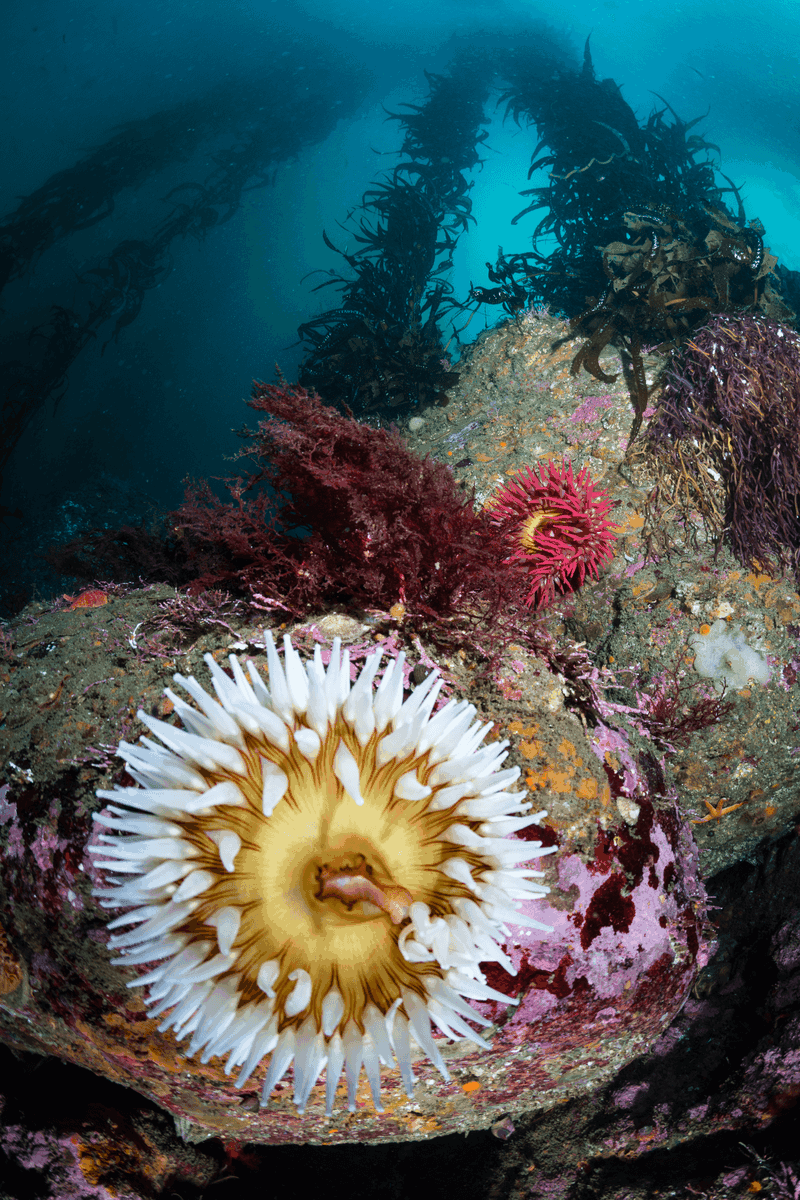
Kelp forest habitats support a wide variety of life. You can find communities of animals everywhere in a kelp forest, from the rocky substrate the kelp anchors itself and attaches to at the bottom of the ocean...
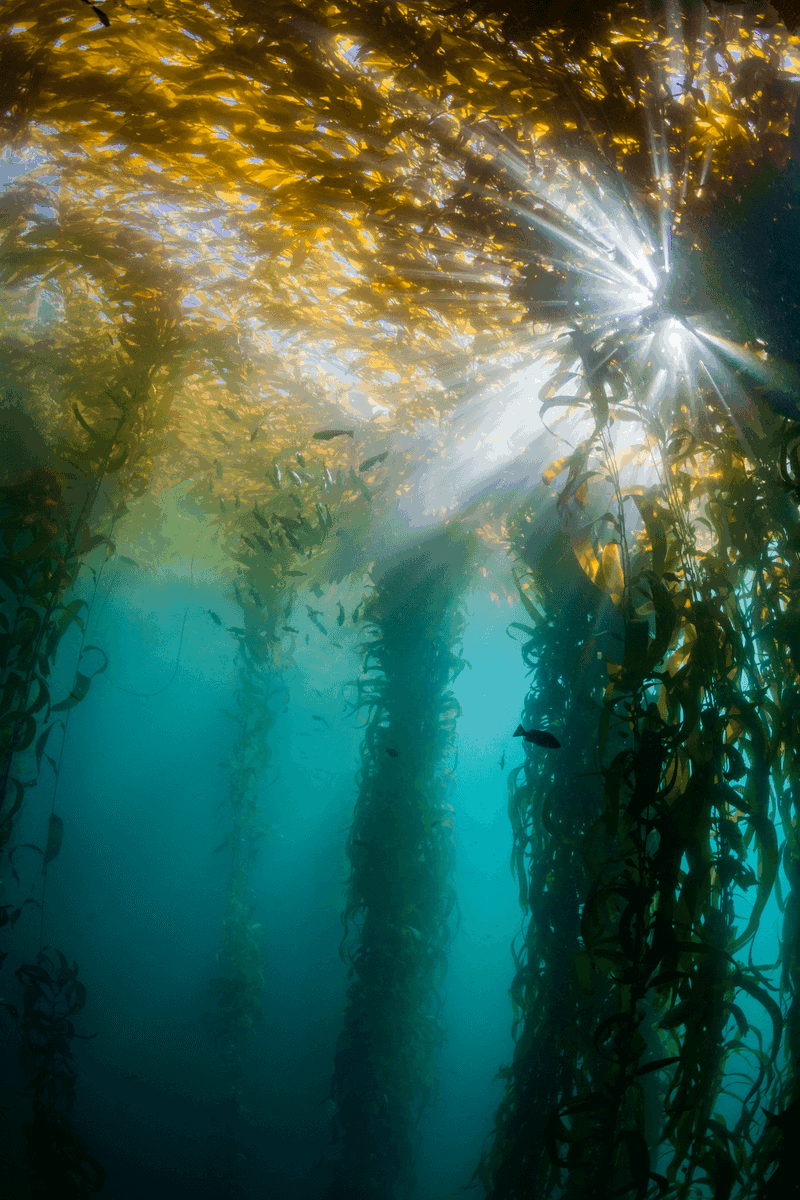
... all the way up to the kelp canopy at the ocean's surface. This diversity of life is possible thanks to keystone predators like sea otters that help maintain the balance within the habitat.
Sea otters help buffer kelp loss
A study led by Aquarium researchers amplifies the significant role these marine mammals play within kelp forest habitats. Their impact on this ecosystem is especially striking when compared to kelp forests in other parts of the state where sea otters haven’t yet been able to reestablish their populations since the 18th- and 19th-century fur trade. Looking back over a hundred years of data by georeferencing historical maps covering the entire coast of California, we've found a sharp decline in kelp forest coverage in both southern and northern regions of the state. That doesn’t seem to be the case along the Central Coast, where the kelp canopy has shown notable growth during the last century. It’s no coincidence that sea otter populations are thriving here.
While we've seen the impact that sea otters have had on the local environment since our opening in 1984, this study's unique approach allowed us to highlight these important ecological relationships over a much larger time scale. Additionally, these results provide a strong link between recovering sea otter populations and kelp forest resilience to climate change.
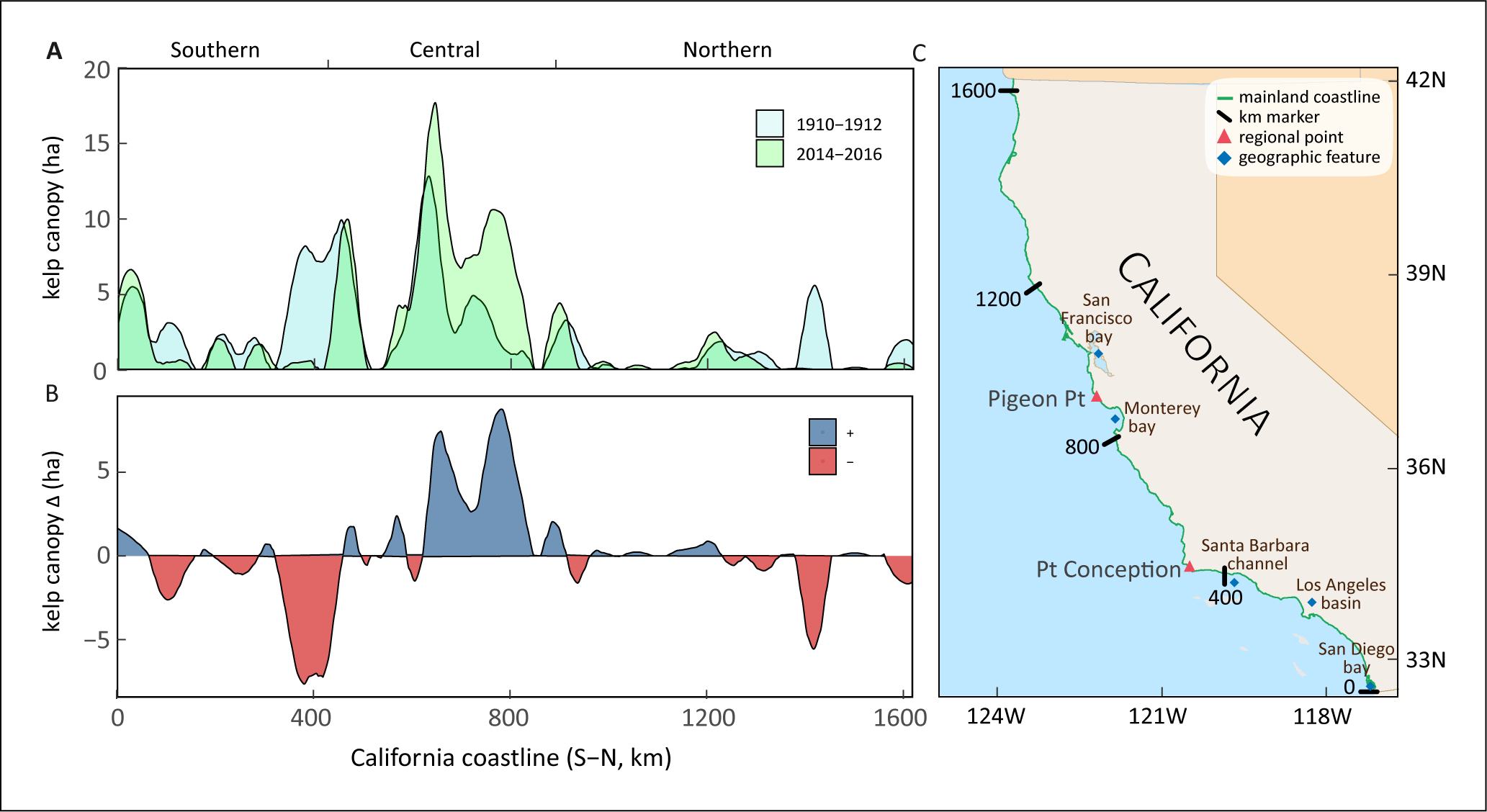
A recent study led by Aquarium researchers has shown that kelp forest coverage along California's central coast has increased over the past 100 years. It's no coincidence that this area between Santa Barbara and Monterey Bay is where the southern sea otter population has made a recovery. In contrast, declines in coverage have been widespread across the northern and southern coasts of the state where sea otter populations have yet to reestablish. Reproduced with permission from Teri Nicholson, author, Sea otter recovery buffers century-scale declines in California kelp forests.
Looking ahead
It’s clear to researchers that the presence of sea otters has helped protect the nearshore marine environments they inhabit in California. Consequently, these regions have flourished, expanded, and witnessed a surge in biodiversity. As we continue our work to support the recovery of the southern sea otter population, we look forward to seeing how the return of sea otters will contribute to the recovery of other important habitats along our coast.
Love sea otters?
Our sea otter conservation efforts are possible thanks to otter lovers like you! By supporting our Sea Otter Program is unique, you'll have real impact on their survival and the coastal habitats they call home.

Keep exploring
Story
Birdwatching tips: A guide to enjoying and identifying local birds
Here are our best tips to help keep you and the birds safe and healthy during a birdwatching adventure.
Read story – Birdwatching tips: A guide to enjoying and identifying local birds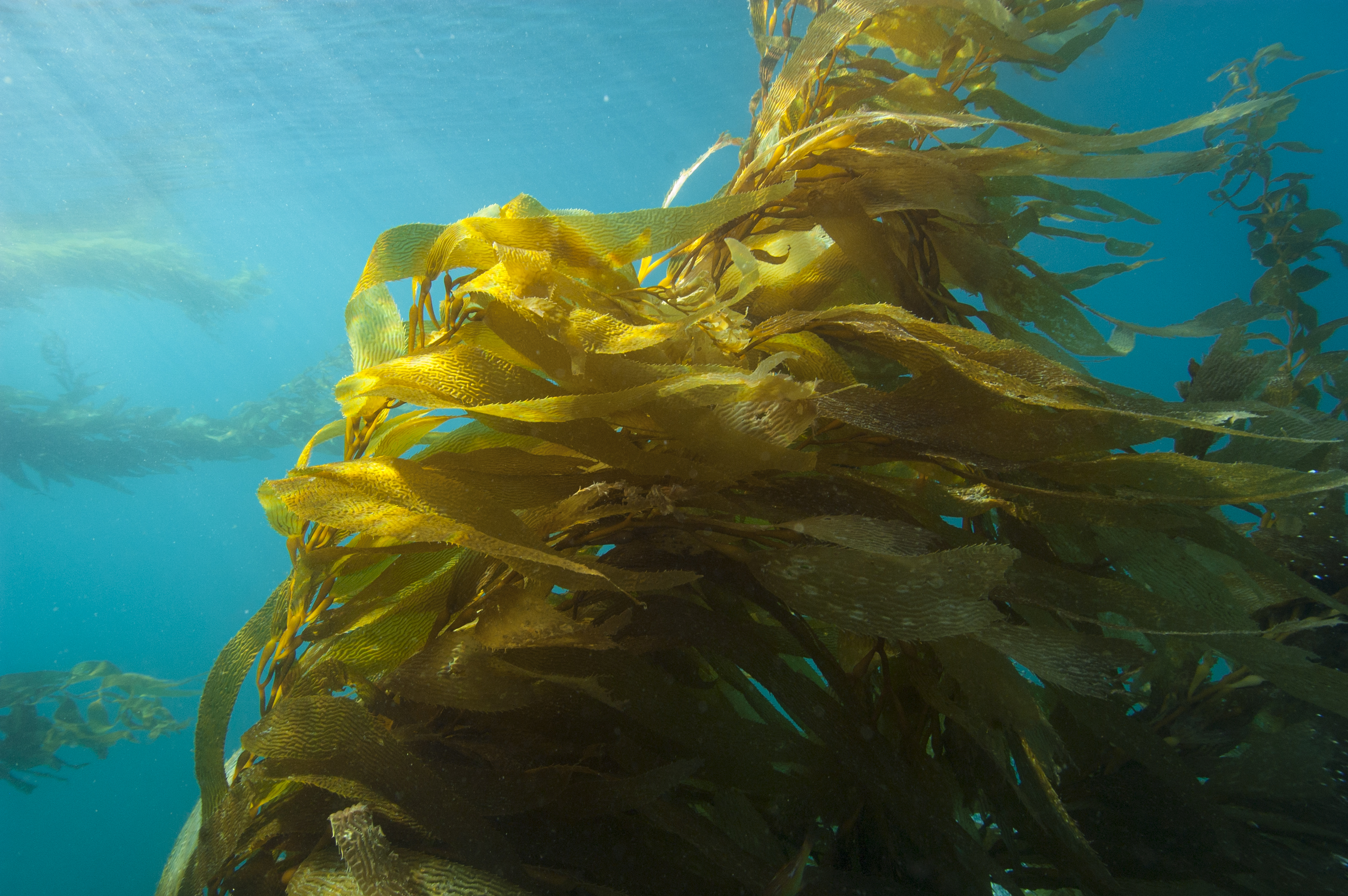
Story
Chumash Heritage National Marine Sanctuary is almost here
Chumash Heritage National Marine Sanctuary protects marine life and cultural resources on California’s coast.
Read story – Chumash Heritage National Marine Sanctuary is almost here
Story
From krill shakes to salmon steaks: A peek into our food room
Step into our food room—the hub where 75,000+ animals and plants get sustainable diets year-round.
Read story – From krill shakes to salmon steaks: A peek into our food room