
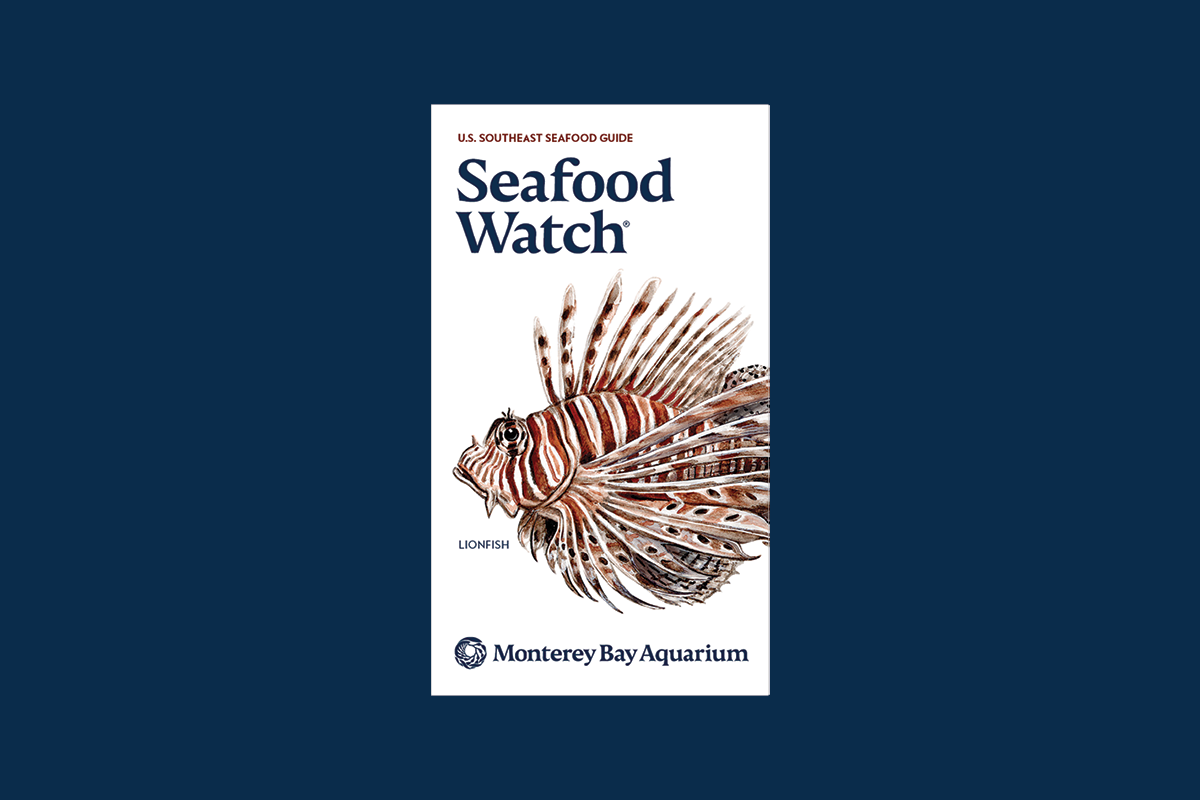
U.S. Southeast Seafood Guide
Use this guide to choose ocean-friendly seafood across the U.S. Southeast, from Texas to Delaware.
Best choice
Buy first. Green-rated seafood is well-managed and caught or farmed in an environmentally responsible manner. It poses a low environmental risk.
- Bass (farmed from U.S. or Mexico) A Super Green food
- Catfish (farmed from U.S.) A Super Green food
- Clams (farmed) A Super Green food
- Cod: Pacific (from Alaska)
- Crab: blue (from Maryland trotline)
- Crawfish (farmed from U.S.)
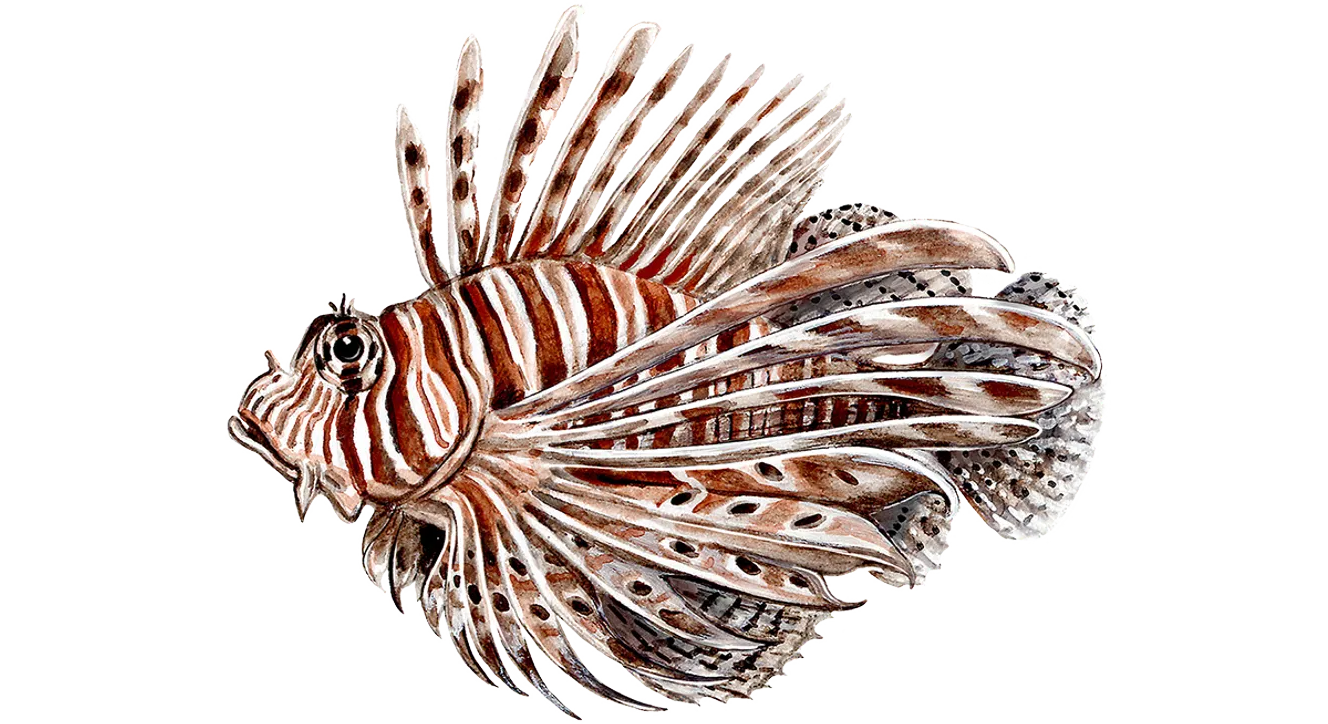
- Lionfish
- Mahi mahi (from U.S. Atlantic pole-&-line)
- Mullet: striped (from U.S.)*
- Mussels (farmed) A Super Green food
- Oysters (farmed) A Super Green food
- Shrimp (farmed from U.S.)
- Sturgeon (farmed from U.S.)
- Swordfish (from U.S. buoy gear, harpoon, or pole-&-line)
- Tilefish: blue (from Atlantic*)
- Trout: rainbow (farmed from U.S.) A Super Green food
- Tuna: albacore/white (from Pacific or Atlantic troll or pole-&-line*) A Super Green food
- Tuna: bigeye, skipjack/chunk light, and yellowfin/ahi (from Pacific pole-&-line*)
- Tuna: skipjack/chunk light and yellowfin/ahi (from Maldives)
- Wahoo (from U.S. Atlantic pole-&-line)
- Wreckfish
Good alternative
Buy if a green-rated option is not available. This seafood poses a moderate environmental risk.
- Clams (wild from U.S. or Canada)
- Cod: Atlantic (from U.S. pole-&-line)
- Conch (from U.S.)
- Crab: blue (from Alabama, Delaware, Maryland, or New Jersey pot)
- Crawfish (wild from U.S.)
- Lobster: spiny (from U.S. or Mexico)
- Mackerel (from Chile, Ecuador, Japan, or Morocco)
- Mahi mahi (from U.S.*)
- Sablefish/black cod
- Pompano (from U.S.)
- Salmon: Atlantic (farmed from Maine or Faroe Islands)
- Shrimp (wild from U.S. or Canada; farmed from Ecuador or Thailand)
- Snapper (from U.S.*)
- Swordfish (from U.S. gillnet or longline)
- Tilapia (from Colombia, Indonesia, Mexico, or Taiwan)
- Tilefish: blue (from Gulf of Mexico)
- Tuna: bigeye, skipjack/chunk light, and yellowfin/ahi (from Hawai’i; from Atlantic pole-&-line, troll, or FAD-free**)
- Tuna: skipjack/chunk light and yellowfin/ahi (from Indian Ocean pole-&-line and FAD-free**)
Avoid
Take a pass. Red-rated seafood poses a high risk to the environment. It's overfished, lacks strong management, or is caught or farmed in ways that harm other marine life or the environment.
- Branzino (farmed from Mediterranean*)
- Chilean seabass (from Chile)
- Cod: Atlantic (gillnet, longline, or trawl)
- Conch (imported)
- Crab (from Asia*)
- Crab: blue (all other U.S. sources)
- Crab: snow (from Canada)
- Crab: stone (from Florida)
- Lobster: American (from U.S. or Canada)
- Mahi mahi (imported*)
- Octopus (Indonesia, Morocco, or Mauritania)
- Orange roughy
- Salmon (farmed from Canada, Chile, Norway, or Scotland*)
- Sharks*
- Shrimp (all other imported options*)
- Squid (all other imported options*)
- Swordfish (imported gillnet or longline)
- Tilapia (from China)
- Tuna: bluefin (farmed/ranched)
- Tuna (all other options)
* With some exceptions
** “FADs” is short for fish aggregating devices, which lure tuna and other species to a specific location, making them easier to catch with purse seines. The terms FAD-free, non-FAD, free school, or school-caught mean FADs were not used to catch the tuna.
Download the guide
How to use this guide
Our green, yellow, and red ratings indicate environmental risk. We use our ratings and third-party certifications to make our recommendations.
Choose
- Green-rated seafood because environmental risks are low.
- Yellow-rated seafood because environmental risks are moderate.
Avoid
- Red-rated seafood because environmental risks are high, often due to overfishing, poor management, or harm to marine life and habitats.
Where to find sustainable seafood
When shopping or dining out, start by asking, “Do you sell sustainable seafood?” You may need to ask what species it is and where and how it was caught or farmed. If the business can’t answer or the label doesn’t provide this information, our Popular Seafood Guide can help you choose another ocean-friendly option.
More retailers and restaurants are sharing where their seafood comes from and how it was caught. But not all businesses have this information. When you ask questions, you help create demand for sustainable seafood and encourage businesses to offer it.
Grocery stores
We work with grocery stores to implement time-bound commitments to follow Seafood Watch recommendations. MOM’s Organic Market and PCC Community Markets follow our recommendations. Whole Foods Market sources green-rated, yellow-rated, and MSC certified wild seafood and has a proprietary standard for farmed seafood.
Restaurants
Seafood Watch’s Best Choice Restaurant Program partners commit to offering at least one green-rated, environmentally sustainable seafood dish on their menu.
We also work with major restaurant chains—including California Fish Grill and The Cheesecake Factory—that are implementing their sustainable seafood commitments.
Meal kits
Hello Fresh only sends its customers green-rated, yellow-rated, or certified seafood. Other meal kit services may offer sustainable seafood. If they don't, we encourage you to ask them to.
Keep exploring
Change & impact
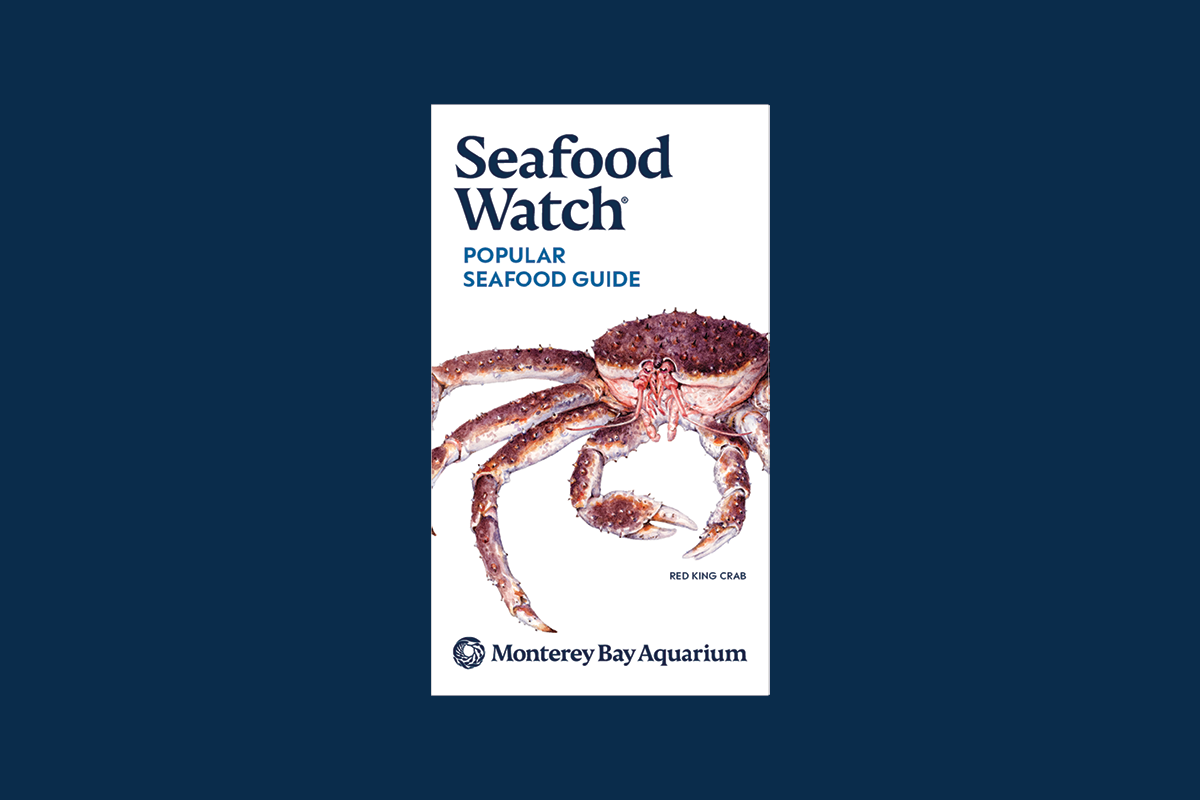
Popular Seafood Guide
The guide includes the fish and shellfish that you’re most likely to see at restaurants and stores.
View and download the guide – Popular Seafood Guide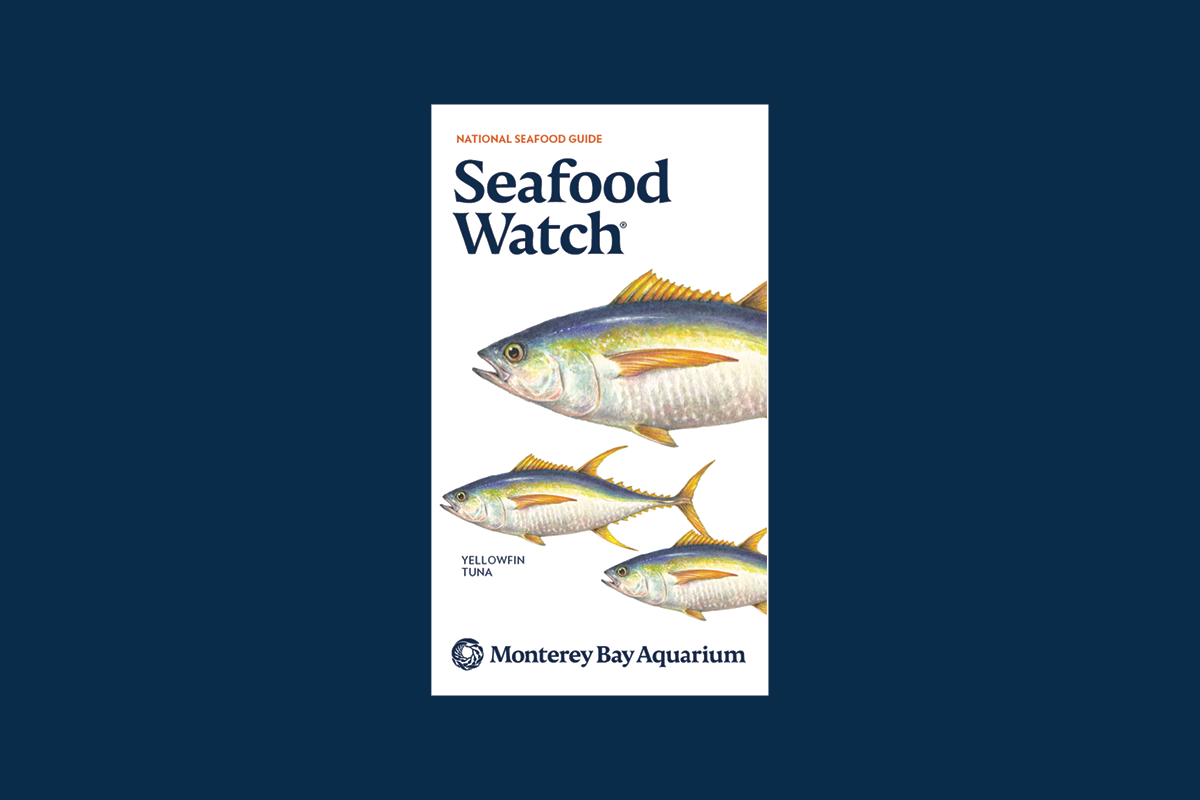
Change & impact
National Seafood Guide
A list of popular seafood to choose and avoid across the U.S.
View and download the guide – National Seafood Guide
Change & impact
Hawai‘i Seafood Guide
A list of popular seafood to choose and avoid in Hawai’i.
View and download the guide – Hawai‘i Seafood Guide
Change & impact
U.S. Central Seafood Guide
A list of popular seafood to choose and avoid across 22 Central U.S. states.
View and download the guide – U.S. Central Seafood Guide