
Sustainable catfish & pangasius buying guide
Catfish and pangasius—a type of catfish native to Asia that’s also called swai, basa, or sutchi catfish—are among the top 10 most-consumed seafoods in the U.S. The good news is that sustainable U.S. catfish should be easy to find. However, a lot of imported pangasius is considered unsustainable by Seafood Watch standards, so it’s important to know what to buy and what to avoid.
Quick buying guide
- Buy catfish farmed in the U.S.
- Buy blue catfish caught in Chesapeake Bay.
- Buy Aquaculture Stewardship Council (ASC), Global Seafood Alliance Best Aquaculture Practices (BAP), or Naturland certified pangasius.
- Avoid pangasius from Vietnam (except the certified sources we recommend).
U.S. farmed catfish is on our Super Green List—good for you and the planet!
What to buy or avoid?
© Scandposters.com
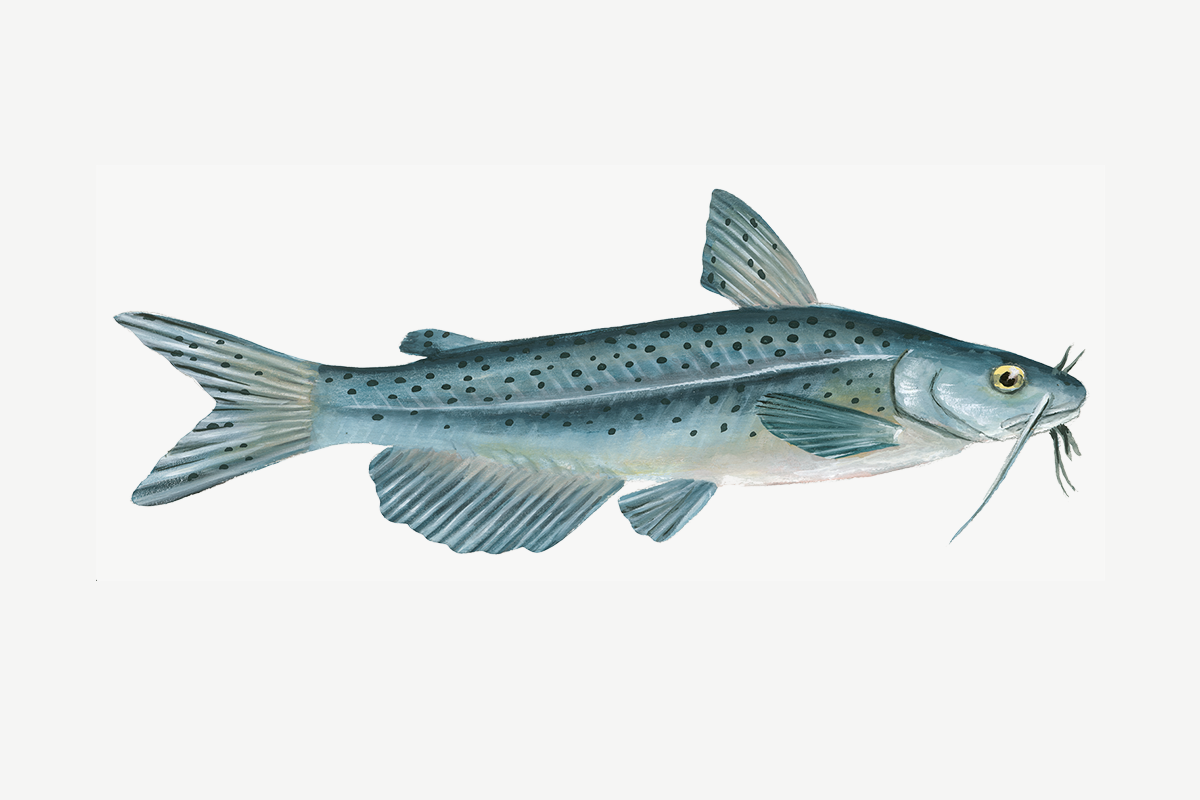
U.S. catfish
Most U.S. farmed catfish are channel catfish, and some are a hybrid of female channel catfish and male blue catfish. Compared to farmed catfish, only a tiny amount of wild-caught catfish is sold in the U.S., most of which is blue catfish. Blue catfish is native to many areas of the U.S., but it was introduced into Chesapeake Bay in the 1970s. Since then, it has impacted native species through predation and resource competition.
- Buy catfish farmed in the U.S.
- Buy blue catfish caught in Chesapeake Bay.
© Scandposters.com
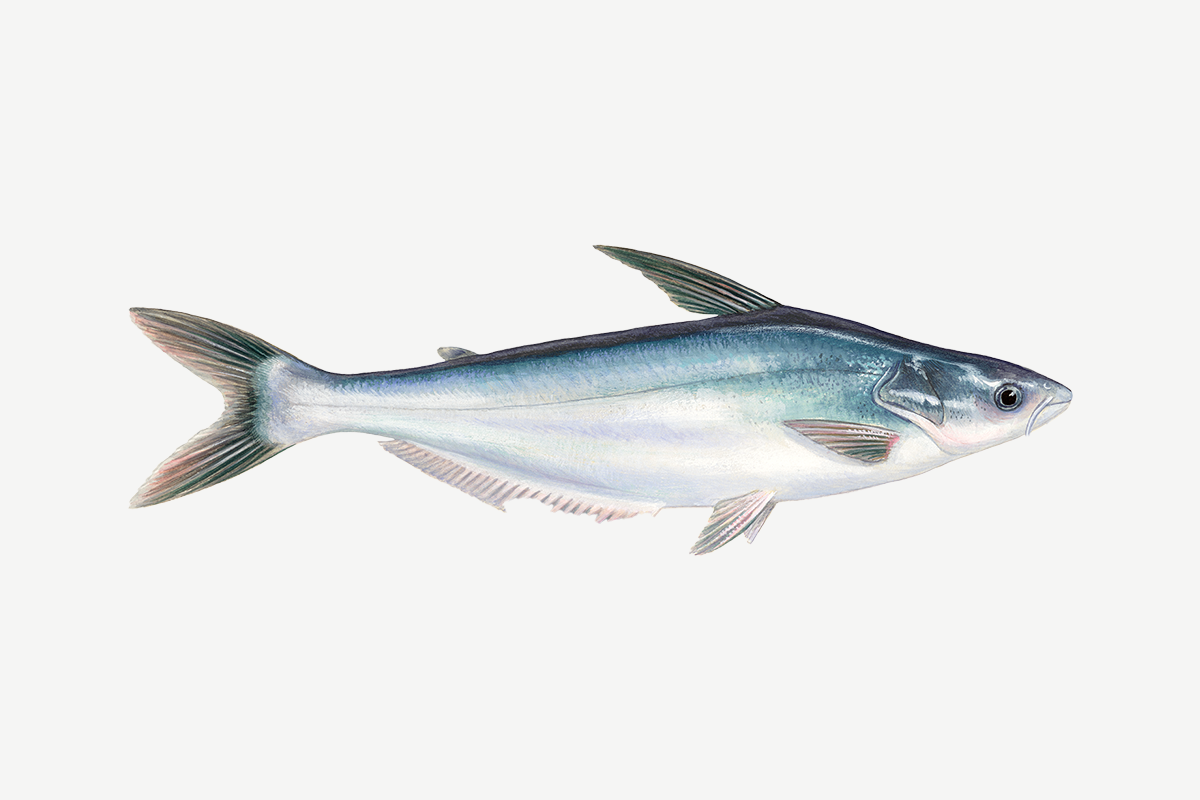
Imported pangasius
The U.S. Food and Drug Administration’s official name for pangasius is sutchi catfish, and U.S. regulations prohibit this species from being sold as simply “catfish.” Pangasius is marketed under many other names, including swai, basa, striped catfish, striped pangasius, panga, or tra.
- Avoid pangasius from Vietnam, except for the certified sources we recommend. There’s evidence that chemical use is very high, including antibiotics that are critically important to human health.

Certified pangasius
Buy pangasius certified by the following organizations:
- Aquaculture Stewardship Council (ASC)
- Global Seafood Alliance Best Aquaculture Practices (BAP)
- Naturland
View certified pangasius recommendations on SeafoodWatch.org
More about catfish recommendations
When is catfish environmentally sustainable?
U.S. farmed catfish rated green by Seafood Watch is the most environmentally sustainable because producers have minimal impact on wildlife and the environment. A small amount of blue catfish caught in the U.S. by the low-frequency electric fishery is also rated green. This source is environmentally sustainable because it specifically aims to reduce blue catfish’s range and population size without impacting other species. All U.S. farmed catfish is rated green.
Wild-caught blue catfish rated yellow means information about bycatch impacts is limited, and the catch of forage fish is a risk. When farmed catfish is rated yellow, there’s significant uncertainty about impacts on wildlife and the environment, or one issue needs substantial improvement.
Catfish rated red by Seafood Watch is not environmentally sustainable. Pangasius from Vietnam (except the certified sources we recommend) is rated red for the following reasons:
- Data on chemical use in Vietnam isn't available, but there’s evidence that it’s very high and includes antibiotics that are critically important to human health. Learn more about antibiotic use in aquaculture.
- Farm waste pollutes the waterways when it’s intentionally or accidentally released. Learn more about effluent impacts.
What are the main catfish fishing and farming methods?
Fishing methods
Blue catfish are caught with many fishing methods in Chesapeake Bay. All fishing methods, except low-frequency electric fishing, can accidentally catch or interact with other vulnerable or overexploited species.
Here’s a quick look at the fishing methods used to catch blue catfish:
- Boat seines encircle and herd catfish using a long wall of netting with a smaller mesh bag that retains the catch.
- Drift gillnets are long nets that drift with the current. Catfish are entangled when they swim into the netting.
- Low-frequency electric fishing temporarily stuns catfish in the water, allowing them to be easily harvested with hand nets without impacting other species.
- Pots are cage-like gears with one or more openings that catfish can easily enter but are difficult to exit.
- Set gillnets entangle catfish when they swim into stationary netting positioned on or near the seafloor.
- Set longlines are stationary fishing lines with baited hooks located on or near the seafloor.
- Stationary uncovered pound nets are large nets that are fixed in place with stakes or other equipment. The gear is oriented to take advantage of catfish’s movement patterns and configured to guide them to an enclosed chamber.
Farming methods
- Most catfish is farmed in ponds, which are natural or built bodies of fresh or saltwater. There are many types, from simple low-tech ponds to hyper-intensive industrial ponds. U.S. catfish farms are typically located on former agricultural lands in shallow ponds, and they can have beneficial effects by serving as artificial wetlands. The hyper-intensive ponds in Vietnam generate large volumes of farm waste.
- Some catfish is farmed in freshwater net pens, which are structures that hold fish in open water as they grow. Open systems like net pens have inherent environmental risks, such as escapes and pollution impacts.
- Catfish is also farmed in indoor recirculating tanks, but this method represents only a small portion of what’s available on the U.S. market compared to other farming systems. These systems continuously recirculate more than 90 percent of the water flow, and they’re rated green or yellow, depending on producers’ wastewater treatment practices. This farming method is also referred to as RAS (short for recirculating aquaculture systems), land-based, or tank-farmed, with variations of these terms sometimes used.
How to use this guide
Our green, yellow, and red ratings indicate environmental risk. We use our ratings and third-party certifications to make our recommendations.
Choose
- Green-rated seafood because environmental risks are low.
- Yellow-rated seafood because environmental risks are moderate.
Avoid
- Red-rated seafood because environmental risks are high, often due to overfishing, poor management, or harm to marine life and habitats.
Where to find sustainable seafood
When shopping or dining out, start by asking, “Do you sell sustainable seafood?” You may need to ask what species it is and where and how it was caught or farmed. If the business can’t answer or the label doesn’t provide this information, our Popular Seafood Guide can help you choose another ocean-friendly option.
More retailers and restaurants are sharing where their seafood comes from and how it was caught. But not all businesses have this information. When you ask questions, you help create demand for sustainable seafood and encourage businesses to offer it.
Grocery stores
We work with grocery stores to implement time-bound commitments to follow Seafood Watch recommendations. MOM’s Organic Market and PCC Community Markets follow our recommendations. Whole Foods Market sources green-rated, yellow-rated, and MSC certified wild seafood and has a proprietary standard for farmed seafood.
Restaurants
Seafood Watch’s Best Choice Restaurant Program partners commit to offering at least one green-rated, environmentally sustainable seafood dish on their menu.
We also work with major restaurant chains—including California Fish Grill and The Cheesecake Factory—that are implementing their sustainable seafood commitments.
Meal kits
Hello Fresh only sends its customers green-rated, yellow-rated, or certified seafood. Other meal kit services may offer sustainable seafood. If they don't, we encourage you to ask them to.
Super Green List
U.S. farmed catfish is on the Super Green List
U.S. farmed catfish is on the Super Green List, a top-ten selection of seafood that earns top marks from…
Sustainable seafood recipe
Southern fried catfish
Fried catfish is a southern classic, best cooked in a cast-iron pan and served with your favorite sides.