
Sustainable pollock buying guide
If the fish is shaped into a square, battered, fried, and served on a bun, there’s a good chance it’s pollock or walleye pollock. Pollock is caught in the Atlantic, and walleye pollock is caught in the Pacific, and the latter can only be labeled Alaska pollock when caught in Alaska. Its mild flavor and light, flaky texture make Alaska pollock the fifth most popular seafood in the United States. However, some pollock caught in the Atlantic is considered unsustainable by Seafood Watch standards, so it’s important to know what to buy and what to avoid.
Quick buying guide
- Buy Alaska pollock.
- Buy Marine Stewardship Council (MSC) certified pollock, except from Russia.
- Buy other U.S. and Canadian sources of pollock if you confirm it’s yellow-rated (scroll down for more information).
- Avoid all other pollock (scroll down for more information).
What to buy or avoid?
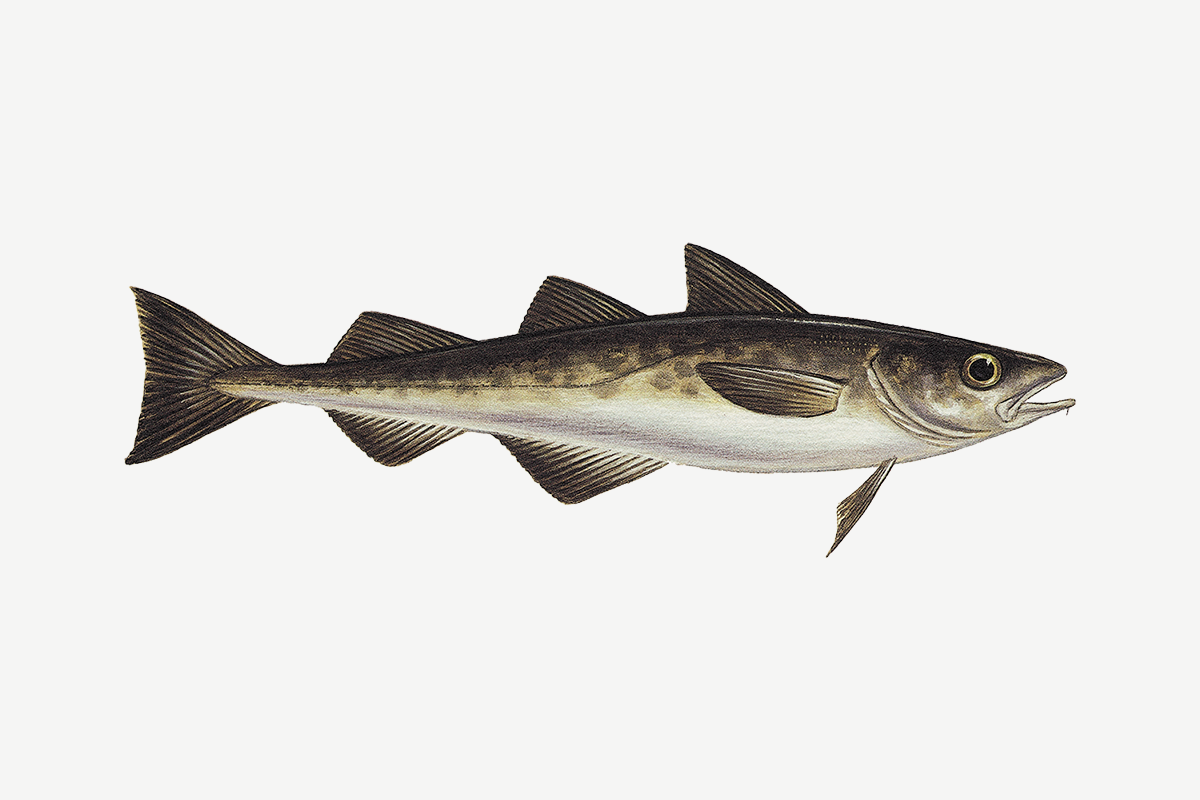
© Scandposters
Fresh, frozen, or prepared pollock
- Buy the following pollock only if you can confirm it’s yellow-rated. Buying from businesses that provide fishery source information and commit to selling sustainable seafood can increase the likelihood that you’re purchasing yellow-rated pollock.
- U.S. Georges Bank and Gulf of Maine: Yellow-rated when caught with bottom trawls or pole-&-lines; red-rated with set gillnets.
- Canada Atlantic: Yellow-rated when caught with set longlines or set gillnets; red-rated with bottom trawls
- Avoid pollock caught with set gillnets in the U.S. Georges Bank or U.S. Gulf of Maine. Pollock is harvested within the endangered North Atlantic right whale’s range, and current management measures do not go far enough to mitigate the set gillnet entanglement risks to whales and promote their recovery.
- Pollock caught with bottom trawls in Canada’s Atlantic due to impacts on severely depleted Atlantic cod and bycatch of other at-risk species.
- Walleye pollock from British Columbia unless confirmed yellow-rated (87% of catch is from red-rated fisheries).
- Avoid all other pollock.

Certified pollock
- Buy Marine Stewardship Council (MSC) certified pollock, except from Russia. Most Alaska pollock is MSC certified.
More about our pollock recommendations
When is pollock environmentally sustainable?
Pollock rated green by Seafood Watch is the most environmentally sustainable because it comes from a healthy population, and the well-managed fishery has minimal to no impact on other marine life and habitats. Currently, no pollock fisheries are rated green.
Pollock rated yellow means management of the fishery is considered moderately effective, but bycatch impacts are a major concern, or it’s caught with Atlantic cod, which is depleted in the U.S. and listed as endangered in Canada.
Pollock rated red by Seafood Watch is not environmentally sustainable because the stock is being overfished, bycatch or entanglement of other marine life is a significant risk, and/or fishery management is considered ineffective.
What are the main pollock fishing methods?
Seafood Watch’s recommendations cover pollock caught in the Atlantic Ocean with bottom trawls, set longlines, set gillnets, and handlines and hand-operated pole-&-lines. Bottom trawls and set longlines are more prone to accidentally capturing other marine life. The U.S. Georges Bank and U.S. Gulf of Maine set gillnet fisheries operate within the endangered North Atlantic right whale’s range, and there are significant concerns about entanglement risks to whales. Handlines and hand-operated pole-&-lines tend to have fewer bycatch impacts, but pollock are caught with overexploited Atlantic cod.
Here’s a quick look at these fishing methods:
- Bottom trawls herd pollock into a cone-shaped net as they’re dragged along the seafloor.
- Set gillnets entangle pollock when they swim into stationary netting positioned on or near the seafloor.
- Set longlines are stationary fishing lines with baited hooks positioned on or near the seafloor.
- Handlines and hand-operated pole-&-lines catch pollock with one or more fishing lines with baited hooks. This fishing method is also described as pole-&-lines.
How to use this guide
Our green, yellow, and red ratings indicate environmental risk. We use our ratings and third-party certifications to make our recommendations.
Choose
- Green-rated seafood because environmental risks are low.
- Yellow-rated seafood because environmental risks are moderate.
Avoid
- Red-rated seafood because environmental risks are high, often due to overfishing, poor management, or harm to marine life and habitats.
Where to find sustainable seafood
When shopping or dining out, start by asking, “Do you sell sustainable seafood?” You may need to ask what species it is and where and how it was caught or farmed. If the business can’t answer or the label doesn’t provide this information, our Popular Seafood Guide can help you choose another ocean-friendly option.
More retailers and restaurants are sharing where their seafood comes from and how it was caught. But not all businesses have this information. When you ask questions, you help create demand for sustainable seafood and encourage businesses to offer it.
Grocery stores
We work with grocery stores to implement time-bound commitments to follow Seafood Watch recommendations. MOM’s Organic Market and PCC Community Markets follow our recommendations. Whole Foods Market sources green-rated, yellow-rated, and MSC certified wild seafood and has a proprietary standard for farmed seafood.
Restaurants
Seafood Watch’s Best Choice Restaurant Program partners commit to offering at least one green-rated, environmentally sustainable seafood dish on their menu.
We also work with major restaurant chains—including California Fish Grill and The Cheesecake Factory—that are implementing their sustainable seafood commitments.
Meal kits
Hello Fresh only sends its customers green-rated, yellow-rated, or certified seafood. Other meal kit services may offer sustainable seafood. If they don't, we encourage you to ask them to.
Keep exploring
Change & impact
Sustainable catfish & pangasius buying guide
Catfish and pangasius—use this guide to choose wisely.
View this buying guide – Sustainable catfish & pangasius buying guide
Change & impact
Sustainable clams, mussels, oysters & scallops buying guide
Clams, mussels, oysters, and scallops are among the most sustainable seafood choices.
View this buying guide – Sustainable clams, mussels, oysters & scallops buying guide
Change & impact
Sustainable cod & haddock buying guide
Know which cod and haddock to buy and avoid the next time you order fish and chips.
View this buying guide – Sustainable cod & haddock buying guide
Change & impact
Sustainable crab buying guide
Crab can be tricky, but this guide makes it easy to know what to buy and avoid.
View this buying guide – Sustainable crab buying guide