

Cephalopods
Meet octopus, squid, and cuttlefish—clever, shape-shifting ocean animals with remarkable abilities.
What's a cephalopod?
A cephalopod is an animal belonging to the group Cephalopoda, containing octopus, squid, cuttlefish, nautilus, and kin. The word “cephalopod” is derived from Greek and means “head foot,” which perfectly describes animals that have eyes just above their many limbs. These boneless creatures can be found exclusively in marine habitats, making them the ideal inspiration for ocean lore around the world. Cephalopods have fascinated generations of people with their elusive nature and captivating appearance—enticing us ever closer to explore the secrets of the ocean’s depths.
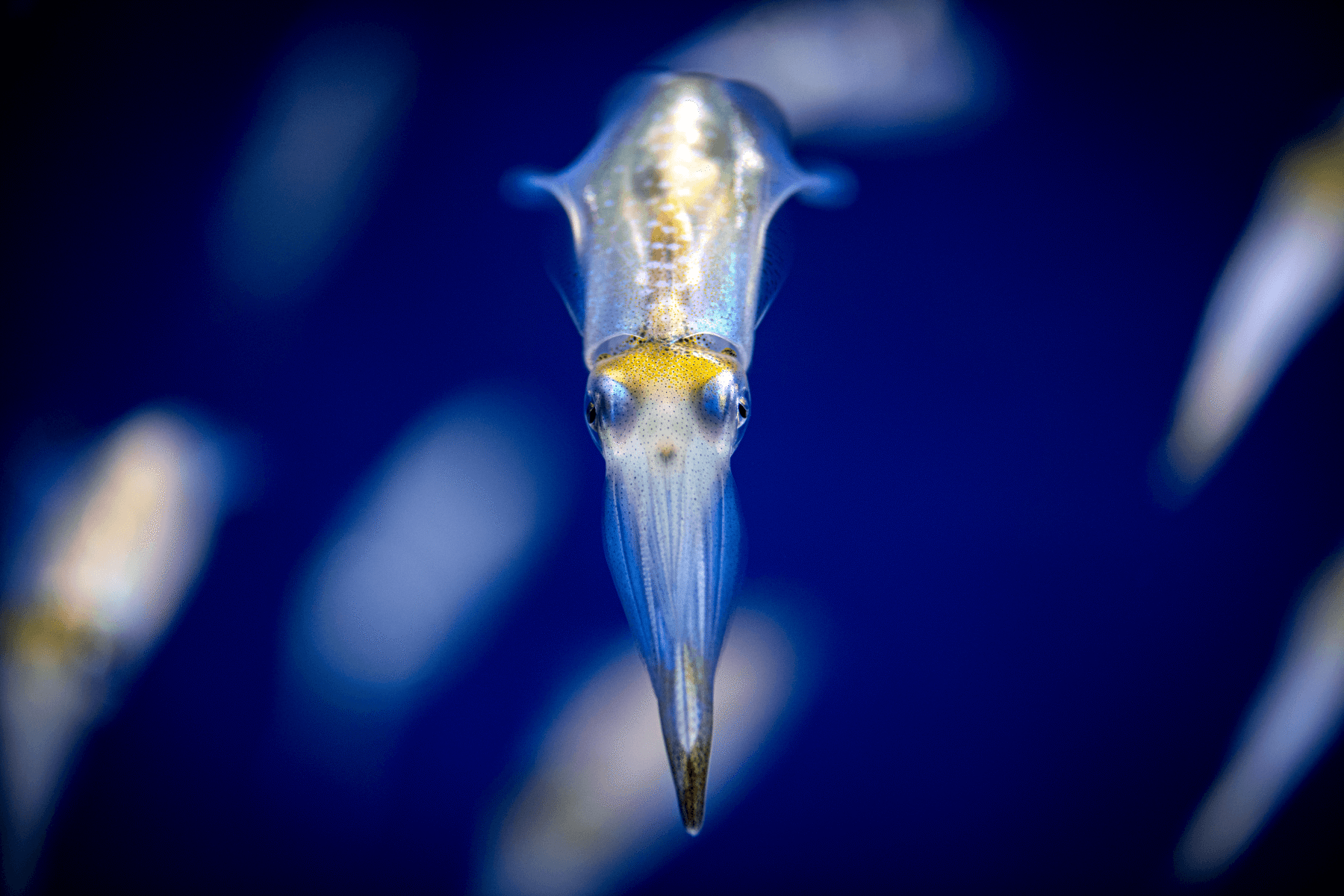
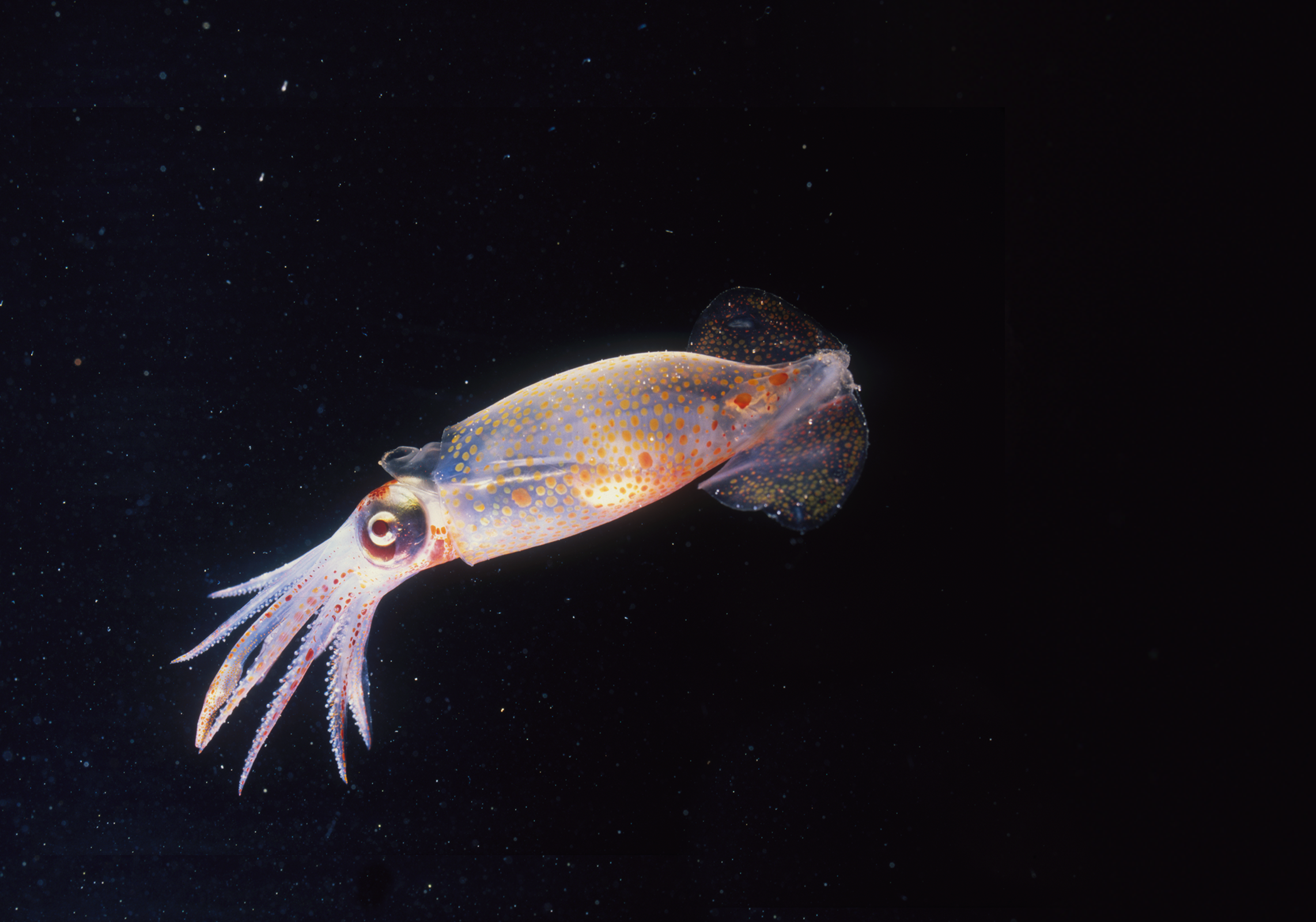
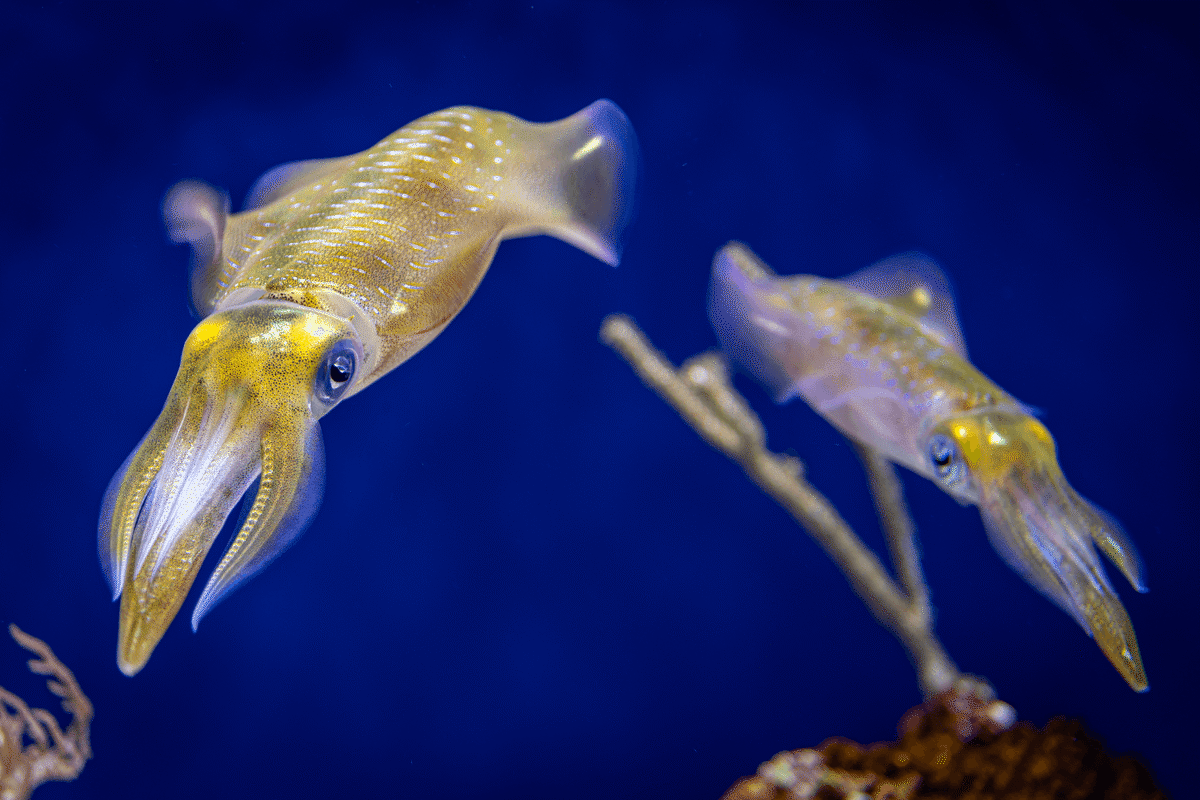
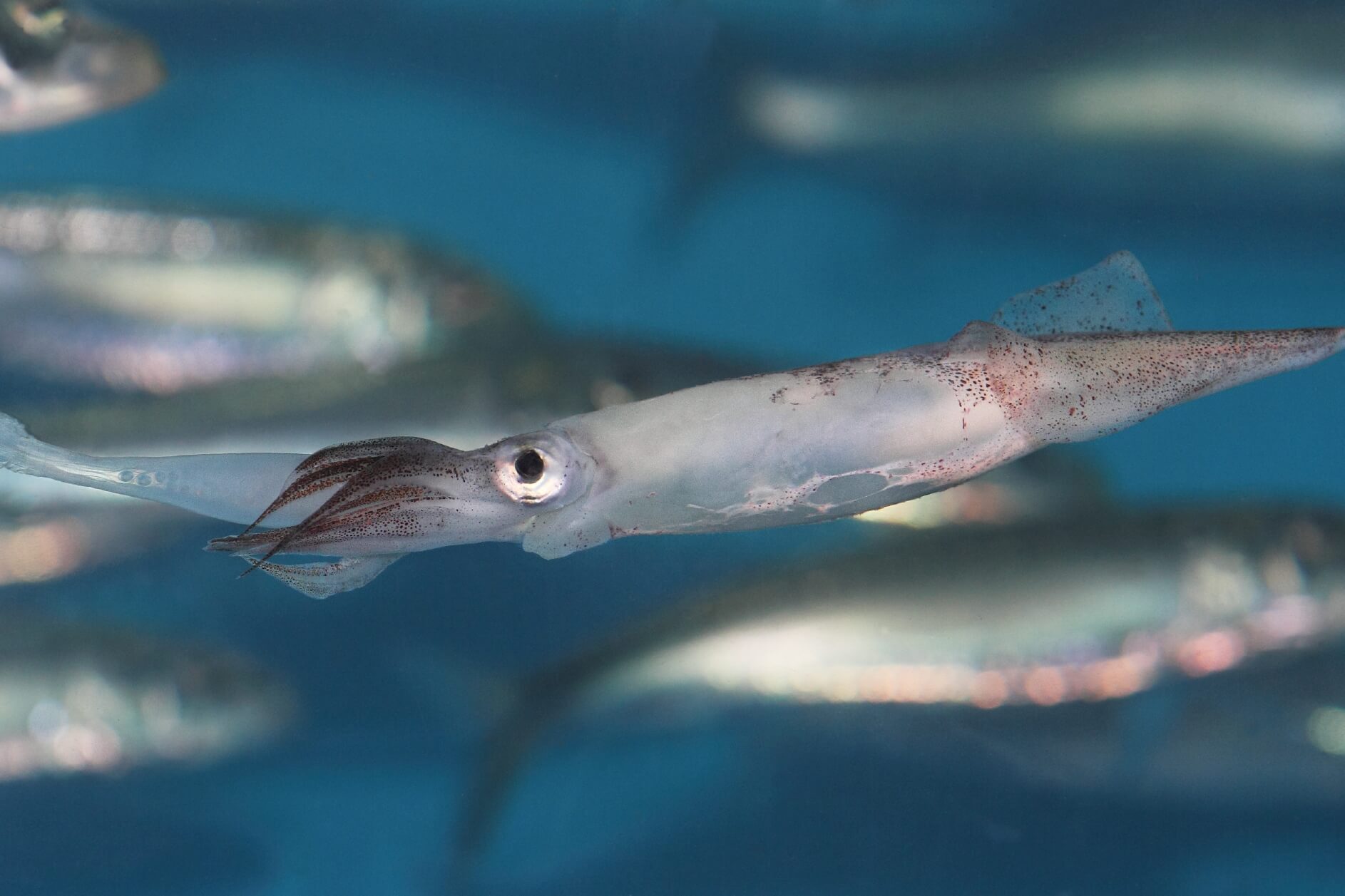
Bigfin reef squid
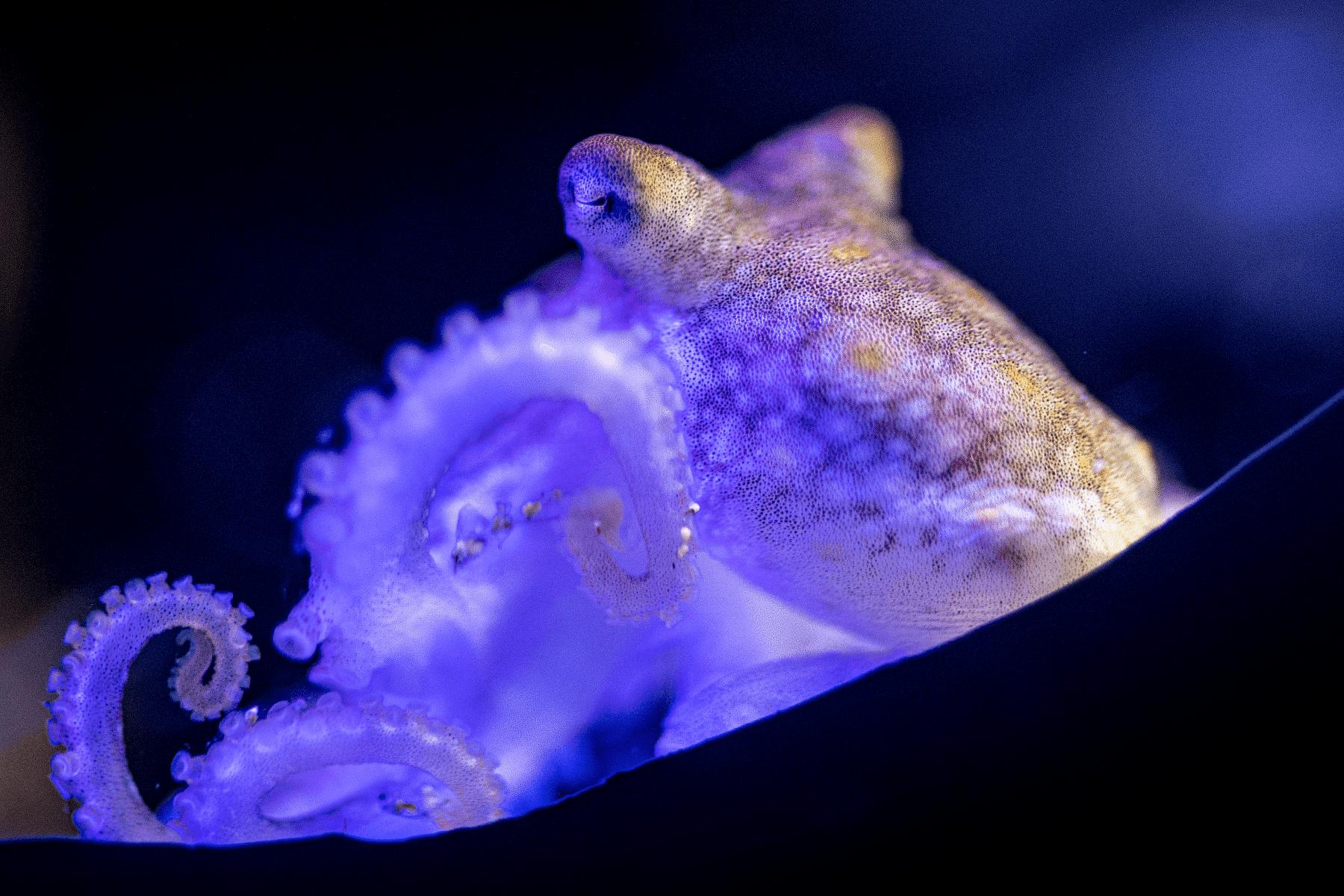
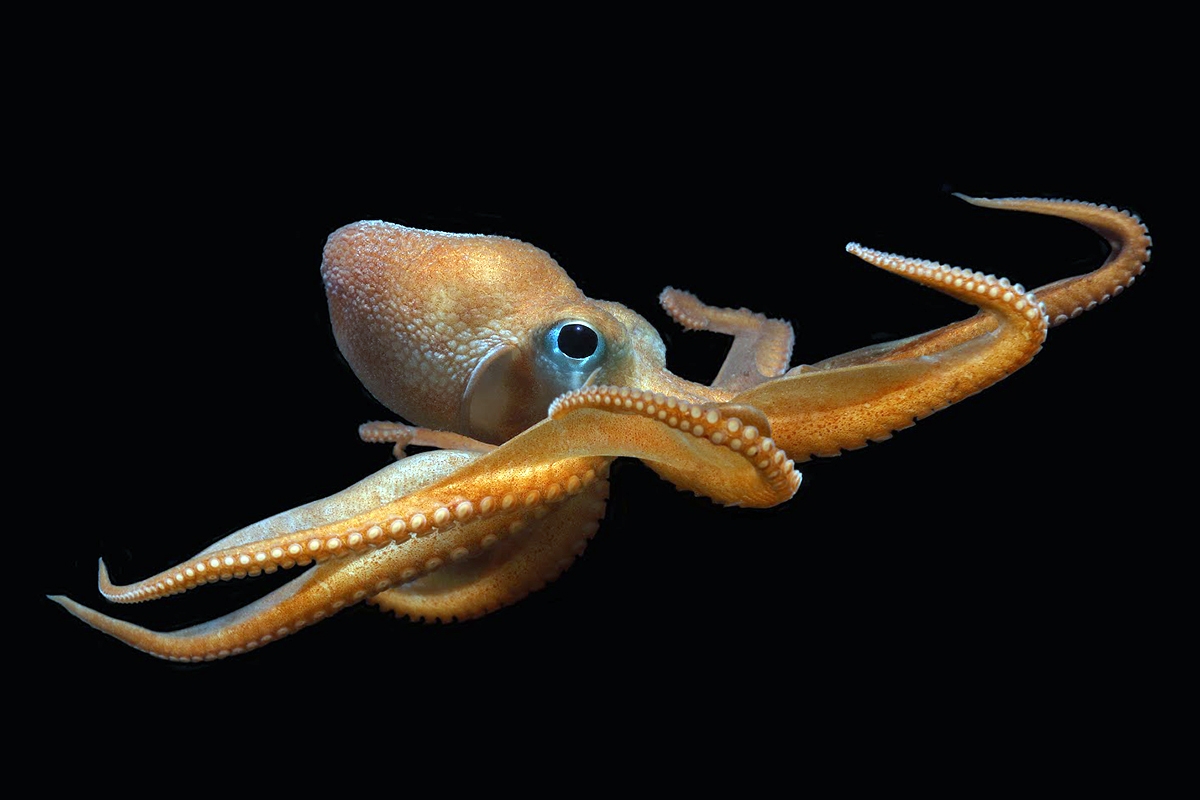
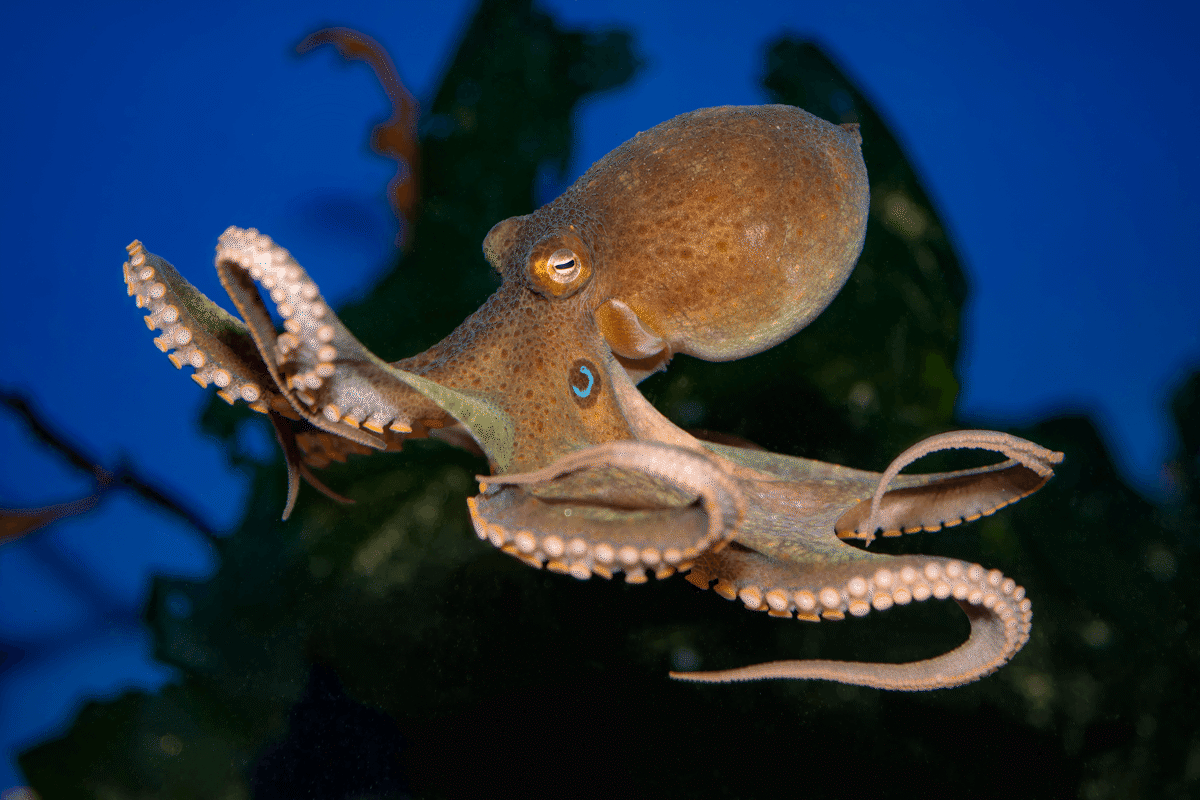
Two-spot octopus
Cephalopod anatomy
If you were to rebuild yourself as an octopus, you’d take your torso, stick it atop your head, and then arrange your limbs around your face. Perhaps not the most flattering look for a human, but it works perfectly for an octopus.
Mantle
The bag-like sac that sits above a cephalopod’s eyes doesn’t contain the brain. It’s called the mantle and it holds the animal's internal organs, including its three (!) hearts, gills, reproductive organs, ink sac, and more.
Donut brain
The brain is located behind the eyes and is shaped like a donut, wrapped around the esophagus. That may be hard to wrap your brain around, but a cephalopod brain is indeed shaped like a ring, and when the animal consumes food, the brain is slightly stretched as food moves through the esophagus. You could say that octopus, squid, and cuttlefish always have food on the brain.
Limbs
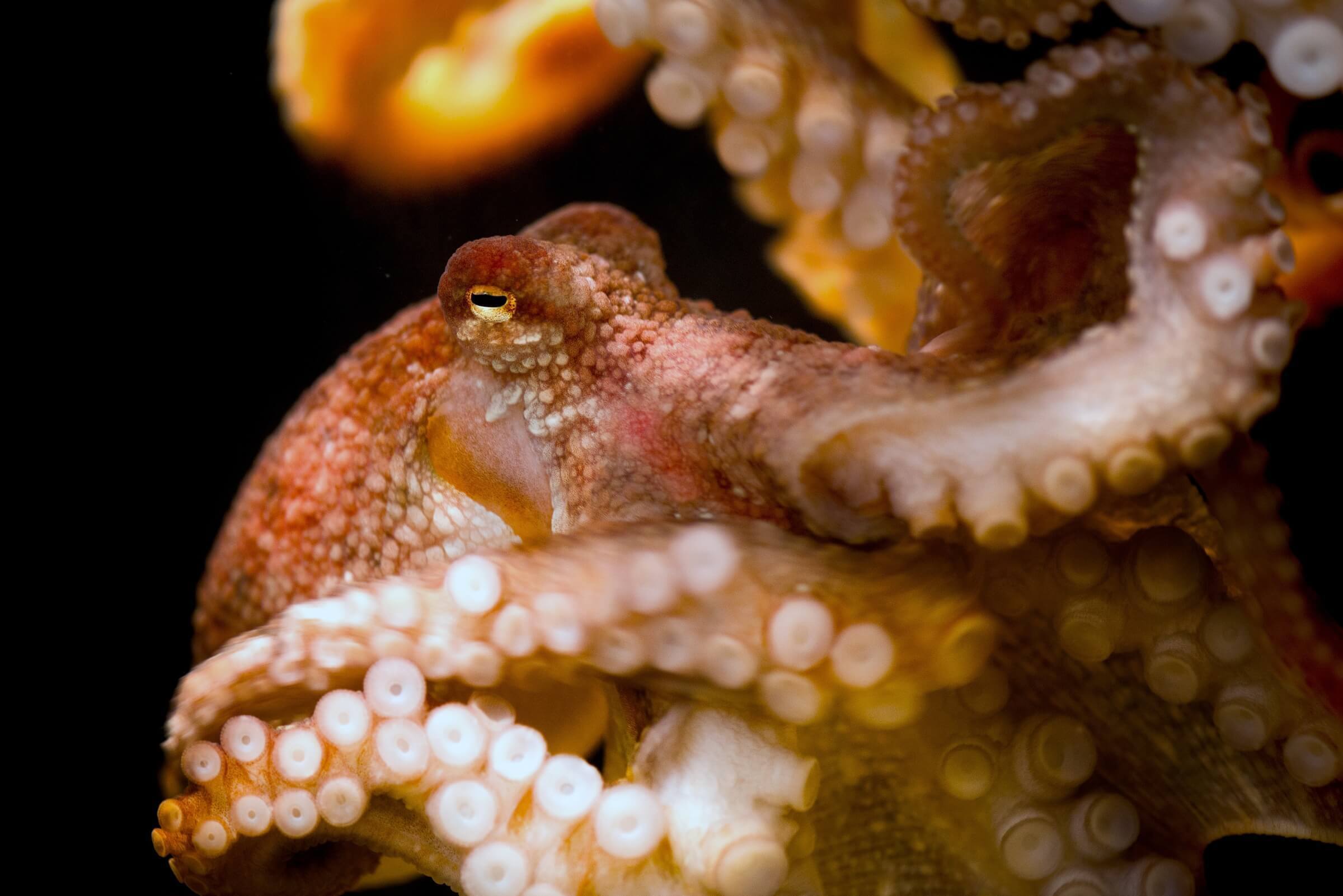
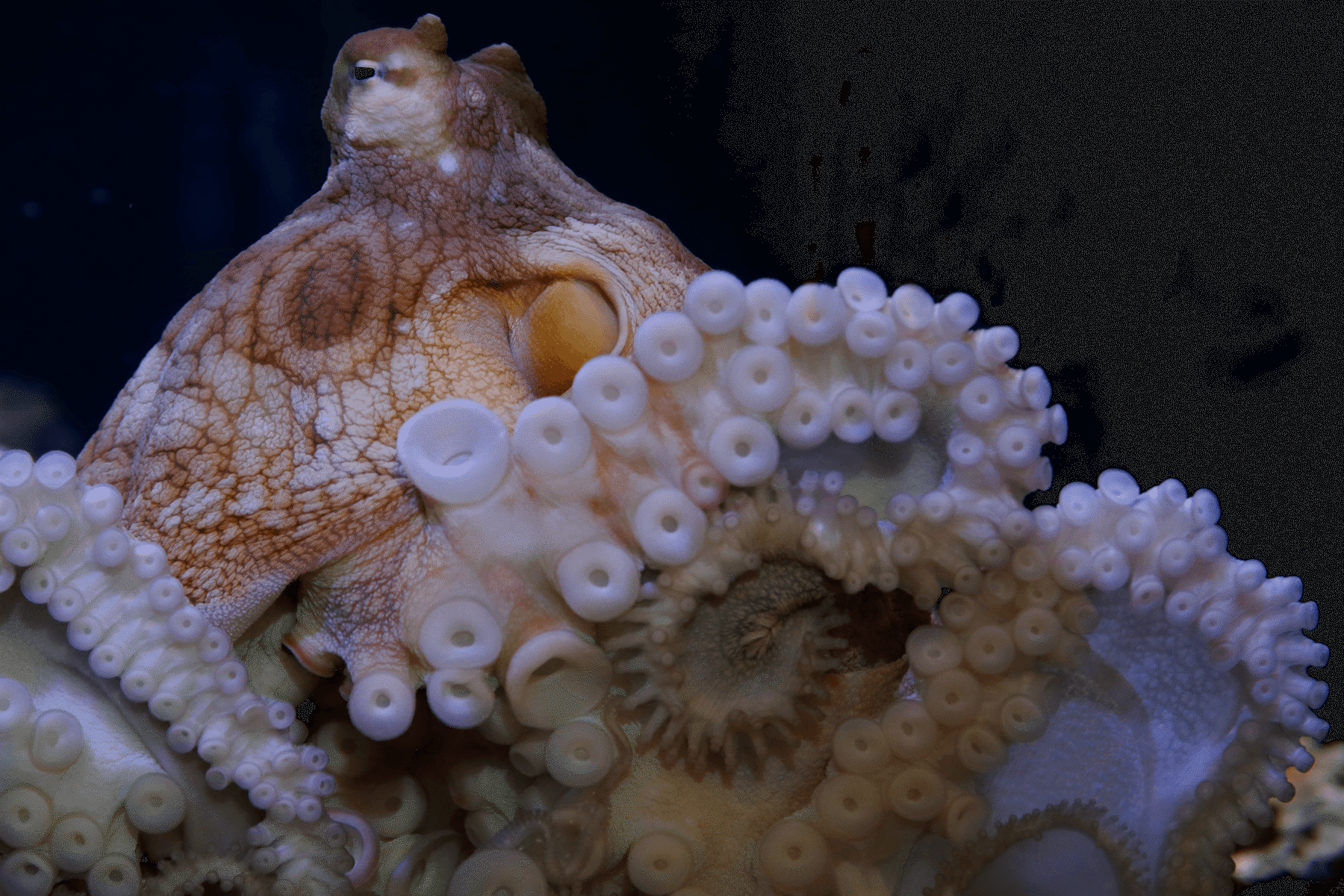
Typically, arms, tentacles, or a combination of the two will extend from the cephalopod’s head. The arms are distinct from tentacles in that they’re completely lined with suction cups. Tentacles, on the other hand (or arm?), sometimes terminate in rounded clubs with suction cups and sometimes with hooks. Cephalopods use tentacles to grab passing prey.
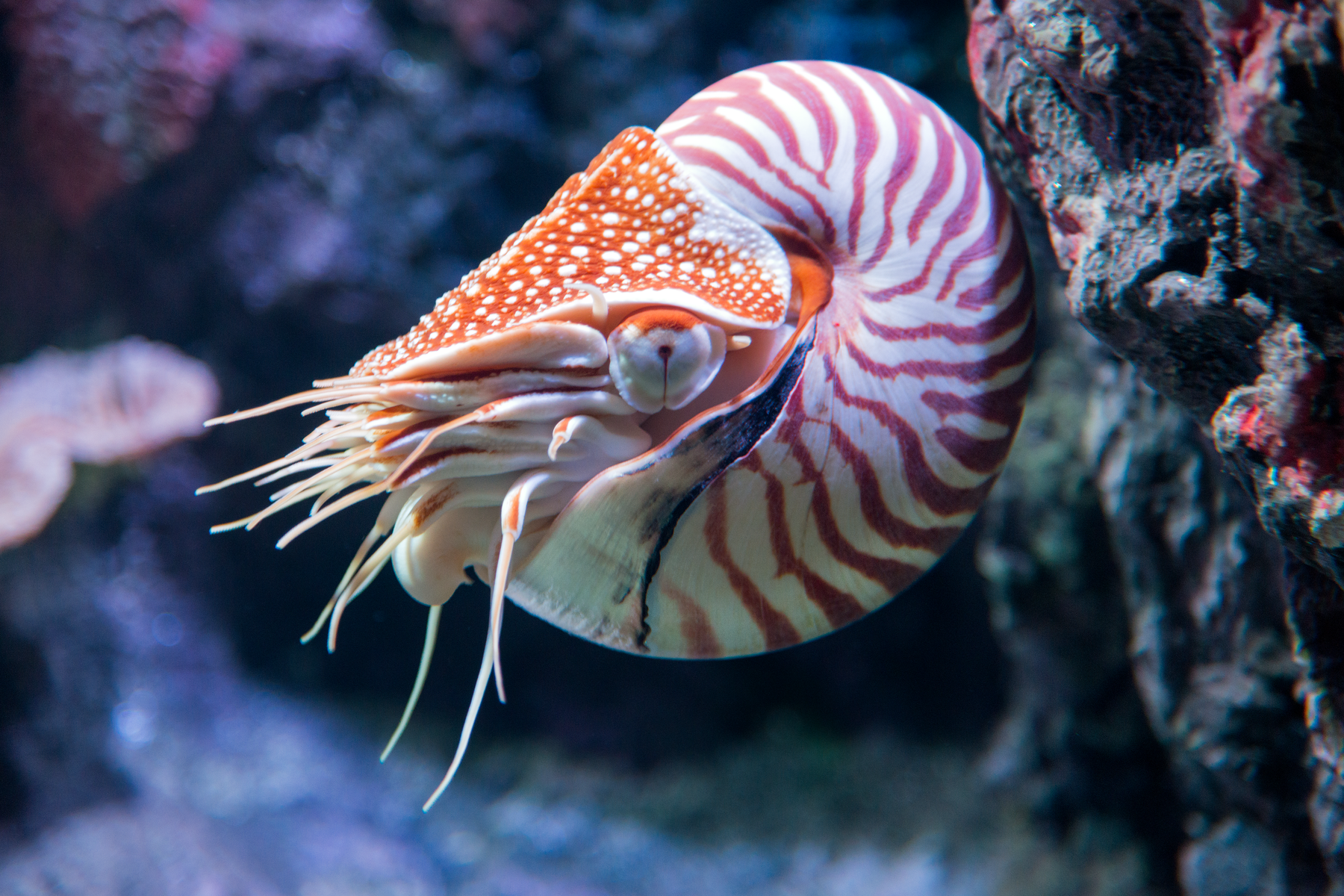
So which cephalopods have which kinds of limbs? An octopus has eight arms and no tentacles. A squid or cuttlefish will have eight arms and two tentacles. A nautilus, being very unique, has many sticky tentacles, but no arms.
Beak
At the center of all these limbs is a bird-like beak used for piercing and consuming food. It features a tongue-like belt of teeth called the radula. The radula is used to rasp food items and break them into smaller pieces—very helpful when your food passes right through the center of your brain.
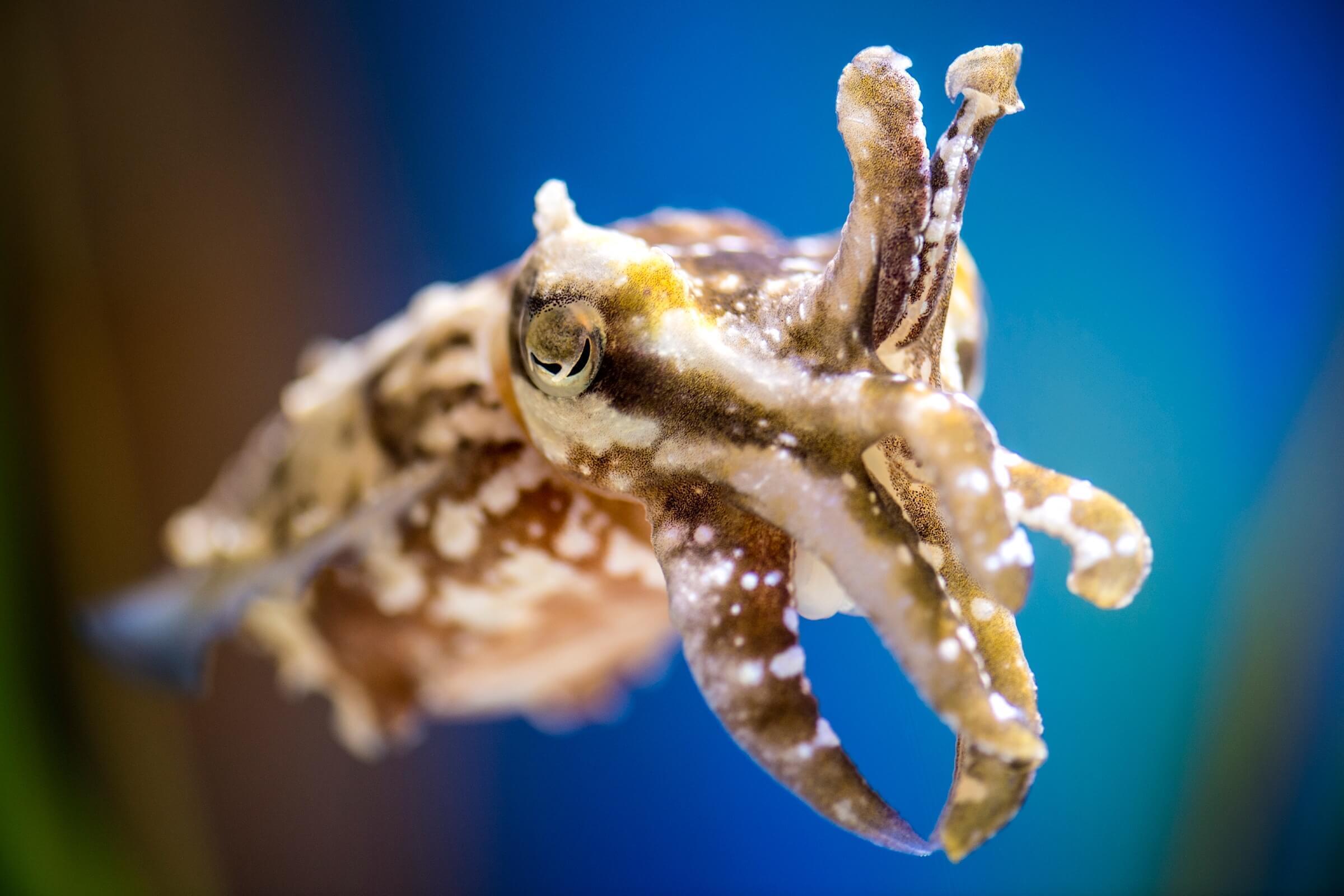
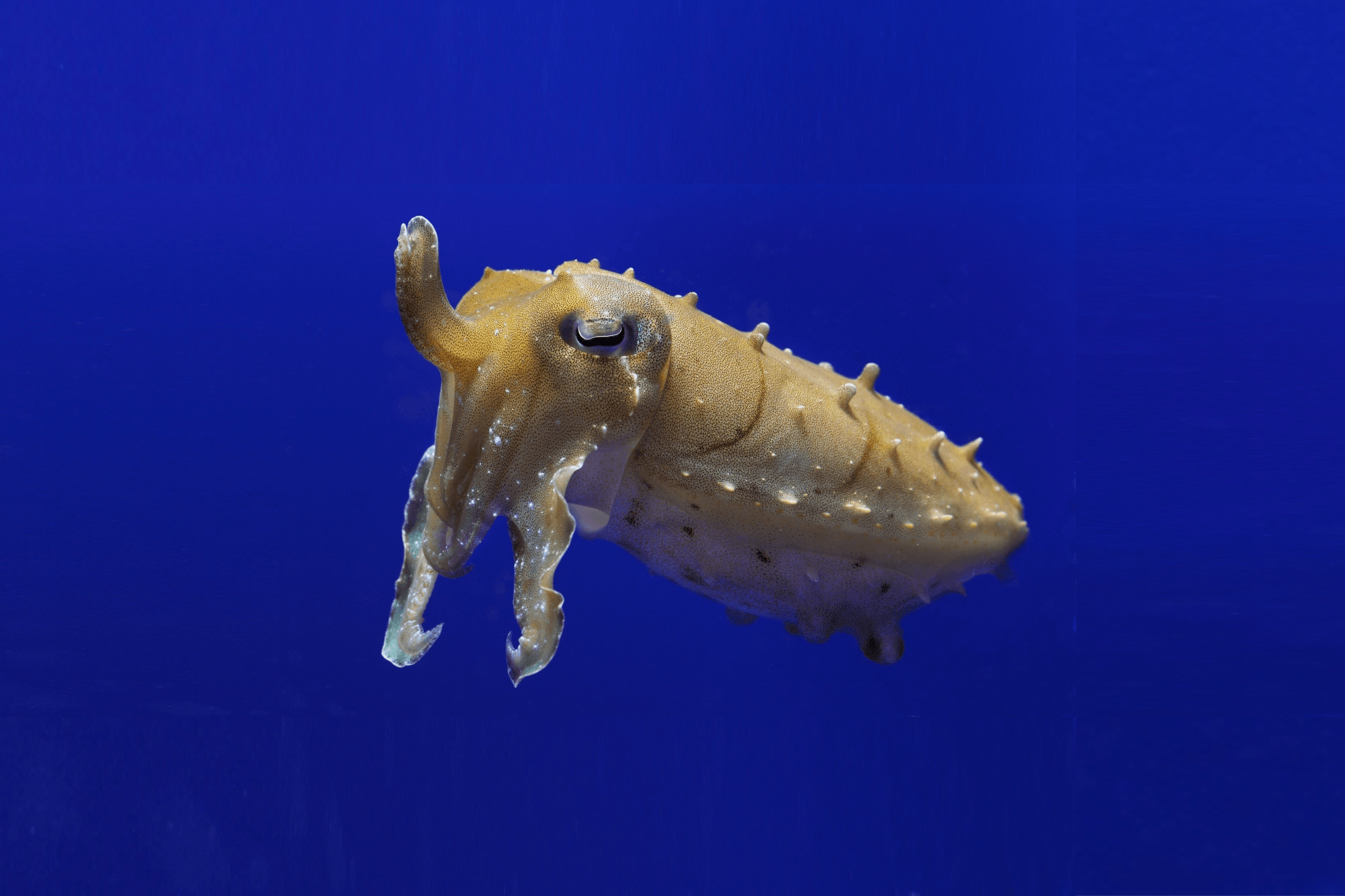
A stumpy cuttlefish displays its eight arms, its two tentacles tucked away for grabbing prey later.
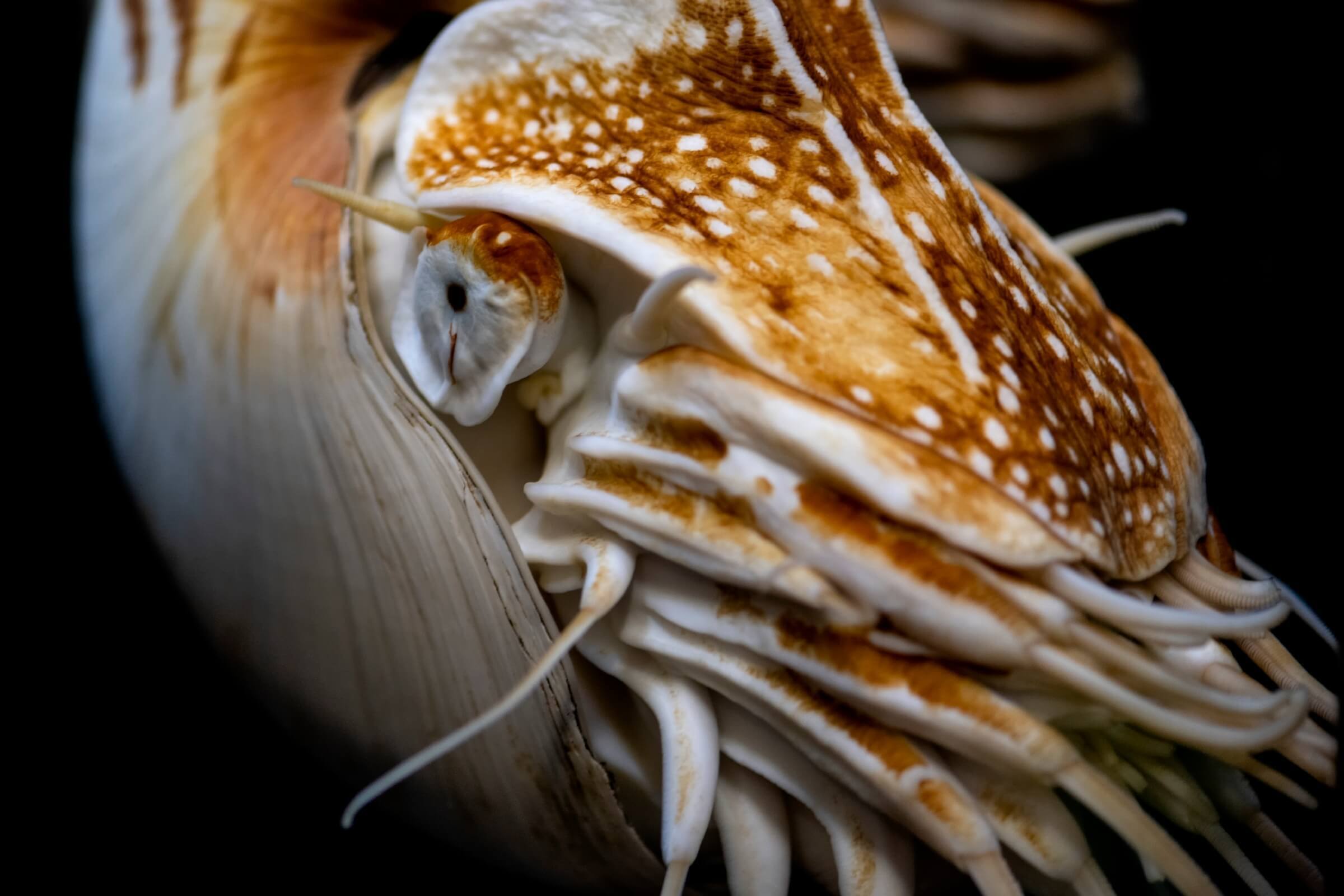
Chambered nautilus have more than 90 sticky tentacles that it uses to capture fish, shrimp, crab, or dead animals.
Masters of disguise
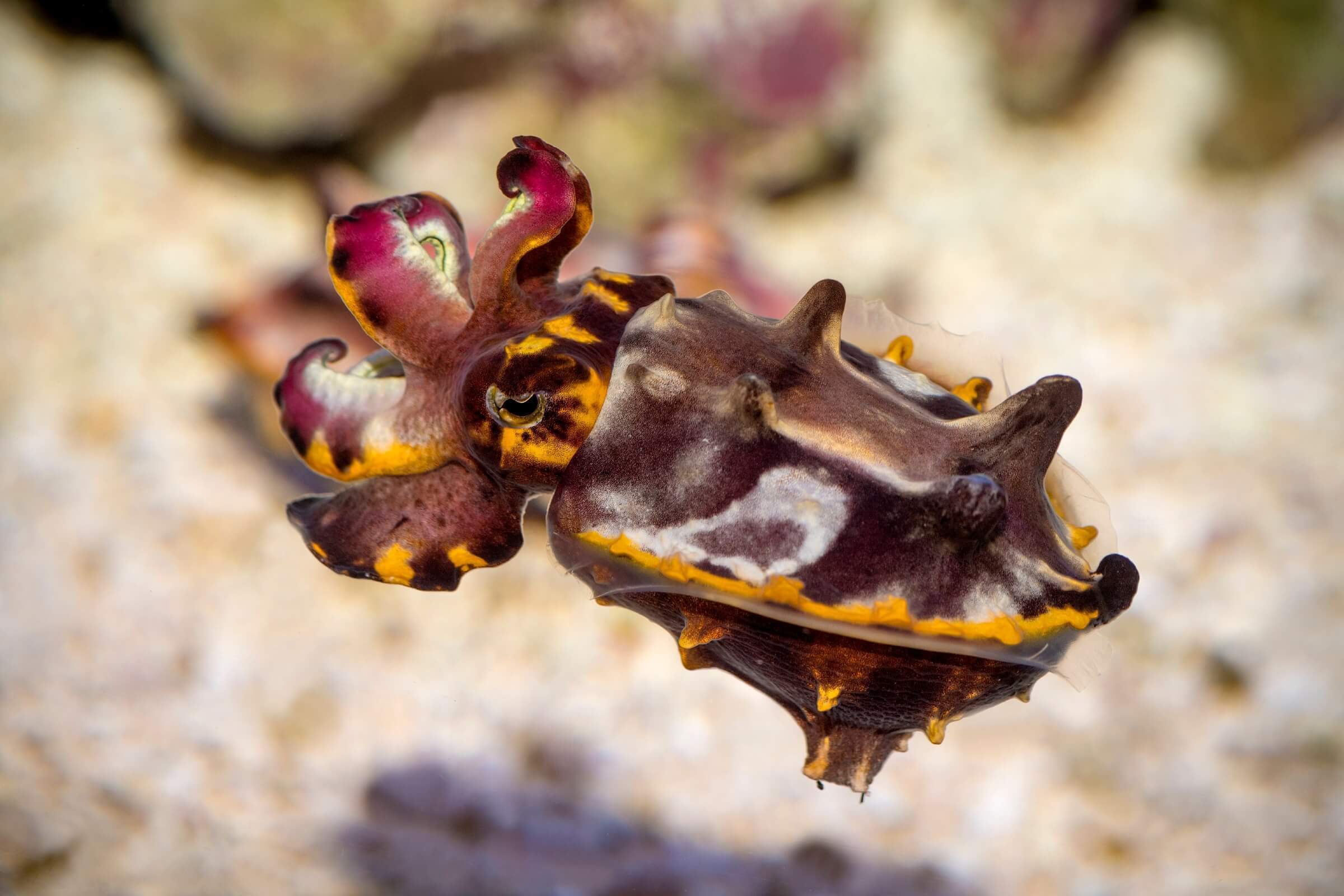
The skin of an octopus, squid, or cuttlefish seems almost to pulse with color and light. It appears electric as colors and patterns dance across it. In truth, these animals can create unique displays or disappear entirely thanks to the presence of chromatophores. Chromatophores are tiny sacs of pigment that can expand and contract in response to a series of environmental cues. It has been observed that cephalopods don’t willfully control their color-changing ability. Instead, the skin itself acts almost like an eye, taking in cues that elicit a colorful response. Cephalopods are believed to be colorblind, which makes their ability to vanish into the background even more fascinating.
The ability to change colors for camouflage is crucial for protection from predation. If you were an invertebrate, an animal without a backbone, you’d want to make your soft, squishy, tasty body could disappear from the eyes of hungry predators. Chromatophores are responsible both for disguise and for a showy display. Why would you want to advertise your presence? When mates or rivals are around, flashing dazzling displays of warning or romance are particularly useful.
Whether for display or camouflage, the ability to rapidly change color is another captivating feature of many cephalopods.
Not all cephalopods camouflage
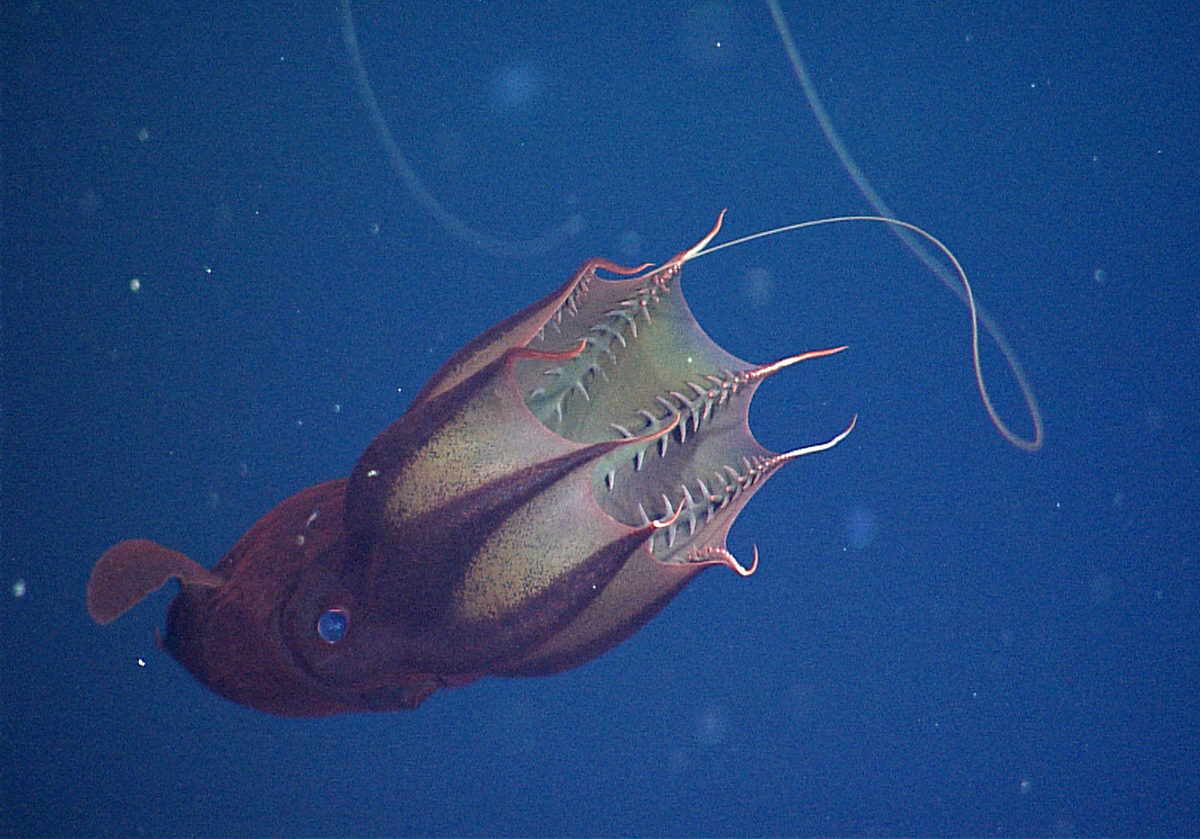
Camouflage is not the only way cephalopods deflect predators. The nautilus, for example, has no chromatophores and relies on a hard shell for protection. In the depths of the sea, the vampire squid performs a defensive “pineapple pose” and hides itself within its webbed arms.
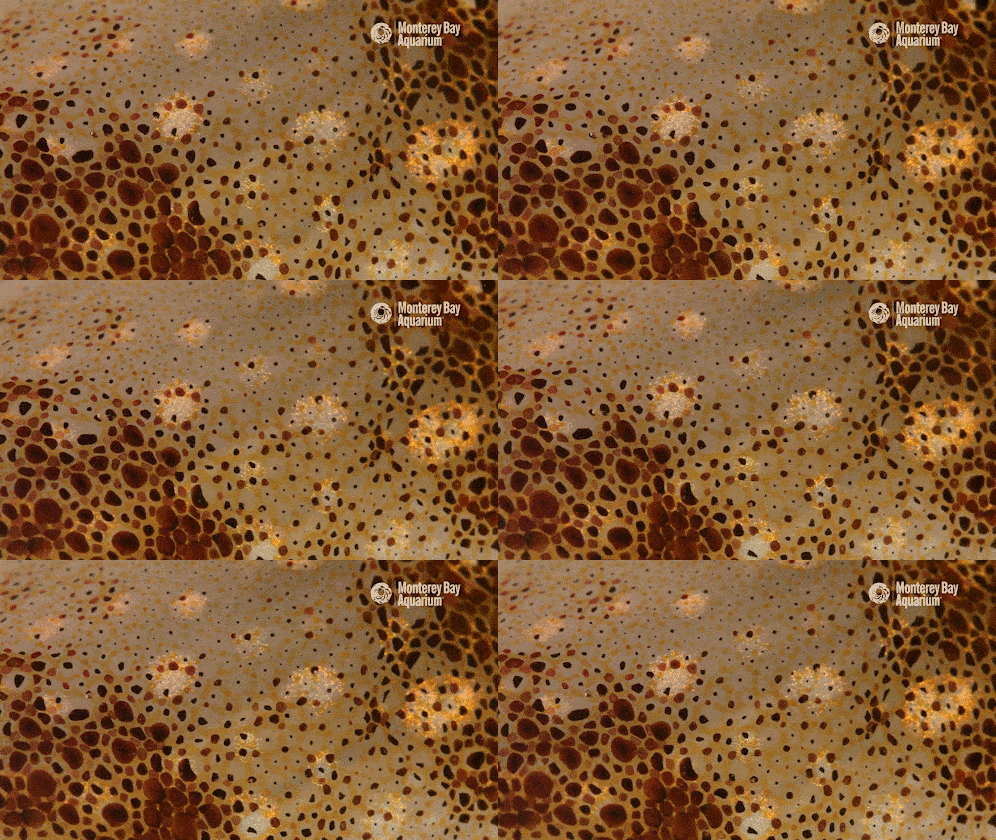
Under the lens of a microscope, you can see the chromatophores in a squid's skin pulsing. These pigment-containing cells are responsible for a cephalopod's ability to camouflage.
A shell of a family tree
The phylum Mollusca to which cephalopods belong is filled with creatures that have distinct and lovely shells, from your average garden snail to the iridescent abalone. Yes, cephalopods are related to chitons, clams, mussels, and other shelled critters! But not all mollusks have shells. Over time, many cephalopods evolved to lose or reduce their shells, replacing them with other defense mechanisms. These adaptations allow them to quickly change color, jet-propel themselves away from danger, or disappear in a cloud of ink. Cuttlefish have a hard internal shell-like structure called a cuttlebone and squid have a more flexible internal structure called a pen, both of which are used for internal support. Octopuses have no shell-like structure at all. Being without a shell has its advantages, though, when you are squeezing yourself into an inaccessible crevice to escape a predator.
While cephalopods may look nothing like their shelled relatives, they do share several features in common:
- All mollusks have a mantle, which encloses the internal organs and produces the shell.
- The radula, the rasping tongue that scrapes food into smaller pieces, can be found inside a cephalopod’s beak and in the mouths of snails and other snail relatives.
- Whether for digging down into the sand and disappearing like a clam or slowly creeping along the surface like a snail, all mollusks have a foot. A cephalopod’s “foot” is modified into arms and tentacles.
Senses
Cephalopods use their suction cups to grab onto prey. The suction cups are also key to helping them explore their world because they’re responsible for the senses of taste and smell. Imagine how different our world would be if we tasted everything our hands touched! An octopus relies on its tactile smelling and tasting ability to explore the environment and seek out prey.
Diet and feeding strategies
The feeding styles and diets of cephalopods are as varied as their lifestyles. Predators will actively hunt fish, crustaceans, and sometimes other cephalopods, but this isn’t the only way to find food. Some are scavengers and even detritivores (that consume dead organic material).
A squid uses its tentacles to snatch a passing fish. A cuttlefish creeping along carefully on two of its arms would potentially whip out its tentacles to catch a shrimp it had hypnotized with a flashing display of chromatophores. An octopus could plunge an arm into a crevice, taste a crab with its suction cups, and extract the delicious crustacean for dinner. A nautilus on the other hand can use its sticky tentacles to scavenge a dead fish, and a vampire squid uses a long sticky filament to catch marine snow (organic material drifting down from the surface).
Living legends
Cephalopods with all their amazing adaptations ruled the seas as top predators for millions of years before the arrival of bony fishes. The earliest cephalopod fossil dates back 515 million years!!
Types of cephalopods
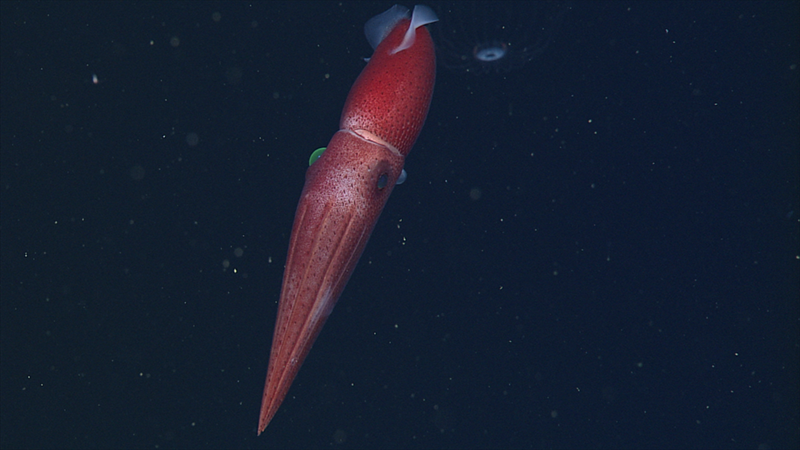
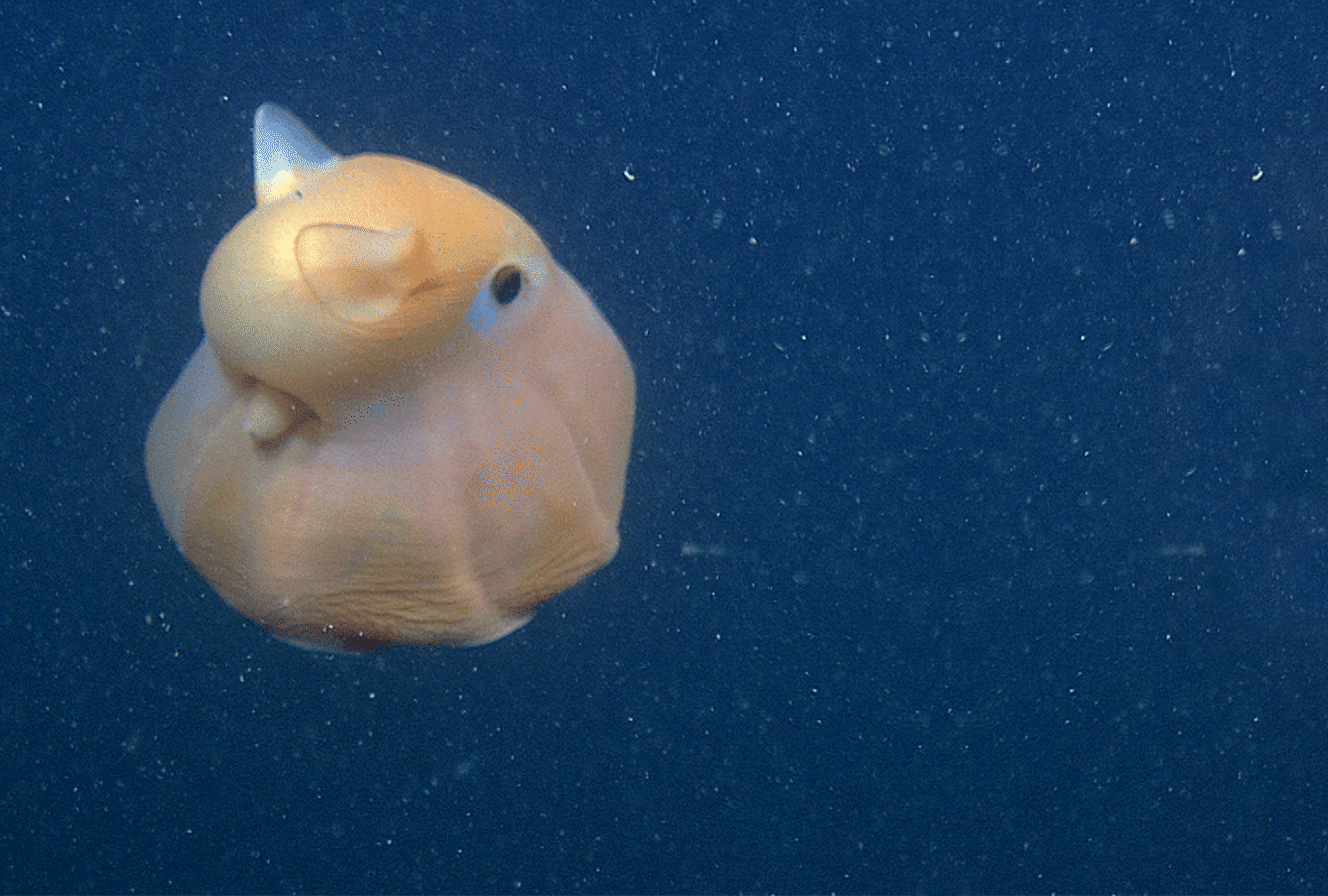
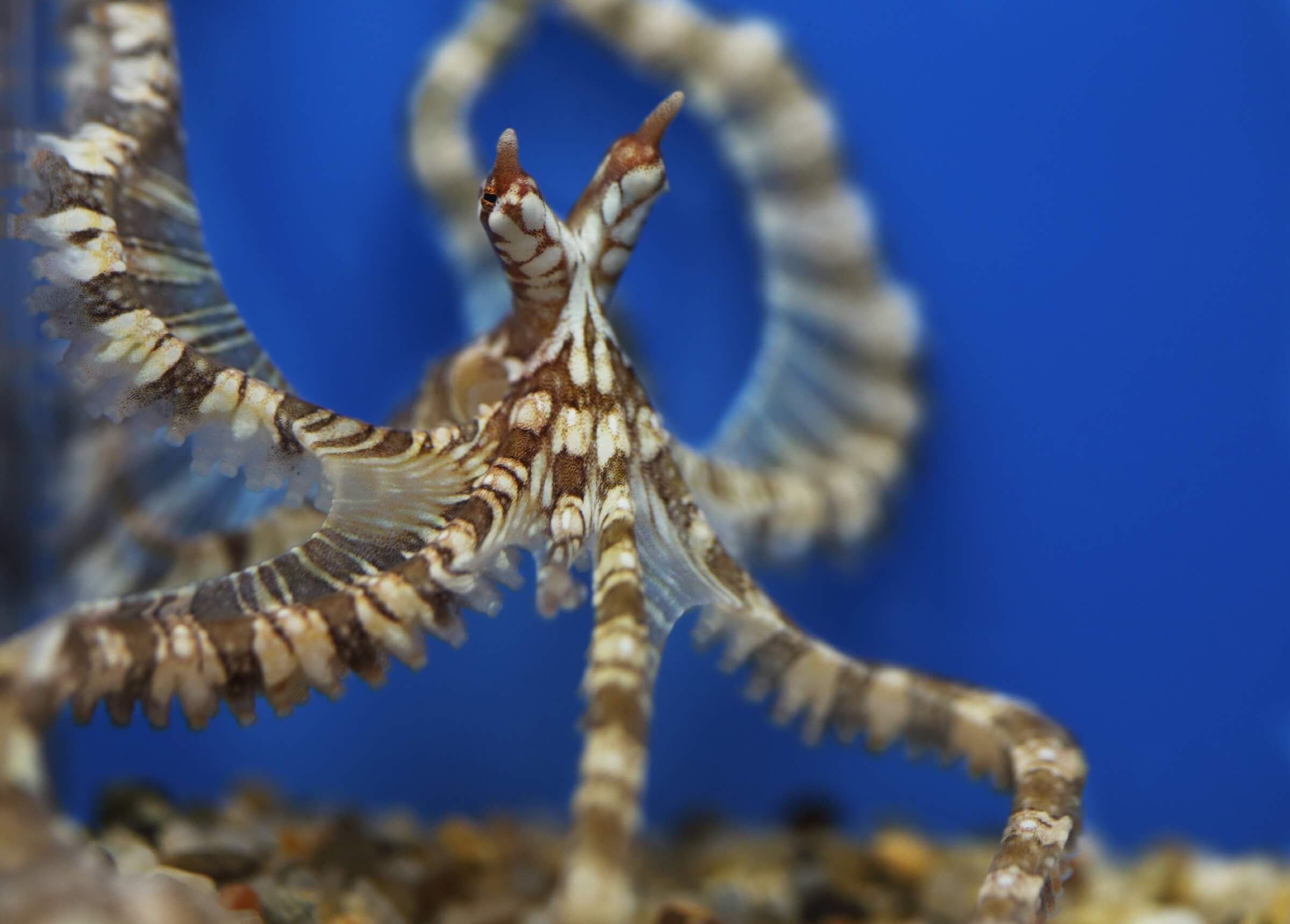
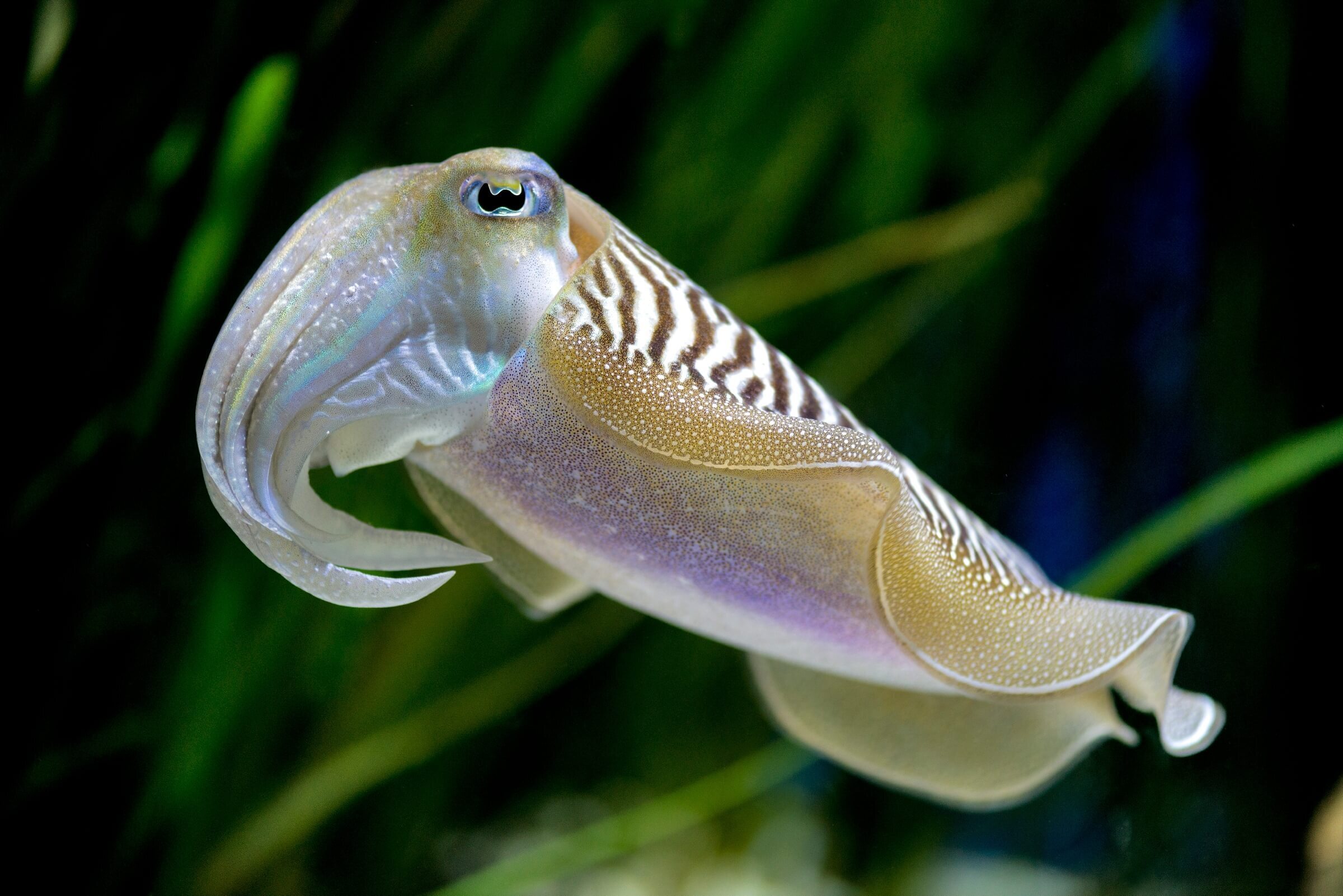
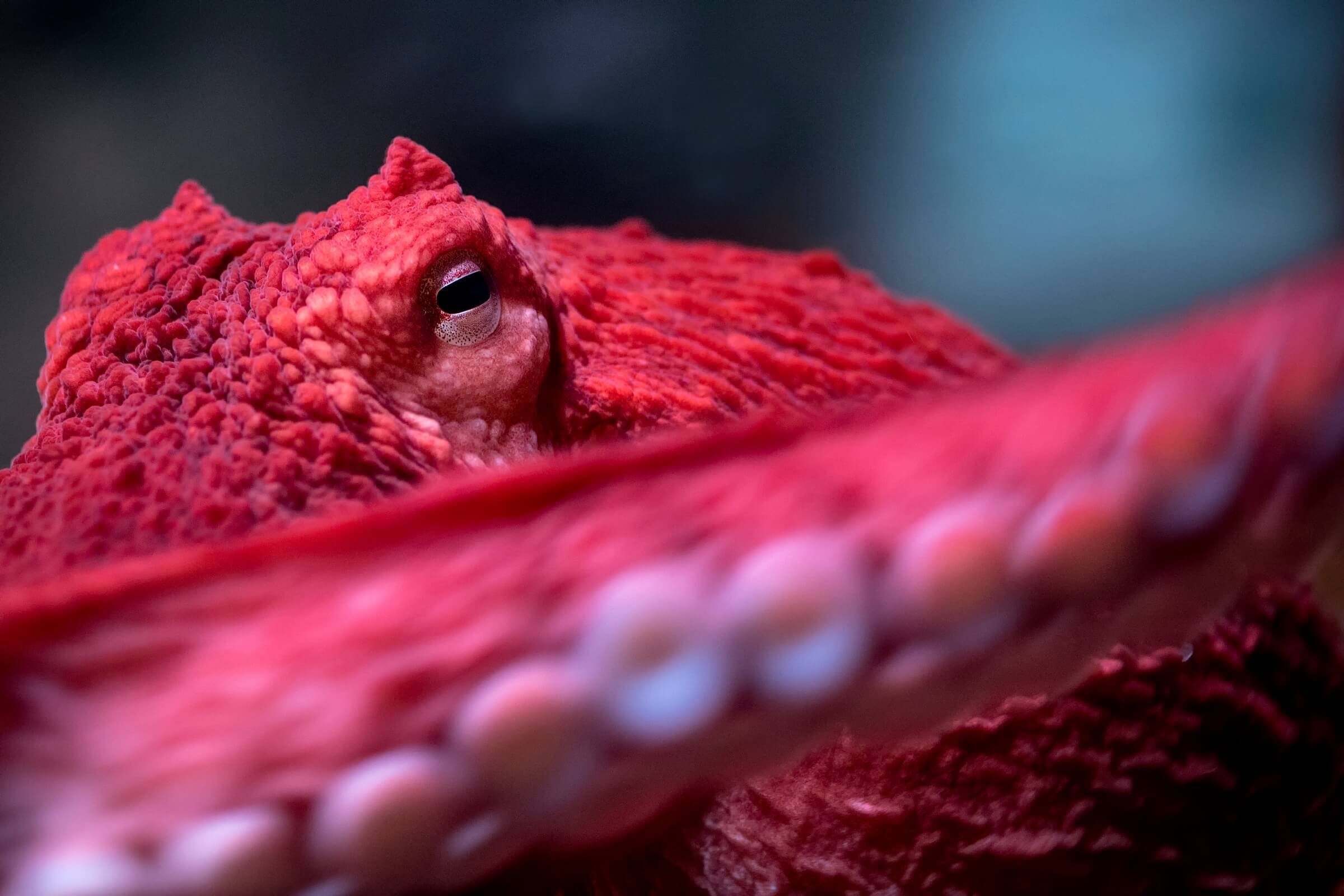
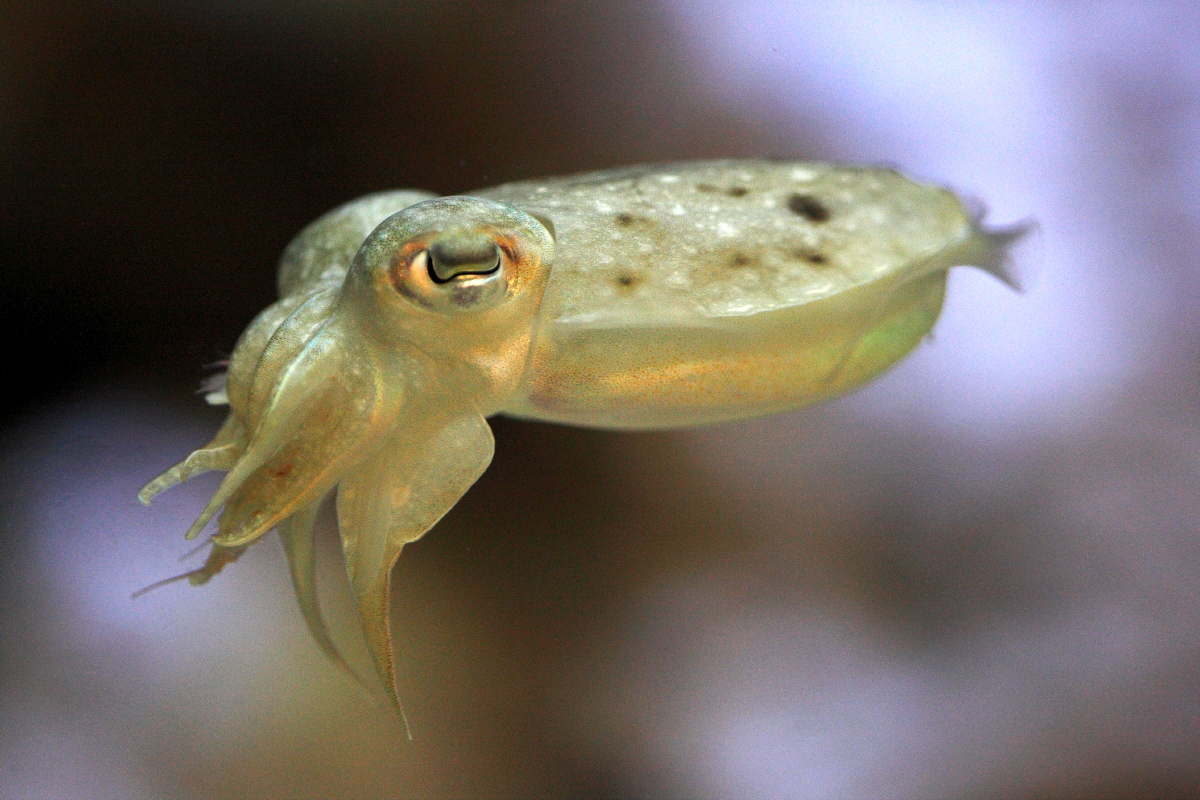
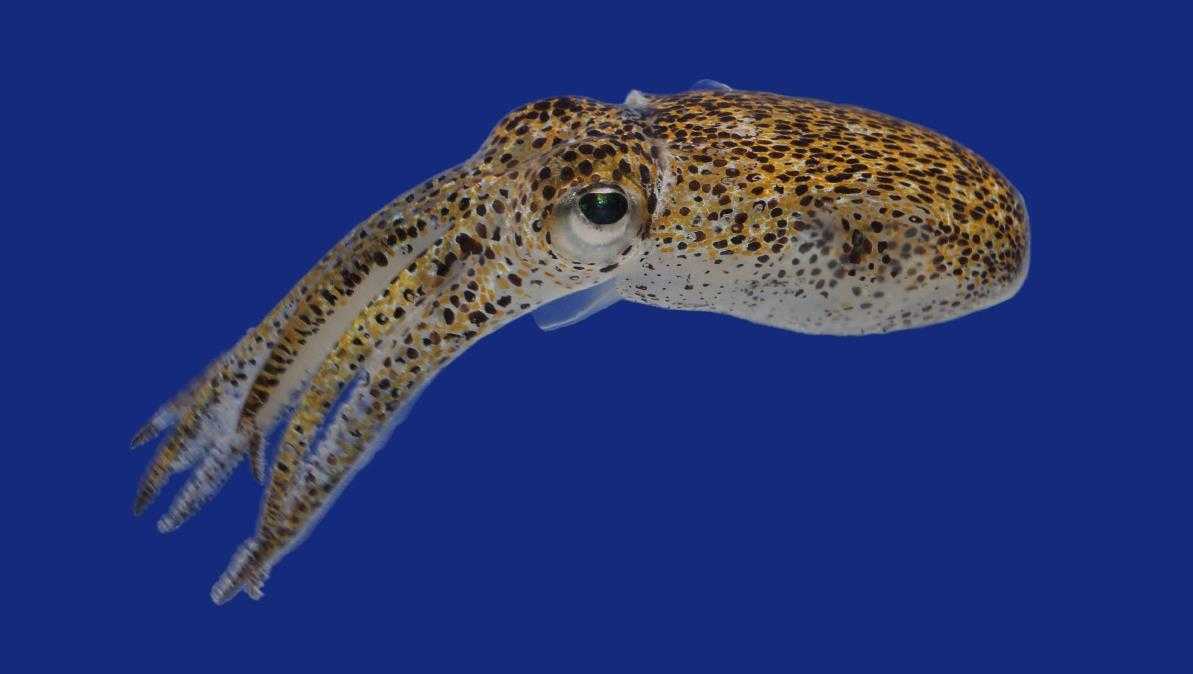
Cephalopods are mysterious, mesmerizing, and majestic! There are so many of these wonderful marine invertebrates to discover. These are some of our favorites. But no matter the creature featured, we always give cephalopods, eight thumbs up!
More on cephalopods
Animals & the ocean
Quiz: Which cephalopod are you?
Cephalopods can be big and small, smart and sneaky. Which one will match your personality?
Read more – Quiz: Which cephalopod are you?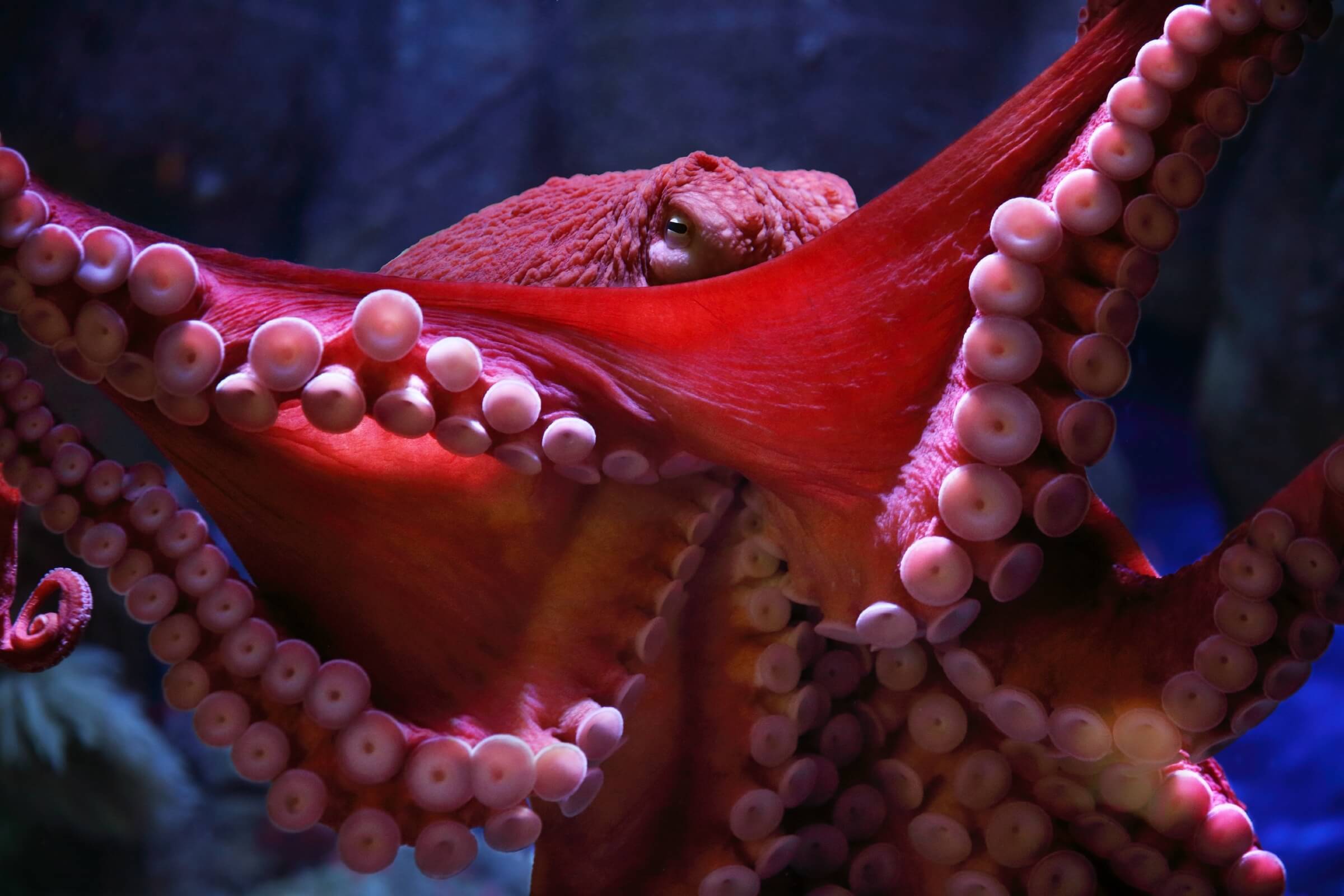
Wallpaper
Giant Pacific octopus wallpaper
Download a beautiful, high-resolution Giant Pacific octopus wallpaper for your desktop or mobile device.
Get wallpaper – Giant Pacific octopus wallpaper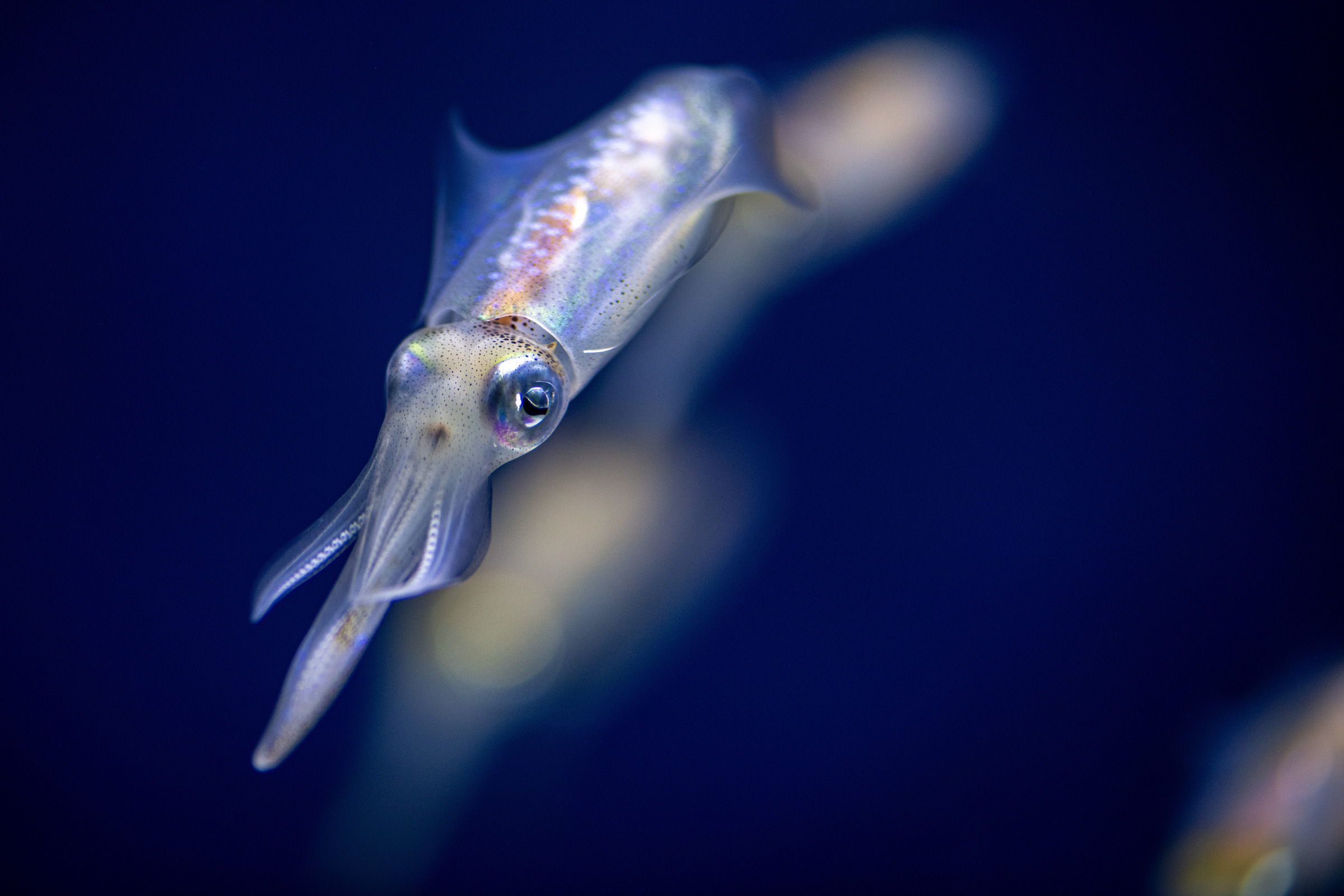
Wallpaper
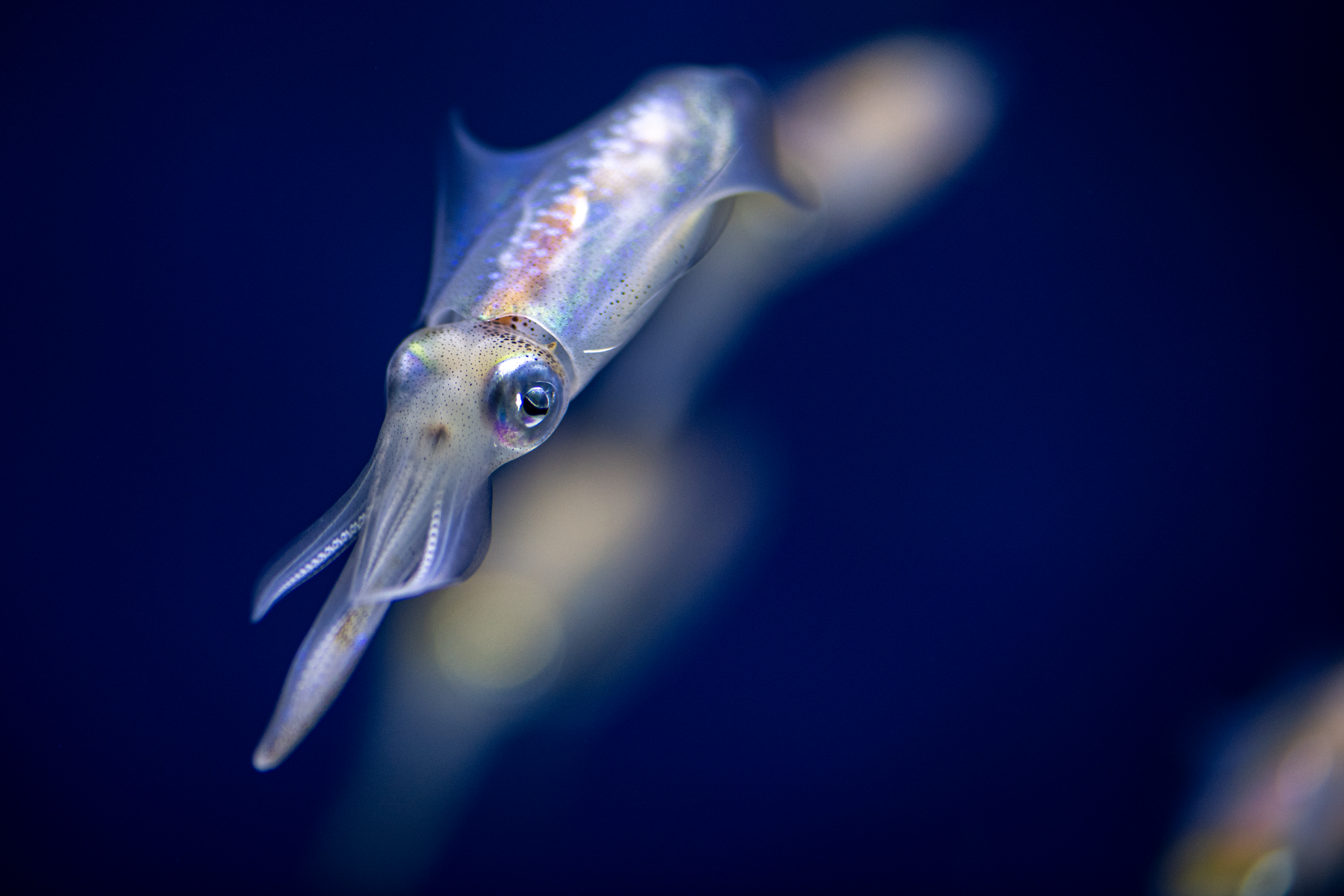
Juvenile bigfin reef squid wallpaper
Download a juvenile bigfin reef squid wallpaper for your desktop or mobile device.
Get wallpaper – Juvenile bigfin reef squid wallpaper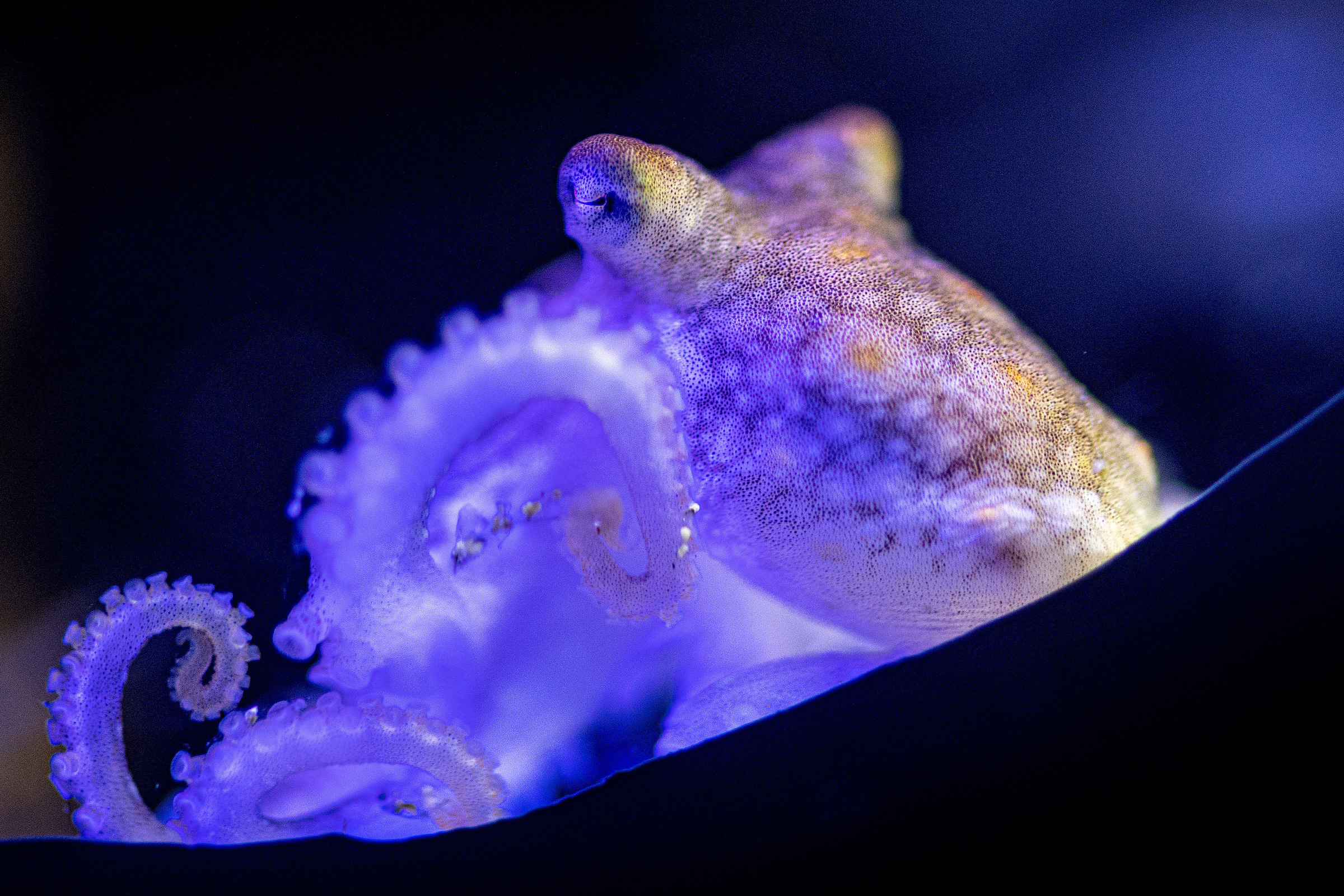
Wallpaper
Two-spot octopus wallpaper
Download a juvenile two-spot octopus wallpaper for your desktop or mobile device.
Get wallpaper – Two-spot octopus wallpaper